
Hyogo University Scholarships for International Students 2027
To help students manage tuition and living expenses, Hyogo University connects to scholarships across different funding levels. Here are several top options to review first.
To broaden funding options beyond institutional awards at Hyogo University, these external and government scholarships are commonly considered as well. A strong option is Japanese Government (MEXT) Scholarship which is fully funded and often covers tuition fees, ¥143,000 to ¥145,000 per month for research students, and ¥117,000 for undergraduate students.
To see every scholarship associated with this institution and compare coverage and eligibility, browse the sections below.
Hyogo University Scholarships for International Students
The scholarships at Hyogo University can help fund your study expenses. There are currently 2 scholarships being offered to international students at the Hyogo University, all with varying requirements, benefits, and application processes. We have compiled them in this list to help you find the scholarship that best fits you.
External Scholarships
Tuition Fees at Hyogo University for International Students
Indicative annual tuition fee ranges for international students at Hyogo University. Exact fees vary by program, so always confirm the current cost on the university's official tuition fee pages.
| Degree Level | Typical Annual Range |
|---|---|
| Bachelor's Tuition | 726,000 Yen |
Please note that tuition fees can vary based on the specific program you choose. For the most accurate and current fee information, consult the official tuition fee pages linked above.
Hyogo University Scholarship Recipients
International students who received scholarships to study at Hyogo University, documented by Global Scholarships.


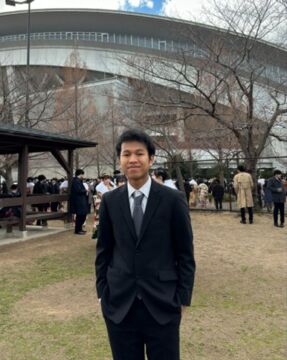
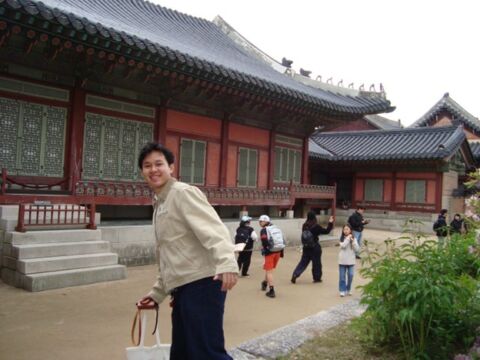
Scholarship Recipient Insights at University of Hyogo
4 degree-study stories.
| Nationalities | Stories per nationality |
|---|---|
| Indonesian | 3 each |
| Thai | 1 each |
| Degree level | Stories | Subjects |
|---|---|---|
| Bachelor’s / undergraduate | 2 | Global Business, Global Business (Economics and Management) |
Funding Routes Used by Featured Recipients
| Funding route | Stories | Recipients |
|---|---|---|
| MEXT Scholarship through the university | 4 | Muhammad Athala; Radhi Kalifa; Lanta Suwanlikit; Keane Edbert Walerian |
Funding Coverage Reported by Recipients
| Recipient and degree/program | Reported coverage |
|---|---|
| Muhammad Athala — Degree study in Economics and Management | Airfare, admission and tuition fees, and ¥120,000 monthly. He described the allowance as sufficient for daily life. |
| Radhi Kalifa — Undergraduate Global Business Course, final-year student | Round-trip airfare, tuition and ¥120,000 monthly for four-year study. |
| Lanta Suwanlikit — Bachelor’s in Global Business (Economics and Management), fourth-year student | Full tuition, ¥120,000 monthly and round-trip international airfare between Thailand and Japan. |
| Keane Edbert Walerian — Degree study in Global Business | Application and admission fees, full tuition, ¥120,000 monthly and round-trip international airfare. |
English-taught programs / stories reporting teaching language: 2/4
Teaching Language and Study Experiences
| Recipient and degree/program | Reported instruction and practical experience |
|---|---|
| Muhammad Athala — Degree study in Economics and Management | Classes were mainly in English; some courses required Japanese comprehension because professors had limited English. Required core courses were available in English. He valued international friendships and Japanese-company internships, jobs and events. |
| Radhi Kalifa — Undergraduate Global Business Course, final-year student | Reported a fully English-taught Global Business Course with Japanese-language learning opportunities. Campus support helped with Japanese-language health-insurance and government matters; Japanese remained important for shopping and travel. |
| Lanta Suwanlikit — Bachelor’s in Global Business (Economics and Management), fourth-year student | Described English classes alongside an economics class with mixed English–Japanese explanations; more final-exam detail was sometimes given in Japanese. Intermediate mandatory Japanese-language classes used Japanese for explanations and exams. Some economics teaching required substantial self-study. Career fairs and internship information were mostly in Japanese. |
| Keane Edbert Walerian — Degree study in Global Business | Described his Global Business program as English-taught, while noting that the English fluency of faculty and students sometimes limited discussion depth. First-year international-dorm life taught him about culture, language and adapting to others. |
Examples of Featured Recipients’ Application Backgrounds
| Recipient and degree/program | Scholarship/application route | Reported background and preparation |
|---|---|---|
| Muhammad Athala — Degree study in Economics and Management | University-route MEXT Scholarship | High-school average 88/100; student-council leadership, two other organizations, event volunteering and soccer competitions. Used an alumnus’s scholarship database and prepared application documents months ahead. |
| Radhi Kalifa — Undergraduate Global Business Course, final-year student | MEXT Scholarship | High-school science average 91.2/100 and experience running a business. Maintained an application database, sought essay proofreading and researched the metaverse for his 2022 application and interview. Practiced Japanese etiquette and ways to address professors. |
| Lanta Suwanlikit — Bachelor’s in Global Business (Economics and Management), fourth-year student | University-recommended MEXT Scholarship | High-school GPA 3.98/4.00, language study and an online clothing business. Teachers reviewed her statement of purpose; interview preparation connected her business experience to a Japanese–Thai curry-store proposal. |
| Keane Edbert Walerian — Degree study in Global Business | MEXT Scholarship through University of Hyogo | School experience in Indonesia and Italy and merit scholarships since junior high school. Contacted senior students, prepared academic records and a TOEFL iBT score, and pitched a plant-based bakery in Japan during selection. |
How Recipients Met Language Requirements
| Language requirement route | Stories / total degree-study stories | Recipients and examples |
|---|---|---|
| TOEFL submitted for the application | 1/4 | Lanta Suwanlikit — Bachelor’s in Global Business (Economics and Management), fourth-year student — submitted scores for her 2022 application even though the university also accepted teacher English-proficiency letters that year. |
| TOEFL iBT submitted for the application | 1/4 | Keane Edbert Walerian — Degree study in Global Business — included a TOEFL iBT score in his application documents. |
Application Timelines Reported by Recipients
| Recipient and degree/program | Application or scholarship route | Reported application timeline |
|---|---|---|
| Lanta Suwanlikit — Bachelor’s in Global Business (Economics and Management), fourth-year student | University-recommended MEXT Scholarship | For her 2022 application, had about one week to prepare for the scholarship interview; rehearsed key points and a business presentation before the online interview. |
Interview Experiences Reported by Recipients
| Applicant and program | Reported selection experience |
|---|---|
| Lanta Suwanlikit — Bachelor’s in Global Business (Economics and Management), fourth-year student | Presented a Japanese curry business with Thai influences in response to a ten-year CEO scenario about marketing Japanese products in her home country. Would strengthen the pitch and research Thai curry more fully. |
| Keane Edbert Walerian — Degree study in Global Business | Presented a plant-based bakery business in Japan. Interviewers questioned feasibility and asked him to explain weaker areas of his academic record. |
Other Offers in Featured Applicants’ Journeys
| Recipient | Reported alternative | Decision described in the story |
|---|---|---|
| Muhammad Athala — Degree study in Economics and Management | Bandung Institute of Technology: accepted in Industrial Engineering through SBMPTN. | Chose economics and management in Japan because it fit his interests in consulting, human resources and management. |
| Keane Edbert Walerian — Degree study in Global Business | Other university admissions and scholarship offers. | Chose MEXT at University of Hyogo because it provided the most comprehensive overall support. |
Lanta Suwanlikit — Bachelor’s in Global Business (Economics and Management), fourth-year student paid for her domestic connection from Tokyo to Kansai Airport herself after MEXT booked the international arrival. She also found the initial mathematics demands difficult after a language-focused school curriculum.
What Scholarship Recipients Say
Advice and insights from international students who successfully secured funding to study at Hyogo University.
"I received a fully funded scholarship, including a plane ticket, admission fee, tuition fee, and a monthly stipend of 120,000 yen. It is enough to sustain my daily life studying in Japan."
"Hi! I’m Radhi Kalifa, a current final-year student at the University of Hyogo, Global Business Course Undergraduate program in Japan."
"My university life in Japan is nothing short of life-changing! I got the opportunity to study under capable professors from around the world."
"We are also supported by the campus for any matters that involve Japanese, such as health insurance or any other government-related services."
"It covers my full tuition, provides a monthly allowance for living expenses (120,000 JPY), and even includes my round-trip flights between Thailand and Japan."
"The university staff is incredibly kind and helpful, particularly in the International Office."
Frequently asked questions
Common questions about scholarships, admissions, and studying at Hyogo University.
I couldn’t find a University of Hyogo scholarship that’s designed specifically for “online-only” study.
Both exist, depending on the program. Many programs in Japan are primarily Japanese-taught, but University of Hyogo also offers English-taught options and English-language coursework.
A clear English-taught example is the School of Economics and Management’s Global Business Course (GBC), which University of Hyogo describes as taught only in English in its GBC materials. In Global Scholarships’ recipient story, Muhammad Athala says: “The classes are mainly conducted in English,” adding that “some courses require some degree of Japanese” depending on the professor.
It depends on the scholarship. Some private scholarships (and government scholarships) set age rules, while university tuition reductions/waivers may focus more on academic performance and financial need.
For example, MEXT has age criteria that vary by track and year (e.g., “born on or after” a specified date in the relevant guidelines). In the Global Scholarships story, Muhammad Athala received MEXT via a university route, so he had to meet MEXT’s eligibility rules in addition to the University of Hyogo’s selection process.
Scholarships can apply across many subjects offered at University of Hyogo, but some funding is tied to specific programs. For example, University of Hyogo’s MEXT-linked “Special Scholarship Program” information is prominently connected to the Global Business Course (economics/business/management).
- Business / Economics / Management: Strongly represented via the Global Business Course (GBC) and its related scholarship routes. Muhammad Athala is studying “Economics and Management” and notes he chose it because it “aligns more with my passion and interests.”
- Engineering & STEM: University of Hyogo has schools/graduate schools in Engineering, Science, and Social Information Science, and scholarship announcements for privately funded international students can be campus-wide.
- Humanities / Social Sciences: University of Hyogo includes the School of Human Science and Environment and a range of liberal-arts/general courses.
It depends on the scholarship type. University/privately-funded scholarships for international students are often open broadly (as long as you meet the program requirements), while government scholarships like MEXT have nationality rules.
For a real example, Muhammad Athala is from Indonesia and received MEXT through a University of Hyogo route. MEXT eligibility typically requires that applicants have the nationality of a country with diplomatic relations with Japan (plus other conditions).
It depends on your program and the language of instruction. For English-taught routes, the University of Hyogo requires proof of English ability (CEFR B2 level) via standardized tests (or approved English-medium schooling documentation).
In the Global Scholarships story, Muhammad Athala says, “I took the SAT and IELTS,” and adds: “I am able to get a decent band of 7.5 in my IELTS.” For Japanese-taught programs (and for some scholarship tracks), Japanese ability may be required or strongly recommended, sometimes demonstrated with JLPT.
There isn’t one universal minimum grade across all programs and scholarships; requirements vary by department and selection route. Some admissions emphasize test scores, essays/interviews, and academic records together rather than publishing a single GPA cutoff.
From the scholarship-recipient side, Muhammad Athala notes, “I did not have high grades” but had “a decent average of 88/100,” plus leadership and activities. Also, some financial benefits are performance-based after enrollment (for example, tuition exemptions in certain programs can increase if you rank in the top portion of your cohort).
A strong academic record helps, but “fit” and an overall profile can matter a lot, especially for competitive scholarships. In the Global Scholarships story, Muhammad Athala highlights being well-rounded: he had an 88/100 average, leadership experience (he says he was “the head of a student council”), and used those experiences to strengthen his essays.
He also describes the strategy of building a balanced application: “I had above-average grades, packed experiences,” plus test scores and certifications. Practically, that suggests a good background includes solid transcripts, credible language scores (when required), and evidence you’ll contribute on campus.
Documents vary by program, but for most programs, the University of Hyogo’s application materials include items like application essays, proof of English proficiency, a school recommendation, academic transcripts, and a graduation certificate/diploma (plus required forms such as a declaration).
It depends on the program. For the Global Business Course (GBC) international selection, University of Hyogo lists an application fee (with payment instructions), and some programs may have separate examination/admission-related fees. As one concrete example, University of Hyogo’s GBC guidelines state an application fee of 8,500 JPY plus handling charges (e.g., 500 JPY via PayPal in the documented method).
About the Author: Hyun Lee


Leave A Comment