
Hokkaido University Scholarships for International Students 2027
Students considering Hokkaido University can explore scholarships that range from fully funded support to partial awards. This shortlist highlights higher coverage options first.
For institution funded support at Hokkaido University, these scholarships are frequently highlighted when prioritizing higher coverage. Special Grant Program for Self-Supported International Students is commonly categorized as full tuition support, and coverage that often includes a full tuition fee waiver. With Tuition Fee Exemption, students may receive full tuition support, and coverage frequently includes 25% to 100%tuition fees.
Outside the university’s own funding routes, Hokkaido University students may be eligible for external programs that can offer substantial support. Here are a few to consider. Japanese Government (MEXT) Scholarship is usually considered fully funded, and typical coverage can include tuition fees, ¥143,000 to ¥145,000 per month for research students, and ¥117,000 for undergraduate students.
This is only a shortlist. Additional scholarships and funding options appear further down on this page.
Hokkaido University Scholarships for International Students
The scholarships at Hokkaido University can help fund your study expenses. There are currently 4 scholarships being offered to international students at the Hokkaido University, all with varying requirements, benefits, and application processes. We have compiled them in this list to help you find the scholarship that best fits you.
Undergraduate Scholarships
Graduate Scholarships
External Scholarships
There are many degrees that are open to international students right now — find yours.
Hokkaido University Admissions
Here are the official admission pages for Hokkaido University:
| Degree | Admissions Pages |
|---|---|
| Bachelor's | International Students Admissions Page |
| Master's | International Students Admissions Page |
Tuition Fees at Hokkaido University for International Students
Indicative annual tuition fee ranges for international students at Hokkaido University. Exact fees vary by program, so always confirm the current cost on the university's official tuition fee pages.
| Degree Level | Typical Annual Range |
|---|---|
| Bachelor's Tuition | 535,800 Yen |
| Master's Tuition | 535,800 Yen |
Please note that tuition fees can vary based on the specific program you choose. For the most accurate and current fee information, consult the official tuition fee pages linked above.
Hokkaido University Scholarship Recipients
International students who received scholarships to study at Hokkaido University, documented by Global Scholarships.
What Scholarship Recipients Say
Advice and insights from international students who successfully secured funding to study at Hokkaido University.
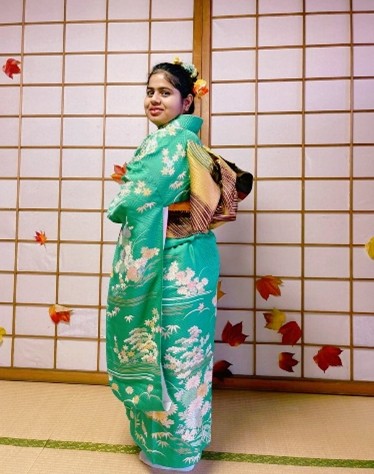
"I am a recipient of the Japanese Government (MEXT) Scholarship (Embassy Recommendation, 2023–2027), awarded by Japan’s Ministry of Education, Culture, Sports, Science and Technology. The scholarship fully covers tuition, provides a monthly stipend, and includes round-trip airfare between Japan and my home country."
"Before beginning the application process, I understood the scholarship's selection criteria and requirements. I prepared diligently for the entrance examination and interview, ensuring my application was aligned with my academic background and research goals. One of the key aspects of my preparation was establishing communication with my prospective professor at Hokkaido University."
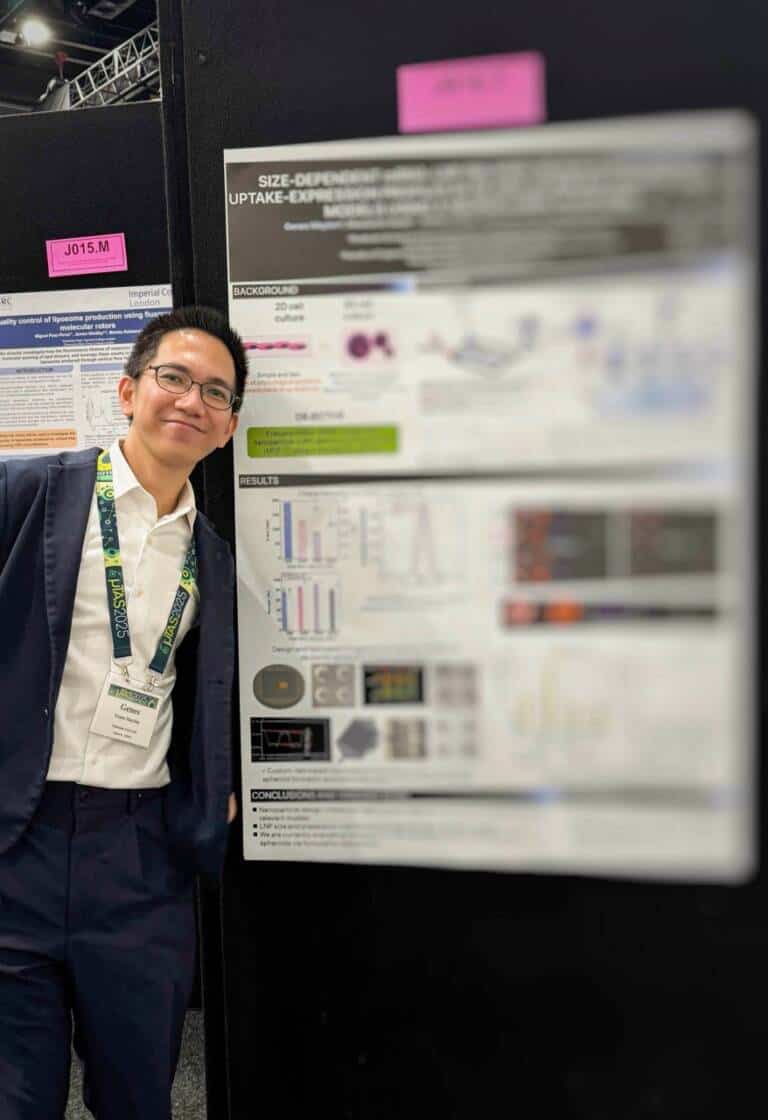
"Life as a Ph.D. student at Hokkaido University has been both challenging and fulfilling. Tokeshi Lab provides an ideal environment for creative and interdisciplinary research. Working on MPS and microfluidics has allowed me to explore questions that sit at the intersection of cell biology, materials engineering, and fluid dynamics, a space I like to call the microcosm of innovation."p>
"Hokkaido University had a strong research program for my program, which was Master of Science in Environmental Molecular Biology. Yes, my program was conducted in English."
Frequently asked questions
Common questions about scholarships, admissions, and studying at Hokkaido University.
Generally, Hokkaido University scholarships are designed for students enrolled in formal on-campus degree/non-degree programs (e.g., MEXT and other competitive scholarships listed for prospective students).
Both, depending on the program. At the undergraduate level, Hokkaido University notes that it offers two English-taught degree programs (MJSP and ISP), and “except for the two undergraduate programs taught in English,” undergraduate classes are “conducted primarily in Japanese,” so advanced Japanese is required for most undergraduate programs.
At the graduate level, Hokkaido University lists multiple English-taught graduate degree options. In recipient stories, Tanya Srivastava (MSc, Environmental Molecular Biology) says, “Yes, my program was conducted in English,” and Genes P. Maylem (PhD) shares that in his graduate program, “classes and research communication are conducted in English.”
It depends on the scholarship. Many students at Hokkaido University apply using external scholarships like MEXT, which has age rules that change by track and intake year. University or private scholarships may focus more on enrollment status, academic merit, and progress rather than age, so always check the specific scholarship’s eligibility conditions.
Many major scholarships used at Hokkaido University (especially MEXT) are not limited to one single subject: students across STEM, humanities, and professional fields can be funded as long as they are admitted and meet the scholarship criteria. Hokkaido University’s undergraduate schools span areas including Engineering, Economics & Business, Humanities and Human Sciences, Medicine, Dental Medicine, Agriculture, Fisheries, and more.
In the recipient stories, you can see the range: Genes P. Maylem is in Biological Chemistry and Engineering (STEM/engineering-life science) and Tanya Srivastava is in Environmental Molecular Biology (STEM/environment).
Medicine note (international students): Hokkaido University includes Medicine among its undergraduate schools, but most undergraduate programs are primarily Japanese-taught (with only two English-taught undergraduate degrees). If you’re aiming for medicine-related study in English, consider graduate-level health/biomedical options (some graduate schools provide courses “in English in principle” for international students).
It depends on the scholarship type. For MEXT (a common route at Hokkaido University), the guidelines state applicants must have the nationality of a country that has diplomatic relations with Japan (and applicants with Japanese nationality at the time of application are not eligible, with limited dual-nationality conditions). Hokkaido University also highlights MEXT as a major option for prospective international students.
In the Hokkaido University recipient set on Global Scholarships, you can see multiple nationalities represented (e.g., Filipino, Indian, Indonesian, Pakistani), which reflects how many scholarships are open broadly, though individual scholarship rules still apply.
It depends on (1) whether your program is English-taught or Japanese-taught, and (2) the admission pathway. For most Japanese-taught undergraduate programs, advanced Japanese is required, while English-taught programs may ask for proof of English. In one Hokkaido University undergraduate admissions guideline, certain applicants “must submit copies of certificate that show their language proficiency,” such as transcripts or score reports.
That said, waivers can happen. Genes P. Maylem says, “English proficiency tests were waived during my application period because my previous degrees were mostly conducted in English.” Having strong scores (IELTS/TOEFL/JLPT) can still strengthen your application, and some scholarships/programs explicitly require them, so treat tests as “program/scholarship-specific,” not universally required.
Hokkaido University admissions standards vary by faculty/program and by the admission route, so there isn’t one universal minimum grade that applies to every applicant. A practical benchmark comes from scholarship requirements: Hokkaido University notes that, for MEXT University Recommendation, applicants must have an academic record score coefficient of “2.3 or higher.”
In recipient examples, strong academics show up clearly: Tanya Srivastava reports a CGPA of 9.10 in her prior degree, and Jillian Abigail Sutrisno shares a 95.4% high school average (and very high marks in Math/Chemistry/Physics), illustrating the kind of profile often seen among scholarship applicants.
A strong academic record plus clear fit with your program/research tends to matter most, especially for competitive funding like MEXT. Tanya Srivastava attributes her success to “my strong academic record, research proposal, and performance in the entrance examination and interview,” and she highlights the value of contacting a prospective professor and having strong recommendations.
For research-focused routes, Genes P. Maylem emphasizes alignment: he “drafted a clear and feasible research proposal tailored to the lab’s strengths,” explaining that the key was ensuring the proposed work “resonated with the lab’s vision and direction.”
Documents vary by level (undergraduate/graduate), program, and admission scheme. One Hokkaido University undergraduate guideline (International Qualification-Based Admission) lists materials such as an application form and photo, educational background form, school recommendation/transcripts (often sealed), and (for some applicants) proof of language proficiency; it also includes items like a self-recommendation letter/statement of purpose and, in some cases, a thesis and summary.
At the graduate level, departments can have their own document sets. For example, the Graduate School’s international applicant instructions list items including basic information, educational background, certificate of graduation, proof of English/Japanese language skills, past research & desired research at Hokkaido University, and signature/consent pages.
Yes. Hokkaido University publishes standard fees, including an “Entrance Examination Fee” (e.g., ¥17,000 for undergraduate applicants and ¥30,000 for many graduate applicants), plus admission and tuition fees depending on the student type.
There are many degrees that are open to international students right now — find yours.
About the Author: Hyun Lee


I’m interested in studying abroad at Hokkaido University.
Hello, take a look at Admissions Section!
Can I go to Hokkaido University right after senior high school?
Yes, you can apply to Hokkaido University right after high school.
Are these scholarships given by hokkaido university?
Yes, they are!