
How Konelasy Vilayphon, a Lao Scholar, Secured a Fully Funded Master’s Through the Japanese Government (MEXT) Scholarship
University: Tokyo University of Agriculture and Technology (TUAT)
Degree: Master’s in International Innovative Agricultural Science
Previous Education: Bachelor’s in Environmental Management, National University of Laos (NUOL)
Scholarship: Japanese Government (MEXT) Scholarship – University Recommendation, Special Program (Full Tuition and University Fees, Approximately ¥144,000 Monthly Stipend, Round-Trip Airfare, and Other MEXT Benefits)
Social Media
The Journey
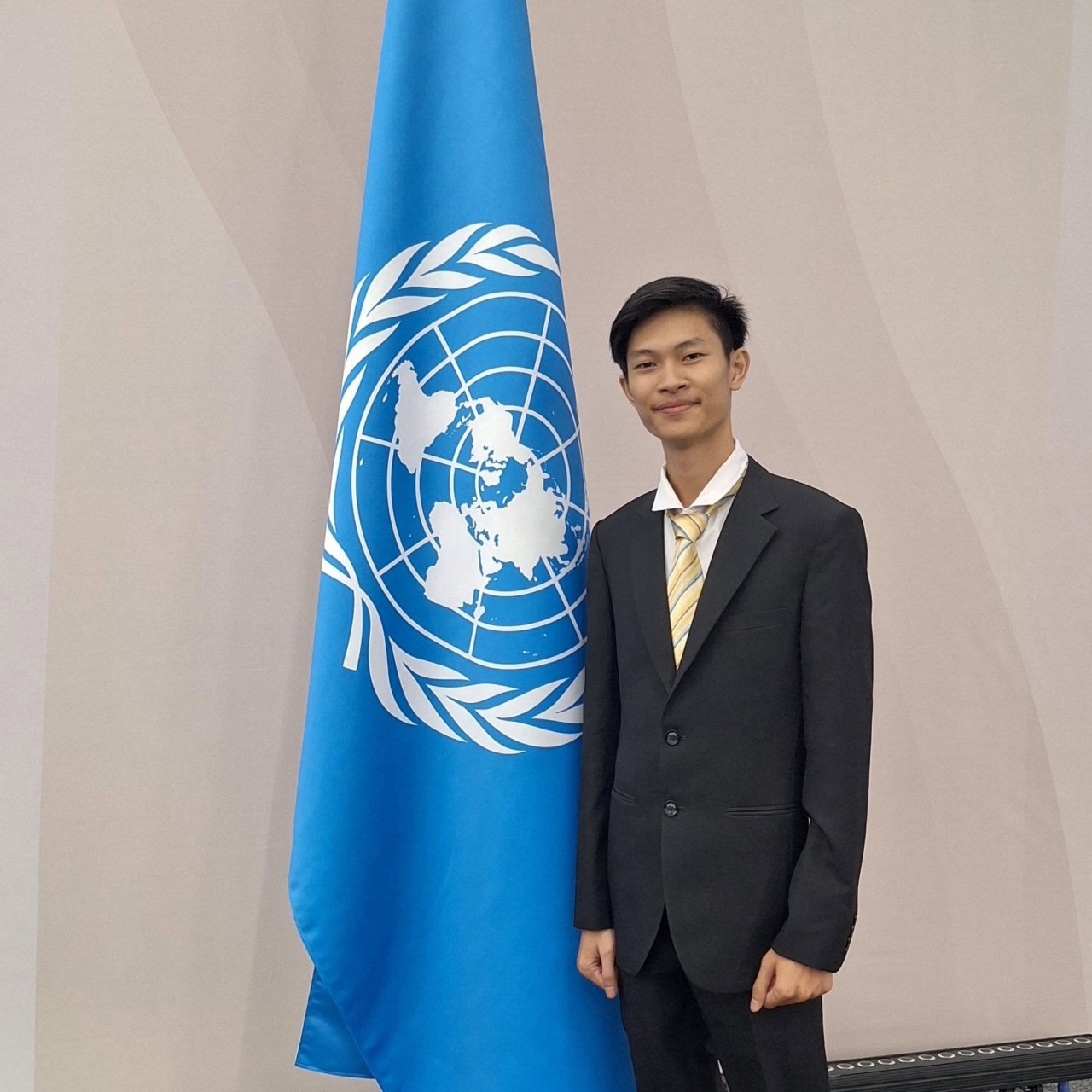
My name is Mr. Konelasy VILAYPHON, you can call me “Kon” for short, I’m from Houaphan Northern part of Laos. I hold a Bachelor’s degree in Environmental Management from the National University of Laos (NUOL), where I graduated with a CGPA of 3.60/4.00. During my undergraduate studies, I was actively involved in environmental and youth initiatives. I served as Vice-President of Social Environmental Education and Development (SEED), a youth-led environmental organization at the Faculty of Environmental Sciences, NUOL. Through SEED, I was involved in environmental education, youth engagement, community activities, and initiatives promoting environmental awareness and sustainable development.
After graduation, I worked as a Junior Forest-Based Value Chains Advisor with GIZ Laos, where I supported sustainable forest-based value chains, rural development, and collaboration with local communities and government stakeholders.
My academic background, leadership experience, and professional work have strengthened my interest in sustainable agriculture, agroforestry, climate resilience, environmental conservation, and rural development. I decided to pursue further education in these areas because I want to develop advanced knowledge and practical skills that can contribute to more sustainable and resilient agricultural and rural development in Laos.
MEXT Scholarship Details
I was awarded the Japanese Government (MEXT) Scholarship through the University Recommendation – Special Program at the Tokyo University of Agriculture and Technology (TUAT) in Japan.
I am pursuing a Master’s degree in International Innovative Agricultural Science (IIAS) at the Graduate School of Agriculture at Tokyo University of Agriculture and Technology (TUAT).
The scholarship provides:
- Full tuition and university fees
- A monthly stipend of approximately ¥144,000 (for a Master’s student)
- Round-trip airfare to Japan, subject to MEXT regulations
- Other benefits according to the MEXT scholarship regulations
I was selected as the university's nominee through TUAT's university recommendation process and was subsequently approved by MEXT.
Educational Background
I studied Environmental Management at the National University of Laos from 2021 to 2025, graduating with a CGPA of 3.60/4.00.
My undergraduate education provided me with a multidisciplinary foundation covering environmental science, natural resource management, conservation, sustainable development, environmental assessment, and community-related issues.
How Did You Prepare to Apply to Tokyo University of Agriculture and Technology?
I started by identifying the academic areas I wanted to develop further. Rather than choosing a university simply because it was highly ranked, I looked for programs that matched my academic background, research interests, and long-term goals.
I researched universities, graduate programs, professors, laboratories, scholarship opportunities, and research topics. I also paid close attention to whether a potential supervisor's research interests were compatible with my proposed research direction.
Japan became one of my preferred destinations because of its strong reputation in agriculture, forestry, environmental science, rural development, and technological innovation.
I had also previously experienced Japan through the JENESYS Japan–Laos Environment Exchange Program in 2022, which gave me an opportunity to learn about Japanese society, environmental practices, and education. That experience strengthened my interest in returning to Japan for graduate study.
How Did You Find Information About MEXT Scholarship and Tokyo University of Agriculture and Technology?
I mainly used official university websites and MEXT information. I also followed scholarship-related information shared by MEXT alumni and social media educational communities.
One important lesson I learned is that applicants should not rely only on general scholarship websites. It is important to go directly to the official university and scholarship websites and carefully check eligibility requirements, application procedures, deadlines, required documents, and scholarship conditions.
For university-recommendation scholarships in particular, I recommend researching individual universities because the application process and requirements can differ considerably.
Did You Take Any Standardized Tests? If So, How Did You Prepare for Them?
I did not take standardized tests such as the SAT, ACT, GRE, or GMAT for my application. I also did not have an IELTS or TOEFL certificate. However, during the scholarship selection process, my academic supervisor assessed my English proficiency during the interview round. The interview was conducted in English, and based on my communication and ability to discuss my academic background and research interests, my supervisor assessed that my English was sufficient for the program.
Following the assessment, my academic supervisor issued an English proficiency certificate as proof of my English ability, which I used as part of my application. Therefore, my experience showed me that applicants should carefully check the specific requirements of each university and program. Some programs may accept alternative evidence of English proficiency rather than requiring IELTS or TOEFL.
How Did You Prepare to Apply for the MEXT Scholarship?
I treated the scholarship application as more than simply completing forms. I first tried to understand why I wanted to pursue graduate study and what I wanted to contribute after graduation.
I prepared my:
- Academic transcripts and certificates
- Curriculum vitae
- Research proposal
- Statement of purpose
- Scholarship application documents
- Recommendation letters from the Dean and my academic supervisor at my previous university
- Study and career plans
One of the most important parts was developing a research proposal that connected my previous experience with my future academic goals.
I also carefully researched potential supervisors, their research areas, publications, and academic interests before contacting them. I looked for a supervisor whose research interests were closely related to my proposed research and whose expertise could support my academic goals.
How is Your Experience at Tokyo University of Agriculture and Technology?
I am currently preparing to begin my Master's study at TUAT. Therefore, I cannot yet provide a complete assessment of my academic experience as a graduate student.
However, I have already received support from the university regarding admission, accommodation, enrollment procedures, visa-related documentation, and preparation for my arrival in Japan.
I will be studying at the Fuchu Campus and living at the Fuchu International House.
How Do You Rate Tokyo University of Agriculture and Technology Academically?
I would rate Tokyo University of Agriculture and Technology (TUAT) very highly academically, particularly in the fields of agriculture, forestry, environmental science, and technology.
One of the factors that attracted me to TUAT is its strong international academic reputation. TUAT is ranked 41st globally, 1st in Japan, and 6th in Asia in agriculture and forestry-related fields, demonstrating its strong position in agricultural and forestry education and research.
However, rankings were not the only reason I chose TUAT. I was particularly interested in its research-oriented environment and strong expertise in agriculture, environmental science, and related technologies, which closely match my academic interests.
Overall, I chose TUAT because of the combination of its strong academic reputation, research environment, relevant graduate program, and the close alignment between the university's academic strengths and my future goals.
How Does Tokyo University of Agriculture and Technology Support International Students?
TUAT provides international students with support related to admission, immigration procedures, accommodation, enrollment, student services, and orientation.
For example, before my arrival, the university provided detailed information about accommodation, enrollment procedures, insurance, transportation, and other preparations needed for international students.
The university also provides Japanese-language learning opportunities, which I believe will be important for international students who want to integrate more effectively into Japanese society.
Are Your Classes Conducted in English or Japanese?
My Master's program, International Innovative Agricultural Science, is an international program, and my academic study is conducted primarily in English.
However, I am also interested in learning Japanese because language is an important part of understanding Japanese culture and communicating with people outside the university. I believe that studying in English while learning Japanese will allow me to participate academically while also adapting better to daily life in Japan.
What Did You Pursue After the MEXT Scholarship?
My goal is to develop advanced knowledge in sustainable agriculture, agroforestry, and rural development, and after graduation, apply this knowledge to contribute to sustainable agricultural and rural development in Laos.
Would Students Have Problems Academically Without Knowing Japanese?
Not necessarily. My program is taught in English, so Japanese proficiency is not required for academic study.
What Do You Think Made Your Application Stand Out?
I believe my application stood out because of the consistency between my academic background, professional experience, research interests, and future goals.
My application was not based on one achievement alone. Instead, my experiences gradually developed toward the same direction.
I studied Environmental Management, conducted research related to environmental impacts, participated in international academic programs, worked in forest-based value chains, and became involved in environmental education and youth engagement.
I also gained international experience through programs and conferences. For example, I represented Lao youth at international events and participated in the International Student Summit on Food, Agriculture and Environment in Indonesia, where I received the Best Paper Award.
Most importantly, I tried to clearly explain why I wanted to study my proposed field, why Japan was the right place for me, why the university and supervisor were suitable, and how I intended to use the knowledge in the future.
What Would You Have Done Differently if You Were Going Through the Process Again?
If I were to go through the process again, I would start preparing even earlier.
I would spend more time researching universities and potential supervisors before the application period, and I would develop my research proposal gradually rather than trying to finalize everything close to the deadline.
I would also strengthen my Japanese-language skills earlier, even though Japanese proficiency was not required for my program.
Another thing I would do differently is keep a well-organized folder of important documents from the beginning. Scholarship applications require many documents, and having transcripts, certificates, CVs, research plans, recommendation letters, and other materials organized in advance can make the process much easier.
Want to submit your
scholarship journey?
Submit Your Story Here!
More Scholarship Recipients

My name is Ehsan Khalid Nasr Elameen. I am from Khartoum, Sudan, and I currently live in the Sultanate of Oman, where I work .... Read more

My name is Vamsi Krishna Boyanagari, and I am from India. I am a doctoral researcher at the Irish Centre for Social Gerontol .... Read more

My name is Ayashi Das Majumder, and I am from Kolkata, India. My work sits at the intersection of environmental science, tec .... Read more
Leave A Comment