
How Marhan Ebit Saputra, an Indonesian Scholar, Secured a Fully Funded PhD in Life Science and Systems Engineering at Kyushu Institute of Technology Through the MEXT Scholarship
University: Kyushu Institute of Technology
Degree: PhD in Life Science and Systems Engineering
Previous Education: Bachelor’s in Physics, Universitas Bangka Belitung (GPA: 3.68/4.00); Master’s in Physics, Universitas Gadjah Mada
Scholarship: MEXT Scholarship – JPY 145,000 Monthly Stipend, Full Tuition, Admission and Examination Fee Exemptions, and Round-Trip Airfare
LinkedIn: Marhan Ebit Saputra
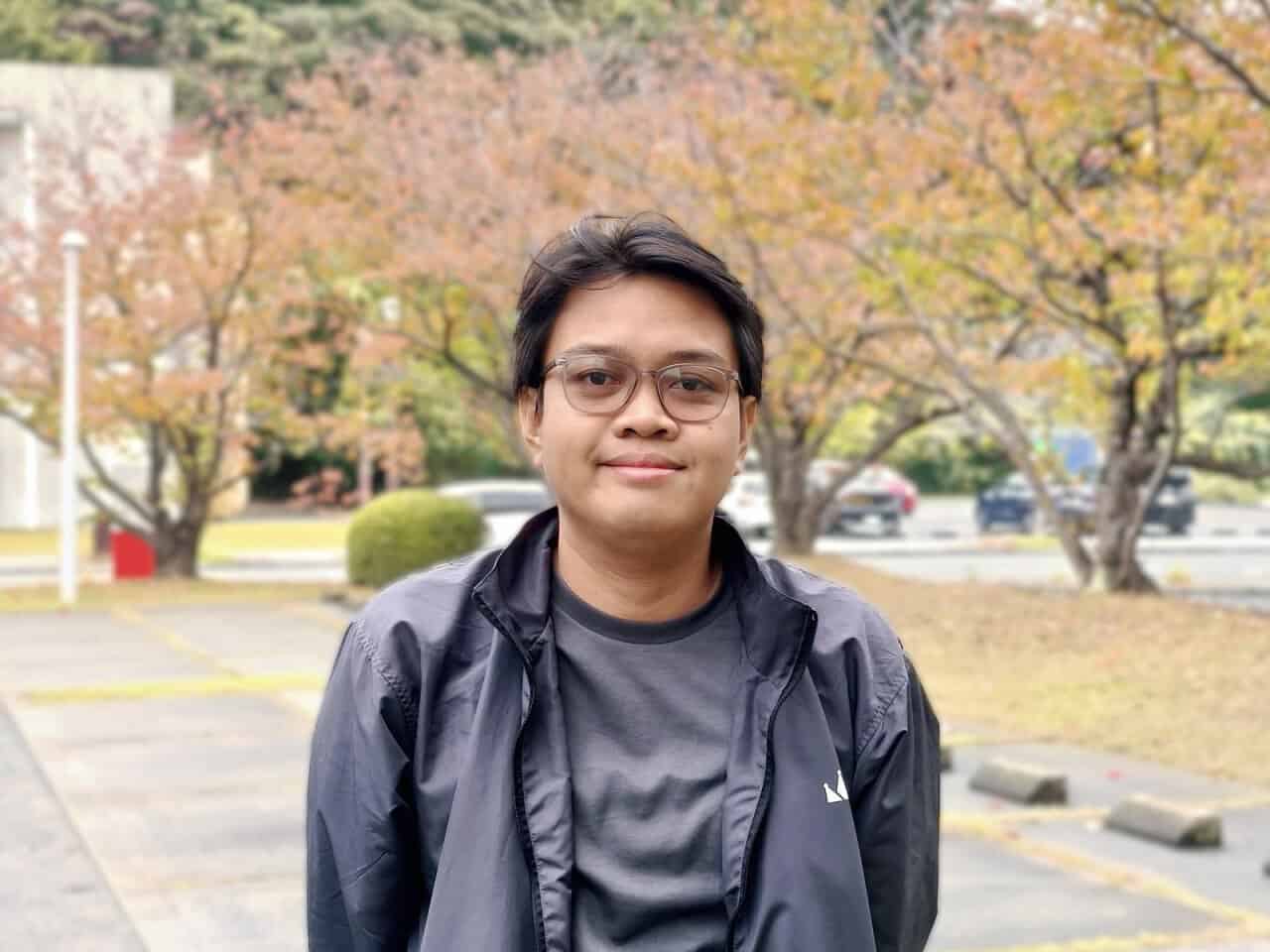
The Journey
My name is Marhan Ebit Saputra, and I come from Tempilang, Bangka Belitung, an island province in Indonesia known for its abundant natural resources. Growing up in this region sparked my interest in exploring how science and technology could help unlock the potential of natural resources and contribute to sustainable development.
I hold a Bachelor’s degree in Physics from Universitas Bangka Belitung and a Master’s degree in Physics from Universitas Gadjah Mada. Throughout my academic journey, I have developed a strong interest in Materials Physics, particularly nanomaterials, magnetic materials, and their applications in biomedical and sustainable technologies.
My research experience during my undergraduate and master’s studies motivated me to pursue education at the doctoral level. I’m currently pursuing a PhD at the Graduate School of Life Science and Systems Engineering, Kyushu Institute of Technology (Kyutech), Japan, under the Japanese Government (MEXT) Scholarship. My current research focuses on developing Fe3O4-based magnetic materials for biomedical applications, particularly magnetic hyperthermia as a potential approach to cancer treatment. Through my academic journey, I hope to contribute to scientific advancement and encourage the development of research and technology, particularly in Indonesia, by connecting scientific knowledge with the potential of its natural resources.
MEXT Scholarship Details
I was awarded the Japanese Government (MEXT) Scholarship through the Doctoral Course application under the DAMD Program at Kyushu Institute of Technology (Kyutech), Japan. I am currently pursuing my PhD at the Graduate School of Life Science and Systems Engineering (LSSE), Kyutech.
The MEXT Scholarship is a fully funded scholarship provided by the Japanese Ministry of Education, Culture, Sports, Science and Technology (MEXT). It covers the major expenses associated with studying in Japan, including:
- Monthly stipend: JPY 145,000 per month (doctoral student allowance).
- Tuition fees: Full exemption from tuition fees.
- Admission and entrance examination fees: Exemption according to the applicable scholarship arrangements.
- Round-trip airfare: Economy-class international airfare between Indonesia and Japan, subject to MEXT regulations.
This scholarship allows me to focus on my doctoral research without having to worry about the major financial expenses of studying abroad.
Educational Background
I hold a Bachelor's degree in Physics from Universitas Bangka Belitung (2017–2021), Indonesia, with a GPA of 3.68/4.00. I specialized in Materials Physics. During my undergraduate studies, I developed an interest in nanomaterials, green synthesis, and the utilization of natural resources and waste materials for functional applications. I was also actively involved in student research projects and scientific activities, which introduced me to experimental research, material characterization, and scientific writing.
I continued my studies at the master's level in Physics at Universitas Gadjah Mada (2022–2024), specializing in Materials Physics. I graduated with cum laude honors, achieving a GPA of 3.82/4.00. My master's research focused on developing Fe3O4-based magnetic nanocomposites with mesoporous silica using Moringa oleifera leaf extract for magnetic hyperthermia applications. Through this research, I gained practical experience in material synthesis and characterization techniques, including XRD, FTIR, TEM, SEM-EDX, VSM, and UV-Vis spectroscopy. I also had opportunities to present my research at international conferences and publish scientific papers in peer-reviewed international journals, including a Q1-ranked journal.
These academic experiences provided me with a strong foundation in materials science, nanotechnology, and magnetic materials. More importantly, they helped me develop critical thinking, experimental skills, and the ability to identify research problems and propose scientific solutions. This background prepared me to pursue doctoral research at Kyushu Institute of Technology, where I aim to further explore magnetic nanomaterials and their biomedical applications, particularly magnetic hyperthermia for cancer treatment.
How Did You Prepare to Apply to Kyushu Institute of Technology?
My application journey was slightly different from the conventional scholarship application process. I first learned about the opportunity through an academic connection between a professor at Kyushu Institute of Technology (Kyutech), Japan, and my master's thesis supervisor at Universitas Gadjah Mada. The professor from Japan shared information about an opportunity for Indonesian students to pursue doctoral studies at Kyutech through the Japanese Government (MEXT) Scholarship under the DAMD Program. My master's supervisor then informed me about this opportunity, which matched my academic background and research interests.
After learning about the opportunity, I communicated with the relevant professors and received further information about the program, admission requirements, and application procedures. My preparation mainly involved reviewing the research direction, preparing the required academic documents, and ensuring that my research interests aligned with the research environment at Kyutech.
Since this was a university-recommended MEXT application (MEXT U to U), the application process was coordinated through the university rather than following the regular Embassy Recommendation route. I prepared the required documents, including my academic transcripts, CV, research plan, recommendation letters, and other supporting documents, following the instructions provided by the university.
How Did You Find Information About MEXT Scholarship and Kyushu Institute of Technology?
I initially received information about the scholarship through my master's thesis supervisor, who was contacted by a professor from Kyushu Institute of Technology regarding an available doctoral study opportunity under the MEXT Scholarship's DAMD Program.
In addition to this academic connection, I also referred to the official Kyutech website to obtain further information about the university, graduate school, scholarship program, eligibility criteria, and application procedures.
I believe that academic networking can be a valuable way to discover opportunities that may not always be widely advertised. Maintaining good relationships with supervisors, lecturers, and researchers can sometimes open doors to international academic opportunities.
Did You Take Any Standardized Tests? If So, How Did You Prepare for Them?
For my application, standardized tests such as the SAT, ACT, GRE, and GMAT were not required. However, I did need to provide proof of English proficiency.
Initially, I prepared my TOEFL ITP certificate. However, during the application process, the university requested an English proficiency certificate that assessed all four language skills: listening, reading, writing, and speaking. Since the application deadline was approaching, I decided to take the EF SET English Certificate as an alternative.
Based on this experience, I would encourage prospective applicants to check the English proficiency requirements of their target universities as early as possible. Although TOEFL ITP can be useful for assessing English proficiency, it does not include a speaking component. Therefore, applicants may need to provide another certificate that covers all four skills. Common options include IELTS, TOEFL iBT, and Duolingo English Test (DET), depending on the university's acceptance policy.
For preparation, I recommend practicing all four skills consistently. Reading international research papers, listening to English podcasts or academic lectures, practicing conversations, and writing regularly can help develop the English skills needed for graduate studies.
How Did You Prepare to Apply for the MEXT Scholarship?
My preparation for the MEXT Scholarship application focused on three main aspects: academic background, research experience, and application requirements.
Since I learned about the opportunity through an academic connection between a professor at Kyushu Institute of Technology and my master's thesis supervisor, I first focused on understanding the DAMD Program and its research opportunities. I then worked on aligning my previous research experience with the potential doctoral research direction at Kyutech.
I prepared the required application documents, including my academic transcripts, CV, research plan, recommendation letters, and other supporting documents. I also reviewed my previous research achievements, publications, and academic experiences to ensure that my application clearly demonstrated my readiness for doctoral studies.
One of the most important parts of my preparation was developing a research plan that connected my master's research on Fe3O4-based magnetic nanomaterials with my future research interests in biomedical applications, particularly magnetic hyperthermia.
I also paid attention to the administrative requirements and communication with the university throughout the application process. Since this was a University Recommendation (U-to-U) application, following the university's instructions and deadlines was particularly important.
How Is Your Experience at Kyushu Institute of Technology?
As I have recently started my doctoral journey at Kyushu Institute of Technology, my experience is still in its early stages. So far, it has been an exciting opportunity to experience a new academic environment and adapt to a different research culture.
One of the things I look forward to most is the opportunity to develop my research skills, interact with researchers from different backgrounds, and explore interdisciplinary approaches to scientific problems.
Moving to Japan has also been a learning experience beyond academics. Adapting to a new culture, environment, and language has encouraged me to become more independent and open to new perspectives. I see this PhD journey not only as an opportunity to advance my academic career but also as a valuable experience for personal and professional development.
How Do You Rate Kyushu Institute of Technology Academically?
I consider Kyushu Institute of Technology a very promising institution for pursuing doctoral studies, particularly for students interested in science, engineering, and interdisciplinary research.
One of the main reasons I chose Kyutech was the opportunity to conduct research in an environment that connects fundamental scientific knowledge with practical applications. Its research-oriented academic environment is particularly relevant to my interests in materials science and biomedical applications.
I also believe that the quality of doctoral education is not determined solely by a university's overall ranking or reputation. The research group, supervisor's expertise, laboratory facilities, and opportunities for academic collaboration are equally important factors. For me, finding a research environment that aligns with my academic background and long-term goals was one of the most important considerations when choosing Kyutech.
How Does Kyushu Institute of Technology Support International Students?
As an international student, I consider institutional support an important part of adapting to a new academic environment. Kyutech provides information and administrative guidance for international students regarding university procedures, enrollment, and student life in Japan. These resources are helpful, particularly for students who are experiencing the Japanese academic system for the first time.
I also appreciate the opportunity to become part of an international academic environment where students and researchers from different countries can interact and exchange ideas. For me, support from the university, academic supervisors, and fellow students plays an important role in helping international students adjust to both academic responsibilities and everyday life in Japan.
What Is the Language of Instruction?
The language used in doctoral studies at Kyutech depends on the specific courses, research activities, and academic requirements. English plays an important role in my doctoral studies, particularly in research discussions, reading scientific publications, writing academic papers, and communicating with international researchers.
However, Japanese is also important for daily communication and interaction within the university and local community. I believe that learning Japanese is beneficial even when students can pursue their academic activities in English.
What Did You Pursue After the MEXT Scholarship?
I am currently pursuing my doctoral degree at Kyushu Institute of Technology under the Japanese Government (MEXT) Scholarship. My main research interest is the development of Fe3O4-based magnetic materials for biomedical applications, particularly magnetic hyperthermia as a potential approach to cancer treatment.
During my PhD, I aim to develop my expertise in advanced material synthesis, characterization, and biomedical applications. I also hope to contribute to scientific knowledge through international publications and research collaborations.
In the long term, I aspire to pursue a career in academia and research, where I can contribute to scientific advancement through research, teaching, and mentoring. I also hope to bring back the knowledge and international research experience I gain in Japan to support the development of research and higher education in Indonesia.
Would Potential Students Have Any Problems Not Knowing Japanese?
I would say that not knowing Japanese does not necessarily prevent international students from pursuing doctoral studies in Japan, especially in research-oriented programs where English is used for academic communication. However, students should understand that living and studying in Japan involves more than academic activities. Japanese is useful when communicating with local people, handling administrative matters, participating in university activities, and building relationships outside the laboratory.
My recommendation is to start learning Japanese before arriving in Japan. Even basic knowledge of hiragana, katakana, and everyday expressions can make the transition much easier. I am also learning Japanese myself, starting with basic writing systems and everyday conversations. I believe that making an effort to learn the local language is a good way to adapt to a new culture and become more connected to the surrounding community.
What Do You Think Made Your Application Stand Out?
I believe several aspects of my academic journey contributed to strengthening my application.
- First, my consistent academic and research background. My undergraduate and master's studies were both in Physics, with a specialization in Materials Physics. This provided a clear academic foundation for pursuing doctoral research in magnetic materials.
- Second, my research experience and scientific publications. During my master's studies, I actively conducted research on Fe3O4-based magnetic nanocomposites and their potential applications in magnetic hyperthermia. I also had opportunities to present my research at international conferences and publish scientific papers in peer-reviewed international journals, including a Q1-ranked journal.
- Third, the alignment between my previous research and the prospective doctoral research environment. My previous experience with magnetic nanomaterials provided a strong starting point for developing further research directions at Kyutech.
- Finally, I believe academic networking and communication played an important role. The opportunity initially came through an academic connection between my master's supervisor and a professor at Kyutech. This experience showed me how maintaining good academic relationships can open opportunities for international education and research collaboration. Overall, I believe that a combination of academic consistency, research experience, publications, and research alignment helped strengthen my application.
What Would You Have Done Differently If You Were Going Through the Process Again?
If I could go through the application process again, I would prepare several things earlier. First, I would start preparing my English proficiency certificate well in advance. During my application, I initially prepared a TOEFL ITP certificate, but the university required evidence of all four English skills: listening, reading, writing, and speaking. Since the deadline was approaching, I had to take the EF SET English Certificate as an alternative. This experience taught me the importance of checking language requirements carefully from the beginning.
Second, I would spend more time developing and refining my research proposal. Although my previous research experience provided a strong foundation, preparing a doctoral research plan requires a deeper understanding of the research gap, potential methodologies, and the long-term direction of the project.
Third, I would start learning Japanese earlier. Although English is important for academic communication, having basic Japanese language skills before arriving would make cultural and social adaptation easier. Most importantly, I would continue building my academic profile through consistent research activities, scientific publications, and international collaboration.
What Advice Would You Give Those Looking to Apply for a Similar Scholarship?
My biggest advice is to start preparing early, build a strong academic profile, and actively seek opportunities through academic networks. Based on my experience, I would like to share several suggestions for prospective applicants:
- Build a consistent academic and research background.Maintain good academic performance and actively participate in research projects, conferences, and scientific publications. Try to develop a clear research interest that connects your previous academic experience with your future goals.
- Explore opportunities beyond the conventional application route.Do not rely solely on scholarship announcements or embassy-based applications. For MEXT, consider exploring both Embassy Recommendation and University Recommendation (U-to-U) opportunities.
Contacting potential supervisors and maintaining academic relationships can sometimes open doors to opportunities that you might not find through regular scholarship searches.
- Find the right university and supervisor.Do not choose a university based only on its ranking or reputation. Explore the research interests of professors, read their publications, and identify laboratories that align with your academic background and research goals.
- Prepare a well-structured research proposal.For postgraduate and doctoral applications, your research proposal is particularly important. Make sure you understand the research problem, identify a potential research gap, and propose realistic approaches to address it.
- Check all application requirements carefully.Pay close attention to academic documents, recommendation letters, deadlines, and English proficiency requirements. In my case, I initially prepared a TOEFL ITP certificate but later had to obtain an alternative certificate covering all four English skills. Preparing these requirements earlier would have made the process much smoother.
- Develop your communication skills.Learn how to write professional emails to professors, explain your research interests, and communicate your academic goals clearly. Good academic communication can make a difference when approaching potential supervisors.
Finally, I want to encourage students, especially those coming from regions with limited research opportunities, not to underestimate their potential. My journey started in Tempilang, Bangka Belitung, and I never imagined that opportunities such as MEXT would take me this far. Remember that scholarship applications are not just about having the highest GPA or the longest list of achievements. They are also about demonstrating your academic potential, research motivation, and clear vision for the future. Do not be afraid to start small, explore opportunities, and take your chances. Sometimes, one opportunity can open the door to another.
Want to submit your
scholarship journey?
Submit Your Story Here!
More Scholarship Recipients
My name is Toheeb Lekan Jolaosho, and I am from Lagos, Nigeria. I am a marine ecologist and interdisciplinary researcher wor .... Read more
- Australia
- Austria
- Canada
- Emory University
- Environmental Science
- Erasmus Mundus Scholarship
- Fully Funded Scholarships
- Marine Science
- Master's Scholarships
- McGill University
- Netherlands
- Nigerian Nationality
- Nord University
- Norway
- Ph.D. Scholarships
- Spain
- United States
- Universidad de Las Palmas de Gran Canaria
- University of Alabama
- University of Groningen
- University of Melbourne
- University of Notre Dame
- University of Vienna
My name is Madison Fitzpatrick, and I am from the Bay Area, California. I studied International Security and Conflict Resolu .... Read more
My name is Dr Simon Okomo Aloo. I am a Kenyan interdisciplinary food and biomedical scientist working at the intersection of .... Read more
- Australia
- Australian Government Research Training Program (RTP) Scholarship
- Biology
- Brain Korea 21 (BK21) Fellowship
- Food Science
- Fully Funded Scholarships
- Global Korea Scholarship
- Kangwon National University
- Kenyan Nationality
- Master's Scholarships
- Monash Graduate Scholarship
- Monash University
- Ph.D. Scholarships
- South Korea
- University of Wollongong
Leave A Comment