
University of Edinburgh Scholarships for International Students 2027
University of Edinburgh offers access to scholarships that can reduce tuition burden and sometimes support additional costs. Below are top options prioritized by funding level.
When reviewing university scholarships connected to University of Edinburgh, these are often the first awards worth checking due to the typical scale of support. Edinburgh Doctoral College Scholarships is commonly categorized as fully funded support, and coverage that often includes 100% of tuition fees and a living stipend of £18,622. With College Research Awards, students may receive fully funded support, and coverage frequently includes living stipend and 100% of tuition fees. School of History, Classics and Archaeology Masters Scholarships is a partially funded award, and the listed benefits often include 100% of tuition fees at the home rate. Dean’s Excellence Scholarship Programme is usually considered partially funded, and typical coverage can include awards of £7,500 and £10,000.
If you are building a wider scholarship strategy for University of Edinburgh, external and government programs can be important additions. Here are a few to consider. Commonwealth Shared Scholarships is usually considered fully funded, and typical coverage can include full tuition fees, thesis grant, and living allowance of up to £1,652 per month. A strong option is Erasmus Mundus Joint Master’s Scholarships which is fully funded and often covers tuition fees, living allowance, and visa fees. Marie Skłodowska-Curie Actions is fully funded, and coverage often includes living stipend, mobility allowance, and special needs, leave, and and/or family allowance (if applicable).
For more opportunities beyond these highlights, explore the scholarship listings below on this page.
University of Edinburgh Scholarships for International Students
The scholarships at University of Edinburgh can help fund your study expenses. There are currently 22 scholarships being offered to international students at the University of Edinburgh, all with varying requirements, benefits, and application processes. We have compiled them in this list to help you find the scholarship that best fits you.
Undergraduate Scholarships
Graduate Scholarships
External Scholarships
There are many degrees that are open to international students right now — find yours.
University of Edinburgh Admissions
Here are the official admission pages for University of Edinburgh:
| Degree | Admissions Pages |
|---|---|
| Bachelor's | International Students Admissions Page |
| Master's | International Students Admissions Page |
Admissions and Scholarship Results at University of Edinburgh
Here are some of the admissions and scholarship results from previous applicants to University of Edinburgh, which you might find helpful. For more results to University of Edinburgh, please see the University of Edinburgh Admissions Profile Page .
| Nationality / Region | SAT/ACT | EFC | GPA | Scholarship | Status |
|---|---|---|---|---|---|
| Singapore | 1480 | N/A | N/A | N/A | Accepted |
| Czech Republic | N/A | N/A | 3.7 | N/A | Accepted |
| Azerbaijan | 1470 | N/A | N/A | N/A | Rejected |
| Australia | 1500 | N/A | 3.8 | N/A | Accepted |
| USA | 1560 | N/A | 4 | N/A | Accepted |
University of Edinburgh Application Deadlines
| Degree | Admission Deadline |
|---|---|
| Bachelor's | January 13, 2027 |
| Master's | August 31, 2026 Different Master's programs have different deadlines |
Tuition Fees at University of Edinburgh for International Students
Indicative annual tuition fee ranges for international students at University of Edinburgh. Exact fees vary by program, so always confirm the current cost on the university's official tuition fee pages.
| Degree Level | Typical Annual Range |
|---|---|
| Bachelor's Tuition | 23,100 – 32,100 GBP |
| Master's Tuition | 23,100 – 30,400 GBP |
Please note that tuition fees can vary based on the specific program you choose. For the most accurate and current fee information, consult the official tuition fee pages linked above.
University of Edinburgh Scholarship Recipients
International students who received scholarships to study at University of Edinburgh, documented by Global Scholarships.







What Scholarship Recipients Say
Advice and insights from international students who successfully secured funding to study at University of Edinburgh.
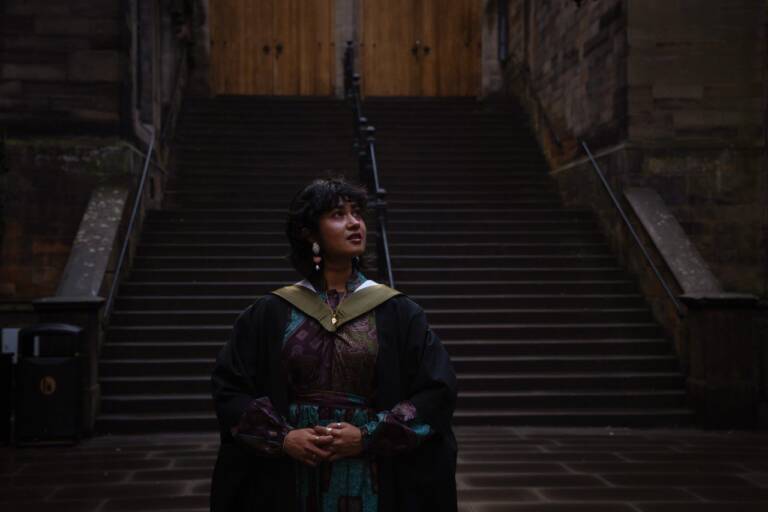
"I was awarded the Mastercard Foundation Scholars Program Scholarship to pursue an MSc in Food Security at the University of Edinburgh. This prestigious and highly competitive scholarship is fully funded, covering tuition, accommodation, books, and other academic materials. It also provides comprehensive support, including round-trip airfare, visa fees, a monthly stipend for living expenses, and access to academic and social support services such as mentoring and career counseling. In my case, the scholarship was valued at approximately £60,000, encompassing all associated costs for my Master's degree at the University of Edinburgh."
"For anyone planning to apply for the Mastercard Foundation Scholarship at the University of Edinburgh, I highly recommend keeping an eye out for the application call and starting your application early. When applying, be sure to highlight your unique story, your commitment to community impact, your leadership journey, and your motivations, explaining how these align with the program you’re applying to. Don’t hesitate to reach out to past scholars for support and guidance throughout the process."
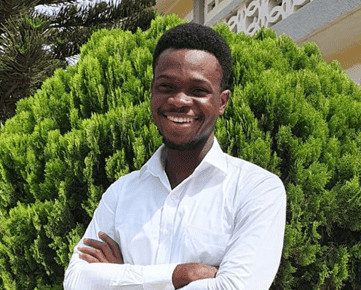
"Hi. My name is Enogba Ende, a Mastercard Foundation Scholar from Nigeria, currently pursuing an MSc in Climate Change Finance and Investment at the University of Edinburgh. With a bachelor's degree in accounting, I worked as a Finance Officer for a nonprofit organisation focused on sustainable development goals (SDGs), specifically SDG 13, which addresses climate action and building environmental resilience. This experience served as a learning curve and sparked my interest in climate finance."
"The comprehensive support extends far beyond financial aid, encompassing full tuition, visa expenses, travel, accommodation, and even providing essential tools like a MacBook, ensuring every resource for success is within reach. Crucially, the program offers invaluable mentorship, personalized development support, and access to a dynamic global network of scholars from diverse backgrounds. This incredible opportunity is not merely advancing my academic aspirations; it is empowering me with the vital resources, insightful guidance, and powerful connections necessary to forge a truly lasting impact in my world."
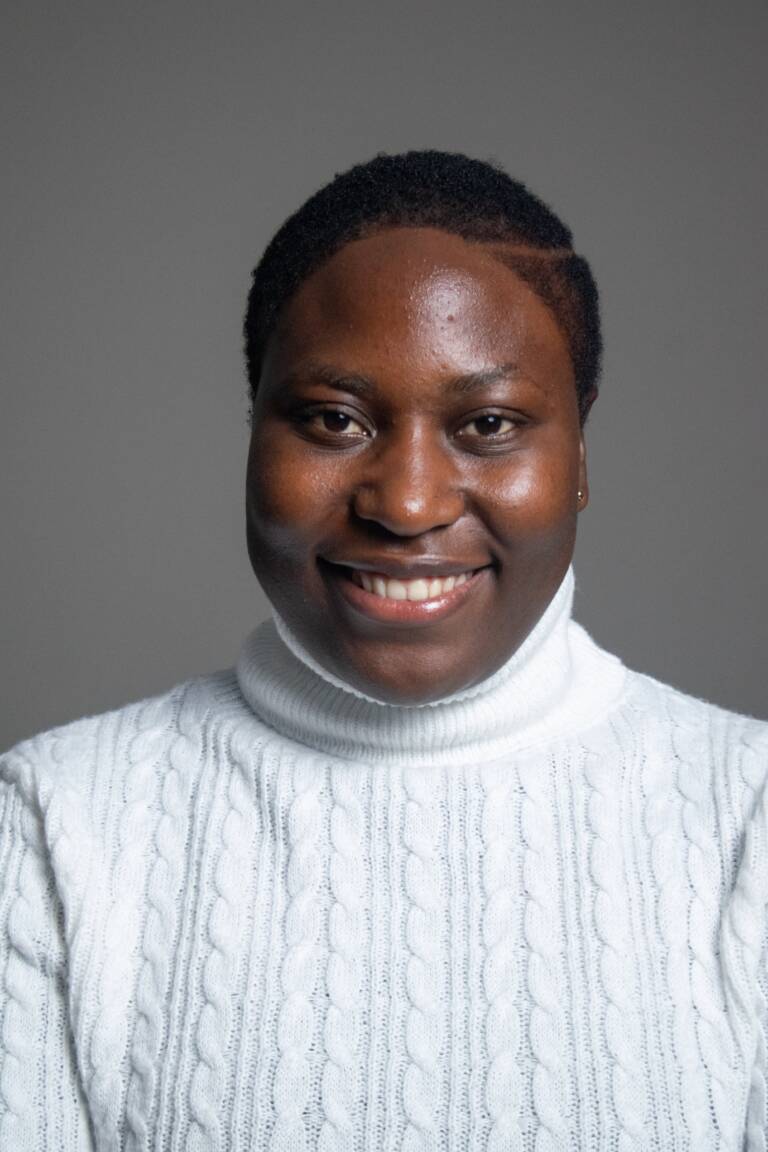
"The University of Edinburgh’s online program offered the flexibility to pursue advanced studies without compromising my responsibilities as a mother to my five-year-old daughter. The program structure has enabled me to remain actively present in my child's life while pursuing my academic and professional dreams."
"I began by researching UK universities through Chevening’s guidelines and by speaking to alumni on LinkedIn. I looked at program modules, global rankings, and institutional support for African students."
Frequently asked questions
Common questions about scholarships, admissions, and studying at University of Edinburgh.
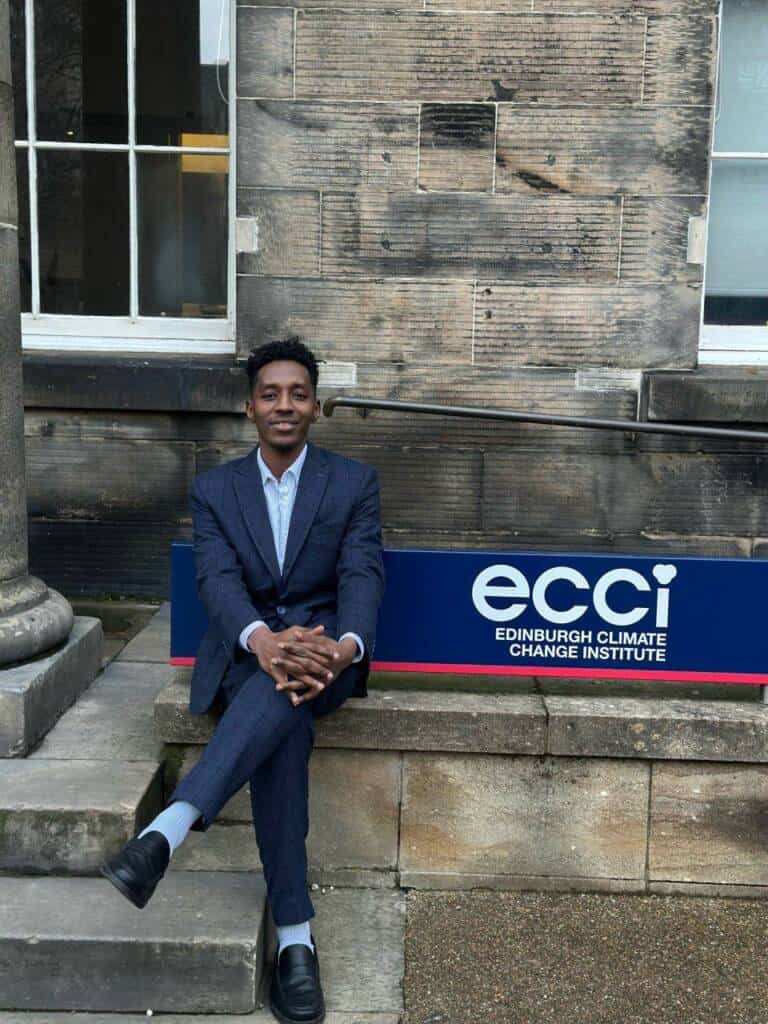
Yes. Edinburgh has funding options specifically for online/distance programmes, and recipients on Global Scholarships have won fully funded online awards. For example, Dickstein Mukaria studied “MSc Carbon Management (Online)” and described receiving “a fully funded online scholarship” through the Mastercard Foundation Scholars Program. Euphrasia Atieno also highlighted the lifestyle benefit of online study, saying the online programme “offered the flexibility” to keep up with family responsibilities.
Edinburgh scholarships span a wide range of subjects, including STEM, humanities, social sciences, business, and (at postgraduate level) medicine/health-related programmes, depending on the specific award and degree.
- STEM & environment: Enogba Ende (MSc Climate Change Finance and Investment) and Dickstein Mukaria (MSc Carbon Management Online) are examples of climate-focused funding paths.
- Agriculture/food systems: Kengran Liza Vernyuy (MSc Food Security) and Nyingilayefa Gift Ernest (Master’s in Food Security) show scholarship outcomes in food/agriculture policy and resilience.
- Humanities & social sciences: Euphrasia Atieno (MSc International Development) and Tyrell Naidoo (MSc Africa & International Development) are examples in development/social science fields.
- Business: Some scholarships are open across “all full-time postgraduate taught master’s programmes” (including business fields), and certain Business degrees also carry higher English test thresholds (see language FAQ below).
- Engineering: Edinburgh advertises engineering-specific Masters scholarships (availability and eligibility depend on the school/programme).
- Medicine/health: International students can apply for Medicine (MBChB), but it is a “controlled subject” with a strict cap; for 2025 entry, Edinburgh listed 21 places for EU/Overseas (International) fee status. Postgraduate/online health programmes may also advertise their own scholarships (e.g., Internal Medicine online).
It depends on the scholarship. Some are open to many (or all) nationalities, while others are restricted by region/country.
- Africa-focused funding: In Global Scholarships recipient stories, multiple Mastercard Foundation Scholars at Edinburgh are from African countries—e.g., Enogba Ende (Nigeria), Nyingilayefa Gift Ernest (Nigeria), Dickstein Mukaria (Kenya), Euphrasia Atieno (Kenya), and Kengran Liza Vernyuy (Cameroon).
- Country-specific examples: The British Council lists University of Edinburgh GREAT Scholarships (2026–27) for students from Ghana, Mexico, and Thailand.
If you’re browsing options, start by checking whether a scholarship is (1) open worldwide, (2) restricted to certain regions/countries, or (3) tied to a specific school/degree.
Often, yes, especially if English is not your first language and you don’t meet an exemption route. Edinburgh Medical School is explicit for Medicine applicants: “All students whose first language is not English will have to provide proof of English language proficiency.”
Requirements vary by programme, but Edinburgh (for many CAHSS programmes) lists common accepted tests such as IELTS and TOEFL (e.g., IELTS overall 6.5 with minimum component scores; and higher thresholds for some degrees like Business). In recipient stories, Euphrasia Atieno lists IELTS, and Kengran Liza Vernyuy shared, “My preparation for the TOEFL was self-guided,” describing how she built her plan using free resources.
Yes, minimum academic entry requirements exist, but they are programme-specific (and can differ by country/qualification type). For highly competitive programmes like Medicine (MBChB), Edinburgh stresses you “must meet the standard entry requirements,” and notes how competitive it is (for 2025 entry, it reported 21 Overseas/International/EU places).
For scholarships and competitive programmes, strong grades help. In Global Scholarships recipient examples at Edinburgh, Nyingilayefa Gift Ernest reported a BSc GPA of 4.23/5.00, Enogba Ende reported a CGPA of 4.15/5.00, and Kengran Liza Vernyuy reported a GPA of 3.43/4, illustrating the kind of academic strength commonly seen in fully funded outcomes.
“Minimum eligibility” depends on the scholarship, but common patterns include: meeting the degree entry requirements, fitting the scholarship’s target group (country/region, fee status, etc.), and demonstrating strong academic merit plus a compelling story and goals.
Recipient advice repeatedly emphasizes authenticity and clarity of purpose. Enogba Ende advises applicants to “Be authentic. Own your story,” and Tyrell Naidoo echoes this with “Tell your story,” not what you think a committee wants. Nyingilayefa Gift Ernest also frames it simply: “Your story is your strength.”
Practically, a “good background” usually means: strong grades in a relevant prior degree (or equivalent), evidence of impact/leadership (work, research, community work), and a focused study plan that matches the scholarship’s mission (e.g., development, climate, equity, etc.).
Document checklists vary by degree and scholarship, but you can usually expect: academic transcripts (and degree certificates if already graduated), CV/resume, personal statement/statement of purpose, references/recommendation letters, proof of English (IELTS/TOEFL or approved alternative), and passport/ID.
Recipients consistently mention the essay and references combo. Nyingilayefa Gift Ernest recommends applicants “refine your essays,” and Tyrell Naidoo shared that having “multiple people review my essays” helped. Kengran Liza Vernyuy described building a timeline for “gathering recommendation letters” and preparing essays, while Enogba Ende highlights the basics: “get your relevant academic documents intact!”
Sometimes. It depends on the level and programme.
- Undergraduate: If you apply via UCAS, UCAS charges an application fee
- Postgraduate: Some programmes charge an application fee. For example, the University of Edinburgh Business School lists a non-refundable £60 application fee for certain MSc applications (e.g., MSc Management), payable after you submit your application and receive your university username details.
There are many degrees that are open to international students right now — find yours.
About the Author: Hyun Lee


My name is James Ansah from Ghana and I have higher national Diploma in electrical engineering. Please I want to ask if you can offer me masters in electrical engineering with full scholarships
Hello, according to our University of Edinburgh scholarships page, they do not offer any fully funded Master’s. Also, we are not University of Edinburgh, and so, we can’t offer you admission. The institution itself offers admission. If you are interested, you can search our Master’s Scholarships Database for fully funded scholarships that fits your criteria.
Hello, I am going for MIM at the University of Edinburgh for the September 2024 intake.
So what all the scholarships are for me?
Hello, if you’ve already received an offer and didn’t get any scholarships, then I think it’s too late now