
How Kuan Yun Leng, a Malaysian Scholar, Secured a Fully Funded Master’s in Advanced Construction Technologies & BIM at the University of Strathclyde, United Kingdom Through the British Council Women in STEM Scholarship
| University | University of Strathclyde, Glasgow, United Kingdom |
| Degree | MSc in Advanced Construction Technologies & BIM |
| Previous Education | BSc (Hons) in Architecture, Taylor’s University, Malaysia |
| Scholarship | British Council Women in STEM Scholarship – Fully Funded |
| Other Scholarship Experience | Taylor’s Merit Scholarship; multiple international university scholarship offers; Chevening and Fulbright – Interview Stage |
| Social Media | LinkedIn: https://www.linkedin.com/in/ky-leng
If you are considering applying for the scholarship or studying in the UK and have questions about my experience, feel free to connect with me on LinkedIn. |
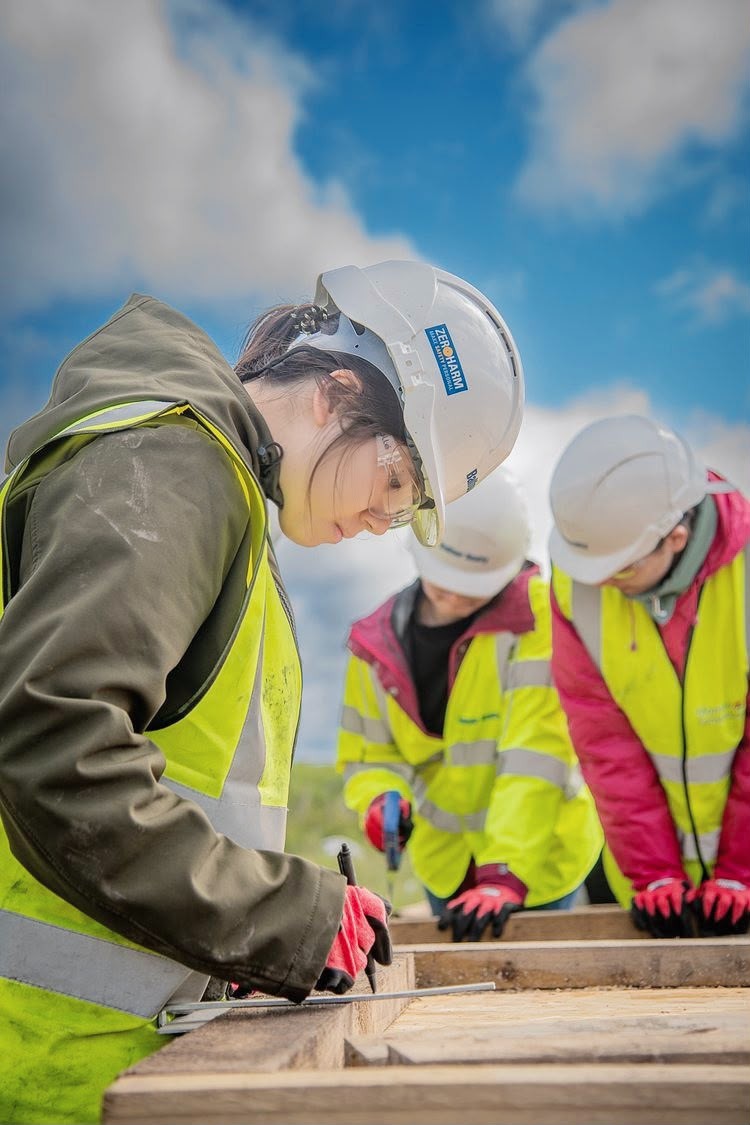
The Journey
My name is Kuan Yun Leng, and I am from Malaysia. I completed my BSc (Hons) in Architecture at Taylor’s University before pursuing the MSc in Advanced Construction Technologies & BIM at the University of Strathclyde.
My decision to pursue postgraduate study grew from professional practice. Working with BIM and multidisciplinary coordination showed me that architecture depends on more than design; it also relies on information management, construction processes, and collaboration. I wanted to understand how digital technologies and advanced construction methods could support more sustainable project delivery, making Strathclyde’s MSc a logical next step.
British Council Women in STEM Scholarship Details
I was selected for the British Council Women in STEM Scholarship for the 2023–2024 academic year to pursue my MSc at the University of Strathclyde.
The scholarship was fully funded. As the package can vary by participating university, location, and cohort, applicants should check the terms for their specific programme. In my case, it removed major financial barriers by supporting tuition, living costs, and eligible study-related expenses such as travel and visa-related costs.
Beyond funding, I valued the community and freedom the scholarship provided. It connected me with women in different STEM disciplines and allowed me to focus on academic, professional, and personal development without the same financial pressure of international study.
Were You Offered Any Other Scholarships?
My scholarship journey began before Women in STEM. I received the Taylor’s Merit Scholarship for my undergraduate degree and later received funding offers from the University of Melbourne, University of Dundee, Queen’s University Belfast, Monash University, RMIT University, and Kansas State University. I also reached the interview stage for both Chevening and Fulbright.
These experiences taught me that scholarship applications are often a journey rather than a single successful attempt. Each application helped me become clearer about my goals and better at explaining why the next step mattered.
Educational Background
I completed my BSc (Hons) in Architecture at Taylor’s University in Malaysia, graduating with a Second Class Upper classification.
My architectural education built a foundation in design, technical development, communication, and problem-solving. Outside the classroom, I held a director role in AIESEC, led a small team, built partnerships, and supported community projects. In practice, I also took on BIM and multidisciplinary coordination responsibilities. Together, these experiences showed that I had already started moving toward the direction described in my scholarship application.
How Did You Prepare to Apply to the University of Strathclyde?
How Did You Find Information About Scholarships and Universities?
My search was broad at first. I used scholarship websites and online resources to explore opportunities such as the GREAT Scholarships and Chevening, then narrowed my options based on eligibility, career goals and programme fit. YouTube and previous recipients’ experiences also helped me understand the process and organise my own thinking.
I was already familiar with Strathclyde through its connection with Taylor’s University and friends who had studied there. What ultimately attracted me was the MSc itself: a specialised, multidisciplinary programme that looked beyond BIM software to construction technology, management, engineering, design and project delivery.
Did You Take Any Standardized Tests?
Yes. I took IELTS before applying to university, so I had the required English-language result ready and could keep different options open. I prepared through practice, online resources, and YouTube tutorials, and found active timed speaking and writing far more useful than simply reading tips. Eligible English-language testing costs could be reimbursed where applicable.
How Did You Prepare to Apply for the British Council Women in STEM Scholarship?
The most important part of my preparation was developing a coherent story. Rather than asking only, ‘How can I make myself look impressive?’, I focused on a different set of questions: Where am I now? What do I care about? What have I already done in that direction? Why do I need this degree, this university, and the UK? Where do I want to be in five to ten years, and what impact could this opportunity help me create?
The key was making sure everything connected. In my case, architecture led to professional practice; practice strengthened my interest in BIM and digital construction; that experience exposed gaps in my knowledge; and the MSc was the next step toward my longer-term ambition in sustainable architecture.
How Was Your Experience at the University of Strathclyde?
My experience at Strathclyde was very positive. The MSc combined management, design, engineering, construction technology and finance, while field trips and industry speakers connected classroom learning with real projects. Most importantly, it helped me see BIM not simply as software, but as part of information management, collaboration and project delivery across a building’s lifecycle.
For students considering the same programme, I previously shared a more detailed student story with the University of Strathclyde: Kuan Yun Leng – University of Strathclyde student story
How Do You Rate the University Academically and How Does It Support International Students?
I would rate my academic experience highly because the programme balanced academic learning with industry exposure and encouraged students to understand construction from multiple professional perspectives.
I also found Strathclyde’s support for international students comprehensive. Orientation, counselling, student events, career guidance and wellbeing services made the transition to a new country easier, and I found Glasgow and Scotland very welcoming.
What Did You Pursue After the Scholarship?
After completing my MSc, I continued developing my interests at the intersection of architecture, technology and sustainability. I went on to pursue a Master of Architecture at the University of Waterloo in Canada, where my work increasingly focused on sustainability, life-cycle assessment, embodied carbon and environmental information in early-stage design decisions.
Looking back, the Women in STEM Scholarship was an important turning point. It helped me connect architecture, BIM, digital technologies and sustainability into a clearer professional direction.
What Do You Think Made Your Application Stand Out?
I do not believe a perfect academic record made my application stand out. What mattered more was a clear and convincing ‘why’: why the MSc was necessary, what I planned to do with it, and evidence that I had already started moving in that direction.
I linked my background in architecture, BIM, leadership, community work and professional practice to a concrete future plan in sustainable architecture. For me, the strongest application shows a believable progression:
|
Past → Present → Next Step → Future Impact |
If you say you care deeply about something, show what you have already done about it. The evidence does not need to be extraordinary; it needs to make your goal believable.
What Would You Have Done Differently?
If I were applying again, I would start earlier, apply for more opportunities, and spend less time trying to look like the ‘perfect candidate’. Even unsuccessful applications are useful because they force you to clarify your goals and communicate them better.
What Advice Would You Give Those Looking to Apply for a Similar Scholarship?
My first piece of advice is simple: apply. Do not reject yourself before the selection panel has the opportunity to consider you.
An imperfect academic profile does not automatically make you uncompetitive. Academic ability matters, but scholarships also invest in potential, direction, and future impact.
Be specific about where you want the opportunity to take you. Replace vague statements such as “I want to make an impact” with a concrete plan: the problem you want to address, the work you hope to do, who could benefit, and why this qualification is necessary.
Then support that future plan with evidence from your past. Professional experience, volunteering, research, competitions, leadership, community work, or personal projects can all show that your ambition is genuine.
Finally, think beyond yourself. Many scholars I met wanted to create wider impact in their profession, community, or country. In my own application, I committed to making opportunities like this more visible to other women and girls in STEM, which makes sharing my journey now especially meaningful.
Do not wait until you feel completely ready. There will always be someone with higher grades, more experience, or more awards. Your job is to make the panel understand who you are, what you are trying to achieve, why this opportunity matters now, and what their investment in you could enable next.
Tell them a story, and make sure it is genuinely yours.
Want to submit your
scholarship journey?
Submit Your Story Here!
More Scholarship Recipients
My name is Shah Hussain, and I am from Khyber Pakhtunkhwa, Pakistan. I completed my Bachelor’s in Psychology at the Univer .... Read more
I am June from the Philippines. I am an educator for Social Sciences and Humanities. I recently earned my Master in Southeas .... Read more
Hi, my name is Abdul Hafeez, and I come from a small town called Nasirabad in Sindh, Pakistan. Currently, I am pursuing a ma .... Read more
Leave A Comment