
How Elciline Moreno, a Cabo Verdean Scholar, Secured a Fully Funded Master’s Through the Chevening Scholarship
University: University of Stirling
Degree: Master’s in International Business and Entrepreneurship
Previous Education: Undergraduate degree in Public Relations and Executive Secretarial Studies, University of Cabo Verde (Uni-CV)
Scholarship: Chevening Scholarship – Fully Funded (Tuition Fees, Monthly Living Allowance, Travel, and Other Eligible Allowances)
Social Media
The Journey
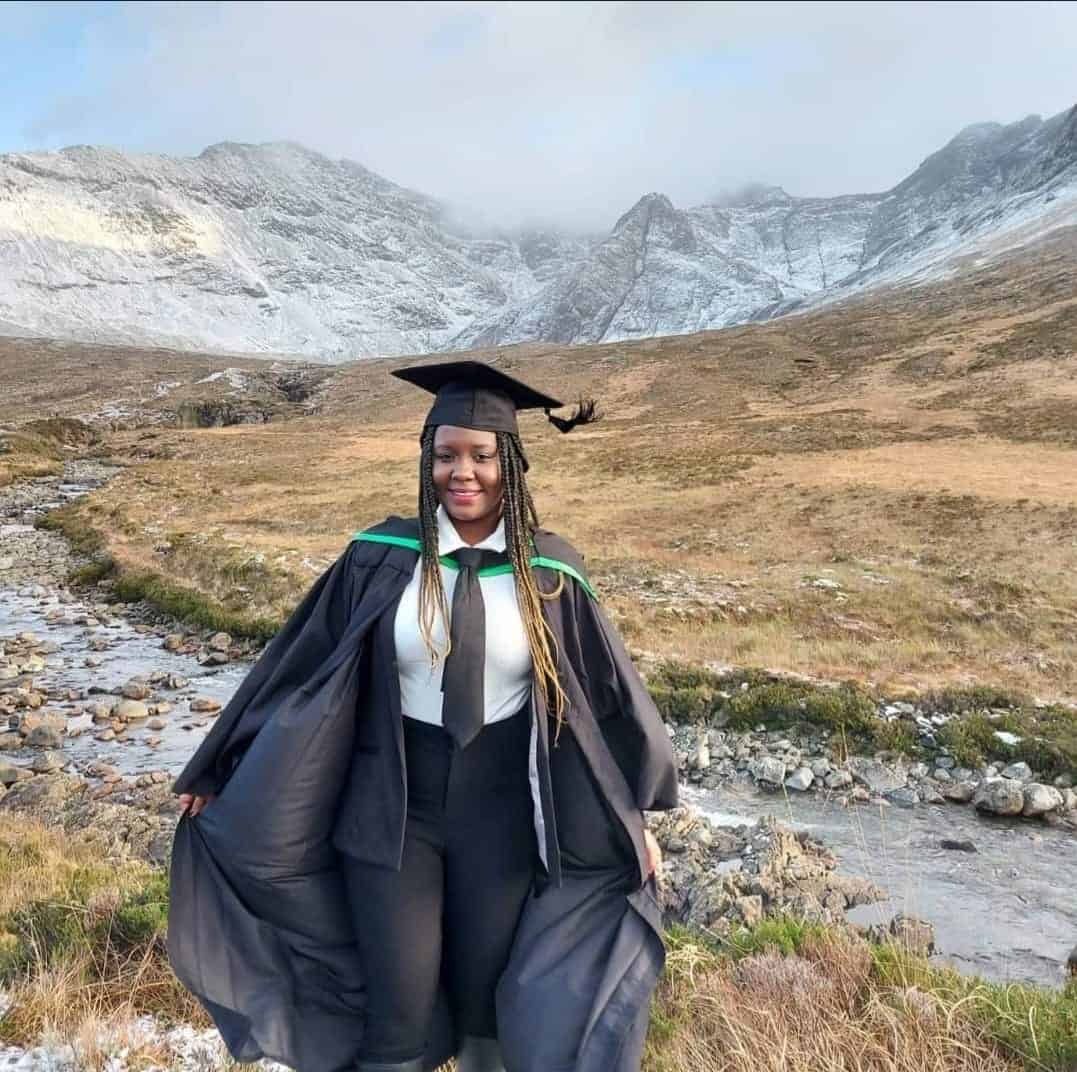
Hi, my name is Elcy (Elciline Moreno), and I am from Praia, the capital of Cabo Verde, an island country in West Africa. Cabo Verde is an archipelago of ten islands, and Praia is located on Santiago, the country's largest island.
I am a mother of a 14-year-old boy, and motherhood has been one of my greatest sources of motivation. It has made me more responsible, determined, and conscious of the future I want to build for myself and my family. Growing up and building a career in a small island country, where resources and opportunities can sometimes be limited, taught me the importance of making the most of every opportunity.
I hold an undergraduate degree in Public Relations and Executive Secretarial Studies from the University of Cabo Verde (Uni-CV), where I graduated with a final grade of 15.53/20. I later pursued a master's degree in International Business and Entrepreneurship at the University of Stirling in Scotland, United Kingdom, through the Chevening Scholarship, graduating with merit.
My decision to pursue further education came from my desire to grow professionally, broaden my understanding of international business, and develop the knowledge and skills to contribute more effectively to my career and my country.
For me, studying abroad was about much more than earning a degree. It was about challenging myself, creating new opportunities, and showing myself and my son that, even when the journey is difficult, persistence can open doors.
Chevening Scholarship Details
I was awarded the Chevening Scholarship to pursue my master's degree in International Business and Entrepreneurship at the University of Stirling during the 2020–2021 academic year.
Chevening is a UK government scholarship programme that supports emerging leaders from around the world to pursue a master's degree in the United Kingdom. It generally covers tuition fees, a monthly living allowance, travel to and from the UK, and other eligible allowances, subject to the scholarship's terms.
My journey to receiving Chevening was not straightforward. I applied twice, and the process taught me a great deal about resilience, self-awareness, and preparation. Receiving the scholarship on my second attempt was particularly meaningful because I knew how much effort I had invested in making it happen.
Were You Offered Any Other Scholarships?
Yes. Before receiving Chevening, I was awarded a national scholarship from the Government of Cabo Verde to support my undergraduate studies at the University of Cabo Verde.
It was called “CONCURSO NACIONAL DE BOLSA DE ESTUDO PARA FORMAÇÃO SUPERIOR NO PAÍS”
Educational Background
I completed my undergraduate degree in Public Relations and Executive Secretarial Studies at the University of Cabo Verde between 2013 and 2017, graduating with a final grade of 15.53/20.
My academic background gave me a strong foundation in communication, organisation, professional relationships, and administrative support. These skills helped me understand how organisations function and how effective communication contributes to achieving common goals.
Alongside my studies, I was actively involved in volunteering through AIESEC Praia, where I served as President of the Local Committee. AIESEC is an international youth-led organisation that promotes leadership development and cross-cultural experiences.
My involvement in AIESEC gave me opportunities to take responsibility, coordinate activities, work with different people, and contribute to my community. These experiences helped me develop my leadership skills and understand the importance of collaboration.
Although my undergraduate degree was not specifically in business, I wanted to build on my existing knowledge and gain a broader understanding of business strategy, entrepreneurship, and international markets. This motivated me to pursue a master's degree in International Business and Entrepreneurship, which I completed with merit at the University of Stirling.
How Did You Prepare to Apply to the University of Stirling?
I started by researching programmes that aligned with my long-term career goals. I wanted to understand not only which universities offered a relevant degree but also how their courses would help me achieve what I wanted professionally.
I researched universities, compared programmes, and examined course content to understand which options best matched my interests in international business and entrepreneurship.
The University of Stirling stood out because its programme aligned with the knowledge and skills I wanted to develop. I approached the process by thinking carefully about why I wanted to study that particular subject, why I wanted to study in the UK, and how the experience would contribute to my future goals. I chose 3 universities with similar programmes; that is also what I think solidifies what you want to do, rather than choosing 3 different programmes.
I believe this alignment is important. Choosing a university should not be only about its reputation or the opportunity to study abroad. You should be able to explain why that programme makes sense for your personal and professional journey.
How Did You Find Information About Chevening Scholarship and University of Stirling?
I first learned about Chevening through a video featuring a Cabo Verdean Chevening alumnus. Seeing someone from my own country who had received the scholarship made the opportunity feel more tangible and encouraged me to investigate further.
After that, I conducted extensive research to understand the scholarship's requirements, selection criteria, application process, and expectations.
I researched the universities and courses that interested me, paying particular attention to how they aligned with my long-term career plans.
That initial video was an important starting point, but it was the research that followed that helped me understand the opportunity and prepare a stronger application.
Did You Take Any Standardized Tests? If So, How Did You Prepare for Them?
Yes. I initially took the TOEFL English-language proficiency test, but my score was not as high as I had hoped.
Rather than allowing that to stop me, I explored the alternatives accepted by my chosen university. Since the University of Stirling accepted the Duolingo English Test for admission at the time, I decided to take the Duolingo English Test at home, using its online test format.
My result met the university's English-language admission requirement, allowing me to move forward with my studies.
This experience taught me the importance of researching the specific requirements of your chosen institution. If one route does not work as expected, it is worth investigating whether there are other accepted options.
My advice is to check the current English-language requirements directly with your university, as accepted tests and minimum scores can change.
How Did You Prepare to Apply for the Chevening Scholarship?
I focused on presenting a clear, consistent story about my leadership experience, my professional ambitions, and the reasons I wanted to pursue a master's degree.
For my essays, I used the STAR approach—Situation, Task, Action, and Result—to structure concrete examples of my experiences. Instead of simply claiming that I had leadership skills, I focused on explaining the situations I faced, the responsibilities I took on, the actions I carried out, and the results.
I also paid close attention to the connection between my chosen course, my long-term career goals, and the difference I hoped to make through the knowledge I would gain.
Research was essential. I studied the universities and courses carefully so that I could explain why I had selected them and how they would support my ambitions.
My experience taught me that a strong scholarship application requires more than a list of achievements. You need to communicate your story clearly, provide evidence of your abilities, and demonstrate that you have thought seriously about your future.
What Was Your Interview Experience Like, and What Did You Learn?
I went through the Chevening interview process twice, and the experiences were very different.
During my first interview, I was working as a receptionist and had not been granted time off work. As a result, I had to attend the interview while still at work.
Unfortunately, someone showed up during the interview, which made me nervous and disrupted my concentration. It was a difficult situation because I wanted to present myself well, but I did not have the quiet, private environment I needed.
That experience taught me a practical lesson that I would share with every scholarship applicant: prepare not only your answers but also your environment.
If possible, arrange time away from work, find a quiet and private place, check your internet connection, and make sure you will not be interrupted. Even if you have prepared thoroughly, unexpected distractions can affect your confidence and concentration.
For my second interview, I was much better prepared and it was covid lockdown, so I did the interview at home, and the experience was very positive. It felt more like a conversation than an interrogation. I was able to explain my motivations more clearly and communicate why I believed I was a strong candidate for the scholarship.
The questions covered several important areas, including:
- My career goals and how the scholarship would help me achieve them.
- What I intended to do in the UK beyond my academic studies.
- A specific example of when I had demonstrated leadership.
- How I build and maintain professional networks.
- What contributions I would make to the Chevening alumni community.
- The relationship between Cabo Verde and the UK, particularly in the field of business.
Preparing for these questions helped me think more deeply about my ambitions and the value I could bring to the Chevening community.
My biggest lesson was that preparation is not about memorising perfect answers. It is about understanding your own story well enough to communicate it naturally, confidently, and convincingly.
How is Your Experience at the University of Stirling?
My experience at the University of Stirling was about much more than academics. One of the most memorable aspects was the people I met, the culture I experienced, and the opportunity to understand how people live in Scotland.
I was particularly touched by how kind and welcoming people were. Living in a different country allowed me to experience a new environment, learn from people with different backgrounds, and see the world from different perspectives.
Studying abroad also challenged me to adapt, become more independent, and step outside my comfort zone. Those experiences contributed to my personal development just as much as the academic programme did.
Looking back, the relationships I built and the cultural experiences I gained remain some of the most valuable parts of my time in Scotland.
How Do You Rate the University of Stirling Academically?
My experience at the University of Stirling was positive, and completing my master's degree with merit was an achievement I am proud of.
The programme helped me expand my understanding of international business and entrepreneurship while building on the communication, organisational, and leadership skills I had developed before postgraduate study.
For me, the value of the experience came from combining academic learning with the opportunity to engage with a different culture and international environment.
How Does the University of Stirling Support International Students?
My experience was shaped by the people I met, the welcoming environment in Scotland, and the opportunities I had to learn and adapt while living abroad.
What Did You Pursue After the Chevening Scholarship?
After completing my master's degree, I continued building my professional career in Cabo Verde.
I joined Garantia Seguros in May 2022, where I developed experience in administrative and executive support before contributing to sustainability-related initiatives. My professional journey has since progressed towards the reinsurance business, where my responsibilities focus on managing the company's reinsurance business.
My academic background, international experience, and professional development have helped me approach my work with a broader perspective. I have also continued to value leadership, sustainability, and initiatives that create opportunities for people and communities in Cabo Verde.
For me, the scholarship was not an isolated achievement. It became part of a wider journey of continuous learning, professional growth, and applying what I have learned to my work and my country.
What Do You Think Made Your Application Stand Out?
I believe that the combination of my leadership experience, clearly defined career goals, and ability to provide concrete examples helped strengthen my application.
My experience with AIESEC gave me opportunities to demonstrate leadership and community engagement. My academic and professional background helped me identify the skills I wanted to develop further.
I also made a conscious effort to connect my long-term ambitions with my chosen course and to explain how studying International Business and Entrepreneurship would help me achieve those goals.
Using the STAR approach helped me present my experiences in a structured way, with specific examples rather than general statements about my abilities.
Finally, I believe my persistence was important. I applied twice, learned from my earlier experience, and approached my second interview better prepared.
My story is a reminder that an unsuccessful attempt does not mean you are not capable. Sometimes, the difference comes from identifying what you can improve and giving yourself another opportunity to succeed.
What Would You Have Done Differently if You Were Going Through the Process Again?
If I were going through the process again, I would pay even more attention to the practical arrangements surrounding the interview.
My first interview taught me how important it is to have a quiet, private space where I can concentrate fully, without work responsibilities or unexpected interruptions. I would try to arrange time away from work in advance and make sure the environment was suitable before the interview began.
I would also continue to invest time in researching the scholarship, the universities, the courses, and the relationship between my academic choices and my long-term career goals.
Most importantly, I would remind myself that the interview is an opportunity to have a genuine conversation about my experiences, ambitions, and potential contributions. It is not about memorising perfect answers but about being prepared enough to express yourself naturally.
What Advice Would You Give Those Looking to Apply for a Similar Scholarship?
My first piece of advice is simple: do not give up on your dream just because your first attempt does not work out.
I applied for Chevening twice before receiving the scholarship. The experience taught me that persistence matters, but persistence should go hand in hand with reflection, preparation, and a willingness to improve.
Here are some practical lessons I would share with future applicants:
1. Research thoroughly. Understand the scholarship's selection criteria, requirements, and expectations. Research your universities and courses carefully, and be ready to explain why they are the right fit for your goals.
2. Use concrete examples. When discussing leadership, use the STAR approach to demonstrate what you did, how you handled a situation, and what resulted from your actions.
3. Connect your course to your long-term goals. Be clear about why you want to study your chosen subject and how it will help you contribute to your professional field and home country.
4. Prepare for the interview, but do not memorise everything. Understand your own story, practise explaining your experiences, and prepare to discuss your goals naturally.
5. Choose a quiet place for the interview. Arrange time away from work or other responsibilities whenever possible. Make sure you have privacy, a reliable internet connection, and a space where you can concentrate without interruptions. My first interview taught me how much the environment can affect your confidence.
6. Be authentic. You do not need to copy another person's journey. Your experiences, challenges, and ambitions are what make your story unique.
7. Keep trying. If you are unsuccessful, take time to reflect on what you could improve. Do not allow one rejection to convince you that you are not capable of achieving your goals.
My journey has taught me that opportunities do not always come at the first attempt, and that setbacks can become valuable learning experiences.
If there is one message I would like future applicants to remember, it is this: believe in your potential, prepare seriously, and do not give up on what matters to you. If you can dream it, you can work towards making it happen.
Want to submit your
scholarship journey?
Submit Your Story Here!
More Scholarship Recipients
I’m Pantea Palahang, and I’m originally from Tehran, the capital of Iran. I recently graduated from the Master’s progr .... Read more

I am Zahirul Bashar, a lawyer from Dhaka, Bangladesh. I completed my LLB with Magna Cum Laude from East West University, Dh .... Read more
My name is Ernesto Rivera, and I am from La Paz, Bolivia. I am a computer scientist. I studied at the University of Geneva i .... Read more
Leave A Comment