
How Arun Kumar Bhomi, a Nepalese Scholar, Secured a Fully Funded Master's in Remote Sensing at Wuhan University Through the Chinese Government Scholarship (CSC)
University: Wuhan University
Degree: Master’s in Photogrammetry and Remote Sensing
Previous Education: Bachelor’s in Geomatics Engineering, Kathmandu University (CGPA: 3.86/4.00)
Scholarship: Chinese Government Scholarship (CSC) – Fully Funded (Full Tuition, Accommodation, Monthly Living Allowance of RMB 3,000, Comprehensive Medical Insurance)
Other Offered Scholarships (if any): Research Master’s Funding Offer, University of North Texas (Teaching Assistantship of US$1,615.35 per Month and Tuition Benefit Program); HM King’s Scholarship, Asian Institute of Technology (Total Listed Value of THB 1,099,900)
Social Media
LinkedIn: linkedin.com/in/arun-bhomi/
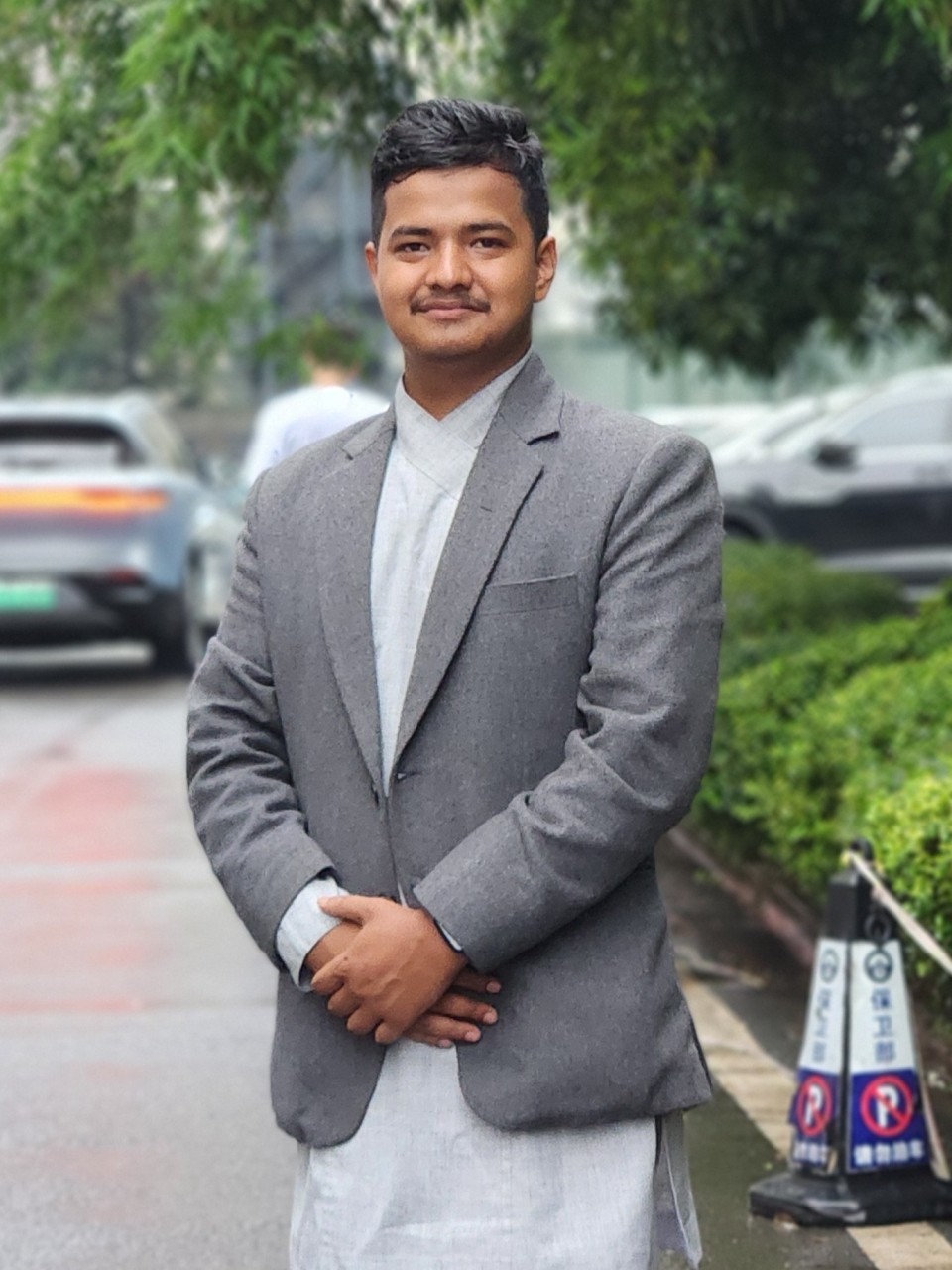
The Journey
My name is Arun Kumar Bhomi, and I am from Bhaktapur, Nepal. My journey into geospatial science was not intended, but being in this field is the best thing that has ever happened to me. My interest in maps, surveying and understanding places through spatial information was like a cheese in a burger, more it is in it, more everyone wanted it. I completed my Bachelor’s degree in Geomatics Engineering at Kathmandu University from 2019 to 2024, graduating with a CGPA of 3.86/4.00. After graduation, I worked as a GIS Engineer at Genesis Consultancy Pvt. Ltd. and Kathmandu Metropolitan City, working with GIS, surveying, UAV mapping, spatial databases, and disaster-related mapping, including the role of Research Assistant at Kathmandu Living Labs (KLL).
My interest gradually moved beyond producing maps toward understanding how Earth observation and remote sensing can support real-world decisions. A Wuhan University summer school in 2024 was an important turning point, exposing me to advanced remote sensing and photogrammetry. My experience with disaster-related mapping in Nepal also made me increasingly interested in flood monitoring, disaster risk reduction, and GeoAI.
That path led me to Wuhan University, where I am now a Master’s student in Photogrammetry and Remote Sensing at LIESMARS, in an English-taught program. My interests include remote sensing, GIS, GeoAI, flood and disaster monitoring, and practical geospatial applications for Nepal and beyond. For me, this scholarship is more than financial support; it is the next step in a journey that began with surveying and GIS in Nepal and is now moving toward advanced remote sensing research.
Chinese Government Scholarship Details
I received the Chinese Government Scholarship (CSC) to pursue my Master’s degree in Photogrammetry and Remote Sensing at Wuhan University, China. My admission is for the English-taught Master’s program of two-years.
The scholarship is a full scholarship covering tuition, lodging/accommodation, living allowance, and comprehensive medical insurance. The standard CSC living allowance for Master’s students is RMB 3,000 per month.
The scholarship is especially meaningful to me because it removes the major financial burden of tuition and accommodation and allows me to focus on study and research. It also gave me the opportunity to study in a strong research environment in my field.
Were You Offered Any Other Scholarships?
Yes. I was fortunate to receive two other major opportunities. The University of North Texas (UNT) offered me admission to the Research Master’s in Geography program with a two-year funding commitment. The offer included a Teaching Assistant position each year with a monthly salary of US$1,615.35, plus a Tuition Benefit Program.
I was also offered the HM King’s Scholarship at the Asian Institute of Technology (AIT), Thailand, for a Master’s in Remote Sensing and Geographic Information Systems. The offer listed 48 credits, tuition of 768,000 Thai Baht, registration of 80,000 Thai Baht, bursary and accommodation of 251,900 Thai Baht, and a total listed amount of 1,099,900 Thai Baht.
I ultimately chose Wuhan University and the CSC scholarship. All three were excellent opportunities, but Wuhan was the strongest match for my academic interests, research direction, and long-term goals.
Educational Background
I completed my Bachelor’s degree in Geomatics Engineering at Kathmandu University with a CGPA of 3.86/4.00. Before that, I completed my +2 at St. Xavier’s College with a CGPA of 3.48 and also received the Best Student Award titled “The Fr. Charles A. Law, S.J. Memorial Award for Excellence in Social and Environmental Responsibility”. I completed my SEE at Bagiswori Secondary School with a CGPA of 3.75.
My undergraduate education gave me a strong foundation in surveying, GIS, remote sensing, photogrammetry, spatial analysis, and geospatial data management. My professional and research experience then helped me understand how those skills are applied to real problems. That combination of academic performance, technical skills, and practical experience prepared me well for graduate study.
How Did You Prepare to Apply to Wuhan University?
I treated the application process as a research process, but for Wuhan University, it was also something personal. After attending the 2024 Summer School at Wuhan University, I became deeply interested in returning to the university for my master’s degree. That experience gave me a closer look at the university and strengthened my interest in pursuing advanced studies there. From that time, joining Wuhan University through the Chinese Government Scholarship (CSC) became a dream of mine, and I started working toward that goal.
I first identified my research interests in remote sensing, GIS, GeoAI, and disaster risk reduction. Then, I searched for programs and universities where my academic background, professional experience, and future goals would be a good match. I explored university websites, scholarship portals, faculty profiles, laboratory pages, and information shared by other students. I paid particular attention to professors and research groups working in areas related to my interests.
Although Wuhan University was my main goal, I also applied to other suitable opportunities, including the University of North Texas (UNT) and the Asian Institute of Technology (AIT). I compared research areas, supervisors, funding opportunities, teaching language, admission requirements, and deadlines to understand which programs could support my long-term goals.
The journey was not always easy. I faced unsuccessful applications and received rejections from professors, which sometimes made the process discouraging. However, I tried to learn from each experience by improving my CV, refining my emails to professors, and making my research interests and statements clearer. I continued applying rather than allowing those setbacks to stop me.
Eventually, my persistence led to three strong opportunities: UNT, AIT, and Wuhan University. Receiving the opportunity to study at Wuhan University through the CSC scholarship was especially meaningful because it was not simply another admission offer. It was the realization of a goal I had carried with me since the 2024 Summer School. Looking back, I believe that having a clear goal, preparing carefully, and continuing despite rejection were the most important parts of my application journey.
Did You Take Any Standardized Tests? If So, How Did You Prepare for Them? How Did You Prepare?
Yes. I took the computer-delivered IELTS through the British Council.
I prepared through regular practice tests, timed practice, vocabulary improvement, and reviewing my mistakes. For writing and speaking, I focused on expressing ideas clearly and naturally rather than memorizing complicated answers. The result helped me qualify for English-taught graduate programs and gave universities evidence of my academic English ability. And believe me, AI can really be useful for speaking practice for IELTS.
How Did You Prepare to Apply for the Chinese Government Scholarship?
I organized my transcripts and certificates, CV, IELTS result, recommendation letters, research interests, and personal statements. I carefully checked each university’s requirements and tailored my application rather than sending the same materials everywhere.
I tried to make my applications tell a consistent story: what I had studied, what I had experienced professionally, what problems interested me, and why graduate study was the next step. The process involved many revisions and many rejections, but each application taught me something and helped me improve.
How is Your Experience at Wuhan University?
My experience at Wuhan University has been very positive so far. I chose the university because of its strong environment in photogrammetry, remote sensing, surveying, and geospatial science, and I am now getting the opportunity to experience that environment as a Master’s student.
Moving from Nepal to China has also been a major personal learning experience. I am learning new research approaches while also adapting to a different culture, language, food, and daily life. Studying abroad is teaching me not only through classes and research, but also through independence and interaction with people from different backgrounds.
How Do You Rate Wuhan University Academically?
I would rate Wuhan University very highly academically, especially in my field of Photogrammetry and Remote Sensing. What makes the university stand out to me is not only its international reputation but also its proven research excellence in the field I have chosen to pursue. According to the 2026 Global Ranking of Academic Subjects published by Shanghai Ranking, Wuhan University ranked No. 1 in the world in Remote Sensing. This is a remarkable achievement and demonstrates the university’s strong academic and research capabilities in my area of interest.
For me, choosing Wuhan University was therefore not simply about studying at a well-known university; it was about learning in an environment with world-leading expertise in my discipline. Its strengths in surveying, mapping, photogrammetry, and remote sensing make it particularly suitable for my academic background and future goals.
I am especially interested in applying remote sensing, GeoAI, and geospatial technologies to real-world challenges such as flood monitoring, disaster risk reduction, and environmental change. I believe studying at Wuhan University will give me the opportunity to strengthen my technical knowledge, learn from experienced researchers, and contribute to meaningful research.
My experience at the 2024 Summer School at Wuhan University also influenced my decision. It helped turn my interest in the university into a personal goal. Being able to return as a master’s student through the Chinese Government Scholarship is therefore both an academic opportunity and the fulfillment of a dream. For these reasons, I consider Wuhan University an excellent institution for my graduate studies and future research career.
How Does Wuhan University Support International Students?
Wuhan University provides support with important parts of the transition to studying in China, including admission, registration, accommodation, student services, and other administrative procedures. For an international student, this support is valuable because even simple procedures can be unfamiliar in a new country.
At the same time, I have learned that students need to be proactive. Asking questions, communicating with the university, and learning how local systems work make the transition much easier.
Are Your Classes Conducted in English or Mandarin?
My Master’s program in Photogrammetry and Remote Sensing is taught in English, so I can follow my academic coursework without needing advanced Chinese.
However, academic English and daily-life communication are very different. Chinese is important for shopping, transportation, ordering food, and interacting with people outside the university. I am therefore learning Chinese alongside my studies. Even basic phrases have already made daily life easier and more enjoyable.
What Did You Pursue After the Chinese Government Scholarship?
Before receiving the scholarship, I had professional experience as a GIS Engineer at Genesis Consultancy Pvt. Ltd., Kathmandu Metropolitan City, working with GIS, surveying, UAV mapping, spatial databases, and disaster-related mapping, including the role of Research Assistant at Kathmandu Living Labs (KLL).
After receiving the scholarship, I moved from professional practice into graduate study at Wuhan University. I am now focusing on photogrammetry and remote sensing, with particular interest in GeoAI, flood monitoring, disaster risk reduction, and environmental applications. The scholarship has allowed me to build on my professional experience at a higher research level rather than leaving that experience behind.
Would Potential Students Have Any Problems Not Knowing Mandarin?
For my program, not knowing Chinese is not a major academic problem because the Master’s program is taught in English. The bigger challenge is daily life, because Chinese is used extensively outside the university.
I would recommend learning basic Chinese before arriving or soon after arrival. Students do not need to become fluent immediately; simple phrases for greetings, numbers, food, directions, and transportation can make a big difference. I see learning the local language as part of the experience of studying in China.
What Do You Think Made Your Application Stand Out?
I think my application stood out because it combined several strengths. I had a good academic record in Geomatics Engineering, including practical GIS and surveying experience, research experience, and a clear interest in remote sensing and disaster risk reduction.
My work at Kathmandu Metropolitan City showed that I could apply geospatial technology to real problems, while my research interests showed that I wanted to develop academically. I tried to make the connection between my past, present, and future clear: where I came from, what I had learned, what problems I cared about, and why the particular graduate program was the right next step.
What Would You Have Done Differently if You Were Going Through the Process Again?
If I could go through the process again, I would start earlier. I would contact potential supervisors sooner, prepare research materials earlier, and organize every document and deadline more systematically.
I would also remind myself earlier that rejection is a normal part of the process. I received many rejections before getting the offers I eventually received. Some were difficult at the time, but they also forced me to improve.
So I would not change the decision to keep applying. I would simply start earlier, stay more organized, and trust the process a little more.
What Advice Would You Give Those Looking to Apply for a Similar Scholarship?
My biggest advice is to start early and understand your own goals first. Know your academic background, strengths, research interests, and long-term direction. Then search for universities and scholarships that genuinely match them.
Do not apply only because a university is famous or a scholarship is fully funded. Check the program, faculty, research environment, funding conditions, and admission requirements carefully. Keep your CV, transcripts, certificates, English test results, recommendation letters, and personal statement ready.
Most importantly, make your application honest and personal. Do not try to sound like someone else. Explain what you have actually done and what you genuinely want to do next.
And do not let rejection stop you. I received many rejections, but I kept improving and applying. Eventually, I received three strong opportunities: UNT, AIT, and Wuhan University, and had the fortunate problem of choosing between them. Consistency was probably the most important part of my own journey.
Want to submit your
scholarship journey?
Submit Your Story Here!
More Scholarship Recipients
Hi, my name is Sat. I am from Astana, Kazakhstan, and I study at the Chinese University of Hong Kong (CUHK). My major is the .... Read more
- Bachelor's Scholarships
- Belt and Road Scholarship
- Bocconi University
- Business Administration
- Chinese University of Hong Kong
- Finance
- Free Tuition (Bocconi University)
- Hong Kong
- Kazakh Nationality
- Marketing
- Merit Scholarship (Northwestern University in Qatar)
- Northwestern University in Qatar
- Partially Funded Scholarships
- QF Financial Aid
- United Kingdom
My name is Roksana, and I work in marketing while also pursuing teaching as a second career. I’m originally from Iran but .... Read more
My name is Prarthana, and I am a Political Science student from India. I am currently pursuing my PhD at Sciences Po. I have .... Read more
Leave A Comment