
University of British Columbia Scholarships for International Students 2027
Students considering University of British Columbia can explore scholarships that range from fully funded support to partial awards. This shortlist highlights higher coverage options first.
For institution funded support at University of British Columbia, these scholarships are frequently highlighted when prioritizing higher coverage. International Scholars Program is fully funded and typically covers full cost of the student's program and living costs. Karen McKellin International Leader of Tomorrow Award is commonly categorized as fully funded support, and coverage that often includes tuition fees and a stipend covering living costs. With Four Year Doctoral Fellowship (4YF), students may receive fully funded support, and coverage frequently includes 100% of tuition fees and an $18,200 living stipend. Graduate Assistantships is a partially funded award, and the listed benefits often include $6,489.72 per term for MSc and MSc (PhD Track) teaching assistants, $9,423.62 per term for teaching assistants pursuing the 12-credit MSc thesis option, and $24,000 per year for PhD teaching Assistants.
Outside the university’s own funding routes, University of British Columbia students may be eligible for external programs that can offer substantial support. Here are a few to consider. Mastercard Foundation Scholars Program is a fully funded award, and the listed benefits often include full tuition, accommodation, and travel allowance.
This is only a shortlist. Additional scholarships and funding options appear further down on this page.
University of British Columbia Scholarships for International Students
The scholarships at University of British Columbia can help fund your study expenses. There are currently 9 scholarships being offered to international students at the University of British Columbia, all with varying requirements, benefits, and application processes. We have compiled them in this list to help you find the scholarship that best fits you.
Undergraduate Scholarships
Graduate Scholarships
External Scholarships
There are many degrees that are open to international students right now — find yours.
University of British Columbia Admissions
Here are the official admission pages for University of British Columbia:
| Degree | Admissions Pages |
|---|---|
| Bachelor's | International Students Admissions Page |
| Master's | International Students Admissions Page |
Admissions and Scholarship Results at University of British Columbia
Here are some of the admissions and scholarship results from previous applicants to University of British Columbia, which you might find helpful. For more results to University of British Columbia, please see the University of British Columbia Admissions Profile Page .
| Nationality / Region | SAT/ACT | EFC | GPA | Scholarship | Status |
|---|---|---|---|---|---|
| India | N/A | 3000 | 4 | Fully Funded | Accepted |
| East Asia | 1500 | N/A | 3.8 | N/A | Rejected |
| South Korea | 1380 | N/A | N/A | N/A | Accepted |
| Saudi Arabia | N/A | N/A | 4.0 | N/A | Accepted |
| Southeast Asia | 1570 | N/A | 3.8 | N/A | Accepted |
University of British Columbia Application Deadlines
| Degree | Admission Deadline |
|---|---|
| Master's (September Intake) | January 1, 2027 Different Master's programs have different deadlines |
Tuition Fees at University of British Columbia for International Students
Indicative annual tuition fee ranges for international students at University of British Columbia. Exact fees vary by program, so always confirm the current cost on the university's official tuition fee pages.
| Degree Level | Typical Annual Range |
|---|---|
| Bachelor's Tuition | 49,548 – 64,114 CAD |
| Master's Tuition | 9,884 – 57,469 CAD |
Please note that tuition fees can vary based on the specific program you choose. For the most accurate and current fee information, consult the official tuition fee pages linked above.
University of British Columbia Scholarship Recipients
International students who received scholarships to study at University of British Columbia, documented by Global Scholarships.
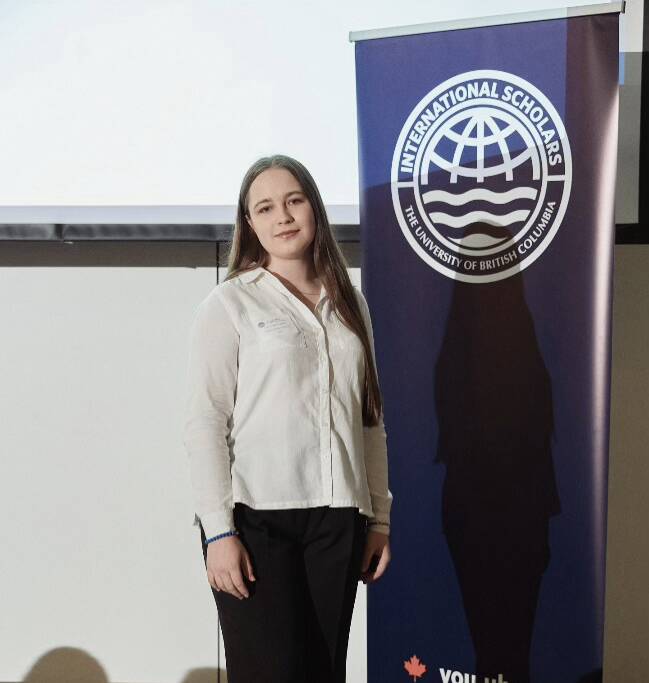



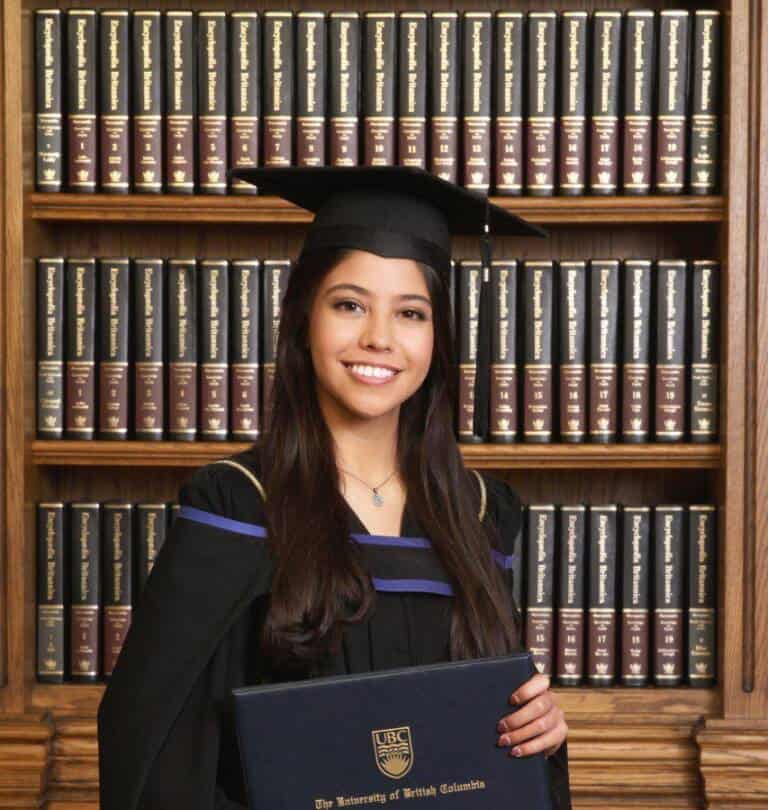







What Scholarship Recipients Say
Advice and insights from international students who successfully secured funding to study at University of British Columbia.
"I received two full-ride scholarships from Canada’s top universities: the Lester B. Pearson International Scholarship at the University of Toronto and the International Scholars Award from the University of British Columbia. Both scholarships cover tuition, housing, and meal plans, and provide additional stipends to support other living expenses."
"I took a highly independent approach to my applications. I didn't rely heavily on traditional college counselors or advisors. Instead, I invested a significant amount of time in conducting my own comprehensive research into the institutions, programs, and application requirements, which allowed me to tailor each submission effectively."
"I’m Samuel Osaretin Buraimoh, from Edo State, Nigeria. I studied at the Federal University of Technology, Akure, where I earned my Bachelor of Technology degree in Food Science and Technology. Additionally, I have a master’s degree in food science from the University of British Columbia, Canada."
"My experience at UBC Sauder has been amazing till now, especially being surrounded by such amazing faculty members and like-minded peers. I would highly suggest applying for the co-op program here, which will open a lot of doors for you after you graduate."
"I am honored to have received the Mastercard Foundation Scholarship at UBC, which provides full tuition, living expenses, travel, and academic support. This scholarship is more than just financial aid; it is a leadership journey. Although I received admission offers from other universities, UBC’s Geomatics for Environmental Management program perfectly aligned with my goals, as well as the Mastercard Foundation’s mission to empower changemakers."
"In 2022, I was awarded the Vanier Canada Graduate Scholarship, which is the most prestigious PhD fellowship in Canada. This scholarship is awarded to doctoral students who demonstrate exceptional academic achievement, research potential, and leadership skills. Receiving the Vanier was a turning point in my academic career—especially since my application was ranked first among all candidates that year, despite the intense competition."
Frequently asked questions
Common questions about scholarships, admissions, and studying at University of British Columbia.
Most UBC scholarships you’ll see for international students are designed for students enrolled in a UBC degree program (and, for many international awards, studying at UBC on a Canadian study permit), rather than stand-alone online courses or non-credit online certificates.
UBC offers scholarships and funding across a wide range of subjects; some awards are general (not tied to one major), and others are faculty- or program-linked. In GlobalScholarships recipient stories, you can see awards supporting business, engineering, and STEM paths like data science, food science, geomatics/environment, and AI/medical-imaging research.
- Satvik Khurana (Business/Finance, Sauder): “My experience at UBC Sauder has been amazing till now.”
- Carmene (STEM, Data Science): “The world is moving toward AI-driven decision-making… This is what made me pursue Data Science.”
- Samuel Osaretin Buraimoh (STEM, Food Science): he pursued “a master’s degree in food science from the University of British Columbia, Canada.”
- Beatrice Somuah (Environment/STEM, Geomatics): “UBC’s Geomatics for Environmental Management program perfectly aligned with my goals.”
- Nourhan Bayasi (Engineering/STEM + health tech): “Ph.D. in Electrical and Computer Engineering, specializing in AI for medical imaging.”
Humanities: UBC also has scholarships for Arts and humanities students (often via general awards plus faculty-recommended awards), so humanities students can still be competitive—especially when academics + leadership/community impact are strong.
Medicine: UBC does fund many health-related areas (e.g., research, biomedical fields, public health, and allied health programs depending on program rules). However, for the MD/PhD route, UBC’s published eligibility notes that the combined MD/PhD program is restricted to Canadian citizens, permanent residents, and persons with refugee status in Canada (so international students would not be eligible for that specific pathway).
UBC scholarships can be open to many nationalities, especially major international entrance awards and need-and-merit programs that are intended for international students studying at UBC. The GlobalScholarships UBC recipient stories show a wide mix of backgrounds, including Rwanda, India, Nigeria, Ghana, and Syrian Canadian.
- Carmene: “My name is Carmene, and I am from Rwanda.”
- Satvik Khurana: “I grew up in New Delhi, India, and moved to Canada in 2022.”
- Samuel Osaretin Buraimoh: “I’m Samuel Osaretin Buraimoh, from Edo State, Nigeria.”
- Beatrice Somuah: “I am from… Ghana.”
- Nourhan Bayasi: “Hi, I’m Nourhan Bayasi (Syrian Canadian).”
Important nuance: some scholarships are broadly open to “international students” (not nationality-specific), while others (including some external and partner-funded programs) may target specific regions or communities, so always check the eligibility text for each award.
Not always. UBC has multiple ways to meet its English language admission standard, including approved tests (like IELTS Academic and TOEFL iBT) and other pathways such as prior schooling in English or an approved waiver process. In recipient stories, you can see both paths: Satvik Khurana says, “I took the SAT and IELTS,” while Beatrice Somuah notes that “UBC waived the GRE/IELTS requirement due to my prior education in English.”
There are also cases where a test isn’t required for a specific program/application context: Samuel Osaretin Buraimoh shares, “I did not take standardized tests such as… TOEFL, IELTS… as they were not required for the programs to which I applied.”
UBC publishes minimum academic thresholds for consideration, but admission is competitive and many programs effectively require higher averages than the minimum. For example, UBC’s academic calendar notes minimum requirements for secondary-school applicants (including a minimum overall admission average) and also emphasizes that higher achievement is often needed because there are more qualified applicants than spaces.
From recipients’ examples, competitive profiles can be very strong: Satvik Khurana reports 96% (Grade 10) and 95.2% (Grade 12), and Nourhan Bayasi reports graduating top of her class with a 3.96/4.0 GPA. At the same time, Carmene reminds applicants that “there are many other factors,” and that it helps “to balance academics with social activities.”
It depends on the scholarship type, but a strong academic record plus evidence of leadership/community involvement is a common theme for many UBC awards. For instance, UBC’s merit-based international entrance awards look for exceptional academic achievement alongside extracurricular and community involvement; and the International Scholars-style awards emphasize leadership, community impact, and meaningful financial need (with a financial assessment).
Recipient stories show what this can look like in practice: Carmene targeted universities that “valued leadership and community impact,” Beatrice Somuah says her process was “holistic,” and Nourhan Bayasi believes her application stood out because of “honesty and authenticity.”
For undergraduate applications, UBC typically requires academic records (transcripts/grades) and, if applicable, proof that you meet the English language requirement (test scores or documentation for another pathway/waiver). After you apply, UBC tells you exactly what to submit and where (often through the Applicant Service Centre), and requirements can differ depending on your curriculum and background.
For graduate applications, common components include academic documents (transcripts), reference letters, and a statement of interest/intent; some programs also require English test scores and/or other test scores depending on the program. In recipient stories, references and personal statements show up repeatedly: Nourhan Bayasi says she “contacted referees… with strong, personalized letters,” Satvik Khurana describes building strong recommendation letters by “cultivat[ing] a rapport with my teachers,” and Beatrice Somuah focused on “crafting a compelling Statement of Purpose and a strong resume.”
A practical tip from Carmene: treat the process like a project: she says she “relied heavily on self-research,” gathering “requirements, and scholarships,” and she even built an Excel tracker to stay organized.
Yes. UBC charges application fees, and the amount depends on whether you’re applying as a domestic applicant or an applicant who will study on a Canadian study permit, and whether you’re applying to undergraduate or graduate programs.
For graduate applicants, UBC notes some cases where an application fee waiver may apply (for example, applicants from countries classified among the UN’s least developed countries, per UBC’s graduate admissions fee guidance).
There are many degrees that are open to international students right now — find yours.
About the Author: Hyun Lee


I am British citizen, and I want to study PhD in psychology
Hi, please take a look at University of British Columbia’s Psychology Ph.D. Page for more information!
Please, I have the interest to study Data Science (PhD). Kindly send me the Admission Form page to me to apply
Hello, University of British Columbia does not have Ph.D. in Data Science specifically, but data science is under Ph.D. in Computer Science. Please check the UBC’s Ph.D. in Computer Science page for the admission procedure.
Good day,
Please, I want to make an enquiry in your university about undergraduate programs. Such as Admission period, Tuition fee payment plan and other things I need to know.
Thanks, am looking forward to hear from you.
Hello, please see the University of British Columbia Admissions section for admissions period, tuition fees, etc.
Hello I am a South Sudanese. I want to studies Master peace and security from University of British Columbia. Is there a full scholarship for that?
Hi, there isn’t a full scholarship but there are partial scholarships like assistantships.
Hi Lee, I need a full scholarship for Masters in Bioinformatics at UBC
Hi, if you are from eligible countries, you might want to apply for Mastercard Foundation Scholarship. I believe that’s the only fully funded scholarships available. If you want partial scholarships as well, there are plenty in this page!
Hi, i m asian student, pursue to bachelor study from University of British Columbia. Is there a fullly funded scholarship in BS in Computer Science?
Yep! Please see the undergraduate scholarships in this page. There is the International Scholars Program
Hi I’m a kenyan and needy student ready to pursue a bachelor in mass communication and journalism at the University of British Columbia. Is there a fully funded schollarship?
Yes, there’s fully funded scholarships available such as the International Scholars Program
Hi . I am interested in a PhD program in reproductive health sciences or global health. Any funded opportunities?
Hello, most PhD programs are fully funded, especially in United States. For Canada, some are and some aren’t.
I have a PhD in Physics. What are chances, please?
I have a PhD in Physics. Please, what are my chances of getting a fully funded PhD program on Electrical and Computer Engineering?
Please inbox me on my WhatsApp +231773645865
How can apply for the scholarship for a bachelor’s degree?