
Friedrich-Ebert-Stiftung (FES) Doctoral Scholarship 2027
The Friedrich-Ebert-Stiftung scholarship supports talented students and doctoral candidates who are studying or conducting doctoral research in Germany. It is open across academic fields, including artistic degree programs, first-degree programs, Master’s or postgraduate study, and doctoral degrees, with the exception of certain excluded fields or study formats.
The program combines financial support with non-financial development opportunities. Scholarship holders may receive monthly funding, health insurance support where applicable, family or child-related allowances in certain cases, and access to seminars, workshops, mentoring, local scholarship-holder groups, and a wider alumni and student network connected to the values of social democracy.
Applicants are expected to show strong academic performance, social or political engagement, and alignment with the values of social democracy. International applicants must already be studying in Germany at the time of application and must be able to prove strong German-language skills, even if their study program or dissertation is conducted in English.
Friedrich-Ebert-Stiftung (FES) Doctoral Scholarship Coverage
This non-profit organization partially funded scholarship for international students covers the following:
-
Monthly allowance of €934 for students
-
Monthly allowance of €1,200 for postgraduates
-
€276 family allowance, if applicable
-
Reimbursement of health care costs
-
*Any income above €400 per month will be deducted from the scholarship amount.
Friedrich-Ebert-Stiftung (FES) Doctoral Scholarship Eligibility Criteria
To be eligible for Friedrich-Ebert-Stiftung (FES) Doctoral Scholarship, you need to meet the following criteria:
- Study or conduct doctoral research at a state or state-recognized German higher education institution.
- Live in Germany and submit the application in German.
- Demonstrate strong German-language ability; international applicants must provide recognized proof of German proficiency.
- Have good or above-average academic results in school, university study, or their completed degree.
- Show social, political, or community engagement.
- Identify with the core values of social democracy.
- Must already be studying in Germany when they apply.
- Must have first graded university results available.
- Admitted for doctoral study at a German university.
- Doctoral applicants must have completed their previous degree quickly and with strong results.
- Doctoral research proposals must make a meaningful academic contribution.
- Applicants in medicine may apply only within the limits stated by the foundation; medical doctoral projects and certain medical training stages are excluded.
For detailed requirements, refer to the official eligibility page .
Eligible degree levels
Eligible programmes
Eligible nationalities
Important Notice
Disclaimer
The foundation does not support all study formats or projects. Exclusions include short stays abroad, project-only proposals, study programs shorter than three semesters, research visits, traineeships, university preparatory courses, most medical doctoral or continuing-training projects, final-only study or doctoral phases, postdoctoral projects, study-abroad programs outside the European Union, part-time or extra-occupational study, language courses, second degrees, internships, and summer schools, unless covered by an existing FES scholarship.
Application timing and funding levels vary by applicant group, degree level, nationality or residency category, and scholarship program. Applicants should check the relevant program page before applying.
How to Apply
In this section, we'll provide a clear general overview of requirements and steps to guide you through the application process for Friedrich-Ebert-Stiftung (FES) Doctoral Scholarship.
To apply for Friedrich-Ebert-Stiftung (FES) Doctoral Scholarship, please follow these steps:
-
Choose the scholarship program that matches the applicant's degree level and applicant category.
-
Complete the relevant online application form in German.
-
Provide initial information about personal background, family and professional background, motivation, and social or political engagement.
-
Wait for the foundation's initial review of formal and content-related eligibility.
-
Submit the requested documents and recommendation reports if invited to continue.
-
Attend a first selection interview with a liaison lecturer if shortlisted.
-
Attend a second interview with a member of the selection committee if moved to the next stage.
Important Note: The application procedures and required documents for Friedrich-Ebert-Stiftung (FES) Doctoral Scholarship may vary depending on your degree, program, nationality and other factors. For specific details regarding the requirements, kindly visit the official website of Friedrich-Ebert-Stiftung (FES) Doctoral Scholarship.
Application Deadlines
Now that you’re familiar with the application procedure, it’s time to know the application dates! Knowing the dates for Friedrich-Ebert-Stiftung (FES) Doctoral Scholarship will help you prepare early and it will also give you the time you need to put together a competitive application.
Application deadlines vary
The application deadlines for Friedrich-Ebert-Stiftung (FES) Doctoral Scholarship vary. It’s important to review official guidelines on the official website or contact administrators for specific deadlines. Make sure to regularly check the Friedrich-Ebert-Stiftung (FES) Doctoral Scholarship page for the latest and most accurate information on application deadlines.
Friedrich-Ebert-Stiftung (FES) Doctoral Scholarship Eligible Institutions
The eligible institutions for Friedrich-Ebert-Stiftung (FES) Doctoral Scholarship are listed below:
F
T
Friedrich-Ebert-Stiftung (FES) Doctoral Scholarship Recipients
Meet students who have received Friedrich-Ebert-Stiftung (FES) Doctoral Scholarship and learn how they secured their award.
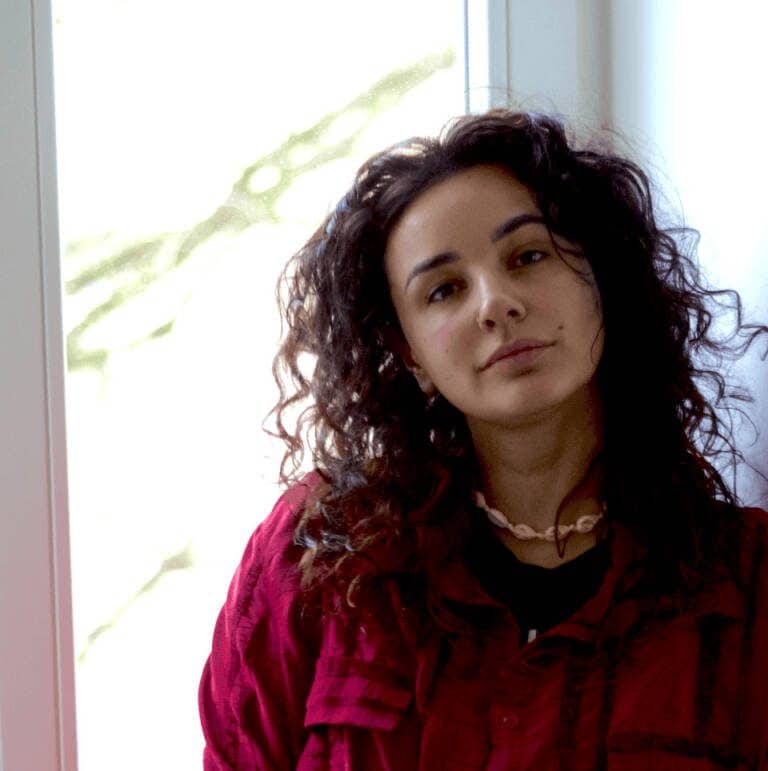
The recipient stories include 1 accounts of degree study supported by Friedrich-Ebert-Stiftung (FES) Doctoral Scholarship.
The Brazilian recipient completed a PhD in Social Sciences at Humboldt University of Berlin and later became a postdoctoral researcher at University of Luxembourg.
Funding Reported by Recipients
| Recipient and degree/program | Reported coverage |
|---|---|
| Júlia de Freitas Sampaio — PhD in Social Sciences, Humboldt University of Berlin | Living-expense support during the doctorate and additional support to attend conferences. An earlier short-period DAAD scholarship helped her transition into doctoral study and prepare her FES application. |
Examples of Featured Recipients’ Application Backgrounds
| Recipient and degree/program | Scholarship/application route | Reported background and preparation |
|---|---|---|
| Júlia de Freitas Sampaio — PhD in Social Sciences, Humboldt University of Berlin | FES doctoral scholarship | Social Sciences bachelor’s at Federal University of Rio Grande do Sul and Social Development master’s at Paul-Valéry Montpellier 3 University. Refined a specific, feasible research proposal with colleague feedback and aligned it with the foundation’s priorities. |
What Recipients Pursued After Their Scholarship-Funded Studies
| Recipient | Scholarship-funded degree/program | Reported outcome or current status |
|---|---|---|
| Júlia de Freitas Sampaio | PhD in Social Sciences, Humboldt University of Berlin | Current role: postdoctoral researcher in Geography at University of Luxembourg, studying inequalities in infrastructure and services and their links to disaster risk. Future ambition: become a professor. |
Other Offers in Featured Applicants’ Journeys
| Recipient | Reported alternative | Decision described in the story |
|---|---|---|
| Júlia de Freitas Sampaio — PhD in Social Sciences, Humboldt University of Berlin | Japan Society for the Promotion of Science scholarship during the doctorate. | Used it for a three-month research stay in Tokyo. |
There are many degrees that are open to international students right now — find yours.

I am very much eager to complete Ph.d program from your university if I get fully funded scholarship.