
How Andrey Lucas Dias Barros, a Brazilian Scholar, Secured a Fully Funded Master’s Through the Eiffel Scholarship
University: Sorbonne University
Degree: Master’s in Research and Development in Biotechnology
Previous Education: Bachelor’s in Bioprocess Engineering and Biotechnology, Federal University of Paraná
Scholarship: Eiffel Excellence Scholarship – (€1,200 Monthly Stipend, Round-Trip Flight, Visa Fees, French Social Security, Supplementary Health Insurance, Priority CROUS Student Housing, Discounted Cultural Activities)
Other Offered Scholarships: Erasmus Mundus Joint Master’s Scholarships; Bourse Excellence Graduate+
Social Media
LinkedIn: https://www.linkedin.com/in/andyeahrey/
The Journey
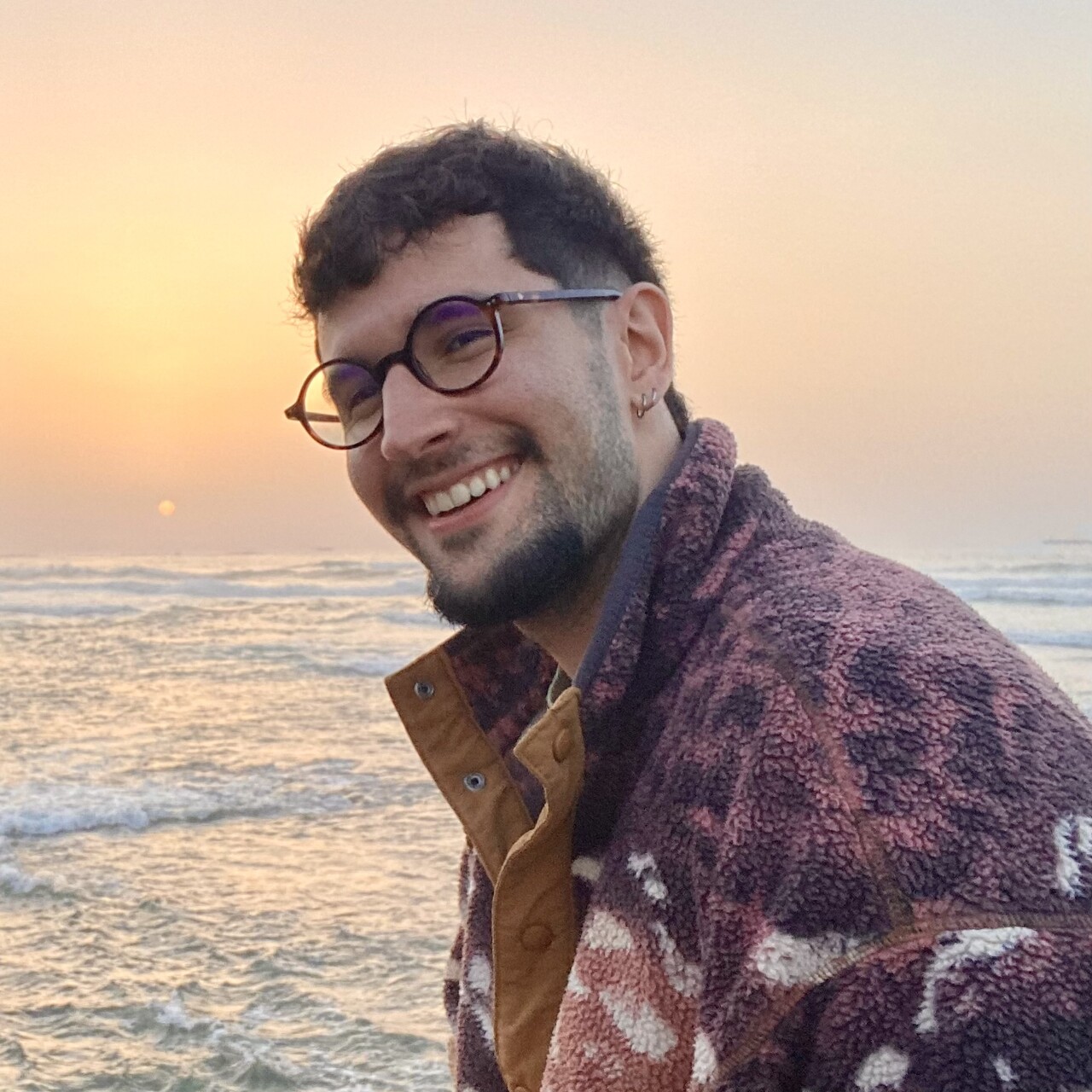
I am Andrey Lucas Dias Barros, 26 years old, a Bioengineer from the Northeastern part of Brazil, originally from Natal, even though most of my university years were spent in Curitiba, in the south of my country, at the Federal University of Paraná, where I hold a Bachelor’s degree in Bioprocess Engineering and Biotechnology. By the time I started drafting this text, I was based in Paris and was about to finish my Master’s degree in Biotechnology at Sorbonne University. Luckily, this has been greatly accomplished!
As a child, I enjoyed experimenting with ingredients and doing science crafts at home, curious about the microscopic world I wanted to better understand. This biological and physical-chemical passion, combined with my technical background in Informatics during vocational High School, shaped me as a STEM enthusiast. I was glad to have earned at 16 my first merit-based exchange scholarship, where I spent a year abroad in Michigan with AFS and BP through a program entitled Global Citizens of Tomorrow.
This definitely cracked open my sense of what the world could look like from outside of my hometown. At 19, as I applied for National Exams to gain college admission in my country, I decided to leave my hometown and follow that same curiosity while studying Biochemical Engineering in another state. That was the beginning of my pathway in the field of biosolutions, mainly engaging in sustainable bioproduction through the circular economy and in innovative biotechnological settings. During university, I was able to go abroad again. I spent an exchange year at Université Clermont Auvergne in France, funded by the Brazilian government’s BRAFITEC-CAPES scholarship, and experienced a three-month research placement at Université du Québec à Trois-Rivières in Canada, through the Mitacs Globalink Research program. Moreover, I was able to attend the 27th Youth Assembly in 2022 as an alumnus of the AFS Global STEM Academy network.
Returning home after these lifetime academic anecdotes, I was able to complete my Engineering diploma. At the same time, I kept in mind the project of coming back to France to enroll in a Master’s degree, aiming to achieve a higher educational diploma. Surely, this would not have been financially possible without the Eiffel scholarship! I decided to apply directly to a Master 2 because I felt I already had all the academic and professional competences in my field of study to go directly to the last year of studies: I also internalized this would allow me to enter more quickly into the labor field.
Even though I sent my applications to other universities, as soon as I received positive feedback from Sorbonne, this became my jackpot to come back to France for future endeavors. Gladly, the dream of living, working, and studying in Paris came with the acceptance to this centenary institution. What made me adore the program was definitely the professional curriculum involved: with a strong R&D approach for the pharma, cosmetic, environmental, and food-biotech industries, I felt this actually let me pick up exactly where my last French chapter had left me off. Since the hardest problems in academia are not only scientific, but also regarding scaling up, regulatory barriers, and society’s adoption, an applied degree like this one sounded sweet in this sense.
Eiffel Excellence Scholarship Details
Master's recipients receive 1,200 euros per month for 24 months if you're doing both years (M1 and M2), or 12 months if you're doing only the M2. The program also covers your round-trip flight and visa fees and includes French social security, supplementary health insurance, and priority for CROUS student housing. On top of all of that, Campus France offers a catalogue of discounted cultural activities. I went to all sorts of events, like trips to villages in the French countryside, cooking classes, and concerts.
You may wonder how the Eiffel scholarship operates in terms of selection: only one university can submit a candidate’s final dossier to the Eiffel committee, which is the last stage of the application process. You should therefore first secure a professor or a department willing to sponsor your candidacy. On the other hand, a student can (and I strongly encourage you to) contact several institutions to find one willing to sponsor them. As soon as you find one, you can withdraw from the other candidacies on time. The core application is sent as a combined professional project, where the academic background and the career plan should be concise and clear to the Selection Committee. Important mentioning that each university has its calendar of application reviewing. In this sense, each university will stipulate its own selection procedures to pre-sort those that will be sent to the Eiffel jury. Hence, some universities can interview candidates before deciding whether to sponsor them or not.
Transcripts, extracurricular certificates, program and course testimonials, recommendation and accomplishment letters- anything that highlights your academic excellence is welcome. Applications nowadays open in October. Within this timeline, most universities decide around mid-November. Dossiers go to Campus France in January. And by March or April, results are announced. A waitlist round can follow in May and June.
I am now an alumnus of the Eiffel scholarship. This is a program awarded by Campus France on behalf of the French Ministry for Europe and Foreign Affairs. I first had to be accepted into the Eiffel scholarship so that I would be able to enter the Master’s program. It is not mandatory that your Master’s program be listed in Campus France’s internal catalogue in order to apply to the Eiffel scholarship. Most importantly, your university must be eligible: that is all.
Were You Offered Any Other Scholarships?
Yes. I applied to 10 Erasmus Mundus Joint Master's programs, got 6 interviews, and was accepted into 2, with a place on the waitlist for a third. I was also accepted into another Master's scholarship, the Bourse Excellence Graduate+.
I had more applications in progress, but as I started getting positive responses and more interview invitations, I felt confident that at least one could work out; thus, I withdrew from the rest. The whole process can become very anxiety-inducing, to be honest. The great news is: once you start, you can recycle most of the paperwork and official institutional documents, which makes it way easier to apply to many programs at the same time.
For those who want to study in France, there are also other scholarship programs, such as IDEX, Smarts-Up, SI, Mistral, Sophie Germain, TIGER, Ampère, and EUR. Worth checking out!
Educational Background
I hold a Bachelor's diploma in Bioprocess and Biotechnology Engineering from the Federal University of Paraná, where I graduated with honors. My final GPA was 0.8786 out of 1.0. I imagine that by the time I applied to Sorbonne University, I had already defended my Engineering thesis and acquired a few years of research experience, which was justified by international environments across a variety of laboratories and in industry itself. Moreover, my previous direct exposure to French academic culture was also an advantage during my preparation.
How Did You Prepare to Apply to Sorbonne University?
How Did You Find Information About Eiffel Excellence Scholarship and Sorbonne University?
There is literally no secret here: the internet! I spent many weekends and Friday nights planning all these applications, both logistically and strategically. In other words, hours and hours of research and proofreading, gathering documents, and back-and-forth emails.
For the Eiffel scholarship, the official Campus France website is the most reliable source, since this is where they publish all the valid documentation. LeBoursier is the main unofficial source dedicated to Eiffel and is great for preparation. I also used websites such as mastere.tn and scholarshipcorner.com for many other scholarship advertisement campaigns.
Did You Take Any Standardized Tests? If So, How Did You Prepare for Them?
Yes. In 2024, I took the IELTS for English, ranking at C1 level, and passed the DALF C1 for French. The advice I can give is that studying for a standardized language test is not the same as taking a language course or studying grammar. Everything helps, but your main focus should be deciphering the structure of the exam and the types of questions it commonly asks. Most definitely, learn to manage stress and emotional pressure, because they can become overwhelming close to deadlines and on test day. Do not leave it until the last minute!
How Did You Prepare to Apply for the Eiffel Excellence Scholarship?
My biggest tip is to reserve time every weekend to focus only on your applications. Nothing should distract you from this precious moment. Put on your best inspiring playlist and go for it; it is as simple as it can be! Use this time to search your Master's options, understand each university's eligibility criteria, and learn the rules and application process for each scholarship. When an application is built ahead of time, you can construct a strong portfolio without rushing. Personalize every application and every letter, as the keywords in your CV and cover letter should connect to your own story.
How is Your Experience at Sorbonne University?
We had classes from September to December, both mornings and afternoons. The cohort had about 20 students, and we had plenty of access to industry speakers. The program itself balanced industry-focused courses with subjects that assisted us with career reflection. Having the chance to study in the heart of Paris’ downtown, near the Quartier Latin, at the Jussieu campus, was a dream. In the end, we completed a six-month internship to earn the diploma.
Public French universities are technically tuition-free, and Sorbonne in particular has always voted in its internal jury to keep tuition fees for international students the same as for European ones. This is very important!!! In this sense, most of the Eiffel stipend goes toward living costs, which is nice, because we can invest in our personal experiences and academic investments.
How Do You Rate Sorbonne University Academically?
Sorbonne has a historic and strong reputation worldwide. My campus used to be named Pierre and Marie Curie University - and it is amazing how much activity and student life fit into a place of one hundred years old. In terms of my Master's, I admired how open the professors were to feedback. Because of that, the courses, the agenda, and the lineup of guest speakers and panelists kept improving, and communication among classmates stayed transparent.
The program can also be taken either via the traditional route or as a work-study program (alternance). Finally, I want to highlight Sorbonne's career counseling service! My meetings with the career psychologist helped me better comprehend my goals and shape my future technical expertise.
How Does Sorbonne University Support International Students?
Most of the support came from Campus France rather than from my university. As Eiffel scholars, we had help with everything needed to make our experience abroad go smoothly, from French bureaucracy to tips for everyday life in Paris. Most importantly, the support you get depends on how actively you seek it! The services are there, but most of the guidance comes only when you eagerly ask for it.
Are Your Classes Conducted in English or French?
All my classes were in French, but the program encouraged us to do our placement in an English-speaking country. That said, several Eiffel-eligible Master's degrees are held entirely in English, so research your program options well!
What Did You Pursue After the Eiffel Excellence Scholarship?
I recently completed my Master's, and my final thesis project is currently opening doors to new technical projects at the company where I work at the moment. My goal is to build a career as an industry consultant and a leader in several biotech sectors, connecting my country with international partners.
Would Potential Students Have Any Problems Academically Not Knowing French?
Not necessarily. Many Master's programs in France, including programs that Eiffel scholars attend, are completely taught in English. That said, solid French is important for daily life, yet it is not utterly mandatory. For anyone considering this path without strong French, everything is fine. Do not give up on this dream; face it as an opportunity to learn the language in a real context of cultural French exposure.
What Do You Think Made Your Application Stand Out?
Knowing how to describe my own story. I started mentoring a few friends and other Brazilian students applying to study abroad, and now I realize more and more that speaking with authenticity and taking ownership of our own journeys is what brings charisma and spotlight. Along with my years of applications, storytelling indeed matters. Tracing a parallel, my career includes several international transitions that show what I call a translator instinct, the ability to bridge different cultures and languages wherever I go.
I have written guides to the Eiffel and Erasmus Mundus scholarships, and during my graduate studies I promoted the Mitacs Globalink program to other students. That is why I am mainly writing this: I want to help others, especially Latin American students, achieve their educational dreams.
Keep in mind that competition can always be intense. The year I was selected, 433 Eiffel scholarships were awarded, about 8% of them to Brazilians, and the final stage had four candidates for every winning spot. In the first selection phase of my university area, only a small group was chosen from about 80 applications, and after the final committee review, only seven students from my department received the scholarship.
What Would You Have Done Differently if You Were Going Through the Process Again?
Nothing that I would have changed, but I did learn a few lessons that help keep the process on track. Whenever each deadline gets closer, sharpen your focus and treat it with more urgency. This is your future calling you! In parallel, a recommendation letter will never be about the writer's title: it is about how well that person knows you and how genuinely they can speak about you. Also, diversify the origin of each draft, for example, a professor and a manager, so each submission shows a different side of you. I always appreciate the triad work: academia and volunteering.
What Advice Would You Give Those Looking to Apply for a Similar Scholarship?
Prepare yourself well for your language tests before application season, for the process only gets more stressful and emotionally unstable as deadlines approach. Never leave the DALF or IELTS until the last minute. Ensure all your experiences tell one consistent story; otherwise, your career plan may sound disconnected. Last but not least, if you are applying to many scholarships as I did (which you should, to maximize your chances!), track every candidacy in a spreadsheet so you do not get lost in the avalanche of information that comes up all at once.
Finally, apply to several French universities - then keep an eye on the deadlines so you can withdraw in time from all but one. Even though only one application should reach the national Eiffel committee, each extra university gives you another chance of being pre-selected. Good luck, and remember: the program should not be the only one choosing… You are choosing it back too!
Want to submit your
scholarship journey?
Submit Your Story Here!
More Scholarship Recipients
My name is Shah Hussain, and I am from Khyber Pakhtunkhwa, Pakistan. I completed my Bachelor’s in Psychology at the Univer .... Read more
I am June from the Philippines. I am an educator for Social Sciences and Humanities. I recently earned my Master in Southeas .... Read more
Hi, my name is Abdul Hafeez, and I come from a small town called Nasirabad in Sindh, Pakistan. Currently, I am pursuing a ma .... Read more
Leave A Comment