
University of Reading Scholarships for International Students 2027
Students considering University of Reading can explore scholarships that range from fully funded support to partial awards. This shortlist highlights higher coverage options first.
For institution funded support at University of Reading, these scholarships are frequently highlighted when prioritizing higher coverage. Felix Scholarships is fully funded, and coverage often includes full tuition coverage, annual living stipend, and book allowance. PhD Studentships is fully funded and typically covers tuition fees, A £1,000 training allowance per year, and stipend of £20,780 per year. Centenary Scholarships is commonly categorized as partially funded support, and coverage that often includes £4,000 as a tuition fee waiver. With Henley Business School Scholarships, students may receive partially funded support, and coverage frequently includes £2,000 to £7,000 for study costs.
Outside the university’s own funding routes, University of Reading students may be eligible for external programs that can offer substantial support. Here are a few to consider. With Commonwealth PhD Scholarships, students may receive fully funded support, and coverage frequently includes full tuition fees, roundtrip airfare ticket, and paid airfare ticket for mid-term visit to home country. Commonwealth Shared Scholarships is a fully funded award, and the listed benefits often include full tuition fees, thesis grant, and living allowance of up to £1,652 per month. Chevening Scholarships is usually considered fully funded, and typical coverage can include 100% of tuition fees, A monthly stipend covering accommodation fees and living expenses, and economy flight from and to your country of residence.
This is only a shortlist. Additional scholarships and funding options appear further down on this page.
University of Reading Scholarships for International Students
The scholarships at University of Reading can help fund your study expenses. There are currently 9 scholarships being offered to international students at the University of Reading, all with varying requirements, benefits, and application processes. We have compiled them in this list to help you find the scholarship that best fits you.
Graduate Scholarships
External Scholarships
There are many degrees that are open to international students right now — find yours.
University of Reading Admissions
Here are the official admission pages for University of Reading:
| Degree | Admissions Pages |
|---|---|
| Bachelor's | International Students Admissions Page |
| Master's | International Students Admissions Page |
Admissions and Scholarship Results at University of Reading
Here are some of the admissions and scholarship results from previous applicants to University of Reading, which you might find helpful. For more results to University of Reading, please see the University of Reading Admissions Profile Page .
| Nationality / Region | SAT/ACT | EFC | GPA | Scholarship | Status |
|---|---|---|---|---|---|
| Spain | N/A | N/A | 9.3/10 | N/A | Accepted |
University of Reading Application Deadlines
| Degree | Admission Deadline |
|---|---|
| Bachelor's | January 13, 2027 |
| Master's | July 1, 2026 Different Master's programs have different deadlines |
Tuition Fees at University of Reading for International Students
Indicative annual tuition fee ranges for international students at University of Reading. Exact fees vary by program, so always confirm the current cost on the university's official tuition fee pages.
| Degree Level | Typical Annual Range |
|---|---|
| Bachelor's Tuition | 25,850 – 30,650 GBP |
| Master's Tuition | 26,450 – 31,650 GBP |
Please note that tuition fees can vary based on the specific program you choose. For the most accurate and current fee information, consult the official tuition fee pages linked above.
University of Reading Scholarship Recipients
International students who received scholarships to study at University of Reading, documented by Global Scholarships.


What Scholarship Recipients Say
Advice and insights from international students who successfully secured funding to study at University of Reading.
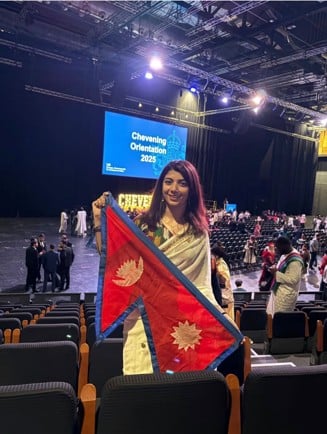
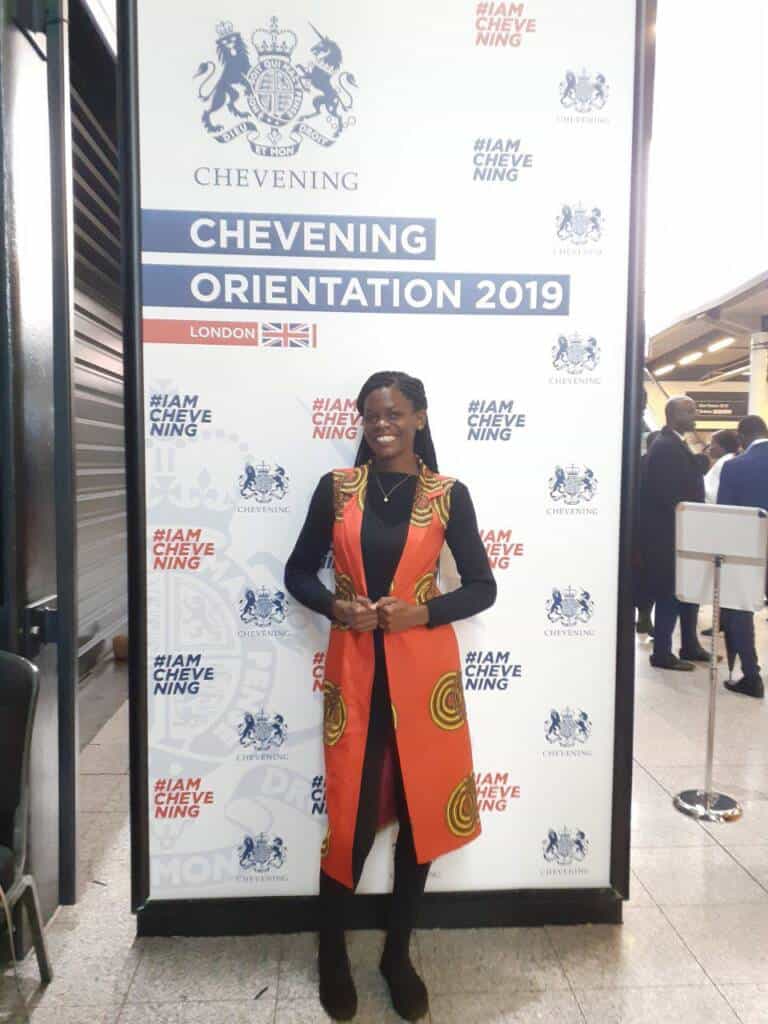
"I was awarded the Chevening Scholarship, funded by the Foreign, Commonwealth and Development Office (FCDO). The scholarship was fully funded and covered major study-related costs, including tuition fees, living expenses, travel costs, and other academic-related allowances."
"Do not underestimate your impact. No experience is too small. This includes internships and volunteering. Quantify your achievements wherever possible, such as the number of people you have reached, programs implemented, partnerships built, funds mobilized, or initiatives led. Remember, Chevening is not just about academic excellence. It is about leadership, influence, and your ability to connect with others."
"Although my undergraduate degree focused on English, I wanted to specialize further in communication. The MSc in Communication for Development was a natural progression and helped me transition more strategically into the development communication space."
"My time at the University of Reading was enriching. The university provided strong support for international students. Coming from a media background and transitioning into a program heavily focused on International Development, including modules in economics, was challenging at first."
"The MSc in Communication for Development was intellectually stimulating and transformative. The program allowed me to critically engage with development theories, community power structures, gender dynamics, governance systems, and technological inequalities."
"Academically, I rate the University of Reading very highly. This is because the program I was in encouraged critical thinking rather than passive learning. The professors were researchers with global field experience."
Frequently asked questions
Common questions about scholarships, admissions, and studying at University of Reading.
There are no scholarships for online courses at the University of Reading at the time of this writing.
The University of Reading offers scholarships across a wide range of subjects rather than only one faculty. The scholarship and international-student pages show funding tied to undergraduate, master’s, and doctoral study across areas such as engineering, business, finance, agriculture, climate science, biomedical and life sciences, computer science, social sciences, and humanities subjects like English, classics, ancient history, archaeology, art, and creative writing.
For business, Henley Business School has its own scholarships. For STEM, there are university-wide scholarships plus subject-focused options such as the Climate Stripes Scholarship for climate-related master’s courses. For humanities and social sciences, the international PhD studentship page explicitly includes arts and humanities and social sciences. For medicine, there’s no MBBS-specific scholarship, but Reading does offer health-related subjects such as Medical Science, Pharmacology, Biomedical Sciences, and related medical sciences, and international students can study those areas.
Nationality rules depend on the scholarship. Some are very broad while others are country-specific.
The verified Global Scholarships stories also show the range of countries that can end up at Reading through external funding routes: Tausi studied at Reading as a Tanzanian Chevening scholar, and Janet Mtali studied there as a Malawian Chevening scholar.
Not always in the sense of IELTS specifically, but you normally do need to satisfy the university’s English-language requirements. Reading accepts IELTS and other approved proofs, and many courses use an IELTS-equivalent level around 6.5 overall with minimum component scores, although some postgraduate courses can ask for 7.0 or some subject-specific variations. So IELTS can be necessary for many students, but it is not the only accepted route.
The verified Reading recipient stories make that practical. Tausi said Reading allowed her to use her secondary school certificate as proof of English proficiency, which saved time and money. Janet Mtali said she took IELTS because Chevening required it at the time, but also noted that applicants now need to meet the English requirements of their chosen university.
There is no single university-wide minimum GPA or grade that covers every programme. For undergraduate admission, Reading says applicants normally need good general education, including English and Mathematics at GCSE-equivalent level, and some courses have extra subject requirements. For postgraduate admission, requirements vary by programme and country, so you need to check the specific course and country-equivalency page.
For scholarships, one clear benchmark is the University of Reading Excellence Scholarship for master’s students, which requires at least a UK Lower Second Class degree or equivalent. The recipient stories are encouraging too: Tausi entered with a second class degree equivalent to a UK 2:1, and Janet Mtali said she graduated with a GPA of 2.8 and still emphasized that leadership, impact, and admission eligibility mattered, not just very high grades.
There are no age limits on major University of Reading scholarships. These scholarships focus on whether you have an offer, your academic background, your fee status, and whether your course is eligible. Reading’s doctoral funding pages also state an equal-opportunities policy that applies regardless of age.
That said, some separate bursaries elsewhere at the university can have age-related rules, so the safest approach is always to read the exact terms of the award you are applying for.
A good academic background for Reading means more than just grades. At undergraduate level, you normally need strong school qualifications plus the required English and Mathematics foundation. At master’s level, you usually need a recognized bachelor’s degree, the course-specific academic standard, and the required English level. For scholarship competitiveness, stronger academic results help, but fit with the programme and your profile also matter.
The verified Reading stories make that clear. Tausi matched her MSc in Communication for Development to both her undergraduate degree and four years of professional experience, and she said Reading stood out because of its module structure and academic reputation. Janet Mtali said she built her profile through volunteering, writing workshops, essay reviews, and mock interviews, and that Chevening prioritizes leadership and impact over grades alone. For highly selective scholarships, requirements can be much higher; for example, the Felix Scholarship expects academic excellence and financial need, and in some cases a first-class bachelor’s degree or equivalent.
For undergraduate applications, Reading says your UCAS application should include required information such as your qualifications, a personal statement, and a reference. For master’s applications, Reading says you should upload full transcripts, an English-language certificate if needed, contact details for two academic or professional references, a statement of purpose, and a passport copy if you are an international student.
For undergraduate applications, there is usually a small one-off UCAS application fee rather than a separate Reading application fee. For master’s applications, Reading explicitly says it does not charge an application fee.
There are many degrees that are open to international students right now — find yours.
About the Author: Hyun Lee


Leave A Comment