
Rhenish Friedrich Wilhelm University of Bonn Scholarships for International Students 2027
To help students manage tuition and living expenses, Rhenish Friedrich Wilhelm University of Bonn connects to scholarships across different funding levels. Here are several top options to review first.
Among the university based funding routes linked to Rhenish Friedrich Wilhelm University of Bonn, these scholarships tend to stand out for their level of support and overall value. Free Tuition is a full tuition award, and the listed benefits often include full tuition fees for four years for bachelors degrees, two years for masters degrees, and up to six years for doctorate degrees.
To broaden funding options beyond institutional awards at Rhenish Friedrich Wilhelm University of Bonn, these external and government scholarships are commonly considered as well. DAAD Scholarships is fully funded, and coverage often includes €992 for master's and €1,300 for Ph.D. students, health insurance, and one-time research allowance. DAAD EPOS (Development-Related Postgraduate Courses) is fully funded and typically covers full tuition fee waiver, health insurance, and A monthly stipend of €934 for Master's students. Konrad Adenauer Stiftung Grant (KAS) is commonly categorized as partially funded support, and coverage that often includes up to 992 euros per month for Bachelor's, master's, and or postgraduate study, up to 1,400 euros per month for PhD study, and health insurance subsidy of up to 120 euros per month.
To see every scholarship associated with this institution and compare coverage and eligibility, browse the sections below.
Rhenish Friedrich Wilhelm University of Bonn Scholarships for International Students
The scholarships at Rhenish Friedrich Wilhelm University of Bonn can help fund your study expenses. There are currently 8 scholarships being offered to international students at the Rhenish Friedrich Wilhelm University of Bonn, all with varying requirements, benefits, and application processes. We have compiled them in this list to help you find the scholarship that best fits you.
Undergraduate Scholarships
Graduate Scholarships
External Scholarships
There are many degrees that are open to international students right now — find yours.
Rhenish Friedrich Wilhelm University of Bonn Admissions
Here are the official admission pages for Rhenish Friedrich Wilhelm University of Bonn:
| Degree | Admissions Pages |
|---|---|
| Bachelor's | International Students Admissions Page |
| Master's | International Students Admissions Page |
Rhenish Friedrich Wilhelm University of Bonn Application Deadlines
| Degree | Admission Deadline |
|---|---|
| Bachelor's (Winter) | July 15, 2026 Different Bachelor's programs have different deadlines |
| Bachelor's (Summer) | January 15, 2027 Different Bachelor's programs have different deadlines |
| Master's (Winter) | July 15, 2026 Different Master's programs have different deadlines |
| Master's (Summer) | January 15, 2027 Different Master's programs have different deadlines |
Tuition Fees at Rhenish Friedrich Wilhelm University of Bonn for International Students
Indicative annual tuition fee ranges for international students at Rhenish Friedrich Wilhelm University of Bonn. Exact fees vary by program, so always confirm the current cost on the university's official tuition fee pages.
| Degree Level | Typical Annual Range |
|---|---|
| Bachelor's Tuition | Free |
| Master's Tuition | Free |
Please note that tuition fees can vary based on the specific program you choose. For the most accurate and current fee information, consult the official tuition fee pages linked above.
Rhenish Friedrich Wilhelm University of Bonn Scholarship Recipients
International students who received scholarships to study at Rhenish Friedrich Wilhelm University of Bonn, documented by Global Scholarships.



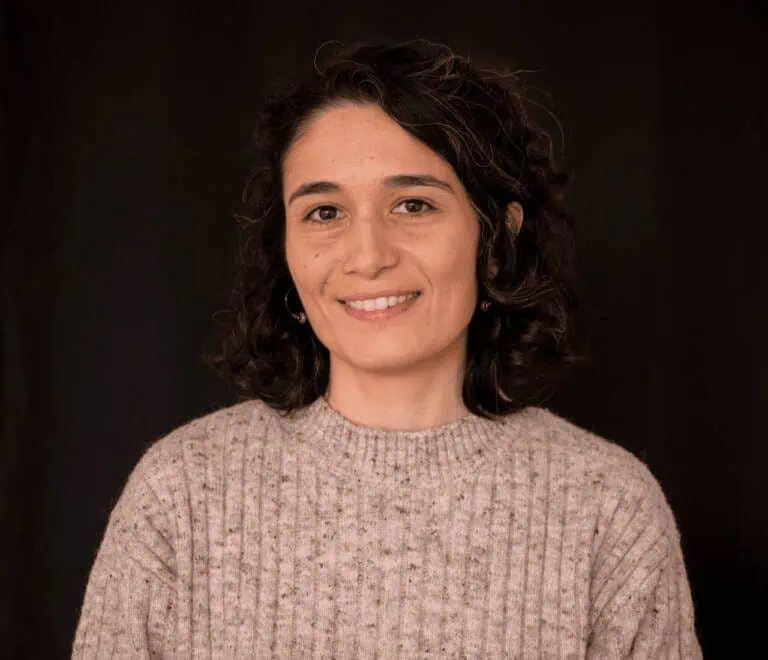


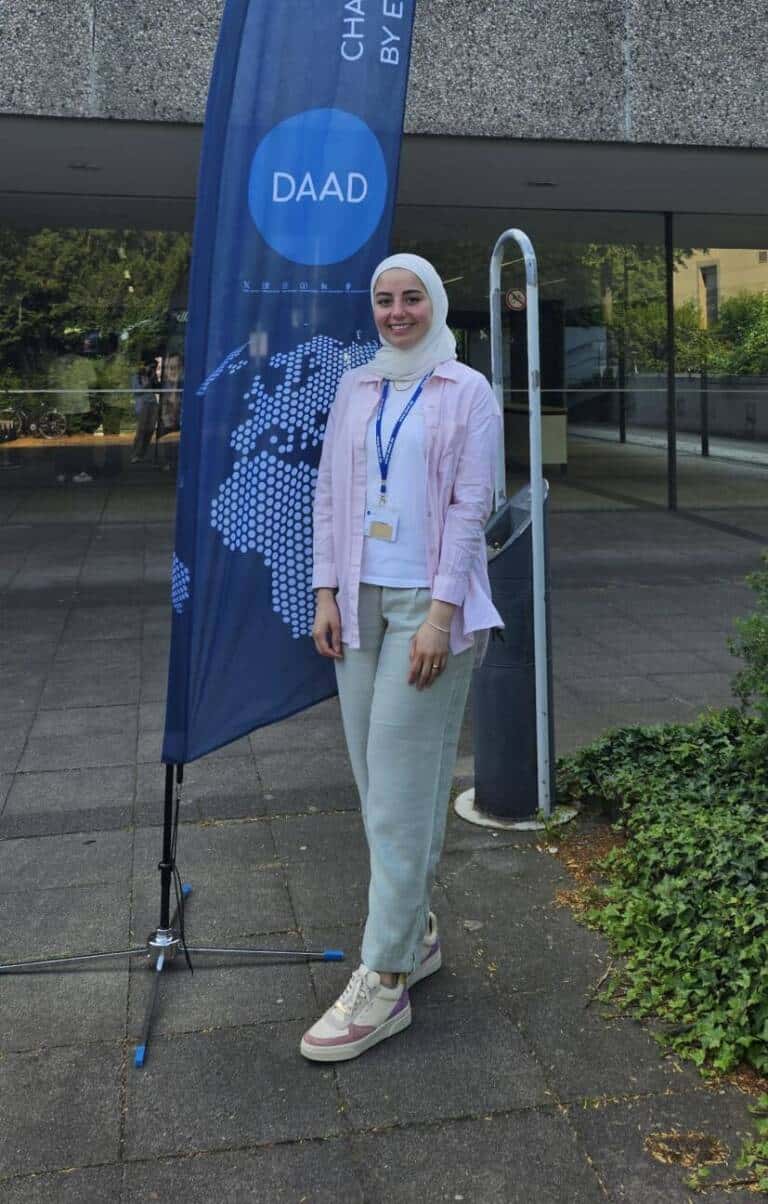


What Scholarship Recipients Say
Advice and insights from international students who successfully secured funding to study at Rhenish Friedrich Wilhelm University of Bonn.
"The DAAD Scholarship for Master Studies for All Academic Disciplines provided me with a monthly stipend of 900 euros, covered my health insurance costs, and supported my accommodation expenses if they exceeded 250-300 euros per month. These benefits fully covered my living costs in Germany, enabling me to focus entirely on my studies."
"Gain solid research experience, find good mentors, and be intentional in telling your story. Start early, be thorough, and stay open to international collaboration."
"Hey! I’m Viktoriia Mospan, an international student from Ukraine who just obtained a Master’s degree in Medical Immunosciences and Infection from the University of Bonn, Germany. This program has been a great addition to my medical background."
"The experience has been truly enriching, both academically and personally. I come from a country that has endured more than 14 years of war, with limited exposure to international perspectives. Studying in a diverse, multicultural environment alongside colleagues from all over the world has significantly broadened my horizons. The faculty and students were incredibly welcoming and supportive from day one—I never felt like a stranger."
"My decision to further my studies in this specific program was driven by several factors. First, after reviewing the curriculum, I became convinced that this program represents exactly the right step forward in my academic and professional journey. The interdisciplinary approach, combining geographical analysis with risk assessment and human security perspectives, aligns perfectly with my career goals in climate adaptation and disaster risk management."
"Currently, I am pursuing an MSc. Neurosciences degree at Rheinische Friedrich-Wilhelms-Universität Bonn, Germany, with support from the prestigious German Academic Exchange Service (DAAD) scholarship. Through this program, I am actively gaining hands-on laboratory training and research experience, particularly focusing on the interactions between microglia and neurons in neurodegenerative diseases."
Frequently asked questions
Common questions about scholarships, admissions, and studying at Rhenish Friedrich Wilhelm University of Bonn.
Most scholarships connected to the University of Bonn are aimed at on-campus (in-person) degree study in Germany rather than fully online programs. In the Global Scholarships recipient stories for Bonn, winners describe full-time, in-person programs like MSc Neurosciences and MSc Global Health (e.g., Yevheniia and Leen Alsabbagh) rather than distance-learning scholarships. The University of Bonn notes that studying is generally tuition-free (with semester fees), and that only a handful of continuing-education programs may charge tuition, so if you’re looking for “online-course scholarships,” the closest match is often continuing-education/certificate formats, but funding options vary by program and aren’t typically framed as online scholarships.
It depends on the program: the University of Bonn offers international degree programs that are “mostly Master’s programs taught in English,” while many other programs (especially many bachelor/state-exam tracks) require German. In the recipient stories, several Bonn scholarship winners explicitly report English-taught study: Grace Achieng Ochieng says, “All my academic activities are conducted in English,” Leen Alsabbagh shares that “all of our classes are conducted in English,” and Abeeb Ajagbe explains that classes are generally in English, with “some courses in German if you can speak German.”
There is usually no single “University of Bonn scholarship age limit” because many major funding routes are external (especially DAAD) and each scholarship has its own rules. DAAD’s guidance says there is “usually no fixed age limit,” with exceptions in certain programs. In the Bonn recipient stories on Global Scholarships, winners range across degree stages (Master’s and PhD), such as Grace (PhD) and Muhammad Saifullah (MSc), but they’re not presented as being constrained by an age cut-off. What matters more is fit, academics, and meeting the funder’s eligibility rules.
Scholarships linked to Bonn are available across a wide range of subjects because Bonn covers major academic areas (including humanities and social sciences, law/economics, mathematics/natural sciences, agriculture, and medicine/health-related fields). In the Global Scholarships stories, recipients span STEM and health especially: Yevheniia studied Neurosciences, Leen pursued Global Health, Grace pursued Plant Breeding and Genetics, and Abeeb pursued Environmental Risk and Human Security. For business and humanities: Bonn has the academic home for economics/law and a large humanities/social sciences landscape, and many funders (like DAAD) are not subject-limited—meaning business, STEM, and humanities applicants can all be eligible depending on the specific DAAD line. For medicine: Bonn has medicine and health-related study/research areas, but international eligibility depends heavily on the exact program type (e.g., state-exam medicine in Germany is typically German-taught and has strict admission rules), so you should check the specific medicine track and language requirements before assuming scholarship eligibility.
Many Bonn-related scholarships are open to international applicants, but eligibility is usually set by the funder (commonly DAAD) rather than only by the university. The Global Scholarships Bonn winners show a very international mix—e.g., Grace (Kenya), Abeeb (Nigeria), Leen (Syria), Yevheniia (Ukraine), Muhammad Saifullah (Cyprus), and Hilal (Turkey). In other words: many nationalities can be eligible, but you must match the specific scholarship’s country/region rules (some are global, some are targeted).
Often, yes, because the requirement follows the language of instruction of your program. For many bachelor/state-exam tracks, the University of Bonn states you need German proficiency (DSH level 2 / CEFR C1 for enrollment, with CEFR B2 at application in some cases). For English-taught master’s programs, proof of English is commonly required. In the recipient stories, English tests show up repeatedly: Yevheniia notes that many German universities require IELTS 6.5+ and says, “I sat for the IELTS exam and ended up achieving a score of 7.0,” and Muhammad Saifullah reports IELTS 7.5 and TOEFL 99/120 as part of meeting admission/scholarship requirements.
There isn’t one single minimum grade that applies to every program. Requirements vary by degree and department, and many master’s programs are reviewed individually by the relevant department. That said, the recipient stories give a feel for what competitive profiles can look like: Yevheniia reports a GPA of 3.8 (and IELTS 7.0), and Muhammad Saifullah reports a CGPA of 3.85/4.00 plus GRE and strong English scores. For some programs with admission restrictions (NC), the “minimum” can change year to year, so always check the exact program page and the most recent admission notes.
A strong academic record helps, but Bonn-related scholarships (especially DAAD routes) also reward research experience, a clear fit with the program, and well-prepared application materials. In the stories: Muhammad Saifullah emphasizes building a strong profile with research internships and explains that for DAAD he “invested significant time in drafting a strong motivational letter,” plus recommendation letters; Abeeb Ajagbe highlights aligning your background with the curriculum and leveraging informed recommendations; and Grace describes focusing on supervisor fit and research alignment (and notes that having a confirmed host institution was a key requirement for her DAAD path). If you’re applying in STEM/engineering-like areas, highlight lab/research skills; for business/humanities, highlight academic writing, relevant projects, and a coherent narrative tied to your goals.
Document requirements depend on your level and program. The University of Bonn states that (for many bachelor/state-exam/theology routes) you typically need a certified copy of your university entrance qualification plus a certified translation (German/English/French), and proof of German language skills (with stated CEFR/DSH levels). For master’s programs, Bonn notes that documents and deadlines are program-specific and are provided in the description of the relevant discipline and during the application process. In the scholarship stories, you also see the scholarship-side document set: Muhammad Saifullah mentions preparing a “motivational letter” and collecting recommendation letters, and Leen Alsabbagh stresses submitting a clear, cohesive set of materials: “clarity and cohesion make a real difference.”
No, Bonn explicitly states that applications to degree programs are free.
There are many degrees that are open to international students right now — find yours.
About the Author: Hyun Lee


I really need a help to continue my education
Hello, fortunately, Rhenish Friedrich Wilhelm University of Bonn is free. You can see the tuition fee page here.