
How I Secured a Fully Funded Master's at Seoul National University of Science and Technology (SeoulTech), South Korea Through the Global Korea Scholarship (GKS)
University: Seoul National University of Science and Technology (SeoulTech)
Degree: Master’s Degree in Data Science
Previous Education: Bachelor’s Degree in Biotechnology, Universidad San Francisco de Quito
Scholarship: Global Korea Scholarship (GKS) – Fully Funded (Full Tuition, Round-Trip Airfare, Monthly Living Allowance, One-Year Korean Language Course)
Social Media
LinkedIn: linkedin.com/in/carlos-vintimilla5/
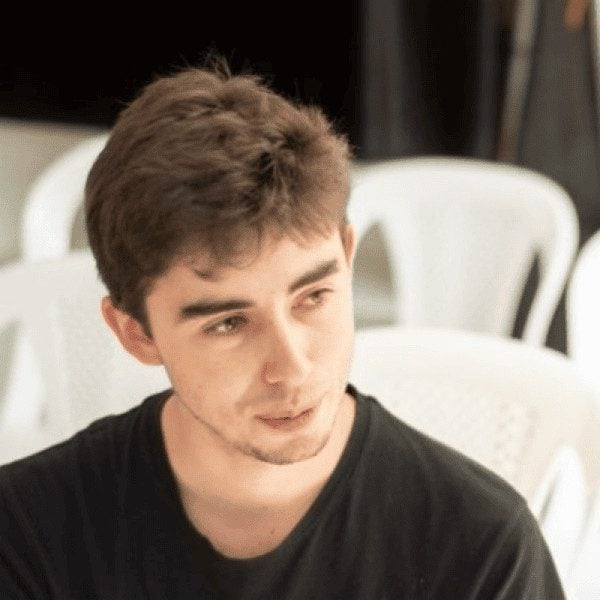
The Journey
My name is Carlos Vintimilla. I was born in Ecuador, and I am 31 years old. I studied Biotechnology for my bachelor's degree and then pursued a Master's Degree in Data Science at Seoul National University of Science and Technology (SeoulTech).
Global Korea Scholarship Details
To study my master's degree, I received the Global Korea Scholarship (GKS), which is a fully funded South Korean government program. It covers full tuition, round-trip airfare, a monthly living allowance (1 million Korean Won during my time; this amount increases every few years), and a one-year Korean language course for international undergraduate and graduate students.
Educational Background
I studied high school in Ecuador. At the time, high school was not specialized, so we studied every subject, from Economics to Physics and Biology, during the school year. I graduated as the best student in my class with a 3.8 GPA and applied to Universidad San Francisco de Quito, one of the best universities in the country.
In Ecuador, private universities have their own admission exams. I received a perfect score in Mathematics, as well as high scores in the other subjects, which earned me a scholarship covering 70% of my tuition.
At university, I studied Biotechnology, and from my second year, I became involved in research and laboratory work as much as possible. This experience eventually helped me publish a couple of papers. Academically, I graduated Summa Cum Laude with a 3.8 GPA.
I think the main ways my background helped me apply for the scholarship were my English proficiency and my research experience. My university offered plenty of courses in English, which helped me develop my English skills.
I also think it was important that my background was not the typical Data Science background. I studied Biotechnology, while most Data Science graduates usually come from Computer Science, Economics, or similar fields.
The gap between Biotechnology and Data Science is not as big as it might seem because biotechnology research generates huge amounts of data. Especially at the time, from 2014 to 2018, when I was studying, many of the tools used to analyze this data were complex, and not many researchers had mastered them. I like to think that this gave me an edge over other candidates.
How Did You Prepare to Apply to Seoul National University of Science and Technology (SeoulTech)?
How Did You Find Information About Global Korea Scholarship and Seoul National University of Science and Technology (SeoulTech)?
At the time, I heard about scholarships in Asia and started researching them. I found all the information about the GKS Scholarship on the Korean Embassy's webpage.
Did You Take Any Standardized Tests? If So, How Did You Prepare for Them?
I took the TOEFL to certify my English proficiency. To prepare for it, I took as many mock tests as I could until most of my results were at a C2 level.
How Did You Prepare to Apply for the Global Korea Scholarship?
The GKS Scholarship allocates a certain number of candidates to each country. For Ecuador, that number was eight when I applied.
Because of this, during my first application, I honestly did not prepare that much. I took the TOEFL because it was a requirement for most of the foreign universities I was looking into, and it also helped with my GKS application.
To be honest, I did not think I was going to get the scholarship on my first try.
How is Your Experience at Seoul National University of Science and Technology (SeoulTech)?
I firmly believe the GKS Scholarship has to be one of, if not the best, scholarships available in the world.
Both KNU (Kangwon National University), where I studied Korean, and SeoulTech were top-notch institutions where I always felt welcome. Academically, they had excellent professors and provided a great environment for learning.
Especially at SeoulTech, I was very fortunate to work in the DaintLab Laboratory under Professor Sangheum Hwang, who helped me improve as a researcher while also allowing me to do state-of-the-art research on many topics related to AI.
How Do You Rate Seoul National University of Science and Technology (SeoulTech) Academically?
I had a very positive academic experience at both universities. I was especially impressed by the quality of the professors and the opportunities available for research.
At SeoulTech, I was able to work on AI research and gain hands-on experience in a research laboratory, which was one of the most valuable parts of my master's degree.
Are Your Classes Conducted in English or Korean?
In my case, I took classes in both Korean and English. I did not achieve Korean proficiency, so sometimes I had difficulties when learning in Korean. However, all the professors were very helpful and would allow me to submit my assignments in English or provide me with material to study in English. The exams were also all in English.
This varies from major to major. Some majors are completely in English, while others are mixed.
What Did You Pursue After the Global Korea Scholarship?
Right now, I am working in Ecuador at a consultancy company, where I am the lead developer of AI products for the company.
What Do You Think Made Your Application Stand Out?
I think there were three things that made my application stand out.
First, my English proficiency. Second, my research experience. And last, I think my background, which was quite different from that of the usual Data Science applicant, helped me stand out.
Coming from Biotechnology rather than Computer Science or Economics gave me a different perspective on Data Science. My previous research experience also showed that I already had experience working with data and conducting research.
What Would You Have Done Differently if You Were Going Through the Process Again?
I would have started studying Korean from the moment I learned about the scholarship. I think that would have made me stand out even more and would have helped me a lot throughout the scholarship process.
Right now, as the scholarship has gained popularity, knowing Korean is a huge plus for a candidate.
What Advice Would You Give Those Looking to Apply for a Similar Scholarship?
My main advice would be to work on both your English and Korean.
I would also recommend participating in the many events that Korean embassies host. Since one of the main ways to apply for the scholarship is through the Embassy Track, gaining visibility by participating in these events can always be a plus.
Most importantly, I would encourage people to apply even if they don't think they have a chance. I honestly did not expect to receive the scholarship on my first try, but I applied anyway. You never know what your application might bring.
Want to submit your
scholarship journey?
Submit Your Story Here!
More Scholarship Recipients
My name is Shah Hussain, and I am from Khyber Pakhtunkhwa, Pakistan. I completed my Bachelor’s in Psychology at the Univer .... Read more
I am June from the Philippines. I am an educator for Social Sciences and Humanities. I recently earned my Master in Southeas .... Read more
Hi, my name is Abdul Hafeez, and I come from a small town called Nasirabad in Sindh, Pakistan. Currently, I am pursuing a ma .... Read more
Leave A Comment