
Ewha Womans University Scholarships for International Students 2027
Ewha Womans University offers access to scholarships that can reduce tuition burden and sometimes support additional costs. Below are top options prioritized by funding level.
When reviewing university scholarships connected to Ewha Womans University, these are often the first awards worth checking due to the typical scale of support. Ewha Global Partnership Program is a fully funded award, and the listed benefits often include full admission and tuition fees, housing fees and if scholar is a dormitory resident, and stipend. International Students Scholarship is usually considered full tuition, and typical coverage can include full admission and tuition fees up to 8 semesters for incoming undergraduate and graduate students and full admission and tuition fees for 1 semester for students with outstanding admissions applications and a TOPIK Level 6 certificate. A strong option is KOICA-Sun Scholarship which is partially funded and often covers 50% off tuition fees.
If you are building a wider scholarship strategy for Ewha Womans University, external and government programs can be important additions. Here are a few to consider. KOICA Scholarship is fully funded, and coverage often includes tuition fees, monthly living allowance, and accommodation. POSCO Asia Fellowships is fully funded and typically covers full tuition, living expense stipend of 1,000,000 KRW per month, and national health insurance. Samsung Global Hope Scholarships is commonly categorized as fully funded support, and coverage that often includes undergraduate level : KRW 3,900,000 per semester and Master's and PhD level : KRW 3,500,000 or KRW 5,000,000 per semester.
For more opportunities beyond these highlights, explore the scholarship listings below on this page.
Ewha Womans University Scholarships for International Students
The scholarships at Ewha Womans University can help fund your study expenses. There are currently 9 scholarships being offered to international students at the Ewha Womans University, all with varying requirements, benefits, and application processes. We have compiled them in this list to help you find the scholarship that best fits you.
Undergraduate Scholarships
Graduate Scholarships
External Scholarships
There are many degrees that are open to international students right now — find yours.
Ewha Womans University Admissions
Here are the official admission pages for Ewha Womans University:
| Degree | Admissions Pages |
|---|---|
| Bachelor's | International Students Admissions Page |
| Master's | International Students Admissions Page |
Admissions and Scholarship Results at Ewha Womans University
Here are some of the admissions and scholarship results from previous applicants to Ewha Womans University, which you might find helpful. For more results to Ewha Womans University, please see the Ewha Womans University Admissions Profile Page .
| Nationality / Region | SAT/ACT | EFC | GPA | Scholarship | Status |
|---|---|---|---|---|---|
| Vietnam | N/A | N/A | 8.7/10 | N/A | Accepted |
| India | N/A | N/A | 4.02/5.0 | N/A | Rejected |
Ewha Womans University Application Deadlines
| Degree | Admission Deadline |
|---|---|
| Bachelor's and Master's (Spring) | October 10, 2025 |
| Bachelor's and Master's (Fall) | April 3, 2026 |
Tuition Fees at Ewha Womans University for International Students
Indicative annual tuition fee ranges for international students at Ewha Womans University. Exact fees vary by program, so always confirm the current cost on the university's official tuition fee pages.
| Degree Level | Typical Annual Range |
|---|---|
| Bachelor's Tuition | 9,540,000 – 11,820,000 KRW |
| Master's Tuition | 13,920,000 – 19,860,000 KRW |
Please note that tuition fees can vary based on the specific program you choose. For the most accurate and current fee information, consult the official tuition fee pages linked above.
Ewha Womans University Scholarship Recipients
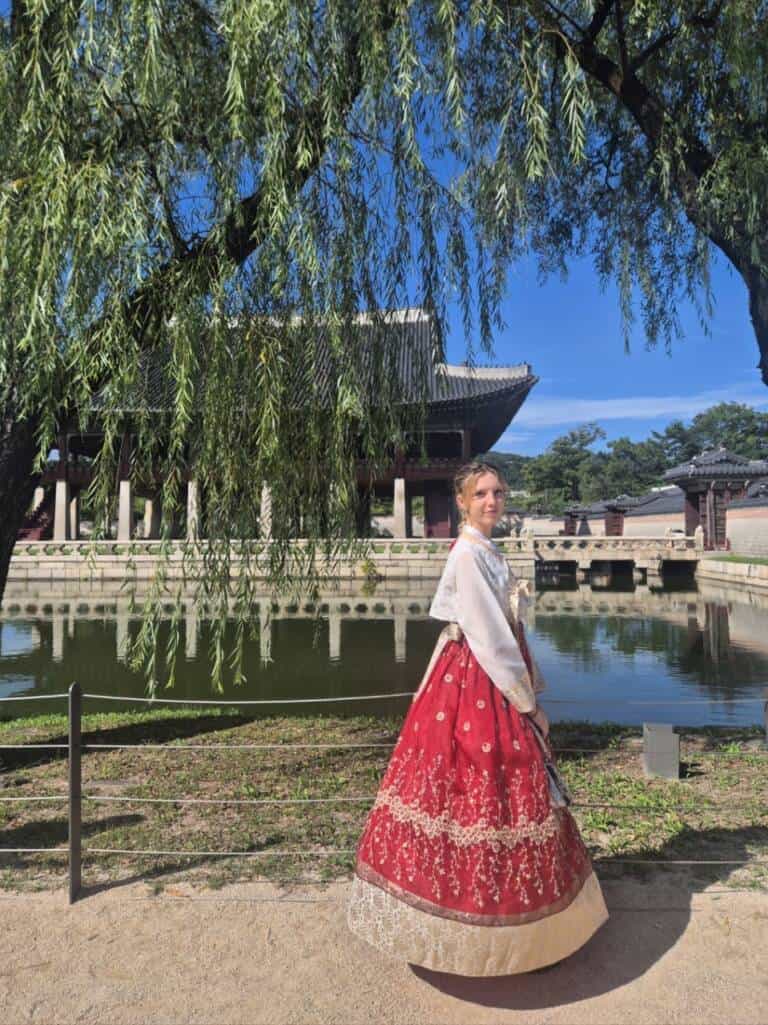
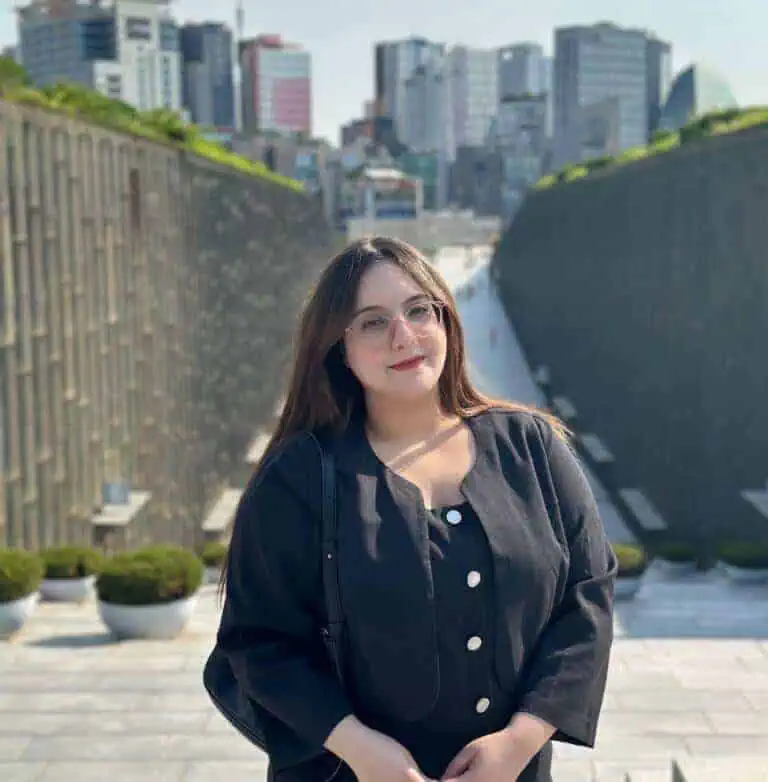
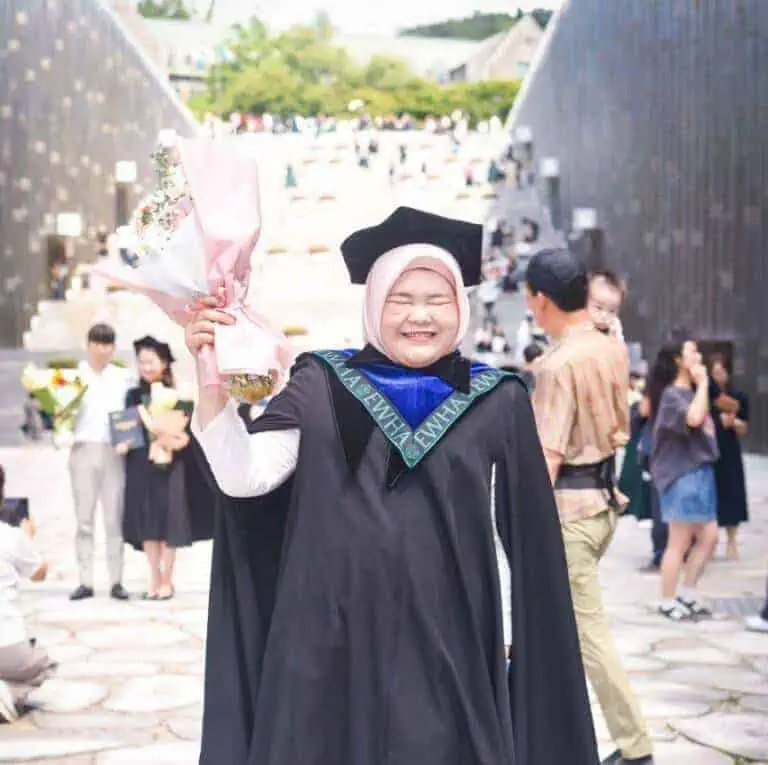
International students who received scholarships to study at Ewha Womans University, documented by Global Scholarships.



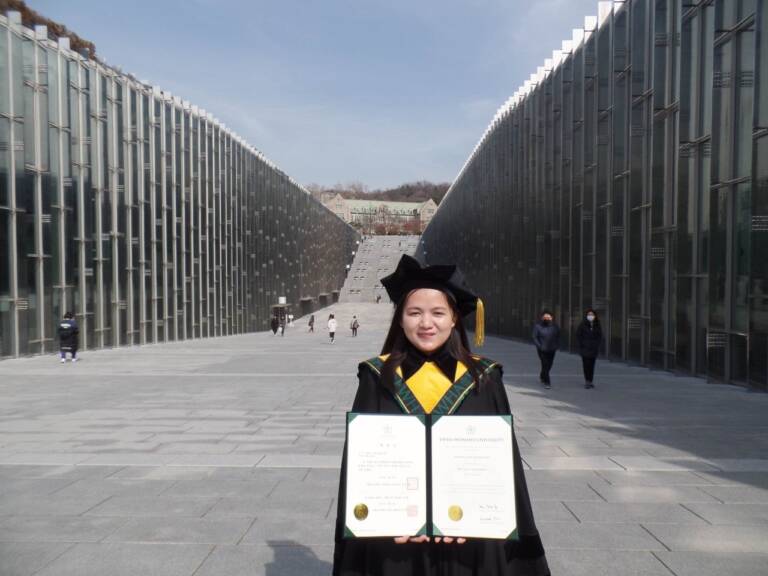
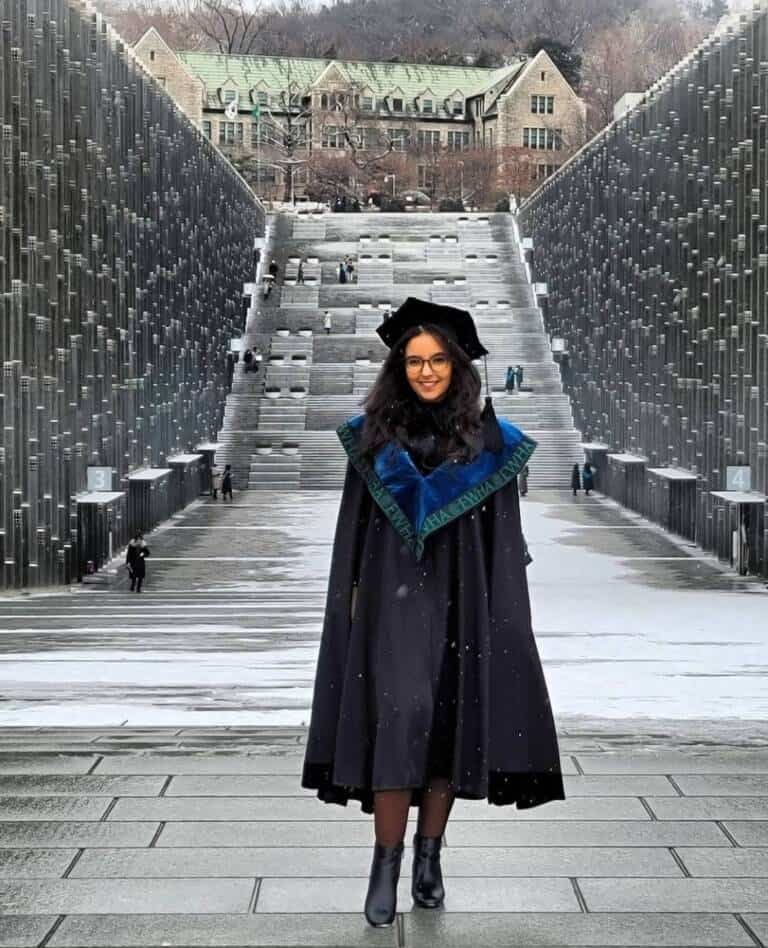

What Scholarship Recipients Say
Advice and insights from international students who successfully secured funding to study at Ewha Womans University.
"The EGPP Scholarship covers: Full tuition, On-campus housing, a Living stipend (about $700/month, enough to cover basic expenses in Seoul), Health insurance, and Round-trip airfare."
"it is important to put genuine effort into writing your SOP, as it should clearly demonstrate your motivation to receive the scholarship."
"I decided to pursue my second master's degree in International Business at Ewha Womans University Graduate School of International Studies (GSIS)."
"My experience at Ewha has been truly inspiring and transformative."
"The professors are exceptionally supportive, offering guidance and mentorship at every step."
"Next year, I will pursue my Master’s Degree in International Relations at Ewha Graduate School of International Studies!"
Frequently asked questions
Common questions about scholarships, admissions, and studying at Ewha Womans University.
Most EWHA scholarships are tied to being admitted into a degree program (undergraduate/graduate) and maintaining enrollment, rather than being “online-course-only” scholarships. For example, EWHA’s admissions guide lists scholarships for incoming international students (such as EGPP and ISS) as part of the special admissions process for international applicants. In recipient stories, scholarships also read like on-campus enrollment packages: Nunnalin describes EGPP benefits and even notes that for extra terms you “must pay in advance and get a full refund after you finish a course,” which suggests the scholarship is managed around semester enrollment rather than standalone online classes.
Both exist, but it depends heavily on the college/department. EWHA notes that all major courses in the Division of International Studies (International Studies, Global Korean Studies) are conducted in English, while in many other majors the share of English-taught courses varies and there may be more courses in Korean. Recipient experiences match this range: Souhaila says, “All classes at Ewha Womans University GSIS are conducted entirely in English,” while Nunnalin answers her program is taught “in Korean.” Thai Quynh Anh Nguyen also describes a mixed environment: “Classes were available in both Korean and English,” and adds that her field’s course materials were in English.
For EWHA’s internal scholarships (like EGPP/ISS in the international admissions guide), age limits are not typically presented as the headline eligibility requirement; the focus is more on applicant type (international admissions), academic strength, and scholarship-specific criteria (e.g., developing-country eligibility for EGPP). However, many applicants combine EWHA scholarships with external funding that does have age rules. For example, the Korean government’s Global Korea Scholarship (GKS) lists age criteria (e.g., “Under 25 years old” for undergraduate and “Under 40 years old” for graduate, depending on the program). In the recipient stories, Shreya Koirala explicitly shares, “I am 22 years old,” while pursuing GKS-linked study pathways.
Scholarships at EWHA are available across a wide range of subjects because they’re usually attached to admission (and sometimes to field-based criteria). EWHA offers majors across humanities and social sciences, STEM, business, engineering, and health fields. In the scholarships section of the international admissions guide, you’ll also see scholarships that are field-linked. Recipient stories show that funding spans many areas: Nunnalin (Computer Science & Engineering), Souhaila (International Business), Thai Quynh Anh Nguyen (Life Sciences), Zainab Ummu Hasanah (Social Welfare), and Gita Poudel (English Language & Literature).
Many EWHA scholarships in the international admissions guide are designed for international applicants (non-Korean applicants applying through the special admissions process for international students). Some scholarships are open broadly to international applicants, while others are nationality- or country-group targeted: EGPP is described as for applicants from developing countries (with reference to OECD DAC guidance), and external scholarships like GKS require the applicant and both parents to hold non-Korean citizenship. Recipient stories reflect this international spread: Nunnalin (Thailand), Thai Quynh Anh Nguyen (Vietnam), Zainab Ummu Hasanah (Indonesia), Shreya Koirala (Nepal), and Souhaila (Morocco).
It depends on your major. In EWHA’s international admissions guide, language documents can be optional in some cases, but there are key exceptions (for example, English test scores are mandatory for applicants to the Division of International Studies, while optional for other majors).
Scholarships can also be directly tied to language proofs: the guide lists TOPIK-based scholarship categories (TOPIK 4/5/6) and also scholarships that require a TOPIK score at application time. Recipient examples show different paths: Nunnalin says, “I took the TOPIK… and achieved Level 5,” while Thai Quynh Anh Nguyen mentions preparing “for the TOEFL score of 88” and later reflects that once you meet the minimum, what matters is how you present your story. Zainab Ummu Hasanah also says, “Yes, I did take IELTS,” and prepared with online videos and practice samples.
EWHA generally uses a holistic/comprehensive evaluation in international admissions (academic capability, language proficiency, preparedness in the major, motivation, and other qualities in submitted materials), rather than publishing one universal “minimum GPA for acceptance.” That said, some scholarships and external programs do publish thresholds. For example, the international admissions guide includes scholarships with explicit cumulative GPA requirements (e.g., some Ewha-alumni-linked awards list GPA requirements out of 4.3), and external scholarships like GKS list an academic performance threshold (e.g., 80%+). In stories, successful recipients often show strong academics: Zainab Ummu Hasanah lists a GPA of 3.62/4.00, and Shreya Koirala lists “CGPA (3.68)” alongside IELTS 7.5.
A strong background usually means (1) solid grades in your most recent program, (2) clear fit with the major, and (3) evidence you can thrive at EWHA (research/portfolio/leadership, depending on level). Recipient stories give concrete examples: Thai Quynh Anh Nguyen attributes strength to “a strong research background,” noting “four publications,” and emphasizes recommendation letters and a well-crafted personal statement. Nunnalin also frames her background around initiative and growth, exploring activities and building language skills, rather than only prestige, saying what mattered was constantly seeking new opportunities. Zainab Ummu Hasanah even highlights differentiation through language effort, sharing that she wrote parts of her scholarship materials in Korean and had them checked for grammar.
Document requirements depend on level (undergraduate vs graduate), but EWHA’s international admissions guide commonly includes: an online application form (with photo upload), a personal statement (undergraduate) or study plan (graduate), and academic records (graduation/degree certificate and official transcript).
For graduate applicants, recommendation letters are “not mandatory but encouraged” and are submitted through the designated recommendation website. If you apply for EWHA scholarships, you also submit a scholarship application form.
The guide also explains translation rules (documents not in Korean/English need certified notarized translations) and that originals/hard copies are required after preliminary admission. Recipient stories echo this paperwork reality: Zainab Ummu Hasanah says, “I… apostilled all documents needed,” and mentions translating and legalizing documents; Thai Quynh Anh Nguyen likewise mentions “gathering recommendation letters, and official documents” alongside test prep.
EWHA offers undergraduate and graduate programs across many colleges and graduate schools. At the undergraduate level, examples include Liberal Arts, Social Sciences, Natural Sciences, Engineering, Business Administration, Science & Industry Convergence, Medicine, Nursing, Pharmacy, and Artificial Intelligence, among others. At the graduate level, EWHA has the Graduate School (with tracks including humanities/social sciences, natural sciences, engineering, arts, medicine, and interdisciplinary programs) and professional/special graduate schools (e.g., Graduate School of International Studies, Business, Law, Social Welfare, Education, Design).
Recipient pathways give a feel for this range: Souhaila studied International Business, Nunnalin studied Computer Science & Engineering, Thai Quynh Anh Nguyen completed a PhD in Life Sciences, and Gita Poudel pursued English Language & Literature.
- Humanities & Social Sciences: Liberal Arts, Social Sciences, Education, Social Welfare, Theology, Policy Science
- STEM: Natural Sciences, Engineering, AI, Science & Industry Convergence, Life Sciences
- Business: Business Administration, Graduate School of International Studies, Graduate School of Business
- Arts: Music, Art & Design, Performing Arts
Yes. EWHA’s international admissions guide lists an application fee of 150,000 KRW (150 USD) and notes that it is generally non-refundable after submission.
There are many degrees that are open to international students right now — find yours.
About the Author: Hyun Lee


Wow. This is really helpful.
Thank you so much.
You are welcome!
I’m interested in your program. I really want to study in Korea but I don’t have the financial capacity to do such.
Hello, you can apply for scholarships here to fund your studies. There are scholars who received scholarships at the school, and some who’ve received scholarships such as GKS Scholarships
Please do you know when we can apply EGPP for this year?
Hello, the applications opened on March 5 and closes on April 7, 2025
hi are applications still open for2026?
Hello, for Spring 2026, it is closed, but for Fall 2026, the deadline will be on April