
How I Secured a Fully Funded PhD at Harbin Institute of Technology, China Through the Chinese Government Scholarship
University: Harbin Institute of Technology
Degree: PhD in Information and Communication Engineering
Previous Education: Bachelor’s in Electrical and Computer Engineering, COMSATS University Islamabad; Master’s in Electrical (Telecommunication) Engineering, National University of Sciences and Technology
Scholarship: Chinese Government Scholarship (CSC) – Full Funding (Tuition, Monthly Living Allowance, Housing Allowance, Health Insurance)
Other Offered Scholarships: Visiting Researcher/Studentship at Prince Sultan University – Funding (Research Salary, Accommodation, Travel Allowance, Health Insurance, Research Funding)
Social Media
LinkedIn: linkedin.com/in/sohaibbinaltaf/
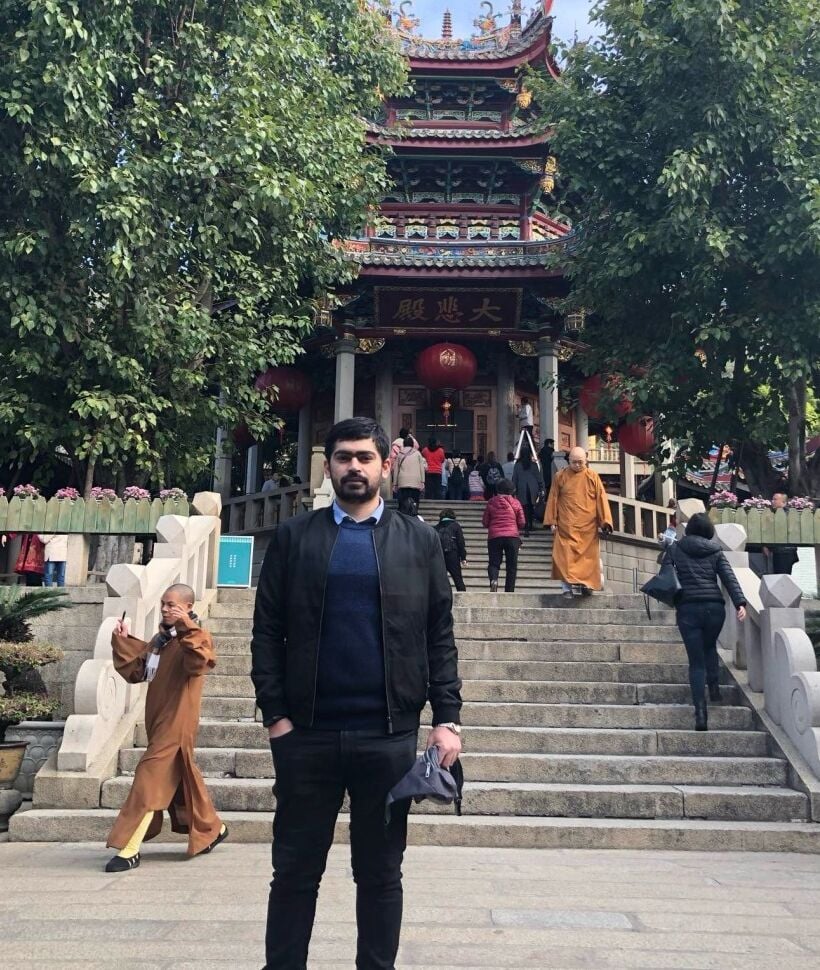
The Journey
My name is Sohaib Bin Altaf Khattak, and I'm from Pakistan. Looking back, I think my whole career path started with a simple childhood curiosity: I was fascinated by how the internet actually worked, and how data could travel huge distances through the air wirelessly. That curiosity followed me through high school and college, and it eventually shaped everything I studied afterward.
That's what led me to pursue my Bachelor's in Electrical and Computer Engineering at COMSATS University Islamabad, followed by a Master's in Electrical (Telecommunication) Engineering at the National University of Sciences and Technology (NUST), and eventually a PhD in Information and Communication Engineering at Harbin Institute of Technology (HIT) in China. Each degree let me dig a little deeper into the same underlying question that had fascinated me as a kid.
Chinese Government Scholarship Details
I was awarded the Chinese Government Scholarship by the China Scholarship Council (CSC) to pursue my PhD at Harbin Institute of Technology*, a member of China's elite C9 League, and a university ranked in the top 200 globally by both QS and Times Higher Education. The scholarship covered my full tuition, along with a monthly living allowance, housing allowance, and health insurance for the entire duration of my PhD.
Were You Offered Any Other Scholarships?
Yes, during my PhD, I was also offered a Visiting Researcher/Studentship position at Prince Sultan University (PSU) in Riyadh, Saudi Arabia. It included a research salary, accommodation, a travel allowance, health insurance, and research funding.
This opportunity later turned into my current postdoctoral fellowship at the same institute, since I was retained there after the visiting position ended.
Educational Background
My educational background built up gradually, step by step, in the field of electrical and telecommunication engineering. My bachelor's gave me a strong foundation in electrical and computer engineering, my master's let me specialize further in telecommunications, and by the time I applied for my PhD, I had a clear and consistent academic path that made my application to HIT coherent rather than a scattered list of unrelated experiences.
How Did You Prepare to Apply to Harbin Institute of Technology?
How Did You Find Information About Chinese Government Scholarship and Harbin Institute of Technology?
I researched university rankings and specifically looked for institutions strong in wireless communications and electronics engineering. HIT stood out immediately, not just for being part of the C9 League, but because its School of Electronics and Information Engineering has a strong global reputation in my exact research area.
How Did You Prepare to Apply for the Chinese Government Scholarship?
I made sure my application told one consistent story rather than a list of unrelated achievements, showing a steady progression from my undergraduate studies through my master's research, all within the same broad field. That coherence, I believe, made the difference.
What Do You Think Made Your Application Stand Out?
Honestly, I think it came down to depth over breadth. I didn't try to show that I had done a little bit of everything — I showed that I had steadily built expertise in telecommunications and wireless communication across multiple degrees, with real published results to back it up.
Life in a Multicultural Environment
One thing I didn't expect going in was how much living abroad would change the way I think. Growing up, I was always curious about places and cultures I'd never had the chance to see, and suddenly I was surrounded by people from those very countries. It was an incredible experience just to sit and talk with someone whose background I'd only ever read about before.
Living in your own country your whole life, you don't realize how much you're missing until you leave it. One of the biggest lessons for me was the value of learning the local language. In China, I made an effort to pick up enough Mandarin to get by and connect with people, and it made a real difference. Whenever I was traveling or just chatting with locals, knowing even a bit of the language broke the ice instantly — it removed that invisible barrier between "foreigner" and "local." It felt like getting a firsthand experience of the place, rather than just observing it from the outside.
My advice to anyone moving abroad for their studies: make the effort to learn the language, even just the basics. It will do more for your social life and your sense of belonging than almost anything else.
What Would You Have Done Differently if You Were Going Through the Process Again?
Looking back, I’d put even more emphasis on finding an opportunity that’s highly relevant to you specifically , the right lab, the right professor, and the right time to avail that opportunity. It’s not just about applying to a good university; it’s about making sure the specific research group and supervisor genuinely align with what you want to work on, and catching that opportunity at the right moment. I’d also spend more time looking into applicants who applied before me and got selected, to understand what profile and background actually worked for that specific scholarship or position.
If there's one thing I'd want future applicants to take away from my story, it's this: **quality is always better than quantity.** You don't need to pad your CV with everything you've ever done. Focus on doing meaningful work in one area, and let that work speak for you.
To give a concrete example from my own journey: my focused work during my Master's helped me land a job. That job and the reputation it built helped me secure my PhD scholarship at an institution like HIT. And my dedicated work during that PhD then opened up a separate opportunity, the position at PSU, which turned into my current postdoctoral role. Every step was earned by the step before it. Good, focused work doesn't just help you get one opportunity; it tends to keep paying off down the line.
How is Your Experience at Harbin Institute of Technology?
My time at HIT was amazing. It's a huge institute, with thousands of students, and one of the things that struck me most was just how multicultural it was, with students from around 70–80 countries on campus. I had never experienced an environment like that before, and honestly, I still haven't seen anything quite like it since. Beyond the size and diversity, HIT is also a very mature, well-established institute with over a hundred years of history, and that showed in the quality of the professors, the labs, and the overall setup. Being part of an institute like that really shapes you; it helps you grow, not just academically but as a person.
How Do You Rate Harbin Institute of Technology Academically?
I'd rate it very highly. HIT's strong global ranking (top 200 on both QS and Times Higher Education) and its status as a C9 League university were actually part of what attracted me to it in the first place. That reputation was backed up by real substance once I got there , experienced professors, well-equipped labs, and a research culture that pushed me to grow.
How Does Harbin Institute of Technology Support International Students?
With students from 70–80 countries on campus, HIT has a lot of experience hosting and supporting an international student body, which made settling in and building a social life much easier than I expected.
Are Your Classes Conducted in English or Mandarin?
I chose an English-language PhD program, so all my coursework and research work were conducted entirely in English.
Want to submit your
scholarship journey?
Submit Your Story Here!
More Scholarship Recipients
My name is Anna Nana Agyeiwaa Mensah, a professional nurse from Ghana. My interest in Global Health grew out of my experienc .... Read more
My name is Ratul Chakraborty, and I am from Bangladesh. My background is interdisciplinary, actually. Before coming to Germa .... Read more
My name is Mabel Zuñiga. I am a graduate student from Panama pursuing a Master’s degree in Public Policy at the Universit .... Read more
Leave A Comment