
How Mukhlisa, an Uzbek Scholar, Secured a Fully Funded Master’s in Law and Economics at Pompeu Fabra University, Erasmus University Rotterdam, and the University of Arizona Across Spain, the Netherlands, and the United States Through the Erasmus Mundus Joint Master Degree Scholarship
University: Pompeu Fabra University; Erasmus University Rotterdam; University of Arizona
Degree: Erasmus Mundus Master in Law and Economics (EMLE)
Previous Education: Bachelor’s degree in Public Law with a specialization in Public Administration, Tashkent State University of Law (TSUL)
Scholarship: Erasmus Mundus Joint Master Degree Scholarship – Fully Funded (Education and Living Expenses)
Other Offered Scholarships: Pennsylvania State University (Penn State) Scholarship – $40,000 (Partial Funding for Graduate Studies)
Social Media
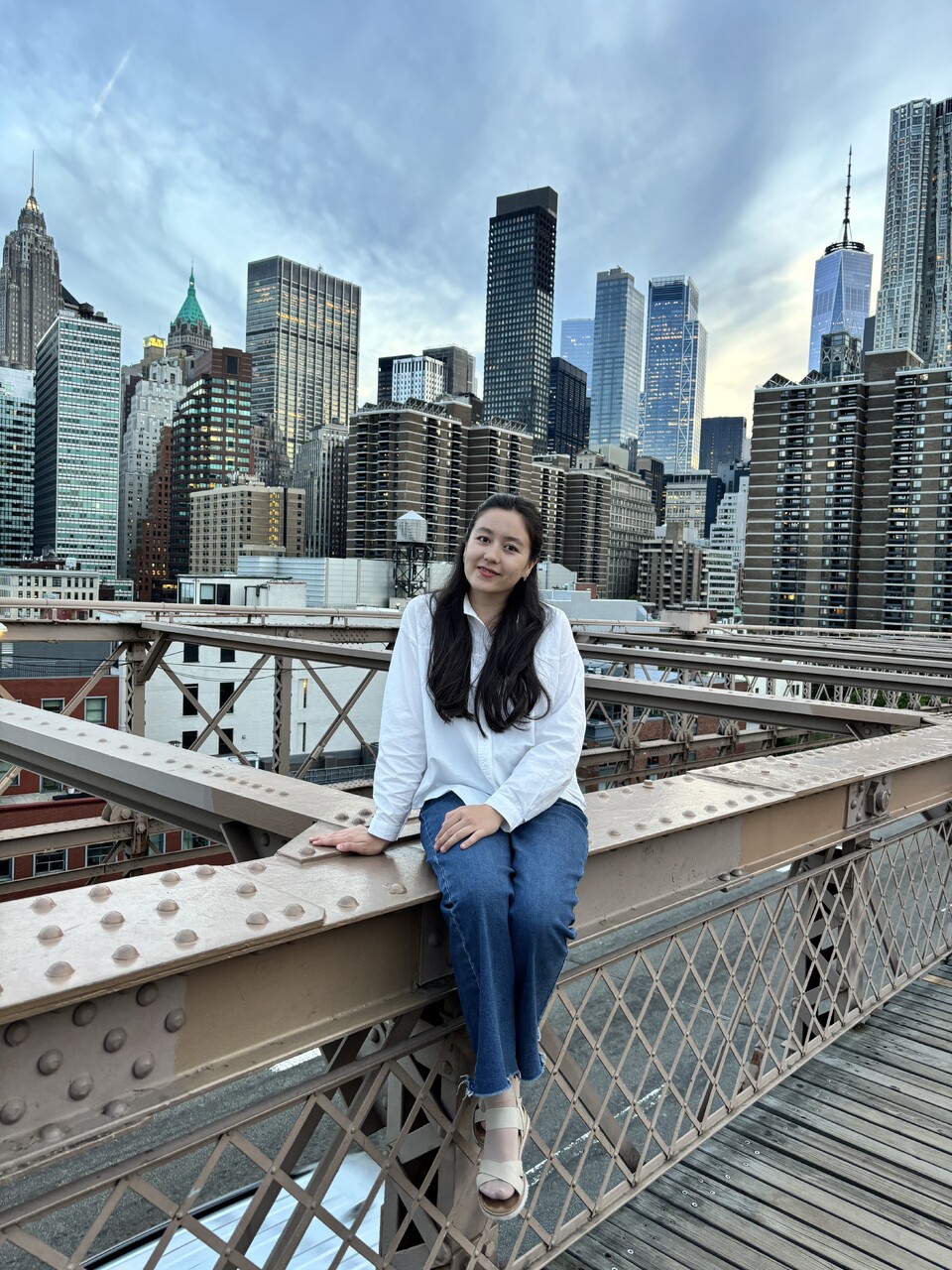
The Journey
My name is Mukhlisa, and I am from Uzbekistan. My academic background is in Public Administration, and I have always been interested in international education and opportunities that allow students to gain experience across different countries and academic environments.
Last year, I was awarded the Erasmus Mundus Joint Master Degree scholarship for the Erasmus Mundus Master in Law and Economics (EMLE) programme. Through the programme, I had the opportunity to study in three different countries: at Pompeu Fabra University in Barcelona, Spain, Erasmus University Rotterdam in the Netherlands, and the University of Arizona in the United States.
Educational Background
Before joining the Erasmus Mundus programme, I completed my Bachelor's degree in Public Law with a specialization in Public Administration at Tashkent State University of Law (TSUL) in Uzbekistan. My undergraduate education gave me a strong foundation in law, public policy, governance, and the functioning of public institutions. Although my specialization was Public Administration, studying in a law-focused university also taught me to approach policy and institutional issues from both legal and practical perspectives.
An important part of my preparation for Erasmus Mundus was my participation in two international exchange programmes. I spent one semester at Gdańsk University in Poland in 2023 and later participated in an Erasmus+ exchange at Saarland University in Germany during the 2024–2025 winter semester. These experiences were especially valuable because they showed me that studying abroad is not simply about moving to another country. Each university had its own teaching methods, classroom culture, expectations, and way of approaching academic work.
For example, I had to become comfortable with studying alongside students from different cultural and academic backgrounds, participating in discussions in English, working in international teams, and adapting quickly to unfamiliar academic environments. Moving between Uzbekistan, Poland, and Germany also made me more independent and flexible and taught me how to adjust to new environments without losing focus on my academic goals.
How Did You Prepare to Apply to the Universities?
How Did You Prepare to Apply for the Erasmus Mundus Joint Master Degree Scholarship?
For me, studying abroad was only possible if I could secure a fully funded scholarship. My family would not have been able to afford the cost of studying abroad, so from the very beginning, I knew that I had to find a scholarship that would cover my education and living expenses.
I started by researching different fully funded master's opportunities and making a list of scholarships and programmes that I could potentially apply for. At that stage, I honestly did not know much about the scholarship application process. I was learning everything from scratch — how to identify suitable programmes, understand eligibility requirements, prepare documents, write motivation letters, and present my experiences effectively.
My first attempts were not perfect. For example, I missed the DAAD application deadline because I was not organised enough at the time. Instead of seeing that as a failure, I treated it as a learning experience. I then applied to several universities and scholarship opportunities in the United States, and eventually discovered the Erasmus Mundus Joint Master Degrees.
By the time I started preparing my EMLE application, I had already learned from my earlier applications. I became much more intentional about how I presented my academic background, international experiences, and future goals.
I spent around a month working on my motivation letter alone. I did not want to submit a generic essay that simply listed my achievements. I wanted the application to tell a coherent story — where I was coming from, why I was interested in the intersection of law and economics, why EMLE was the right programme for me, and how the programme connected to my future plans. I continuously revised and customised my application so that it reflected my own experiences rather than what I thought a selection committee simply wanted to hear.
Interestingly, I submitted my application only about 15 minutes before the deadline. It was definitely stressful, but I remember feeling unusually calm afterwards. Something in me genuinely believed that I had given this application everything I could.
After submitting my EMLE application, I actually lost much of my motivation to apply for other scholarships. I had the feeling that this was the opportunity I was looking for. Of course, I could not know the result, but I had put so much thought and effort into the application that I decided to trust the process.
The competition was significant. More than 770 candidates applied that year, and I was among the top 10 applicants selected for the EMLE scholarship. Being selected from such a large pool was incredibly meaningful to me, especially because this scholarship was not simply an academic opportunity — it made studying abroad financially possible for me.
Looking back, I think two things particularly strengthened my application. First was the motivation behind my application. I had a very clear reason for pursuing a fully funded international master's degree and a genuine interest in the field I was applying to. Second was my international academic background. Before EMLE, I had already studied in different European academic environments through exchange programmes in Poland and Germany. These experiences demonstrated that I was comfortable adapting to new environments, working with people from different backgrounds, and studying internationally.
Most importantly, however, I think my application stood out because I tried to make it personal and coherent. Rather than presenting a collection of achievements, I tried to show the selection committee the person behind them — what had shaped my interests, why I wanted this particular programme, and what I hoped to do with the opportunity.
Were You Offered Any Other Scholarships?
Yes. Before ultimately choosing the Erasmus Mundus opportunity, I was offered a $40,000 scholarship from Pennsylvania State University (Penn State) for my graduate studies. At the time, Penn State was ranked #89 globally in the 2025 QS World University Rankings, placing it among the top universities worldwide. However, it was not a fully funded scholarship, meaning that I would still have needed to cover a substantial portion of the remaining tuition and living expenses myself.
Could You Briefly Discuss the Erasmus Mundus Program You Pursued and the Specific Field of Study It Focused On?
I was part of the Erasmus Mundus Master in Law and Economics (EMLE) programme. In simple words, it is a programme where you study both law and economics and, most importantly for me, learn how these two fields work together.
The subjects were quite different from what I had studied during my Bachelor's. We had courses related to law and economics, competition, regulation, public policy, and quantitative methods. At first, some of the economics and statistics parts were definitely challenging for me because my previous education was much more focused on law. But that was also one of the reasons I wanted to do the programme — I wanted to get out of my comfort zone and learn something I had not studied before.
So, for me, EMLE was a really good combination of my previous background and something completely new. I came from a law and public administration background, and the programme gave me the opportunity to add economics, research, and an international perspective to it. And, of course, doing all of that while living and studying in three different countries made the experience even more special.
How Did the Cost of Living Vary Across the Countries You Studied In? Which Country Was the Most Affordable or Expensive, and How Did You Manage Financially?
The cost of living was honestly very different in each country. Out of the three, Barcelona was the most affordable for me. I could manage my monthly expenses with around €600–700, including my daily living costs, and I was also able to find relatively affordable housing. So financially, Barcelona was the easiest part of my EMLE journey.
The Netherlands was more expensive, especially when it came to housing and everyday expenses, but it was still manageable. I was able to cover my expenses in both Spain and the Netherlands using my Erasmus Mundus scholarship, so I tried to be quite careful with my spending and plan my monthly budget.
The biggest financial challenge for me was actually the United States, where I studied in Tucson, Arizona. Housing there was significantly more expensive. I was paying around $900–1,000 per month just for accommodation, which was a big difference compared with Barcelona.
Because of the higher cost of living in Arizona, my scholarship alone was not always enough to comfortably cover everything, so I used some of my personal savings alongside my scholarship. I had already anticipated that the US part of the programme would be more expensive, so I tried to save money beforehand and plan for that period.
Overall, I would say that Barcelona was the most affordable, the Netherlands was somewhere in the middle, and Arizona was the most expensive for me. One thing I learned from studying in three countries is that receiving a scholarship does not mean you can completely stop thinking about your finances. You still need to research the cost of living in each destination, especially housing, and plan your budget before moving there.
Would Potential Students Have Any Problems Not Knowing the Native Languages? Did the Language of Instruction Change from One Country to Another?
I wouldn't say that I faced a real language barrier because the language of instruction was English in all three countries — Spain, the Netherlands, and the United States. So I didn't have to switch from one academic language to another when moving between universities. However, there was definitely a difference between knowing English and actually living in an English-speaking academic environment.
I am from Uzbekistan, where English is not the language people normally use in their everyday lives. Even if you have studied English for years, you don't necessarily get the chance to have long conversations, participate in academic discussions, or simply communicate with people in English every single day.
So, at the beginning of my master's, academic English was probably more challenging for me than the language itself. Reading academic papers was one thing, but listening to lectures, following fast discussions, expressing my ideas immediately, and participating in debates with people from different countries was a completely different experience.
The first few weeks were definitely an adjustment period. I sometimes needed more time to process what someone had said or to find the right words to express my thoughts. But I didn't do anything particularly complicated to overcome it — I simply put myself in situations where I had to use English. I participated in class discussions, worked on group projects, talked to my international classmates, and tried not to worry too much about making mistakes.
Would You Recommend the Erasmus Mundus Program to Others? What Advice Would You Give to Someone Considering This Scholarship?
Yes, definitely. I would recommend Erasmus Mundus to anyone who is looking for more than just a master's degree abroad. What makes it so special for me is the experience of studying in different countries and universities as part of one programme.
You don't just get to see three countries — you experience three different universities, teaching styles, academic environments, and cultures. Every time you move, you have to start adapting again, meet new people, and get out of your comfort zone. It can be challenging, but that's exactly what makes it so valuable.
My biggest advice would be not to underestimate your own profile. When I first started looking for scholarships, I didn't really know how scholarship applications worked. I made mistakes, missed deadlines, and learned along the way. So if you are currently thinking, "I don't have enough experience" or "There are probably thousands of people better than me," don't reject yourself before the selection committee does.
I would also strongly recommend starting early. Give yourself enough time to understand the programme, prepare your documents, and especially work on your motivation letter. I spent about a month working on mine for EMLE, and I believe that time made a real difference.
And finally, don't try to make your application sound like someone else's. Be yourself and tell your own story. Your experiences may look ordinary to you because you have lived them, but the way you connect those experiences to your goals can make your application much stronger.
What Would You Have Done Differently if You Were Going Through the Process Again?
Yes, definitely. If I could go back, I would make even more effort to meet new people, stay in touch with friends, and explore the cultures around me.
When you are in a demanding master's programme, it is very easy to get caught up in assignments, exams, deadlines, and just trying to keep up with everything. Sometimes you forget that you are actually living a once-in-a-lifetime experience.
Looking back, I wish I had been even more intentional about spending time with people from different countries, learning about their backgrounds, and building friendships that could last beyond the programme. Every country I lived in gave me the chance to meet people with completely different perspectives and ways of thinking.
I also learned that Erasmus Mundus is not only about the education you receive from your university. You learn a lot from the people sitting next to you, the friends you make, the cultures you experience, and even the conversations you have outside the classroom.
So if I could give my past self one piece of advice, it would be: don't spend all your time studying. Go outside, meet people, say yes to invitations, explore the country you are in, and enjoy the experience while you are there. The degree is important, but the people and memories you take with you are just as valuable.
Want to submit your
scholarship journey?
Submit Your Story Here!
More Scholarship Recipients
My name is Shah Hussain, and I am from Khyber Pakhtunkhwa, Pakistan. I completed my Bachelor’s in Psychology at the Univer .... Read more
I am June from the Philippines. I am an educator for Social Sciences and Humanities. I recently earned my Master in Southeas .... Read more
Hi, my name is Abdul Hafeez, and I come from a small town called Nasirabad in Sindh, Pakistan. Currently, I am pursuing a ma .... Read more
Leave A Comment