
How Maria Annaliza Fraser, a Guyanese Scholar, Secured a Fully Funded Master’s in International Relations at Birkbeck, University of London, United Kingdom Through the Chevening Scholarship
University: Birkbeck, University of London
Degree: MSc in International Relations
Previous Education: Bachelor of Science in General Biology, University of Guyana; MSc in Marine Sciences (Biology), Zhejiang University
Scholarship: Chevening Scholarship – Fully Funded (Tuition, Living Expenses, Travel, Other Eligible Study Costs)
Other Offered Scholarships: MOFCOM Scholarship – Fully Funded (MSc in Marine Sciences (Biology) at Zhejiang University)
Social Media
LinkedIn: linkedin.com/in/maria-fraser-5228b2104/
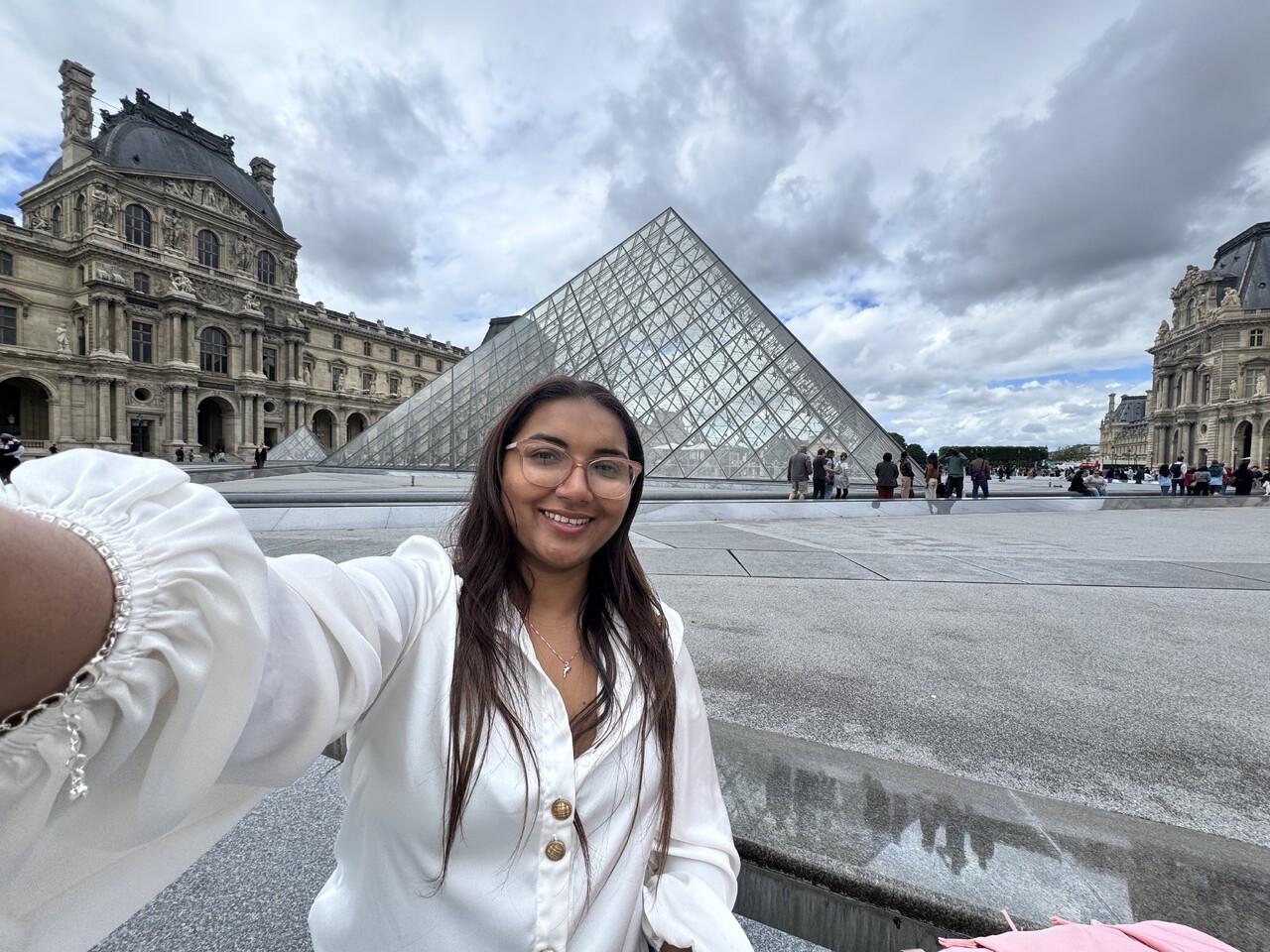
The Journey
My name is Maria Annaliza Fraser, and I am from Guyana. My academic journey has taken me from Guyana to China and then to the United Kingdom, supported by two major international scholarships.
My first academic field was biology and marine science. After completing my undergraduate degree in Guyana, I received the MOFCOM Scholarship to pursue my first master's degree, an MSc in Marine Sciences (Biology) at Zhejiang University in China.
Several years later, I was awarded the Chevening Scholarship to pursue my second master's degree, an MSc in International Relations at Birkbeck, University of London.
Chevening Scholarship Details
For my second master's degree, I was awarded the Chevening Scholarship, funded by the UK Government, to study an MSc in International Relations at Birkbeck, University of London during the 2025–2026 academic year.
Chevening is a fully funded scholarship that covered my tuition and provided financial support for living expenses, travel, and other eligible costs associated with studying in the United Kingdom.
Receiving Chevening was particularly significant because it was my second opportunity to pursue a master's degree abroad through a fully funded international scholarship. It demonstrated to me that receiving one scholarship does not mean you should stop looking for opportunities to develop yourself further, particularly when the next programme serves a different purpose in your career.
Were You Offered Any Other Scholarships?
Before Chevening, I had previously been awarded the MOFCOM Scholarship to study at Zhejiang University in China, where I completed an MSc in Marine Sciences (Biology).
The MOFCOM Scholarship was a fully funded opportunity that allowed me to undertake postgraduate study in China.
Although this scholarship was received at an earlier stage of my academic journey rather than alongside Chevening, I think it is important to mention because it demonstrates that it is possible to receive major international scholarships at different stages of your career.
The two scholarships served very different purposes in my development. MOFCOM strengthened my scientific expertise; Chevening allowed me to expand into international relations, policy, and diplomacy.
Educational Background
My educational journey began at the University of Guyana, where I completed a Bachelor of Science in General Biology. This gave me my foundation in biological sciences and eventually led me towards marine research and conservation.
I then received the MOFCOM Scholarship to Zhejiang University in China, where I completed my first master's degree in Marine Sciences, specialising in Biology.
Studying in China was one of the experiences that broadened my outlook beyond science. I was not only learning marine science; I was living in another country, adapting to another culture and interacting with people from different parts of the world. It gave me an early appreciation for how differently countries approach development, science, environmental management and international cooperation.
After returning to professional life, I worked across marine research, conservation and natural resource management. Those experiences increasingly exposed me to questions that science alone could not answer: Who has authority over natural resources? How do governments balance conservation and economic development? What happens when maritime resources become connected to sovereignty disputes? How can countries cooperate when their political interests conflict?
Those questions eventually led me to International Relations.
Receiving Chevening therefore did not mean that I was simply collecting another master's degree. My second MSc filled a specific gap in my first. Marine Science taught me to understand the ocean as an ecological system; International Relations taught me to examine it as a political, legal, and geopolitical space. That intersection eventually became central to my research on ocean diplomacy, Marine Protected Areas, sovereignty, and governance in contested maritime spaces.
What Do You Think Made Your Application Stand Out?
I believe what made my application stand out was the combination of my academic journey, professional experience, leadership, and years of volunteering in different parts of the world.
My journey was not necessarily a conventional one. I started in biology, moved into marine science and natural resource management, and later pursued International Relations. However, there was always a connection between these areas: a desire to understand environmental challenges not only through science, but also through people, policy, governance, and diplomacy.
Volunteering has been a particularly important part of that journey. Over the years, I have volunteered and participated in community, environmental, and youth initiatives both in Guyana and internationally. These experiences allowed me to work with people from very different cultural, academic, and professional backgrounds. They taught me that leadership does not always mean having a title. Sometimes it means showing up, giving your time, sharing what you know, listening to others, and being willing to contribute where you are needed.
Travelling and volunteering internationally also helped me build genuine networks. Some connections lasted for a particular project or moment, while others developed into friendships and professional relationships that have continued across countries and over many years. I think this gave me something meaningful to draw on when writing about leadership and networking in my Chevening application—I was writing about things I had actually lived rather than what I thought a scholarship panel wanted to hear.
My professional experience also gave the application a clear direction. Working in marine science, conservation, and natural resource management exposed me to the political side of environmental issues. It made me question how decisions are made, who has influence over natural resources, and how countries cooperate or compete over shared environmental spaces. This helped me explain why, despite already having an MSc in Marine Sciences, a second master's in International Relations was a logical next step.
I also believe being from Guyana contributed a perspective that was genuinely my own. Coming from a small developing country while having studied, worked, travelled, and volunteered internationally allowed me to connect local challenges with much larger global conversations.
Ultimately, I do not think one achievement made my application stand out. It was the story connecting everything together—science, volunteering, leadership, international exposure, professional experience, and a clear idea of where I wanted to go next.
My advice to future applicants is therefore not to volunteer simply because it will look good on a scholarship application. Volunteer because you care about something. Get involved. Meet people. Help where you can. Travel when opportunities arise and learn from the communities you enter. Over time, those experiences become part of who you are, and when the time comes to write your application, you will have a real story to tell rather than one you have created for the scholarship.
Advice for Applicants Who Already Have a Master's Degree
One lesson from my experience is that having a master's degree should not automatically stop you from applying for another scholarship or another master's programme.
The more important question is: Why do you need the second degree?
If you cannot explain that, then another master's may simply look repetitive. But if the second programme fills a genuine knowledge or professional gap, changes the direction of your career, or connects two areas of expertise, that can become a strength.
In my case, my first master's made me a stronger marine scientist. My second helped me understand the political world in which marine science and natural resource decisions are made.
So my advice is not to collect degrees for the sake of qualifications. Build a story in which each opportunity adds something that the previous one could not.
My journey has taken me from Guyana to China through MOFCOM, and then to the United Kingdom through Chevening. Each scholarship opened a different door. China strengthened my scientific foundation and gave me my first major international academic experience. The UK allowed me to move deeper into diplomacy, international relations, and geopolitical thinking.
For me, the value of a scholarship has never been limited to the degree written on the certificate. It is also about the countries you experience, the people you meet, the networks you build, and, perhaps most importantly, how those experiences change the way you understand your own country and the contribution you want to make when you return home.
But I always say: Focus, hard work, and determination will get you anywhere.
Want to submit your
scholarship journey?
Submit Your Story Here!
More Scholarship Recipients
My name is Shah Hussain, and I am from Khyber Pakhtunkhwa, Pakistan. I completed my Bachelor’s in Psychology at the Univer .... Read more
I am June from the Philippines. I am an educator for Social Sciences and Humanities. I recently earned my Master in Southeas .... Read more
Hi, my name is Abdul Hafeez, and I come from a small town called Nasirabad in Sindh, Pakistan. Currently, I am pursuing a ma .... Read more
Very proud of your journey Maria, not only your academic journey but your growth as a person. You always inspire those around you to grow 🪴