
How Lamia Salehin, a Bangladeshi Scholar, Secured a Fully Funded Master’s in Management of Business Information Technology at the University of Greenwich, United Kingdom Through the British Council Women in STEM Scholarship
University: University of Greenwich
Degree: MSc in Management of Business Information Technology
Previous Education: BSc in Naval Architecture and Offshore Engineering, Bangladesh Maritime University
Scholarship: British Council Women in STEM Scholarship – Full Funding (Tuition, Monthly Living Allowance, Return Flights, Visa Fees, Immigration Health Surcharge)
Social Media
LinkedIn: linkedin.com/in/lamia-salehin/
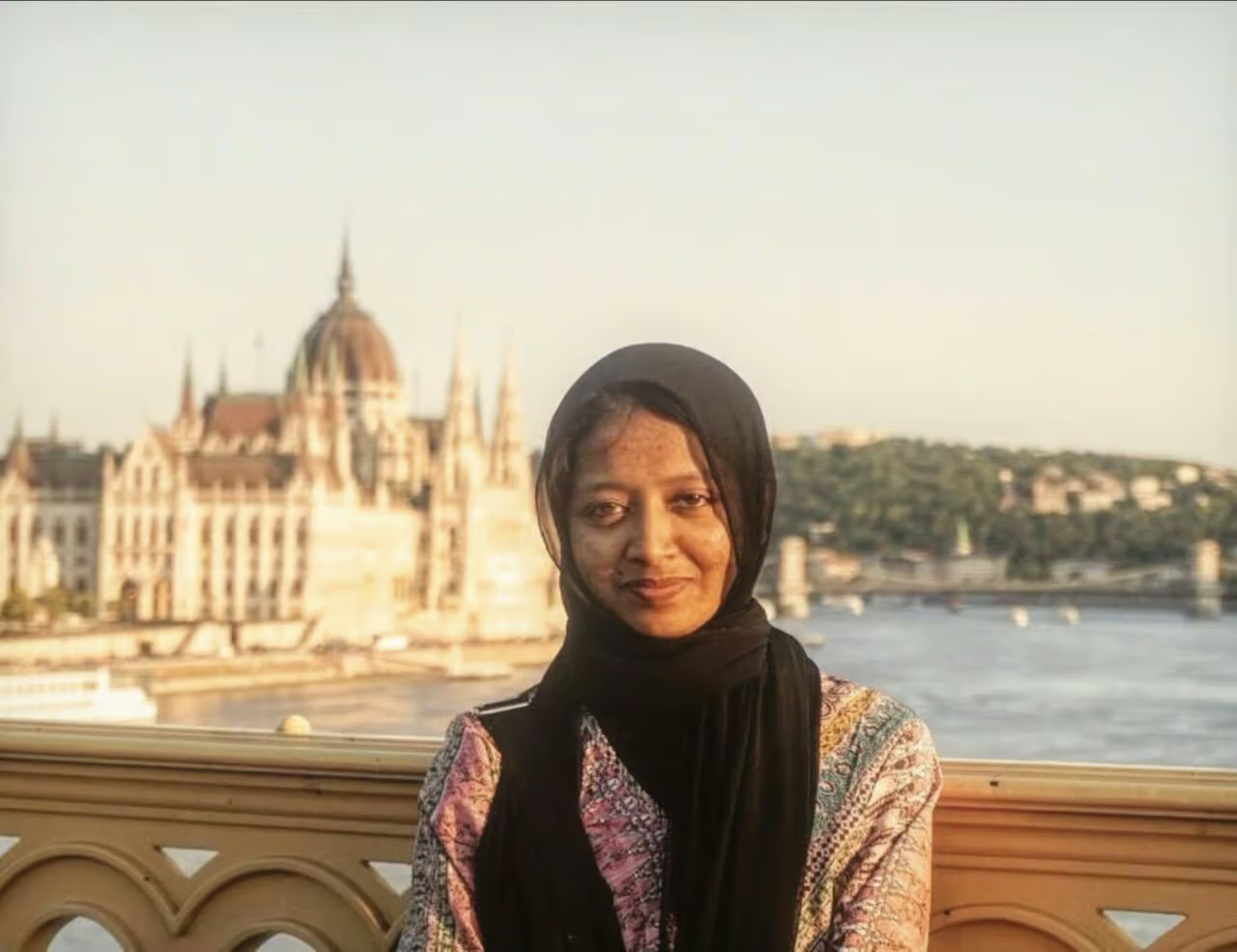
The Journey
My name is Lamia Salehin, and I’m from Chattogram, Bangladesh. My background is in Naval Architecture and Offshore Engineering, and I was awarded the British Council Women in STEM Scholarship to pursue an MSc in Management of Business Information Technology at the University of Greenwich.
My interest in technology grew from the questions I encountered in engineering. During my undergraduate research, I used Automatic Identification System data to study vessel traffic in the Port area. Later, working as a Junior Naval Architect at a design firm, I contributed to shipping feasibility studies covering logistics, infrastructure, and regulatory requirements. These experiences helped me see how much good engineering depends on reliable information and informed decisions.
British Council Women in STEM Scholarship Details
I was awarded the British Council Women in STEM Scholarship in 2024 as one of five scholars at the University of Greenwich. It supported my MSc in Management of Business Information Technology and covered full tuition, a monthly living allowance, return flights, visa fees, and the Immigration Health Surcharge.
This support gave me the freedom to focus on learning without the financial pressure of studying abroad.
Educational Background
I completed my BSc in Naval Architecture and Offshore Engineering at Bangladesh Maritime University. I worked on the design of a 2,000-TEU container vessel and explored traffic patterns through my undergraduate thesis using AIS data. My research contributions also covered cleaner marine fuels, emissions, and supply chain challenges. These experiences made me curious about how engineering decisions affect the wider world, from how goods move to how we use resources responsibly.
Alongside my studies, I wanted to make room for extra-curricular experiences that helped me grow as a person. I believe that combination strengthened my scholarship application. My academic work showed my readiness for further study, and my activities outside the classroom gave me exposure to leadership, teamwork, and contribution.
How Did You Prepare to Apply to the University of Greenwich?
Did You Take Any Standardized Tests? If So, How Did You Prepare for Them?
I was interested in studying abroad and wanted a course that would connect my BSc background with my experience in business and maritime operations. I regularly explored major scholarship portals, covering university websites and online scholarship communities as financial security is always my prime concern. When I found the Women in STEM Scholarship on the British Council’s website, I began looking closely at the participating institutions and their offered courses. Considering the course content, location, and my career goals led me to the MSc in Management of Business Information Technology at the University of Greenwich.
For the language requirement, I took the IELTS test. Alongside a full-time job, it was challenging for me. With so many materials available, I narrowed my preparation to a few helpful YouTube channels, selected online resources, and official practice materials. I followed a two-week plan, practised past questions and completed a round of revision, focusing on my weaker areas and time management. Achieving a good score taught me that with focused preparation, even an ambitious next step can become achievable.
How Did You Prepare to Apply for the British Council Women in STEM Scholarship?
Beyond academic results and certificates, recommendation letters and a motivation letter can make a real difference in a scholarship application. Hence, I took these two documents with sincere consideration. I asked supervisors who knew my work well to write my recommendations, so they could speak about my abilities, progress, and potential from their own experience.
For my motivation letter, I reflected on how my engineering degree, job experience, and leadership roles had shaped my goals. I connected those experiences with why I wanted to study business information technology and how I hoped to use that knowledge in the maritime sector. I also shared my draft with my supervisors. Their guidance helped me express my plans clearly while keeping my own voice.
How Do You Rate the University of Greenwich Academically?
I really enjoyed my time at Greenwich, and I would rate my academic experience highly. The course helped me connect my engineering background with business and technology. For my dissertation, I explored how SharePoint could improve offshore construction management, which gave me a chance to apply my learning to a field I already knew.
My lecturers were friendly and approachable, and my classmates were willing to help. As an international student entering a new academic environment, that support made settling in much easier. Flexible access to labs and library resources helped with my coursework and research, while the university also offered international student advice and wellbeing support.
All my classes were taught in English. Through discussions, presentations, and assignments, I became more confident in sharing my ideas. Completing my MSc with Distinction is a proud and meaningful milestone in my journey.
What Did You Pursue After the British Council Women in STEM Scholarship?
I have joined as a Management Trainee Officer in Export in PRAN-RFL Group, one of Bangladesh’s leading industrial conglomerates. Alongside my job, I am continuing research work and hope to contribute more to academia in the future. I look forward to bringing what I learn in industry into my research and growing through both.
What Do You Think Made Your Application Stand Out?
I think it was how the different parts of my profile supported each other. My bachelor's degree, research, and work experience as a Junior Naval Architect showed my active involvement in STEM. My leadership roles and extracurricular activities gave the panel examples of my initiative and willingness to take responsibility beyond academics.
In my motivation letter, I connected these experiences with a clear reason for choosing business information technology and a practical plan for using it in my future career plan. As the scholarship aims to help more women pursue opportunities in STEM, I believe my commitment to the field and potential to contribute aligned well with that purpose. Together, these aspects may have helped the panel see how I would make good use of their support.
What Would You Have Done Differently if You Were Going Through the Process Again?
If I were going through the process again, I would start preparing earlier and organise my search more carefully. I’d keep an Excel tracker of scholarships, intake dates, deadlines, and required documents, so I could plan ahead and give each application enough time. That would also help me explore a wider range of opportunities across Europe.
I would consider taking the GRE test too if it could open up more programmes suited to my goals. Looking back, I think a clearer plan would have made the process less stressful and given me more room to explore my options with confidence.
What Advice Would You Give Those Looking to Apply for a Similar Scholarship?
My biggest advice is not to rule yourself out before you apply. Many of us think scholarships are only possible with outstanding grades or publications. Those certainly strengthen an application, and competition for full funding is real, so preparation matters. But if you meet the eligibility requirements, one weaker part of your profile should not stop you from trying.
Different scholarships value different strengths. Give yourself time to find suitable opportunities, submit all the required documents carefully, and explain how your experiences connect with your future plans. A thoughtful motivation letter and recommendations from people who know your work can make a real difference.
Seek feedback, stay focused, and keep applying where there is a good fit. Applying cannot guarantee a scholarship, but not applying closes that possibility entirely. If studying abroad is your dream, give yourself a fair chance; you may discover opportunities you never thought were within reach.
Want to submit your
scholarship journey?
Submit Your Story Here!
More Scholarship Recipients

My name is Shah Hussain, and I am from Khyber Pakhtunkhwa, Pakistan. I completed my Bachelor’s in Psychology at the Univer .... Read more
I am June from the Philippines. I am an educator for Social Sciences and Humanities. I recently earned my Master in Southeas .... Read more

Hi, my name is Abdul Hafeez, and I come from a small town called Nasirabad in Sindh, Pakistan. Currently, I am pursuing a ma .... Read more
Leave A Comment