
How Ibrahim, a Ghanaian Scholar, Secured a Fully Funded Master’s in Renewable Energy Engineering at Brunel University London, United Kingdom Through the Chevening Scholarship
University: Brunel University London
Degree: MSc Renewable Energy Engineering
Previous Education: BSc in Chemical Engineering, Kwame Nkrumah University of Science and Technology (KNUST)
Scholarship: Chevening Scholarship – Full Funding (Tuition Fees, Living Support, and Relevant Travel/Visa-Related Costs)
Social Media
LinkedIn: linkedin.com/in/walaman-i-ibrahim/
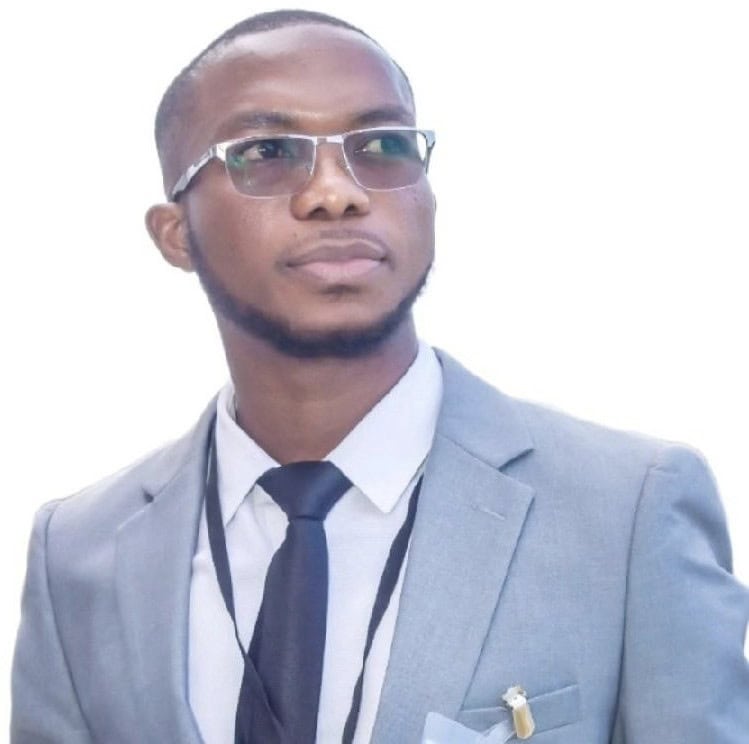
The Journey
My name is Ibrahim, and I am a Ghanaian renewable energy engineer. I originally trained in Chemical Engineering at Kwame Nkrumah University of Science and Technology (KNUST), but my early exposure to the energy sector and renewable-energy projects drew me towards clean energy. I therefore pursued an MSc in Renewable Energy Engineering at Brunel University London as a Chevening Scholar. I wanted to build the specialist technical knowledge needed to contribute to practical energy-transition solutions, particularly in countries such as Ghana where reliable, affordable and sustainable energy is closely linked to development. Today, I work in the UK as a Design Engineer at Naked Energy, supporting renewable-heat and building-decarbonisation projects.
Chevening Scholarship Details
I received a Chevening Scholarship to study MSc Renewable Energy Engineering at Brunel University London. I would describe the value as fully funded rather than give a single cash figure: the award covered my tuition fees and provided the core Chevening financial support associated with studying in the UK, including living support and relevant travel/visa-related costs.
Educational Background
Before my master's degree, I completed a BSc in Chemical Engineering at KNUST in Ghana from 2013 to 2017. I later completed an MSc in Renewable Energy Engineering at Brunel University London. Chemical Engineering gave me a strong foundation in areas such as thermodynamics, heat and mass transfer, process design, and techno-economic thinking. My early exposure to the energy sector, including experience at Bui Power Authority and work around solar-energy projects, helped me see how that engineering foundation could be applied to renewable energy. The MSc was therefore a logical specialisation rather than a complete change of direction.
How Did You Prepare to Apply to Brunel University London?
I worked backwards from the career problem I wanted to solve: building a career in renewable energy and contributing to the energy transition. I compared programmes based on their technical content, relevance to the energy sector, course structure and how well they complemented my Chemical Engineering background. I also made sure my application explained the transition clearly, so that Renewable Energy Engineering came across as the next step in my development rather than an unrelated change of field.
How Did You Find Information About Chevening Scholarship and Brunel University London?
I used official scholarship and university sources as the starting point, especially the Chevening website, university course pages, entry requirements, and module information.
Did You Take Any Standardized Tests? If So, How Did You Prepare for Them?
, SAT/ACT/TOEFL/IELTS/GRE/GMAT? If So, How Did You Prepare for Them?
How Did You Prepare to Apply for the Chevening Scholarship?
I approached Chevening as more than a funding application. The important thing was to build one consistent story across my evidence of initiative and leadership, the relationships and networks I had built, why the degree I had chosen was necessary, and what I intended to do with the opportunity afterwards. I focused on examples that showed actions and outcomes rather than simply listing positions or responsibilities. I also worked to make the link between my past experience, the MSc and my longer-term contribution to the energy sector very clear. For the interview, the key was being able to defend the choices and examples in my written application and explain the 'why' behind my course and career plan.
How is Your Experience at Brunel University London?
I found the Brunel experience academically demanding but rewarding. The MSc helped me move from broad engineering training into more focused renewable-energy thinking, while studying in London placed me in a highly international environment. One of the major benefits of studying alongside people from different countries and professional backgrounds was seeing how energy challenges can look very different depending on the local context.
How Do You Rate Brunel University London Academically?
I would rate Brunel strongly from an academic perspective because the MSc gave me the technical foundation and academic credibility to build a career in renewable energy. For me, the value was not only the individual subjects studied; the programme helped me develop a more structured way of analysing energy technologies from technical, economic, and sustainability perspectives.
How Does Brunel University London Support International Students?
Brunel has a large international student community, which makes the environment relatively easy to settle into as an overseas student, and university support services and student networks are available. In my case, Chevening also provided an additional community through the wider scholar network, events, and connections with people studying across the UK.
What Did You Pursue After the Chevening Scholarship?
After completing the MSc, I continued developing my career in renewable energy. My work has included solar PV, solar thermal, energy storage/off-grid solutions, and building decarbonisation. I later joined Naked Energy in the UK, where I now work as a Design Engineer, having previously worked in a Technical Sales Engineer capacity. I have also remained involved in wider clean-energy and leadership communities, including UNLEASH, Engineering for Change and Open Africa Power. I have since mentored around 10 prospective Chevening applicants, which has given me the opportunity to pass on what I learned from my own journey.
What Do You Think Made Your Application Stand Out?
I think one of the strongest parts of my application was its coherence. I was not simply saying that I wanted a master's degree; I could connect my engineering background, my exposure to Ghana's energy sector, the skills gap I wanted to close, the specific master's programme I had chosen, and the contribution I hoped to make afterwards. I also had evidence of taking initiative and working towards energy solutions rather than only expressing an interest in them. The application therefore had a clear past-present-future story.
What Would You Have Done Differently if You Were Going Through the Process Again?
Having since mentored around 10 prospective Chevening applicants, I would approach the process even more systematically if I were doing it again. I would start earlier, build an evidence bank of leadership and relationship-building examples, quantify outcomes wherever possible, and ask reviewers to challenge whether every paragraph actually proves something rather than simply sounds impressive. I would also begin preparing for the interview as soon as the written application was submitted, because the strongest interview answers come from understanding your own story deeply rather than memorising scripts.
What Advice Would You Give Those Looking to Apply for a Similar Scholarship?
Treat the application as one coherent story, not a collection of separate essays. Be specific and use concrete examples that show what you did, why you did it, and what changed because of your actions. Do not rely on job titles or try to impress with complicated language; evidence is more persuasive. Choose courses that logically close a gap in your career plan, make your future goals ambitious but credible, and explain clearly why studying in the UK is relevant to those goals. If you are shortlisted, prepare from your own application and be ready to discuss both your examples and the issues in your field. Most importantly, do not wait until you feel you have a 'perfect' profile before applying - build the strongest, most honest case you can from the experience you already have.
Want to submit your
scholarship journey?
Submit Your Story Here!
More Scholarship Recipients
My name is Anna Nana Agyeiwaa Mensah, a professional nurse from Ghana. My interest in Global Health grew out of my experienc .... Read more
My name is Ratul Chakraborty, and I am from Bangladesh. My background is interdisciplinary, actually. Before coming to Germa .... Read more
My name is Mabel Zuñiga. I am a graduate student from Panama pursuing a Master’s degree in Public Policy at the Universit .... Read more
Leave A Comment