
Commonwealth Scholarship Scholar Ibrahim Mustapha Umar from Nigeria Shares His Journey of Securing a Fully Funded Master's at the Loughborough University, United Kingdom
University: Loughborough University
Degree: MSc Water Engineering for Development
Previous Education: First Class BEng in Civil and Water Resources Engineering from the University of Maiduguri, Nigeria; MSc in Information Management at Ahmadu Bello University
Scholarship: Commonwealth Scholarship – Fully funded scholarship (Tuition fees)
Other Offered Scholarships: Chevron Nigeria Limited Academic Excellence Scholarship
Social Media
LinkedIn: linkedin.com/in/engr-ibraheem1-pmp/
The Journey
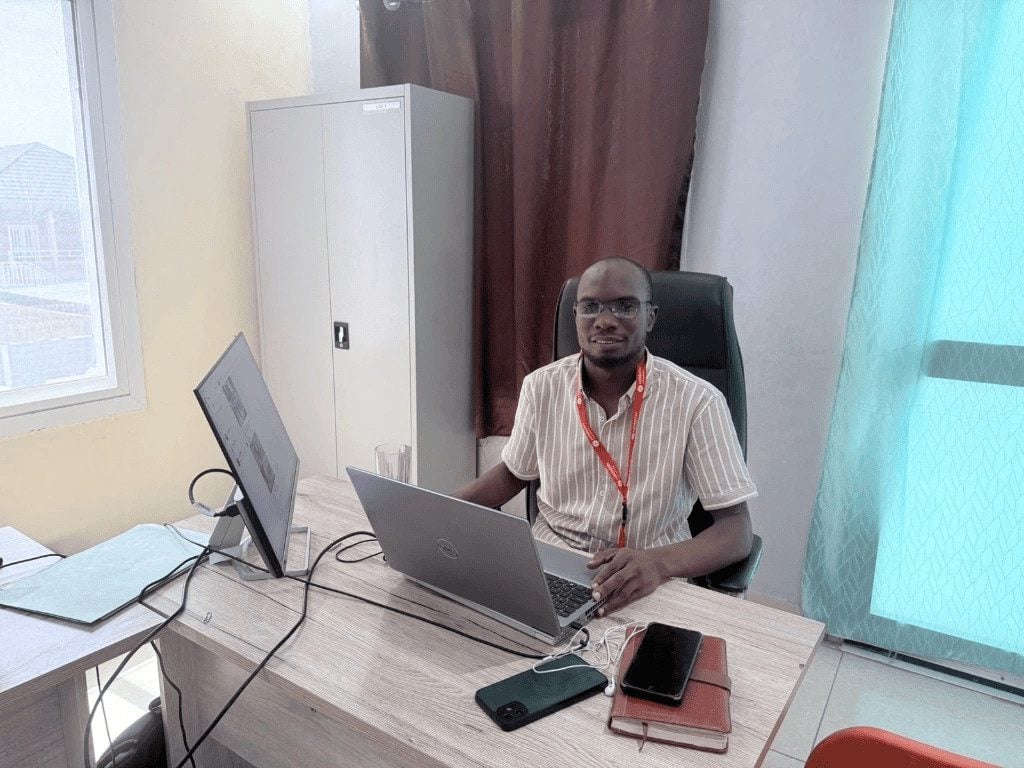
My name is Ibrahim Mustapha Umar, and I am from Borno State, Nigeria. I am a Civil and Water Resources Engineer with strong academic and professional experience in WASH, infrastructure, humanitarian engineering, water supply, sanitation, and emergency response. Over the years, I have worked with several humanitarian organisations, including Solidarités International, ACTED, INTERSOS, NRC, and others, supporting vulnerable communities affected by conflict, displacement, floods, and public health emergencies.
I decided to pursue further education in Water Engineering for Development because my professional work exposed me to the urgent need for sustainable, climate-resilient, and technically sound water and sanitation solutions in humanitarian and development contexts. I wanted to strengthen my technical knowledge in areas such as urban and rural water supply engineering, groundwater management, sanitation engineering, flood modelling, humanitarian WASH, and disaster risk management, so that I could contribute more effectively to solving real-life water and infrastructure challenges in vulnerable communities.
Commonwealth Scholarship Details
I received the Commonwealth Scholarship to study in the United Kingdom. The scholarship supported my studies for the MSc Water Engineering for Development at Loughborough University, UK.
- Institution: Loughborough University, United Kingdom
- Scholarship Name: Commonwealth Scholarship
- Degree Programme: MSc Water Engineering for Development
- Scholarship Amount: Fully funded scholarship covering tuition fees
Were You Offered Any Other Scholarships?
In addition to the Commonwealth Scholarship, I had previously received the Chevron Nigeria Limited Academic Excellence Scholarship in 2014 during my undergraduate studies. I was also recognised and awarded as the Best Graduating Student in Civil and Water Resources Engineering at the University of Maiduguri in 2017.
Educational Background
My educational background strongly prepared me for this scholarship. I hold a First Class BEng in Civil and Water Resources Engineering from the University of Maiduguri, Nigeria, with a GPA of 4.71/5.00, and I was awarded Best Graduating Student in the Faculty of Engineering.
I also completed an MSc in Information Management at Ahmadu Bello University, graduating with Distinction, GPA 4.59/5.00. I am currently studying MSc Water Engineering for Development at Loughborough University, UK, with a distinction-level performance of 4.63/5.00 rating, 72% of all my coursework average, pending dissertation completion.
Together, these studies and my over ten years of experience in WASH, infrastructure, shelter, and humanitarian response gave me the academic and practical foundation to succeed in the scholarship programme.
Did You Take Any Standardized Tests? If So, How Did You Prepare for Them?
I did not take the SAT, ACT, GRE, GMAT, TOEFL, or IELTS for this application. My previous education and professional experience were sufficient for the application requirements.
How Did You Prepare to Apply for the Commonwealth Scholarship?
I prepared by carefully reading the scholarship requirements and ensuring that every part of my application was aligned with the scholarship objectives. I paid attention to my personal statement, academic records, professional experience, references, and the link between my proposed study and development impact.
I made sure my application clearly explained why I needed the scholarship, why the programme was relevant to my career, and how I intended to use the knowledge gained to contribute to water, sanitation, infrastructure, and humanitarian response in Nigeria and other vulnerable contexts.
My experience working in emergency and development settings helped me demonstrate that the scholarship would not only benefit me personally but would also support wider community impact.
How is Your Experience at Loughborough University?
My experience at Loughborough University has been academically enriching and professionally relevant. The MSc Water Engineering for Development programme is strongly linked to real-world water and sanitation challenges. The courses in water supply engineering, sanitation engineering, groundwater management, humanitarian WASH, flood modelling, and disaster risk management directly relate to my professional work and future goals.
The programme has helped me connect field experience with academic research, technical analysis, and evidence-based decision-making.
How Do You Rate Loughborough University Academically?
I rate Loughborough University highly because the programme combines technical depth, practical relevance, and strong academic support. The course is particularly useful for professionals working in water, sanitation, engineering, humanitarian response, and development.
For me, the strength of the programme is that it not only focuses on theory but also connects engineering knowledge with real-world development and humanitarian challenges
How Does Loughborough University Support International Students?
Loughborough University supports international students through academic guidance, online learning resources, student support services, access to lecturers, library resources, and a structured learning environment. As an international student, I found the academic system supportive, especially in terms of access to course materials, feedback, and communication with academic staff.
What Did You Pursue After the Commonwealth Scholarship?
After the scholarship, I continued building my career in humanitarian WASH, infrastructure, water engineering, and research. My goal is to use the knowledge gained from the programme to strengthen sustainable water supply, sanitation, flood resilience, and infrastructure programming in humanitarian and development contexts.
I have also continued contributing to research and publications in engineering and water-related fields, including groundwater quality, sustainable engineering materials, and dam-related opportunities and risks.
What Do You Think Made Your Application Stand Out?
I believe my application stood out because it combined strong academic performance, relevant professional experience, leadership, and a clear development purpose.
Academically, I had a First Class degree in Civil and Water Resources Engineering and a distinction-level MSc in Information Management. Professionally, I have extensive experience implementing WASH, shelter, infrastructure, and humanitarian programmes in complex contexts such as Nigeria, Syria, Jordan, South Sudan, and Sudan.
I also demonstrated that my career was already focused on solving water, sanitation, and infrastructure challenges. For example, I had worked on boreholes, water networks, latrines, water trucking, health infrastructure, solar-powered boreholes, and emergency WASH responses reaching large numbers of vulnerable people.
Another important factor was that my application showed a strong connection between my past achievements, the course I wanted to study, and my future contribution to communities affected by water insecurity and humanitarian crises.
What Would You Have Done Differently if You Were Going Through the Process Again?
If I were going through the process again, I would start even earlier. Preparing a strong scholarship application takes time, especially when collecting transcripts, writing personal statements, contacting referees, and tailoring the application to the scholarship objectives.
I would also spend more time reviewing successful scholarship essays and seeking feedback from mentors before submission. Early preparation reduces stress and gives applicants enough time to improve the quality of their application.
What Advice Would You Give Those Looking to Apply for a Similar Scholarship?
My advice is to be intentional and strategic. Do not apply randomly. First, understand your career goals, then identify the scholarship and programme that best fit those goals.
Applicants should also make sure their application tells a clear story: who they are, what they have achieved, why they need the scholarship, why they selected the programme, and how they will use the knowledge to create impact.
Strong academic results are important, but they are not enough alone. Applicants should also show leadership, community impact, professional relevance, and a clear vision for the future. Most importantly, applicants should start early, read the instructions carefully, and make sure every part of the application is honest, focused, and well-written.
Want to submit your
scholarship journey?
Submit Your Story Here!
More Scholarship Recipients
My name is Shah Hussain, and I am from Khyber Pakhtunkhwa, Pakistan. I completed my Bachelor’s in Psychology at the Univer .... Read more
I am June from the Philippines. I am an educator for Social Sciences and Humanities. I recently earned my Master in Southeas .... Read more
Hi, my name is Abdul Hafeez, and I come from a small town called Nasirabad in Sindh, Pakistan. Currently, I am pursuing a ma .... Read more
Leave A Comment