
How I Secured a Fully Funded PhD at Chung-Ang University, Republic of Korea Through the Chung-Ang University Young Scientist Scholarship (CAYSS)
University: Chung-Ang University
Degree: Integrated M.S.–Ph.D. in Animal Science and Technology
Previous Education: Bachelor’s in Biology (Microbiology), University of the Philippines Los Baños (UPLB)
Scholarship: Chung-Ang University Young Scientist Scholarship (CAYSS) – Full Funding (Full Tuition Support, Monthly Financial Support, Research and Laboratory Training)
Social Media
LinkedIn: linkedin.com/in/arxel-elnar-3065b9195/
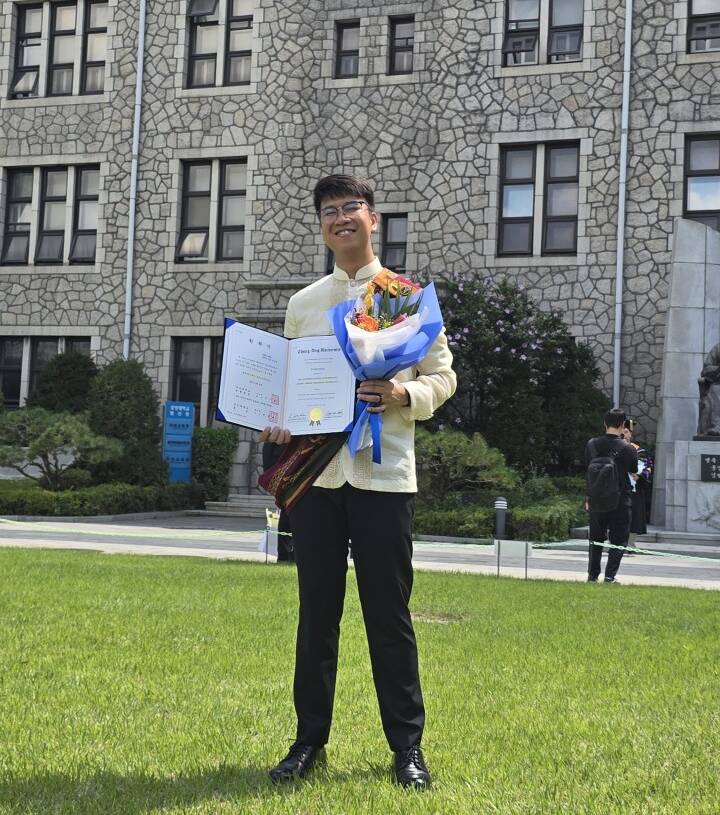
The Journey
Hi! My name is Arxel Gutierrez Elnar, and I am from the Philippines. I am currently a postdoctoral researcher in the Department of Animal Science and Technology at Chung-Ang University, Republic of Korea, under the BK21 FOUR program.
I completed my integrated M.S.–Ph.D. in Animal Science and Technology at Chung-Ang University under a full graduate scholarship. My research focuses on microbial biotechnology, probiotics, bacteriocins, and the use of beneficial microorganisms for applications in food, animal health, and biotechnology.
I became interested in this field because I have always been fascinated by how microorganisms can be harnessed to address practical problems. During my graduate studies, this interest developed into research on bacteriocins, probiotic microorganisms, and the microbial conversion of linoleic acid into conjugated linoleic acid (CLA).
Pursuing graduate studies in Korea gave me the opportunity not only to develop specialized scientific expertise but also to work in an international research environment, collaborate with researchers from different backgrounds, and eventually contribute to scientific exchange between Korea and the Philippines.
Chung-Ang University Young Scientist Scholarship Details
I received a Chung-Ang University Young Scientist Scholarship (CAYSS) to pursue an integrated M.S.–Ph.D. degree in Animal Science and Technology.
The scholarship provided:
- Full tuition support
- Monthly financial support through the research laboratory and graduate program
- Research and laboratory training opportunities
- Access to a well-equipped research environment and opportunities to participate in internationally oriented research
For me, the most valuable aspect of the scholarship was not simply the financial support. It gave me the opportunity to conduct research under experienced mentors, develop advanced laboratory and analytical skills, present my work internationally, publish scientific papers, and participate in research projects with practical and translational potential.
Were You Offered Any Other Scholarships?
No. The CAYSS scholarship was my primary scholarship support throughout my graduate studies at Chung-Ang University. In addition to the scholarship, the university and research laboratory provided various incentives for research outputs, as well as financial support for participation in academic conferences and other research-related activities.
Educational Background
I earned my bachelor's degree in Biology, major in Microbiology, from the University of the Philippines Los Baños (UPLB) before pursuing graduate studies in Korea.
My undergraduate training provided me with a strong foundation in microbiology, laboratory research, and biological sciences. This background naturally led me toward microbial biotechnology and the study of microorganisms with potential applications in food and animal science.
At Chung-Ang University, I expanded this foundation into more advanced areas including microbial genomics, molecular biology, transcriptomics, enzymology, and probiotic biotechnology.
Although academic performance is important, I believe that my early research experience, curiosity, and willingness to learn were equally important in preparing me for graduate studies.
How Did You Prepare to Apply to Chung-Ang University?
One of the most important things I did was to identify potential research laboratories rather than simply choosing universities.
I spent considerable time reviewing faculty profiles, recent publications, and ongoing research projects to identify laboratories whose research interests aligned with my background and interests.
I also carefully prepared my curriculum vitae and contacted potential supervisors, including through recommendations from my undergraduate professors. Before contacting a professor, I made an effort to understand the laboratory's research direction and consider how my previous experience could contribute to their work. A recommendation or introduction from a professor who knows your research interests can be especially helpful when approaching potential supervisors.
This approach helped me communicate genuine research interest rather than simply expressing a desire to study abroad.
How Did You Find Information About Chung-Ang University Young Scientist Scholarship and Chung-Ang University?
I searched university websites, laboratory webpages, scholarship information, and academic publications. I also talked with researchers and students who had experience studying in Korea.
One important lesson I learned is that not every research opportunity is widely advertised. Some opportunities are communicated through individual laboratories or professors rather than through large scholarship portals.
For research-based graduate programs, I therefore recommend looking beyond general scholarship websites and actively exploring individual laboratories and potential supervisors.
Did You Take Any Standardized Tests? If So, How Did You Prepare for Them?
I did not take the SAT, ACT, GRE, or GMAT for my graduate application.
For applicants who are required to submit an English proficiency examination, however, I would recommend preparing early and taking the exam seriously. A strong English score can strengthen an application and make the transition into an international academic environment easier.
How Did You Prepare to Apply for the Chung-Ang University Young Scientist Scholarship?
Rather than focusing only on the scholarship itself, I focused on becoming a competitive graduate-school applicant.
I strengthened my research experience, developed laboratory skills, read scientific literature, and became familiar with the research areas of potential supervisors. I also carefully prepared my CV and application materials and tried to clearly communicate my research interests and long-term goals. At the time, I was also preparing for the Registered Microbiologist licensure examination, which I believed would further strengthen my academic and professional profile. In hindsight, balancing the licensure examination with my graduate application meant that I had less time to prepare for a Korean language proficiency test.
My experience at Chung-Ang University has been both academically challenging and personally rewarding.
The research environment encouraged me to become increasingly independent while providing strong mentorship and opportunities to collaborate with other researchers. During my graduate studies, I conducted multidisciplinary research involving microbial biotechnology, genomics, molecular biology, and biochemical analysis.
I also had opportunities to present at national and international conferences, publish peer-reviewed research, participate in patent development, and receive recognition for my research and academic achievements, including the Yeosong Future Dairy Science Award from the Korean Society of Dairy Science and Biotechnology and the Chairman’s Award (이사장상) received during my graduation in August 2025.
Beyond academics, living and studying in Korea helped me grow personally. I learned to adapt to a different culture and research environment, communicate with people from diverse backgrounds, and develop greater confidence as an international researcher. These experiences have shaped not only my scientific career but also my perspective as a Filipino researcher working in an international academic environment.
How Do You Rate Chung-Ang University Academically?
I would rate Chung-Ang University very highly for research-oriented graduate education.
One of the university's strengths is the opportunity for graduate students to work closely with faculty members in active research laboratories. This provides students with practical research experience rather than limiting their education to classroom-based learning.
For students interested in research, I believe the quality of the laboratory and supervisor is particularly important. A supportive research environment can significantly influence both scientific development and career opportunities.
How Does Chung-Ang University Support International Students?
Chung-Ang University provides various forms of support for international students, including orientation programs, administrative assistance, Korean language courses, and resources that help international students adapt to university life.
However, adjusting to a new country also requires personal initiative. Building relationships with colleagues, participating in university activities, and learning some Korean can make the experience considerably easier.
Are Your Classes Conducted in English or Korean?
For my graduate research, most scientific discussions, research activities, manuscript preparation, and academic communication were conducted in English. Classes, however, are mostly conducted in Korean.
The language environment can vary depending on the laboratory, so prospective students should check with their potential supervisor. For daily life, however, learning Korean is extremely useful. Even basic Korean can make communication, administrative procedures, transportation, and everyday activities much easier.
What Did You Pursue After the Chung-Ang University Young Scientist Scholarship?
After completing my Ph.D. in August 2025, I continued my research at Chung-Ang University as a BK21 FOUR postdoctoral researcher.
My current work continues to focus on microbial biotechnology, probiotics, bacteriocins, and the development of beneficial microorganisms for sustainable applications in food and animal science.
I also mentor students, collaborate with researchers in Korea and the Philippines, and participate in activities that promote academic exchange between Korean and Filipino researchers.
My long-term goal is to build a research career that combines scientific innovation with international collaboration, particularly between Korea and ASEAN countries.
Would Potential Students Have Any Problems Not Knowing Korean?
Not necessarily.
Many graduate research laboratories in Korea use English for scientific discussions, research papers, and communication with international students. However, this depends on the laboratory and supervisor.
I would still strongly recommend learning basic Korean before or after arriving. It is extremely helpful for daily life and administrative matters, and even a basic understanding of the language can make it much easier to build relationships with Korean colleagues.
You do not need to be fluent immediately. Being willing to learn goes a long way.
What Do You Think Made Your Application Stand Out?
Looking back, I believe several factors strengthened my application:
- Research experience before graduate school
- A clear alignment between my interests and the laboratory's research
- A willingness to learn and develop new technical skills
- Careful preparation of my application materials
- A genuine motivation to pursue research rather than simply obtain a degree
I also believe that contacting potential supervisors and demonstrating that I understood their research helped distinguish my application.
One lesson I learned is that professors are not necessarily looking only for applicants with the highest grades. They also look for students who demonstrate curiosity, initiative, persistence, and the potential to contribute to their research group.
What Would You Have Done Differently if You Were Going Through the Process Again?
If I were applying again, I would start preparing even earlier.
I would contact potential supervisors sooner, refine my research interests earlier, and seek feedback on my application materials before submitting them.
I would also spend more time learning Korean before arriving in Korea. Although it is possible to conduct graduate research primarily in English, having some Korean language ability would have made my initial adjustment to life in Korea easier.
What Advice Would You Give Those Looking to Apply for a Similar Scholarship?
Don't underestimate yourself because you come from a smaller university or because you feel that your achievements are not enough.
Focus on becoming a strong applicant rather than simply chasing scholarships. Build research experience, develop technical skills, read scientific literature, and learn how to communicate your research interests clearly.
Most importantly, don't just apply to universities; apply to laboratories. Your graduate experience will be shaped significantly by your research environment and supervisor. Take time to understand a laboratory's research and identify how your interests and experience align with it.
I would also encourage applicants to contact professors directly when appropriate. A well-prepared, thoughtful email can open opportunities that may not be obvious from a general scholarship announcement.
Finally, be patient and persistent. Rejection is part of the process. I did not build my career through one opportunity alone. Each application, research experience, and interaction helped me become a stronger candidate for the next opportunity.
Want to submit your
scholarship journey?
Submit Your Story Here!
More Scholarship Recipients
My name is Ian Cawich. I’m a proud Belizean, specifically from a small northern town called Orange Walk, which serves as t .... Read more
My name is Miguel Felipe Arévalo Castiblanco, and I'm originally from Colombia. I'm currently a PhD candidate in Electrical .... Read more
My name is Brendon Munashe Mahere, and I am from Zimbabwe. I graduated from Al Akhawayn in 2024 with a BSc in Engineering an .... Read more
Leave A Comment