
Chung-Ang University Scholarships for International Students 2027
Students considering Chung-Ang University can explore scholarships that range from fully funded support to partial awards. This shortlist highlights higher coverage options first.
For institution funded support at Chung-Ang University, these scholarships are frequently highlighted when prioritizing higher coverage. Young Scientist Scholarship is fully funded and typically covers waivers for application fees, tuition fees, and admission fees and monthly stipend worth 500,000 KRW or above. International Student Scholarships is commonly categorized as full tuition support, and coverage that often includes 50% tuition waiver for students majoring in Natural Science, engineering, medicine, and pharmacy with an admission score of 80 or higher, 70% tuition waiver for students majoring in Natural Science, engineering, medicine, and pharmacy with a TOPIK Level 5 proficiency, and 100% tuition waiver for students majoring in Natural Science, engineering, medicine, and pharmacy with a TOPIK Level 6, TOEFL iBT 91, TOEIC 780, or IELTS 6.5 proficiency score. With TOPIK Scholarship, students may receive full tuition support, and coverage frequently includes 70% tuition fee waiver for students with TOPIK level 5 and 100% tuition fee waiver for students with TOPIK level 6.
Outside the university’s own funding routes, Chung-Ang University students may be eligible for external programs that can offer substantial support. Here are a few to consider. Global Korea Scholarship (GKS) is a fully funded award, and the listed benefits often include tuition fees, airplane tickets, and living stipend. Samsung Global Hope Scholarships is usually considered fully funded, and typical coverage can include undergraduate level : KRW 3,900,000 per semester and Master's and PhD level : KRW 3,500,000 or KRW 5,000,000 per semester.
This is only a shortlist. Additional scholarships and funding options appear further down on this page.
Chung-Ang University Scholarships for International Students
The scholarships at Chung-Ang University can help fund your study expenses. There are currently 6 scholarships being offered to international students at the Chung-Ang University, all with varying requirements, benefits, and application processes. We have compiled them in this list to help you find the scholarship that best fits you.
Undergraduate Scholarships
Graduate Scholarships
External Scholarships
There are many degrees that are open to international students right now — find yours.
Chung-Ang University Admissions
Here are the official admission pages for Chung-Ang University:
| Degree | Admissions Pages |
|---|---|
| Bachelor's | International Students Admissions Page |
| Master's | International Students Admissions Page |
Admissions and Scholarship Results at Chung-Ang University
Here are some of the admissions and scholarship results from previous applicants to Chung-Ang University, which you might find helpful. For more results to Chung-Ang University, please see the Chung-Ang University Admissions Profile Page .
| Nationality / Region | SAT/ACT | EFC | GPA | Scholarship | Status |
|---|---|---|---|---|---|
| Italy | N/A | N/A | 4.50/4.50 | N/A | Rejected |
Tuition Fees at Chung-Ang University for International Students
Indicative annual tuition fee ranges for international students at Chung-Ang University. Exact fees vary by program, so always confirm the current cost on the university's official tuition fee pages.
| Degree Level | Typical Annual Range |
|---|---|
| Bachelor's Tuition | 9,956,000 – 13,650,000 KRW |
| Master's Tuition | 13,454,000 – 18,318,000 KRW |
Please note that tuition fees can vary based on the specific program you choose. For the most accurate and current fee information, consult the official tuition fee pages linked above.
Chung-Ang University Scholarship Recipients
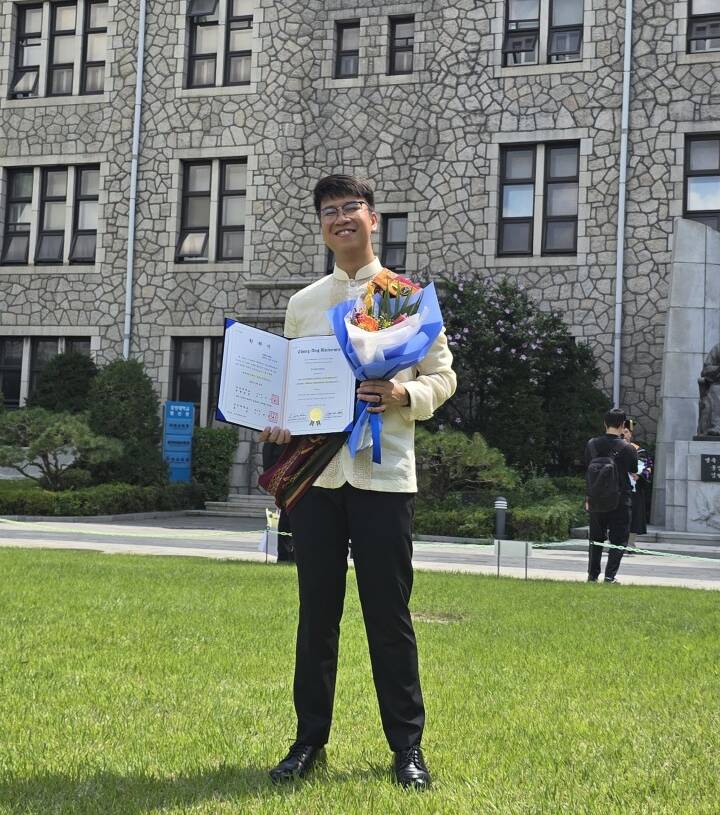
International students who received scholarships to study at Chung-Ang University, documented by Global Scholarships.




Scholarship Recipient Insights at Chung-Ang University
The stories reviewed include 9 degree-study accounts.
Featured Recipients by Nationality
| Nationalities | Stories per nationality |
|---|---|
| Bulgarian, Filipino, Italian, Kyrgyz, Libyan, Pakistani, Portuguese, Turkish, Vietnamese | 1 each |
Degree Levels and Subjects
| Degree level | Stories | Subjects |
|---|---|---|
| Master’s | 6 | Chemical Engineering; Filmmaking; Early Childhood Education; Media Communication; Global MBA |
| PhD | 2 | RF and Microwave Engineering; Molecular Biology |
| Integrated master’s–PhD | 1 | Animal Science and Technology |
Funding Routes Reported by Featured Recipients
Reported Funding Coverage
| Recipient and degree/program | Reported coverage |
|---|---|
| Usman Memon — PhD in RF and Microwave Engineering | Young Scientist Scholarship awarded in 2012: five years of tuition and living expenses. |
| Mohamed Atwair — Master’s in Chemical Engineering | GKS awarded July 2018: tuition, round-trip flight, living allowance and health insurance for the three-year program. |
| Aikanysh — Master’s in Filmmaking | GKS covered tuition, flights, health insurance and living stipend for the two-year master’s. She paid production costs herself for first- and third-semester short films and the graduation film. |
| Sema Nur Korkmaz — Master’s in Early Childhood Education | Reported GKS monthly support of KRW 1,310,000. |
| Tran Kieu Anh Ly — Master’s in Media Communication | Reported tuition coverage, about KRW 1,000,000–1,300,000 monthly living support, flights, health insurance and language-training support when required. |
| Carlotta — Global MBA | Reported tuition, a language year and about US$700 monthly support. She cautioned that the stipend could be insufficient in Seoul. |
| Arxel Gutierrez Elnar — Integrated master’s–PhD in Animal Science and Technology; graduated August 2025 | CAYSS covered tuition; laboratory and graduate-program funding supplied monthly support. Also received conference support and incentives for research outputs. |
Examples of Featured Recipients’ Application Backgrounds
| Recipient and degree/program | Scholarship/application route | Reported background and preparation |
|---|---|---|
| Usman Memon — PhD in RF and Microwave Engineering | Young Scientist Scholarship | Prior BSc and MSc engineering training; described strong mathematics preparation and tailored academic documents. |
| Mohamed Atwair — Master’s in Chemical Engineering | GKS, embassy submission in Libya | Chemical Engineering bachelor’s at University of Zawia, 89.66%, ranked first in his department. Prepared recommendations and statements with mentor advice. |
| Aikanysh — Master’s in Filmmaking | GKS | Business Management degree, GPA 3.24/4.0; built an admission portfolio through filmmaking masterclasses and her own projects, alongside Korean study. |
| Sema Nur Korkmaz — Master’s in Early Childhood Education | GKS | Gazi University Early Childhood Education graduate, third in department, GPA 3.75. Supported her proposed education solution with a business plan and relevant training certificates. |
| Tran Kieu Anh Ly — Master’s in Media Communication | GKS | Business Administration background, a Vietnamese brand-image research project on VinFast, and media/marketing work. Connected these experiences to digital communication research and sought feedback from former scholars. |
| Carlotta — Global MBA | GKS | Mass Media Communication bachelor’s with honors in Siena. A year in Korea on an H-1 visa helped her investigate universities and scholarships before applying. |
| Stefani Tileva — Global MBA | GKS | Media and Communication Studies dual-degree background from University of New York in Prague and SUNY Empire State University. Explained how an MBA extended her international-study experience. |
| Catia Mota — PhD in Molecular Biology | GKS, embassy track in Portugal | Clinical Analysis and Public Health bachelor’s and Biomedical Science master’s. Studied Korean for 1.5 years at King Sejong Institute Lisbon; prepared a research plan and authenticated documents before the application window. |
| Arxel Gutierrez Elnar — Integrated master’s–PhD in Animal Science and Technology | Chung-Ang University Young Scientist Scholarship | Biology bachelor’s, Microbiology major, from University of the Philippines Los Baños. Read prospective labs’ publications and contacted supervisors, including introductions from undergraduate professors. |
How Recipients Met Language Requirements
| Language requirement route | Stories / total degree-study stories | Recipients and examples |
|---|---|---|
| IELTS taken for the application | 2/9 | Mohamed Atwair — Master’s in Chemical Engineering; Stefani Tileva — Global MBA. |
| TOPIK application evidence | 3/9 | Aikanysh — Master’s in Filmmaking: Level 3; Sema Nur Korkmaz — Master’s in Early Childhood Education: Level 3; Catia Mota — PhD in Molecular Biology: TOPIK I Level 2. |
English-taught programs / stories reporting teaching language: 3/9.
Teaching Language and Firsthand Study Experience
| Recipient and degree/program | Reported instruction and experience |
|---|---|
| Usman Memon — PhD in RF and Microwave Engineering | Reported English classes and English lab communication. |
| Mohamed Atwair — Master’s in Chemical Engineering | Most graduate courses and supervisor meetings were English; labmates helped him adapt. |
| Aikanysh — Master’s in Filmmaking | Program taught mainly in Korean. Completing practical film productions required additional personal spending. |
| Sema Nur Korkmaz — Master’s in Early Childhood Education | All classes were Korean, including assignments and exams. Language-school staff helped with banking, insurance and visas; she experienced less support after entering her degree. |
| Tran Kieu Anh Ly — Master’s in Media Communication | Classes primarily Korean, with English materials. Research-oriented coursework examined communication theory, user behavior and platform dynamics. |
| Carlotta — Global MBA | MBA fully English; described convenient subway access, campus facilities and the spring festival. |
| Stefani Tileva — Global MBA | MBA entirely English; highlighted the library, dormitories and study spaces. |
| Catia Mota — PhD in Molecular Biology | Most classes Korean; presentations, workshops and administrative work also demanded Korean. Described strong labs and demanding professors, alongside expectations of independent navigation as a degree student. |
| Arxel Gutierrez Elnar — Integrated master’s–PhD in Animal Science and Technology | Classes mostly Korean, while scientific discussions and manuscript work were mainly English. Research covered microbial genomics, molecular biology, transcriptomics, enzymology, probiotics and bacteriocins. |
Application Timelines Reported by Recipients
| Recipient and degree/program | Application or scholarship route | Reported application timeline |
|---|---|---|
| Sema Nur Korkmaz — Master’s in Early Childhood Education | GKS | Six months in a Korean course → six months of self-study → TOPIK Level 3 → immediate scholarship application. |
| Aikanysh — Master’s in Filmmaking | GKS | Applied three times; after the first rejection, spent one year studying Korean in Korea, strengthened her portfolio and language skills, and was ultimately selected. |
Other Offers in Featured Applicants’ Journeys
| Recipient | Reported alternative | Decision described in the story |
|---|---|---|
| Sema Nur Korkmaz | Free access to online digital education through the Game and Application Academy in Turkey | Pursued a Master’s in Early Childhood Education through GKS at Chung-Ang University. |
What Recipients Pursued After Studying at Chung-Ang University
| Recipient | Degree/program at Chung-Ang University | Reported outcome |
|---|---|---|
| Mohamed Atwair | Master’s in Chemical Engineering | Pursued a Chemical Engineering PhD at University of South Carolina as a graduate research and teaching assistant. Also reported a CAYSS award in January 2022 after his master’s; its receipt does not establish a second completed degree here. |
| Catia Mota | PhD in Molecular Biology | Reported pursuing a postdoctoral fellowship at Korea Basic Science Institute. |
| Arxel Gutierrez Elnar | Integrated master’s–PhD in Animal Science and Technology, completed August 2025 | Continued at Chung-Ang University as a BK21 FOUR postdoctoral researcher, mentoring students and collaborating with Korean and Philippine researchers. |
Preparation Lessons from the Stories
Catia Mota would devote more preparation to spoken Korean, while Arxel Gutierrez Elnar would contact supervisors earlier and improve Korean before arrival. Their accounts show why laboratory fit and classroom language deserve separate attention in research-degree preparation.
What Scholarship Recipients Say
Advice and insights from international students who successfully secured funding to study at Chung-Ang University.
"This scholarship, offered by Chung-Ang University, provided full coverage of tuition and admission fees for a period of four semesters. Receiving this award further supported my academic journey and recognized my research potential during my graduate studies."
"If I were to go through the process again, I would focus even more on building a diverse portfolio of extracurricular, DIY projects, and research experiences early on, as these can further distinguish an application."
"My name is Mohamed Atwair, and I am originally from Libya. I studied Chemical Engineering at the University of Zawia, where I completed my bachelor’s degree, and later went on to earn a Master’s degree in Chemical Engineering at Chung-Ang University in South Korea through the GKS scholarship."
"My experience at Chung-Ang University was very positive. I found both the academic environment and the campus community to be supportive and welcoming. The faculty encouraged independent research and critical thinking, while my peers created a collaborative and motivating atmosphere."
"My Korean lab mates and other international students at my university were very supportive and always willing to help me adapt to the new environment. This made the transition much smoother and helped me focus more on my studies and research."
"My academic experience at both the University of Leeds and Chung-Ang University was exceptional. Both universities are supportive of international students and maintain comprehensive scholarship information on their official websites."
Frequently asked questions
Common questions about scholarships, admissions, and studying at Chung-Ang University.
A strong scholarship profile at CAU usually looks like: high grades, solid foundation in key subjects for your major, and clear academic direction (study plan/research interest), plus language scores that match your program. The recipient stories show what this can look like. Mohamed Atwair emphasized top academic standing,“ranking first in my department,” and a focused research direction. Usman Memon linked success to quantitative strength and exams, describing a profile built on strong grades and preparation for tests like IELTS/GRE.
It depends on your program. If your track is Korean-taught (common in many undergraduate routes), you’ll typically need to meet a Korean requirement (often via TOPIK or approved Korean-language coursework before fully progressing in the degree). Some graduate/department tracks accept English proficiency for admission in certain divisions.
For scholarships, language scores can directly improve your chances and your award level. In CAU scholarship tables, stronger TOPIK/TOEFL/IELTS levels can map to bigger tuition waivers. From lived experience: Mohamed Atwair explained,
“As part of my preparation, I took the IELTS test,” and added that “it was not a mandatory requirement for the scholarship,” but he still used it to strengthen his application.
Many CAU scholarships discussed in international admission guides are aimed at international applicants and don’t have specific nationality criteria (typically defined as foreign nationals under CAU rules). In practice, CAU scholarships often target students applying through international tracks (and you may need to meet CAU’s definition of an “international applicant”). For government/external scholarships like KOICA and GKS, they often have specific nationalities that they are looking for
Our scholarship recipient examples include Mohamed Atwair (Libya) and Usman Memon (Pakistan), showing that scholarship pathways connected to CAU have supported multiple nationalities.
CAU is a comprehensive university, so course offerings span many colleges. Common international-student pathways include (examples): Humanities, Social Sciences, Business & Economics, Natural Sciences, Engineering, Arts/Design, and Sports/Physical Education.
In the recipient stories, the examples are strongly STEM/engineering: Mohamed Atwair studied Chemical Engineering and wrote that he “achieved a cumulative GPA of 89.66%,” while Usman Memon pursued RF and Microwave Engineering and emphasized building a strong math/physics base.
For many CAU-based scholarships, the eligibility criteria tend to emphasize things like your academic record, language scores, and (for international tracks) nationality status, rather than listing a strict age cap. However, government scholarships you might use at CAU can have age limits (for example, some GKS tracks do).
Most Chung-Ang University (CAU) scholarships are designed for on-campus degree students (or in-person exchange/visiting students), not fully-online programs. For example, CAU scholarship conditions commonly assume you will register for credits each semester and maintain academic performance.
In the recipient stories, both Mohamed Atwair and Usman Memon described campus-based graduate study and research. Mohamed highlighted how his CAU experience was academically immersive and community-based, saying his time at CAU was very positive.
CAU offers both Korean-taught and English-taught courses, but many degree programs (especially at the undergraduate level) are primarily Korean-taught, which is why CAU commonly sets Korean-language progression requirements (often via TOPIK or approved Korean-language coursework).
That said, English instruction can be very realistic in some graduate settings. Mohamed Atwair shared that “Most of my graduate-level courses were conducted in English.” Similarly, Usman Memon said, “My classes were conducted in English… and I did not face any language barriers.”
Yes, CAU commonly charges an application fee, and the amount can vary by level and whether a practical test is involved. For example, an undergraduate guide shows KRW 130,000 for Humanities/Science and KRW 180,000 for Arts & Athletics. A graduate guide example shows KRW 100,000 for general departments and KRW 130,000 for departments with practical tests.
Because fees can change by intake, always confirm the exact amount in the admission guide for the term you’re applying to.
There are many degrees that are open to international students right now — find yours.
About the Author: Hyun Lee


I am a student of BSC nursing in India,can I get fully funding scholarship for MSC nursing in Chung Ang University
Hi yes, Chung-ang University’s Young Scientist Scholarships covers Nursing.
Does Chung-ang University need neet mark which is conducted in India as a Indian student?
If you have good score on neet, that will certainly help your application. If you don’t, you can still apply through other standardized scores such as TOEFL/IELTS/SAT/ACT.
Does the Chung Ang University do Topik courses and tests a year before actual courses start?
They do have a language program. Here’s the link to their language program. I’m not sure if you can take the language program before courses start (like holding your admissions), but you definitely can do the language courses and apply while you are doing your language courses so that you can start right after your language courses. It will be much easier for you to get an admit if you took their language courses and do well in it.
I’m an undergraduate Mass communication student. I’m looking for a fully funded scholarship to study at Chung Ang University. How can i apply?
Hello, for funding that includes living expenses, look at the Global Korea Scholarship (GKS). Check whether Chung-Ang and your intended program are available in the current GKS university list. Are you looking to start a new degree or transfer your current studies?