
How Aneeqa Arshad Virk Secured a Fully Funded LL.M. at ZUEL Through the CSC Scholarship
University: Zhongnan University of Economics and Law (China)
Degree: LL.M. specialising in Intellectual Property Law
Previous Education: LL.B. and LL.M. in Commercial Law at the University of Management and Technology, Lahore, Pakistan. The two LL.M. degrees were completed in the same year.
Scholarship: Chinese Government Scholarship (CSC), Belt and Road programme. Full tuition waiver, on-campus accommodation, and RMB 3,000 per month.
Social Media
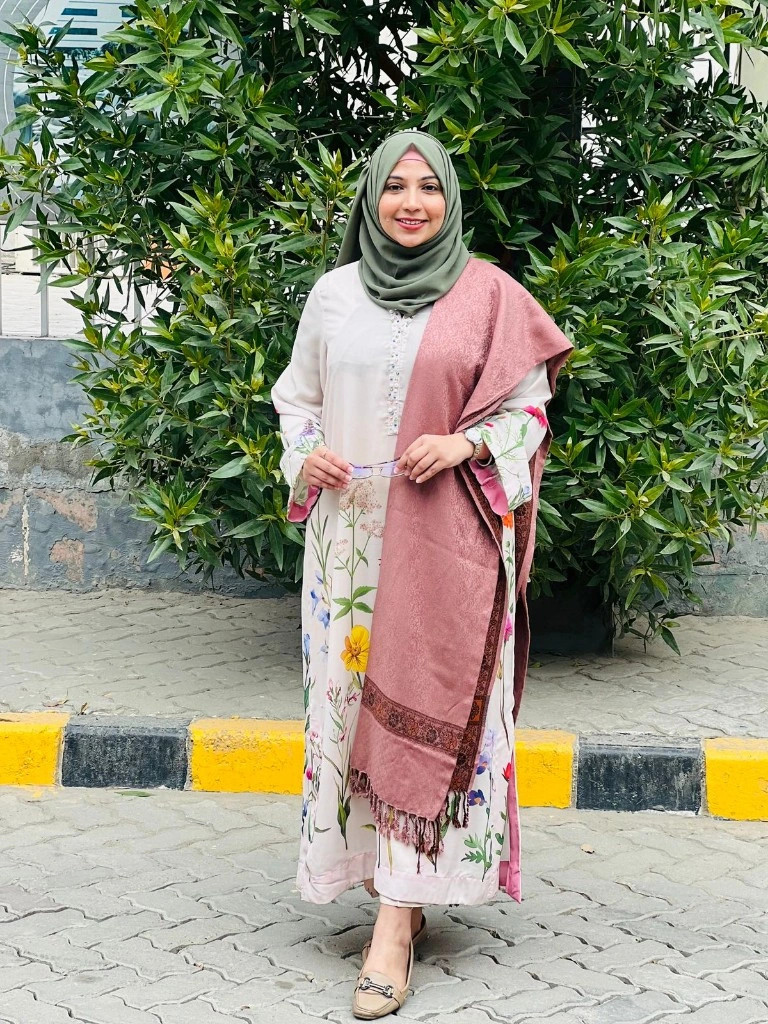
The Journey
My name is Aneeqa Arshad Virk, and I hail from Bahawalpur, a small city in South Punjab, Pakistan. I completed my early schooling at a Dominican convent higher secondary school and moved to Lahore at a very young age to study at Queen Mary College. Over the past 12 years, I have lived independently in a hostel, balancing my education alongside odd jobs. Even though I come from a financially stable family and did not need to work out of necessity, taking on those jobs taught me resilience, financial independence, and invaluable life skills.
My dream of becoming a lawyer—and one day a judge—started back in the eighth grade. In Pakistan, pursuing a career in law as a woman comes with significant societal resistance and cultural taboos. Despite opposition from my family and surroundings, I persevered and proudly became the first female lawyer in my family. I completed my LL.B. entirely on merit scholarships from the University of Management and Technology (UMT) in Lahore. Without taking a break after graduation, I immediately enrolled in an LL.M. in Commercial Law at UMT on scholarship. During the first year of my master's program, I was awarded a scholarship in China, where I pursued a second LL.M. specializing in Intellectual Property (IP) Law. Today, I am a double LL.M. scholar in Commercial Law and Intellectual Property Law, having completed both postgraduate degrees on full scholarships.
Chinese Government Scholarship Details
I was awarded the Chinese Government Scholarship (CSC) through its Belt and Road programme to study at Zhongnan University of Economics and Law (ZUEL) in Wuhan, China. This was a fully funded scholarship that covered:
- A complete tuition fee waiver
- Free on-campus accommodation
- A monthly living stipend of RMB 3,000
I have always aspired to earn a foreign qualification at some point in my academic journey. One of my respected teachers at UMT, who was pursuing his Ph.D. at ZUEL at the time, guided me toward this opportunity. Knowing my ambition to study abroad, he informed me when the CSC applications opened and encouraged me to apply. Through strong determination, manifestation, and the grace of Allah, I was able to turn that aspiration into reality.
Under the Chinese Government Scholarship, students are required to complete a monthly attendance sign-in/registration during the last five days of each month in order to receive the next month's stipend. Aside from my airfare and initial visa processing fees in Pakistan, the monthly stipend of RMB 3,000 covered all my living expenses comfortably and was more than sufficient.
Educational Background
Prior to moving to China, I completed my LL.B. and the first year of my LL.M. in Commercial Law at the University of Management and Technology (UMT), Lahore. During my studies at UMT, I earned both the Rector's Award and the Dean's Merit Award, which qualified me for a 100% merit scholarship. My final cumulative transcript grade was 3.75.
Throughout my academic career at UMT, I actively participated in class discussions and delivered numerous presentations. This constant engagement built my confidence and public speaking skills, which proved decisive during my scholarship interview for the Master's in Intellectual Property Law in China. Furthermore, recognizing how rapidly the legal landscape is evolving with Artificial Intelligence (AI), I centered my academic focus and interview discussion on the intersection of AI and Intellectual Property Law. Presenting a forward-looking research interest distinct from conventional legal topics strongly resonated with the selection committee.
How Did You Prepare to Apply to Zhongnan University of Economics and Law?
My preparation started well before my graduation. As soon as my LL.B. concluded, I proactively collected all essential academic and legal documents from my university—including my degree, a consolidated transcript, individual semester-wise transcripts, a bona fide certificate, an English Proficiency Letter, and letters of recommendation from my professors—as well as my Police Character Certificate. Having all documents ready in advance ensured a smooth, stress-free application process.
For my Study Plan, I adopted a clear, country-oriented approach: I articulated my goal of gaining specialized legal and technological expertise in China and returning to Pakistan to contribute to its legal and IP sector. Instead of drafting a rigid, separate research proposal beforehand, I prepared thoroughly around my core research vision on Artificial Intelligence and IP Law, which I articulated confidently when asked about my research plans during the interview.
How Did You Find Information About the Chinese Government Scholarship and Zhongnan University of Economics and Law?
I initially learned about the scholarship through my former professor, who was completing his Ph.D. at Zhongnan University of Economics and Law. He invited me to attend an official online orientation session hosted by a panel from the university for prospective international applicants. During the session, the panel explained the CSC application process and program structure.
Following the orientation, my professor shared the university portal link with me, and I also explored the official Chinese Government Scholarship (CSC) portal. The official CSC portal is very well-structured—it allows applicants to view university rankings, available departments, and program details in one place. Rather than applying through a professor's acceptance letter, I applied directly through the university track: I uploaded my documents on ZUEL's online portal first, received an email invitation for an interview, passed the interview, and was issued an official Admission Letter. I then uploaded the Admission Letter and supporting documents onto the CSC portal, after which I received my JW201 visa form and obtained my Chinese student visa smoothly.
Practical Tip on Documentation: Applicants should keep in mind that a Police Character Certificate is typically valid for only six months. Because mine expired during the waiting period, I had to obtain a fresh one—so timing your police clearance carefully is essential.
Did You Take Any Standardized Tests? If So, How Did You Prepare for Them?
I did not take any standardized language tests such as IELTS or TOEFL prior to applying. Since my previous education was conducted in English, I submitted an official English Proficiency Letter from my home university to fulfill the language requirement.
However, after arriving in China, I learned that passing HSK Level 3 (Chinese Proficiency Test) is a mandatory requirement to graduate and receive the final degree. I subsequently took Chinese language classes at the university, successfully passed HSK 1 and HSK 2, and began preparing for HSK 3.
How Did You Prepare to Apply for the Chinese Government Scholarship?
My scholarship preparation centered on early organization, tracking official portals, and aligning my application with the bilateral goals of the scholarship program. By securing my attested academic transcripts, degree certificates, English Proficiency Letter, recommendation letters, and Police Character Certificate early, I was able to submit my university application promptly once the portal opened.
I carefully followed the two-stage submission workflow—first securing admission and passing the interview on ZUEL's institutional portal, and then completing the official Chinese Government Scholarship (CSC) online application with my university Admission Letter attached. Preparing a focused, impact-driven Study Plan linking Chinese academic training in IP and AI with future legal development in Pakistan also played a key role in my preparation.
How Was Your Experience at Zhongnan University of Economics and Law?
Honestly, my experience at Zhongnan University of Economics and Law was wonderful and completely different from life in Pakistan. Initially, adjusting to the food was challenging, as transitioning from a Muslim country to a different culinary environment takes time. Aside from food, however, everything about the institution was remarkable. The professors were supportive and approachable, the campus environment was welcoming, and the international exposure I gained was truly transformative.
How Do You Rate Zhongnan University of Economics and Law Academically and Why?
I would rate the institution 8 out of 10 academically. The university offers strong research facilities, a clean and scenic campus, comfortable accommodation, and accessible cafes that make studying and researching enjoyable. For students specializing in Intellectual Property Law, ZUEL is a renowned hub and even hosts a prestigious IP Summer School (formerly a bridging program), which I had the privilege of attending. The professors and my research supervisor were highly experienced, responsive to messages, and attentive to the needs of international students.
The only reason I deduct two points is the lack of pre-arrival orientation materials—such as introductory videos on YouTube or the university website showing international students what daily life, campus procedures, and practical settling-in look like before arrival. Having such resources would help foreign students prepare much better before traveling.
How Does Zhongnan University of Economics and Law Support International Students?
The university provides extensive support to international students from day one. During registration and orientation, student volunteers are readily available to guide newcomers through administrative steps. The international office assists students with visa procedures and even accompanies them to the local police station for mandatory residence registration.
Additionally, the university organizes vibrant cultural events celebrating both Chinese and international cultures—including Pakistani cultural showcases—and includes a dedicated course on Chinese culture, making the overall experience deeply engaging and inclusive.
What Was the Language of Instruction?
All of my degree classes were conducted entirely in English.
What Did You Pursue After the Scholarship?
As soon as I received the offer for the Chinese Government Scholarship, I took a semester break from my ongoing LL.M. at UMT and moved to China.
Because my program was under the Belt and Road framework, I spent one year studying in China and returned to Pakistan to complete my degree requirements and resume professional practice. Upon returning, I joined Wajid Ali Shah's Law Chamber, where I handle Intellectual Property registrations and civil litigation. Alongside legal practice, I also took on a teaching and research position, which has been deeply rewarding.
I also completed the remaining requirements of my first LL.M. at UMT in the same year, allowing me to graduate with both LL.M. degrees together. While I plan to pursue a Ph.D. in the future, I am currently focused on my ongoing professional goals—and I humbly ask everyone reading my story to remember me in their prayers that Allah makes my path easy and grants me success.
Would Students Face Academic Challenges Without Mandarin?
Academically, students will not face any issues if they do not know Chinese, provided they enroll in an English-taught program. All lectures, coursework, and academic evaluations are conducted completely in English, and the university also provides structured Chinese language classes to help students meet graduation requirements.
Outside the classroom, however, basic Chinese is helpful for everyday tasks such as grocery shopping, navigating the city, communicating with locals (as very few people speak English in daily life), or navigating Chinese-language sections of online portals. Using translation apps easily bridges this gap in daily life, while classroom learning remains unaffected.
What Do You Think Made Your Application Stand Out?
Three key factors made my application stand out: my strong academic record (a CGPA above 3.0, including a 4.0/4.0 GPA, Rector's Award, and Dean's Merit Award), my forward-looking research focus on Artificial Intelligence within Intellectual Property Law, and—most importantly—my performance during the interview. My confidence, clarity of thought, and ability to articulate a distinct research vision helped differentiate me from other applicants.
What Would You Have Done Differently?
If I were to go through the process again, I would explore a wider range of scholarship opportunities before applying so I could compare programs that offer longer-term research and career pathways abroad without requiring an immediate return midway. That said, one habit I would definitely repeat—and strongly recommend—is collecting all degrees, consolidated and semester transcripts, certificates, and recommendation letters immediately upon completing a degree.
What Advice Would You Give Those Looking to Apply for a Similar Scholarship?
- Practice patience and trust the process. Do not get discouraged by rumors or anxiety about delays in application updates or visa processing.
- Rely only on official updates on the Chinese Government Scholarship portal and stay in polite, direct contact with your university.
- Prepare your documents calmly and well ahead of deadlines, and start the attestation process early. Getting documents attested by IBCC, HEC, and the Ministry of Foreign Affairs (MOFA) takes considerable time.
- Keep a fresh, professional passport-style photograph ready with a clean blue, white, or grey background.
I am grateful for the opportunity to share my journey. Many people aspire to live the life and access the opportunities you currently have—so always be thankful for what Allah has blessed you with, celebrate the successes of others with a generous heart, and trust that what is written for you will reach you at the right time. Work hard, manifest your goals, stay patient, and place complete trust (Tawakkul) in Allah.
Want to submit your
scholarship journey?
Submit Your Story Here!
More Scholarship Recipients
My name is Hamed Tarboosh. I am a medical doctor who graduated from Latakia University, Syria, in 2025. I am a holder of the .... Read more

My name is Khola Aarif, and I'm from Pakistan. I completed a Master's in International Trade at Shandong University in China .... Read more

My name is Javier Ivan Batista Saturno, and I am from Chitré, a small town in the Panamanian countryside. For my undergradu .... Read more
Leave A Comment