
How Andrew Bandawe, a Mozambican Scholar, Received an Erasmus Mundus Scholarship for Humanitarian Studies
Universities: Currently at ISCTE – Instituto Universitário de Lisboa, Portugal.Norwegian University of Science and Technology; Makerere University; University of Cape Verde; University of Santiago; National and Kapodistrian University of Athens; University of Rovuma.
Degree: Erasmus Mundus joint master’s in humanitarian coordination, health and displacement
Previous Education: Bachelor’s in English Language Teaching at Universidade Eduardo Mondlane; Master’s in TESOL at University of Birmingham; PhD candidate in Education at Universidade Federal de Sergipe
Scholarship: Erasmus Mundus scholarship: approximately €50,000 total value
Other Offered Scholarships: Commonwealth Scholarship accepted for a Master’s in TESOL at the University of Birmingham; Fulbright master’s in Education offer in 2021 not taken up; later Fulbright African Scholar Programme opportunity withdrawn
LinkedIn: Andrew Bandawe
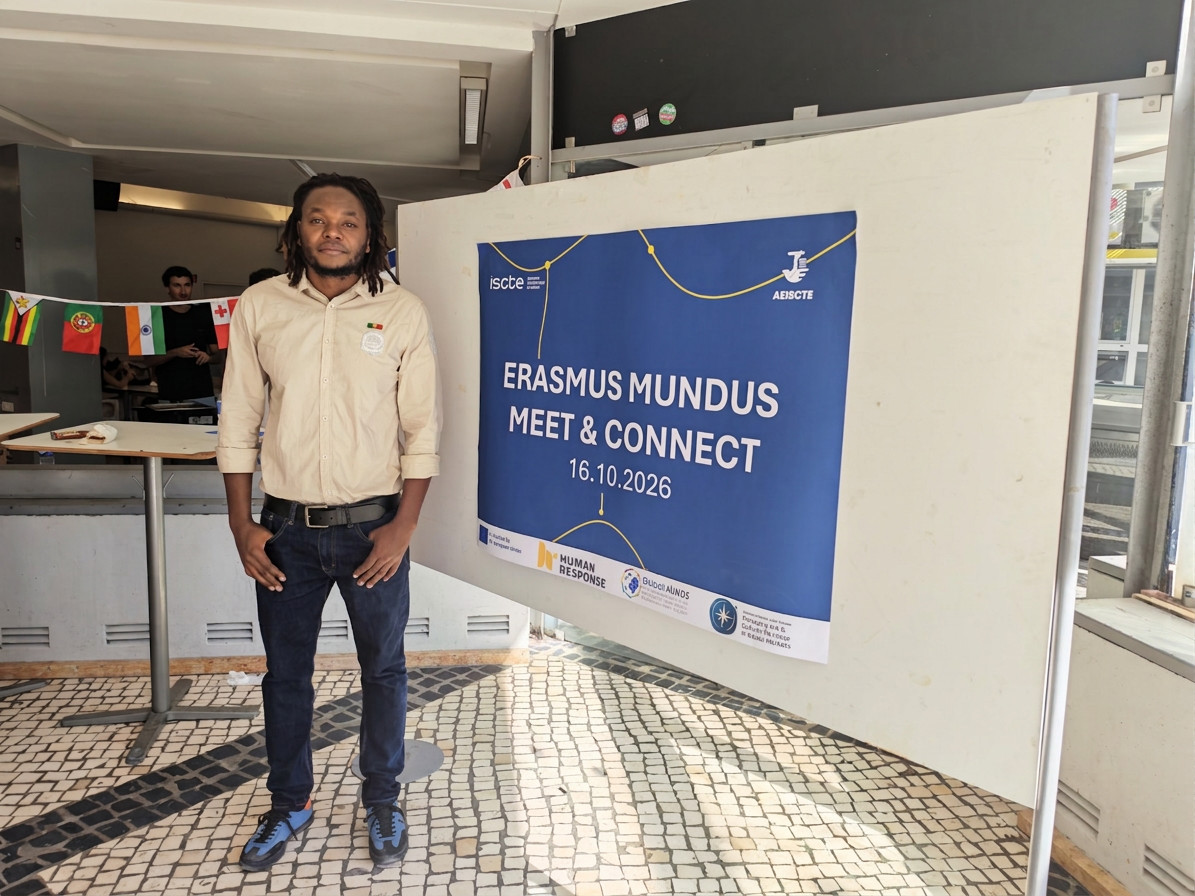
The Journey
My name is Andrew Bandawe, and I am from Mozambique. I grew up in Niassa Province, a remote setting where access to opportunities can be limited. My own educational journey has shaped my belief in education as a means of widening opportunities and strengthening communities. I am currently pursuing the Erasmus Mundus joint master’s programme in Humanitarian Coordination, Health and Displacement, with study mobility across Portugal, Norway, Greece and Uganda. I began my studies at ISCTE – Instituto Universitário de Lisboa in Portugal. I chose this field because I want to understand how humanitarian action responds to displacement, conflict and disasters, and how responses can be better coordinated and more accountable to affected communities. My background in education, teacher training, research and capacity-building gives me a useful perspective on learning, inclusion and community resilience in humanitarian settings.
Erasmus Mundus Scholarship Details
I received an Erasmus Mundus scholarship to pursue the joint master’s programme in Humanitarian Coordination, Health and Displacement. I am currently studying at ISCTE – Instituto Universitário de Lisboa in Portugal, as part of a programme that includes mobility across Portugal, Norway, Greece and Uganda.
- Institution/programme: Erasmus Mundus joint master’s programme in Humanitarian Coordination, Health and Displacement.
- Scholarship name: Erasmus Mundus scholarship – Humanitarian Coordination, Health and Displacement.
- Scholarship amount/value: approximately €50,000.
The HumanResponse consortium comprises Iscte – Instituto Universitário de Lisboa (Portugal), Norwegian University of Science and Technology (Norway), Makerere University (Uganda), University of Cape Verde (Cape Verde), University of Santiago (Cape Verde), National and Kapodistrian University of Athens (Greece), and University of Rovuma (Mozambique). Andrew reports that he has begun at ISCTE; the other institutions are programme partners, not a claim that he has attended all seven.
Other Offered Scholarships
Yes. In the same year that I received the Commonwealth Scholarship to study in the United Kingdom, I was also awarded a Fulbright scholarship. I chose to take up the Commonwealth Scholarship and pursue my Master’s in TESOL at the University of Birmingham in the UK.
I was also offered the opportunity to pursue the Fulbright African Scholar Programme in connection with my current stage of study. I decided to withdraw from that programme and continue with the Erasmus Mundus master’s opportunity in humanitarian coordination, health and displacement.
- Commonwealth Scholarship: Master’s in TESOL, University of Birmingham, United Kingdom; accepted.
- Fulbright scholarship: Master’s in Education, 2021; not taken up.
- Fulbright African Scholar Programme: I withdrew from this opportunity in order to pursue my current programme.
Educational Background
My academic background includes a Bachelor’s degree in English Language Teaching from Universidade Eduardo Mondlane in Mozambique and a Master’s degree in TESOL from the University of Birmingham in the United Kingdom. I am also a PhD candidate in Education at the Universidade Federal de Sergipe in Brazil, where my research interests include English language education and Global Citizenship Education.
Professionally, I have worked as a lecturer and researcher at Universidade Rovuma, Niassa Extension. My responsibilities have included teacher education, supporting curriculum development and institutional needs assessments, and coordinating internship and graduation activities for large student cohorts. These experiences strengthened my skills in teaching, research, coordination and capacity-building, while also helping me see the links between education, inequality, inclusion and social development. My previous degrees and professional experience prepared me for humanitarian studies by giving me a foundation in research, communication, programme coordination and the role of education in people’s lives.
How Did You Prepare to Apply to ISCTE – Instituto Universitário de Lisboa?
I prepared by researching the programmes and scholarships, checking their requirements, and thinking carefully about how each opportunity connected with my academic background and future goals. I was interested in opportunities that would allow me to deepen my knowledge, learn from international academic communities and use what I learned to contribute to education and, more recently, humanitarian action.
I approached the application by considering how the programme connected with my longer-term academic interests, professional experience and desire to contribute to social change. I reviewed the programme’s focus and structure and considered how the knowledge and skills could complement my existing background in education and research.
How Did You Find Information About the Erasmus Mundus Scholarship and ISCTE – Instituto Universitário de Lisboa?
I found information about scholarships and institutions through scholarship websites, university websites, webinars, and professional networks and social networks like LinkedIn and Facebook. I recommend using official sources to check eligibility criteria, required documents, deadlines, and funding conditions.
Did You Take Any Standardized Tests? If So, How Did You Prepare for Them?
I have taken both IELTS and TOEFL (twice) and achieved positive results in both examinations. I took IELTS for the Commonwealth Scholarship application and TOEFL for the Fulbright scholarship applications. Preparing for these tests required determination. I come from Niassa, where well-equipped libraries and other study resources are limited, and I have also faced financial constraints. I therefore prepared for both examinations independently. My experience as a lecturer and teacher trainer helped me manage the preparation, particularly because I was already familiar with language learning and teaching.
For Mozambican applicants, these examinations can be challenging because English is not widely used in Mozambique. Applicants may have limited opportunities to practise English regularly or access suitable preparation materials. My experience taught me that careful planning, independent study and persistence can help overcome some of these barriers.
How Did You Prepare to Apply for the Erasmus Mundus Scholarship?
I focused on presenting a clear and convincing account of my academic background, professional experience, motivation, and future goals. I believe that a strong personal statement is essential: it should explain why the programme matters to you, how it connects with your previous experience, and what you hope to contribute after the scholarship.
How Was Your Experience at ISCTE – Instituto Universitário de Lisboa?
My experience so far has introduced me to an international learning environment and a field that is new to me professionally. The programme brings together students and perspectives from different countries and backgrounds. The welcome activities included discussions with lecturers, round tables, and a field visit to the Portuguese Refugee Council (Centro Português para os Refugiados). These experiences have helped connect classroom concepts with the work of organisations supporting displaced people. Coming from an education background, I am learning new humanitarian concepts and terminology. This requires effort, but it is also an opportunity to transfer skills I already have—research, communication, teaching and coordination—into a different professional field.
How Do You Rate ISCTE – Instituto Universitário de Lisboa Academically and Why?
At this stage, I value the programme’s interdisciplinary approach and the opportunity to learn from different academic and practical perspectives. Studying humanitarian coordination alongside themes such as health and displacement encourages students to look beyond a single discipline when analysing crises. This is an initial reflection based on my experience so far, rather than a comprehensive assessment of the institution.
How Does ISCTE – Instituto Universitário de Lisboa Support International Students?
My experience includes participation in programme welcome activities that helped students meet lecturers and classmates and become familiar with the learning environment. I would prefer to give a fuller assessment of academic, administrative, and practical support for international students after gaining more experience with the institution’s services.
Are Your Classes Conducted in English or the Country’s Native Language?
Both my Master’s programme at the University of Birmingham in the United Kingdom and my current Erasmus Mundus master’s programme are taught in English. For me, studying in English is both a challenge and an opportunity as a Mozambican. English is not widely used in everyday life in Mozambique, so studying in an English-medium academic environment requires continued effort. At the same time, it gives me the opportunity to use English regularly, develop my academic communication and engage with students and lecturers from different backgrounds.
Would Students Face Academic Problems Without Knowing Portuguese?
Not necessarily, if the programme’s language of instruction is one they understand well. However, local-language knowledge can be important for daily life, community engagement, internships, and understanding the local context. Applicants should confirm the programme’s teaching language and any language requirements for placements or fieldwork. Learning basic Portuguese has practical value for living and interacting in Portugal, even when academic activities are conducted in another language.
What Do You Think Made Your Application Stand Out?
I believe my applications stood out because of my passion for learning and the strength and sincerity of my personal statement. I tried to communicate a clear reason for pursuing each opportunity and to show how my educational background, professional experience, and future ambitions connected with the programme.
My journey has not always been easy. Coming from Niassa, where access to well-equipped libraries and learning resources can be limited, and facing financial constraints, I have had to rely on persistence, independent preparation and a strong commitment to learning. I believe that demonstrating this motivation, alongside my experience as a lecturer, teacher trainer and researcher, helped me present a compelling application.
I believe the strength of my application was the connection between my academic background, professional experience and motivation to learn in a new field. My work as a lecturer and researcher has involved teacher education, student support, coordination and institutional development. These experiences have helped me develop a commitment to inclusion, capacity-building and social impact. I also brought a willingness to move beyond my established field of education and learn about humanitarian action. My experience has taught me that skills developed in one sector—such as communication, research, coordination and learning—can be relevant to another when they are connected thoughtfully to the programme’s aims.
What Would You Have Done Differently if You Were Going Through the Process Again?
If I were going through the process again, I would start preparing even earlier, create a checklist of documents and deadlines, and allow more time to revise the motivation statement and obtain feedback. I would also contact current students or alumni to understand the programme’s practical demands, mobility arrangements, and living costs. Finally, I would keep a clear record of scholarship conditions and funding details so that I could plan more confidently before travelling.
What Advice Would You Give Those Looking to Apply for a Similar Scholarship?
Start early and rely on official sources. Read the eligibility rules and selection criteria carefully, and do not treat the motivation statement as a generic essay. Explain your own journey, why the programme fits your goals, what you can contribute to the cohort, and how you intend to use the opportunity afterwards. Make your experience relevant rather than simply listing achievements. If you are changing fields, show the connection between what you have done and what you want to learn. Ask trusted people to review your application, check every document before submission, and apply even if your background does not follow a perfectly straight path. A scholarship can open a door, but preparation, persistence and a clear sense of purpose help you make the most of it.
Want to submit your
scholarship journey?
Submit Your Story Here!
More Scholarship Recipients

My name is Silvany Tavares, and I am from Cape Verde. I studied Biomedicine in Brazil, and later I got my Master’s in Biom .... Read more
- Bachelor's Scholarships
- Biomedical Engineering
- Brazil
- Cape Verdean Nationality
- China
- Chinese Government Scholarships
- FCT PALOP + Timor-Leste Scholarship
- Federal University of Uberlândia
- Fully Funded Scholarships
- Health
- Master's Scholarships
- NOVA University Lisbon
- Partially Funded Scholarships
- Ph.D. Scholarships
- Portugal
- Southeast University
My name is Eyerusalem Daniel Haile, and I am from Ethiopia. I come from a rural community, where I grew up seeing the challe .... Read more
My name is Marc Alain Boucicault, and I am from Haiti. I am a social entrepreneur and the founder of Banj, Haiti’s first i .... Read more
Leave A Comment