
How I Secured a Fully Funded Master's at the University of Sussex, United Kingdom Through the Chevening Scholarship
University: University of Sussex
Degree: Master’s in Sustainable Development
Previous Education: Bachelor’s in Marketing and Business Administration, Mu’tah University
Scholarship: Chevening Scholarship – Fully Funded (Full Tuition, Monthly Stipend for Accommodation and Living Expenses)
Social Media
LinkedIn: linkedin.com/in/anaswobeidat/
The Journey
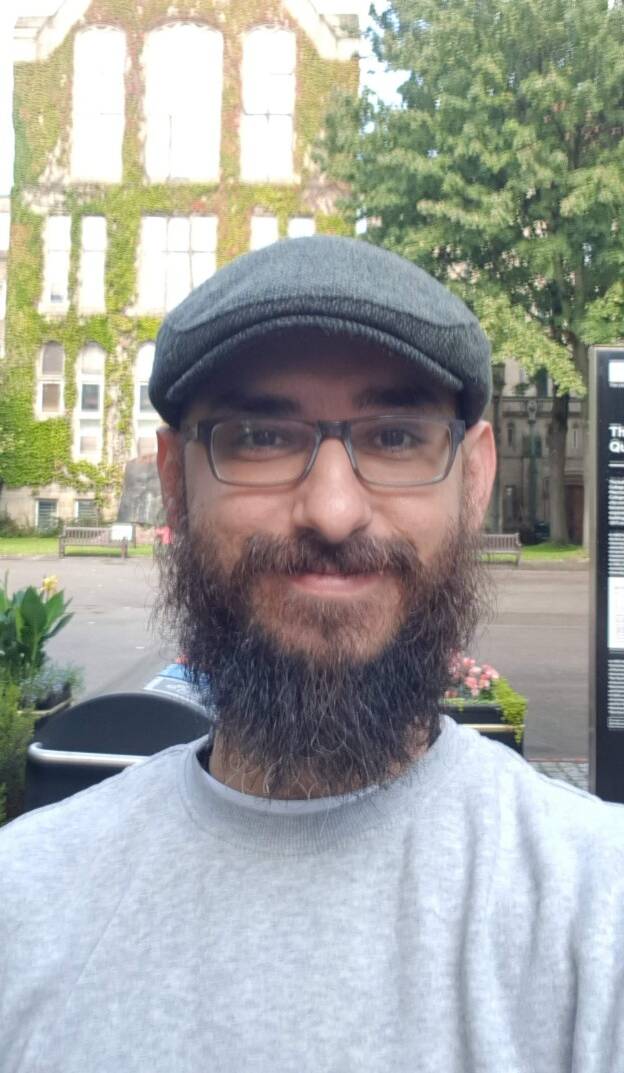
My name is Anas Aleassa, and I am a Business Innovation and Strategy Expert from Jordan with more than a decade of experience across the private and development sectors. Throughout my career, I have focused on entrepreneurship and economic development, with a particular interest in developing and supporting innovative ideas that contribute to economic empowerment and create meaningful community impact.
My work spans business modeling, innovation management, open innovation, mentorship, incubation, and entrepreneurship support. Over the years, I have contributed to the design and implementation of initiatives that strengthen entrepreneurship and innovation ecosystems, working with startups, businesses, development organizations, and research institutions. Through open innovation initiatives in particular, I have helped bring different actors together to address real-world challenges, encourage collaborative problem-solving, and support the development and adoption of new solutions.
I was born and raised in Jordan and completed my bachelor's degree in Marketing and Business Administration at Mu'tah University in Karak in 2011. Since then, my professional journey has taken me across both the private sector and international development, with much of my work centered on entrepreneurship, innovation, and economic development.
After several years of professional experience, I decided to pursue a Master's degree in Sustainable Development at the University of Sussex. What attracted me to the program was its focus on some of the world's most complex and interconnected challenges, including climate change, poverty, income inequality, and sustainable economic development.
The program resonated strongly with both my personal interests and professional experience. It helped me move beyond looking at individual development challenges in isolation and instead understand how economic, social, environmental, and political systems interact. It also strengthened my understanding of how policies and institutions shape development outcomes and how innovation, entrepreneurship, and other approaches can contribute to more inclusive and sustainable solutions.
I am also PMP certified, a proud Chevening alumnus, and was honored to be recognized as one of PMI's Future 50 in 2024.
Chevening Scholarship Details
I was honoured to receive the Chevening Scholarship in 2021 to pursue my Master's degree in Sustainable Development at the University of Sussex. Chevening is a fully funded scholarship, and in my case, it covered the full cost of tuition, along with a monthly stipend to support accommodation and living expenses during my studies in the UK.
Beyond the financial support, the scholarship also gave me access to the wider Chevening community and a global network of scholars and alumni, which became an important part of the overall experience.
Educational Background
I completed my Bachelor's degree in Marketing and Business Administration at Mu'tah University in Jordan, graduating with an overall average of 83%, which was classified as "Very Good."
While my undergraduate degree was not directly related to Sustainable Development, it provided me with a strong foundation in business, markets, management, and economic decision-making. Over the following decade, my professional experience increasingly focused on entrepreneurship, economic development, innovation, and supporting businesses and communities.
By the time I applied for the Chevening Scholarship, I had more than ten years of professional experience. This experience helped bridge my academic background in business with my growing interest in sustainable development. Pursuing a Master's degree in Sustainable Development therefore felt like a natural progression, allowing me to complement my practical experience with a broader understanding of development challenges, economic systems, inequality, sustainability, and the policies that influence them.
How Did You Prepare to Apply to the University of Sussex?
Did You Take Any Standardized Tests? If So, How Did You Prepare for Them?
I first determined the field I wanted to study and then researched UK universities offering strong programs in that area. I used the QS World University Rankings, particularly the rankings related to Development Studies, as a starting point to identify leading institutions. From there, I researched the programs offered by each university in more detail, including their course content, entry requirements, application procedures, and how well they aligned with my academic background and professional experience.
I also contacted some universities directly before applying to ask about their programs and whether my educational and professional background would be suitable. This was particularly important to me because my bachelor's degree was in Marketing and Business Administration, while I wanted to pursue a Master's degree in Sustainable Development. By the time I applied, however, I had more than ten years of professional experience, including significant work related to entrepreneurship and economic development. These conversations helped me narrow my choices to three universities that I felt were the strongest fit for my goals.
Once I selected the universities, I began preparing the required documents and submitting individual applications. Each institution had its own admission process and requirements, with differences in areas such as minimum academic results and English-language requirements.
I did not need to take tests such as the SAT, ACT, GRE, or GMAT. Chevening itself did not require an IELTS score at the time of my application, although individual universities could set their own English-language requirements. Therefore, I carefully reviewed the requirements of each university as part of the selection and application process.
How Did You Prepare to Apply for the Chevening Scholarship?
I first learned about the Chevening Scholarship through my professional network and friends who had applied in previous years. Before starting my application, I spent time researching the scholarship, its eligibility requirements, selection criteria, and application process to make sure that I was eligible and that the opportunity was aligned with my academic and professional goals.
One of the most important steps was deciding what I wanted to study and why. I wanted my choice of program to be connected not only to my previous education but, more importantly, to the professional experience I had accumulated over more than a decade and to the direction I wanted my career to take. Once I had identified Sustainable Development as my preferred field, I selected three UK universities and incorporated those choices into my Chevening application.
I then worked through the online application carefully, gathering the required documentation and developing clear answers about my professional experience, leadership, networking, career plans, choice of program, and reasons for applying to Chevening. I also began applying to the selected universities separately so that I could secure the required university offer as the scholarship process progressed.
The next major stage was preparing for the Chevening interview. I reviewed my application in detail and prepared clear talking points about my professional experience, achievements, future career goals, and reasons for choosing my field of study and selected universities. I also researched recent policies, developments, and regional issues related to sustainable development and economic development so that I could discuss my interests within a broader context.
Most importantly, I prepared to explain why Chevening was more than simply a source of funding for my Master's degree. I wanted to demonstrate why becoming part of the Chevening network was relevant to my long-term goals and how I hoped to use the academic experience, professional connections, and international exposure to contribute to development in Jordan and the wider region.
How is Your Experience at the University of Sussex?
My experience at the University of Sussex was very positive, both academically and personally. I had the opportunity to learn from highly knowledgeable academic staff, many of whom were leading researchers and experts in their respective fields.
I particularly appreciated the research-based approach to learning. The program encouraged us to critically engage with academic literature, review research papers, and discuss different perspectives through lectures and seminars. The open discussions were especially valuable because they allowed students to challenge ideas, learn from one another, and connect academic concepts with real-world development issues.
Outside the classroom, living in Brighton was also a very positive part of the experience. My classmates came from a wide range of countries and professional backgrounds, which created a diverse, welcoming, and intellectually stimulating environment. Learning alongside such an international group added significantly to my overall experience.
How Do You Rate the University of Sussex Academically?
I would rate the University of Sussex very highly academically. One of its main strengths was the quality and expertise of the academic staff, combined with a strong emphasis on research, critical thinking, and independent learning.
Rather than focusing only on theoretical knowledge, the program encouraged us to examine evidence, question assumptions, and explore complex development challenges from different perspectives. The combination of lectures, seminars, academic research, and discussions with students from diverse backgrounds made the learning experience both rigorous and engaging.
For me, this approach was particularly valuable because it strengthened my ability to analyze development challenges at a broader systems level and connect academic research with the practical issues I had encountered throughout my professional experience.
How Does the University of Sussex Support International Students?
The University of Sussex provided a supportive environment for international students. This included access to university-managed accommodation, as well as dedicated support staff who could assist students with academic, administrative, and practical matters.
I also appreciated the flexibility and understanding provided by the university when students faced individual circumstances or needed additional support. For international students adjusting to a new country, academic system, and living environment, having access to this support made the transition much easier and contributed positively to the overall university experience.
What Did You Pursue After the Chevening Scholarship?
After completing my Master's degree, I returned to Jordan and resumed my professional career. I continued working in the fields of economic development, entrepreneurship, and innovation, applying many of the perspectives and analytical approaches I developed during my studies.
The scholarship and my experience at the University of Sussex helped broaden the way I approach development challenges, particularly by looking at the connections between economic, social, and sustainability issues. Since graduating, I have continued building on my previous professional experience while taking on roles and initiatives that support businesses, entrepreneurs, and innovation ecosystems.
What Do You Think Made Your Application Stand Out?
I believe what made my application stand out was being genuine and making sure my answers reflected my actual experience, motivations, and career goals rather than trying to provide what I thought the selection committee wanted to hear.
I also made a conscious effort to connect my answers to specific examples from my professional experience and to demonstrate the impact of my work. Wherever possible, I supported my examples with relevant numbers, results, and facts rather than relying on general statements.
Research was another important part of my preparation. I made sure I understood the scholarship, the universities and programs I selected, and the broader issues related to my field of study. This helped me present a clear and consistent story connecting my previous experience, my decision to pursue Sustainable Development, and what I hoped to achieve after completing the scholarship.
What Would You Have Done Differently if You Were Going Through the Process Again?
I would not change much about the process, as my overall experience was very positive and the preparation I did worked well for me.
If I were to go through it again, I would probably start some parts of the process slightly earlier, particularly researching universities and preparing supporting documents. This would allow more time to compare programs, refine the application, and reduce some of the pressure closer to the deadlines.
Overall, however, I was satisfied with the way I approached the application and with the outcome.
What Advice Would You Give Those Looking to Apply for a Similar Scholarship?
My first piece of advice is not to be discouraged if you are not selected on your first attempt. Chevening is a highly competitive scholarship, and many strong candidates apply more than once before being successful. Use the experience to strengthen your application and consider applying again.
I would also strongly recommend doing your research and having a clear understanding of what you want to study and why. A scholarship like Chevening is a significant opportunity, so your choice of program should not be based only on what is relevant to you today. Think about where you want your career to be in five or ten years and choose a field of study that can support that longer-term direction.
Finally, be genuine in your application. Connect your answers to your actual experiences, demonstrate your impact with specific examples and evidence, and make sure there is a clear link between your past experience, your chosen programme, and what you hope to achieve in the future.
Want to submit your
scholarship journey?
Submit Your Story Here!
More Scholarship Recipients
My name is Ian Cawich. I’m a proud Belizean, specifically from a small northern town called Orange Walk, which serves as t .... Read more
My name is Miguel Felipe Arévalo Castiblanco, and I'm originally from Colombia. I'm currently a PhD candidate in Electrical .... Read more
My name is Brendon Munashe Mahere, and I am from Zimbabwe. I graduated from Al Akhawayn in 2024 with a BSc in Engineering an .... Read more
Leave A Comment