
University of Stuttgart Scholarships for International Students 2027
University of Stuttgart offers access to scholarships that can reduce tuition burden and sometimes support additional costs. Below are top options prioritized by funding level.
If you are building a wider scholarship strategy for University of Stuttgart, external and government programs can be important additions. Here are a few to consider. PTDF Overseas Postgraduate Scholarship Scheme is usually considered fully funded, and typical coverage can include full tuition fees for approved programmes, research bench fees and where applicable, and return flights. A strong option is DAAD EPOS (Development-Related Postgraduate Courses) which is fully funded and often covers full tuition fee waiver, health insurance, and A monthly stipend of €934 for Master's students. DAAD Scholarships is fully funded, and coverage often includes €992 for master's and €1,300 for Ph.D. students, health insurance, and one-time research allowance.
For more opportunities beyond these highlights, explore the scholarship listings below on this page.
University of Stuttgart Scholarships for International Students
The scholarships at University of Stuttgart can help fund your study expenses. There are currently 8 scholarships being offered to international students at the University of Stuttgart, all with varying requirements, benefits, and application processes. We have compiled them in this list to help you find the scholarship that best fits you.
External Scholarships
There are many degrees that are open to international students right now — find yours.
University of Stuttgart Admissions
Here are the official admission pages for University of Stuttgart:
| Degree | Admissions Pages |
|---|---|
| Bachelor's | International Students Admissions Page |
| Master's | International Students Admissions Page |
University of Stuttgart Application Deadlines
| Degree | Admission Deadline |
|---|---|
| Bachelor's | July 15, 2026 Different Bachelor's programs have different deadlines |
| Master's (Winter) | July 15, 2026 Different Master's programs have different deadlines |
| Master's (Summer) | January 15, 2027 Different Master's programs have different deadlines |
Tuition Fees at University of Stuttgart for International Students
Indicative annual tuition fee ranges for international students at University of Stuttgart. Exact fees vary by program, so always confirm the current cost on the university's official tuition fee pages.
| Degree Level | Typical Annual Range |
|---|---|
| Bachelor's Tuition | 3,000 Euros |
| Master's Tuition | 3,000 Euros |
Please note that tuition fees can vary based on the specific program you choose. For the most accurate and current fee information, consult the official tuition fee pages linked above.
University of Stuttgart Scholarship Recipients
International students who received scholarships to study at University of Stuttgart, documented by Global Scholarships.
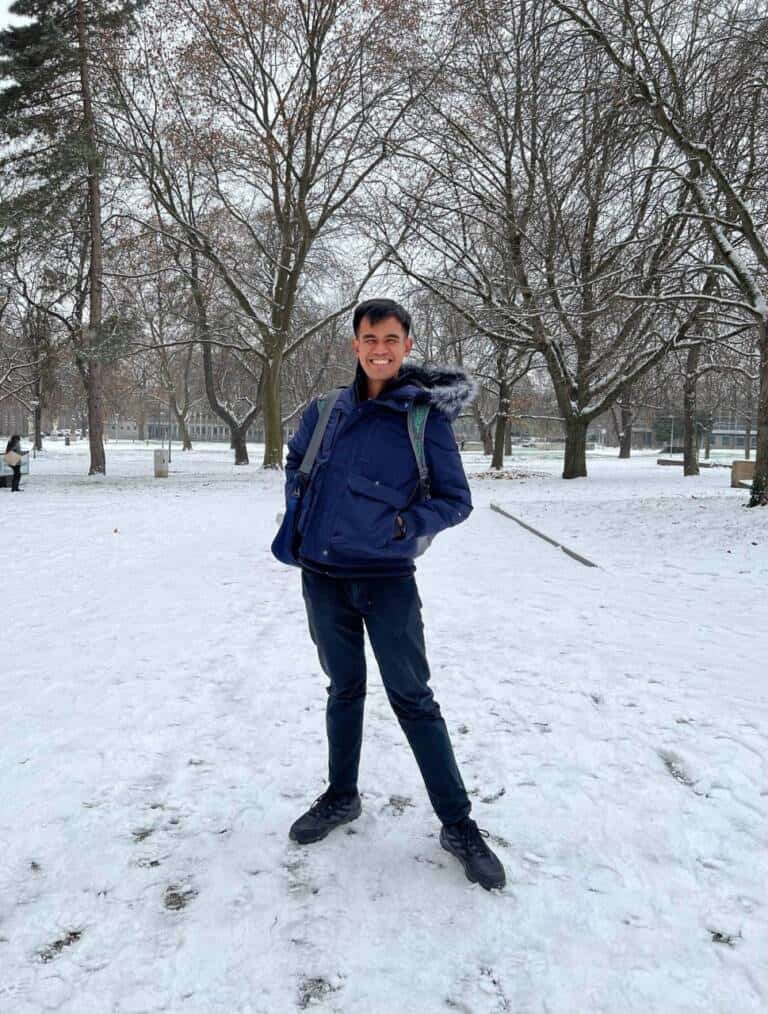
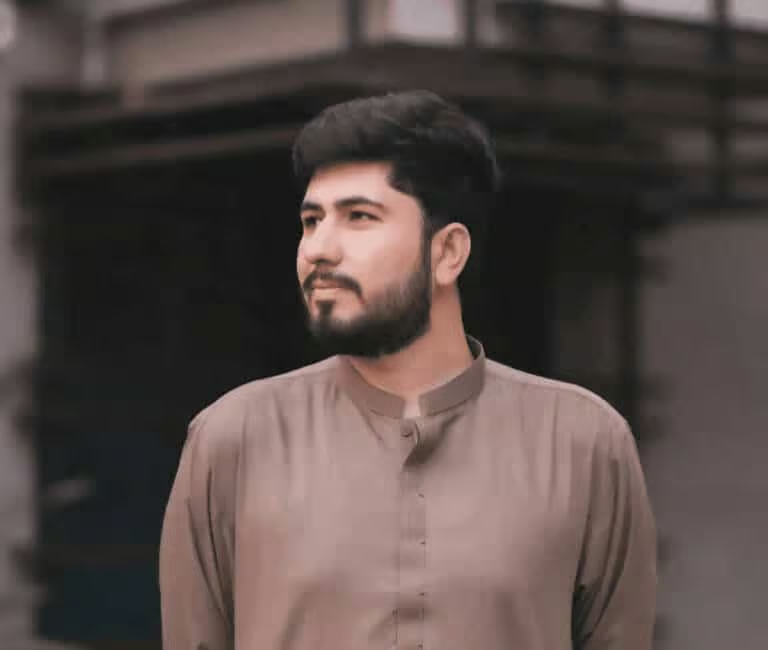
What Scholarship Recipients Say
Advice and insights from international students who successfully secured funding to study at University of Stuttgart.
"This scholarship provided financial support of €500 per month and was granted in recognition of my strong academic performance as well as my active involvement in student initiatives related to gender, diversity, and equality."
"My experience at the University of Stuttgart was extremely positive and enriching."
"The institution is very welcoming toward international students and fosters a supportive and inclusive environment."
"The faculty members are highly experienced, approachable, and committed to student learning, which significantly enhances the overall academic experience."
Frequently asked questions
Common questions about scholarships, admissions, and studying at University of Stuttgart.
The University of Stuttgart does offer some part-time “Master:Online” continuing-education programs (often designed for working professionals). Scholarships for fully online/continuing-ed formats are usually less common than for regular on-campus degrees.
Both, but it depends on the level and the specific program. Many Bachelor’s programs (and a lot of Master’s programs) are taught in German, while the University also offers a set of English-taught Master’s programs. This “mixed reality” matches what scholarship recipients often describe in Germany: Maria Voronkova noted her program was “taught in English and German, with the possibility of studying entirely in English,” and she used free language courses alongside her studies.
In general, there is no single “University of Stuttgart age limit” that applies to all scholarships. Many scholarships focus on academic merit and engagement rather than age. Recipient stories show a wide range of ages and stages: Maheen Sohail introduced herself as “a 27-year-old” Master’s student (Deutschlandstipendium), while Harini received DAAD-WISE as an undergraduate. Always check the specific funder’s eligibility rules.
Scholarships connected to the University (and external scholarships used by its students) generally cover a wide range of subjects across Stuttgart’s fields: engineering and STEM (a major strength), business/management and social sciences, and humanities (languages/cultural sciences). For medicine specifically, the University of Stuttgart is not a medical school (so an “MD/medicine degree scholarship at Stuttgart” typically isn’t applicable), but related areas like biomedical/health-adjacent engineering or life-science research pathways can still be scholarship-relevant in Germany more broadly.
It varies by scholarship. Some options are broadly open to enrolled students regardless of nationality (for example, merit scholarships tied to enrollment), while many external scholarships (e.g., DAAD) are nationality- or region-targeted. Also keep in mind that in Baden-Württemberg, non-EU/EEA students generally face additional tuition fees, so scholarships are especially important for that group.
Often yes, depending on your program’s language. For German-taught programs, you generally must prove German proficiency (e.g., TestDaF/DSH) at the time of application. For English-taught programs, you typically need proof of English (e.g., TOEFL/IELTS) unless you qualify for an exemption the program accepts. Recipient experiences mirror this: Yağmur Kaymakçı said she reached C1 German and “achieved a score of 17/20 on the TestDaF,” while Muzhdah Shayan shared, “I did not take IELTS or TOEFL… the language of instruction was English,” so she was waived.
There isn’t one universal minimum grade for all programs; requirements depend on the degree level and the specific program (and some programs have restricted admission/selection). Scholarship-wise, many awards expect strong performance: the Deutschlandstipendium, for example, is explicitly merit-focused and looks for above-average grades plus additional “soft” achievements. A concrete “Germany admissions competitiveness” example from a recipient story: Yağmur Kaymakçı mentioned her converted entry score was “NC 1,3” when applying in Germany.
A strong academic record plus evidence you’ll contribute beyond grades. Scholarship recipients frequently highlight high GPAs and substantive projects: Harini reported a “CGPA of 9.3/10” and emphasized research fit; Maria Voronkova noted a “GPA 4.9/5” plus conferences; and Maheen Sohail listed a “GPA equivalent: 1.1” with strong references and a detailed motivation letter. For Stuttgart-linked awards like Deutschlandstipendium, engagement (volunteering, leadership, obstacles overcome) can matter alongside grades.
For admission, you’ll typically upload documents in the University’s application system (not paper): your university entrance qualification and transcript (and, if applicable, prior university records and transcripts), plus proof of the required language (German and/or English depending on the program). The University also commonly requires certified translations into German or English (uploading both original + translation). Scholarship applications often add items like CV, motivation letter, and references: Harini said she submitted a “motivation letter… CV… academic transcripts… a recommendation letter… and a passport copy,” and Saima Khanam Puspo listed “letters of reference… employment certificates… my IELTS score… academic transcripts.”
No, University of Stuttgart states you “will not be charged an application fee” for admission. Check the latest guidelines for updated information.
There are many degrees that are open to international students right now — find yours.
About the Author: Hyun Lee


Leave A Comment