
AAUW’s International Fellowship 2027
The AAUW International Fellowship supports women from outside the United States pursuing graduate or postgraduate studies at U.S. institutions. Funded by the American Association of University Women, this fellowship aims to empower women in academia, research, and professional fields. It prioritizes candidates who demonstrate a commitment to advancing gender equity and making a positive impact in their home countries.
AAUW’s International Fellowship Coverage
This non-profit organization partially funded scholarship for international students covers the following:
-
$20,000 for Master's and first professional degree recipients
-
$25,000 for Doctoral Students
-
$50,000 for Postdoctoral Students
AAUW’s International Fellowship Eligibility Criteria
To be eligible for AAUW’s International Fellowship, you need to meet the following criteria:
- Women, including those who identify as women, in all fields of study at accredited institutions or postdoctoral research.
- Non-U.S. citizens or hold a nonimmigrant visa if residing in the U.S.
- Students with a degree equivalent to a U.S. the required degree by the application deadline.
- Students who plan to study full-time during the fellowship year and return to their home country afterward.
- Proficient in English and provide proof via accepted exams, transcripts, or a statement.
- Accepted or applied to an accredited institution for the fellowship year
For detailed requirements, refer to the official eligibility page .
Eligible degree levels
Eligible programmes
Eligible nationalities
How to Apply
In this section, we'll provide a clear general overview of requirements and steps to guide you through the application process for AAUW’s International Fellowship.
To apply for AAUW’s International Fellowship, please follow these steps:
-
Access the application platform
-
Create an account
-
Complete all the required components
Application Requirements
Before applying, make sure you meet the following requirements:
-
Research Proposal
-
Two letters of recommendations
-
Proof of highest degree or Proof of current enrollment
-
Proof of doctorate or M.F.A. degree
-
Proof of English proficiency
-
Certified translations (If your documents are not in English)
Important Note: The application procedures and required documents for AAUW’s International Fellowship may vary depending on your degree, program, nationality and other factors. For specific details regarding the requirements, kindly visit the official website of AAUW’s International Fellowship.
Application Deadlines
Now that you’re familiar with the application procedure, it’s time to know the application dates! Knowing the dates for AAUW’s International Fellowship will help you prepare early and it will also give you the time you need to put together a competitive application.
Here are the application deadlines for AAUW’s International Fellowship:
| Degree | Application deadline |
|---|---|
| Master's, PhD | Opens: |
AAUW’s International Fellowship Eligible Institutions
The eligible institutions for AAUW’s International Fellowship are listed below:
B
C
G
N
S
U
- University at Buffalo, The State University of New York
- University of Alabama at Birmingham
- University of Arizona
- University of Arkansas
- University of California, Berkeley
- University of California, Davis
- University of California, Irvine
- University of California, Los Angeles
- University of California, Riverside
- University of California, Santa Barbara
- University of California, Santa Cruz
- University of Central Florida
- University of Chicago
- University of Cincinnati
- University of Colorado Boulder
- University of Connecticut
- University of Delaware
- University of Florida
- University of Houston
- University of Illinois Chicago
- University of Iowa
- University of Kansas
- University of Kentucky
- University of Massachusetts Amherst
- University of Miami
- University of Minnesota-Twin Cities
- University of Missouri
- University of Nebraska-Lincoln
- University of New Mexico
- University of North Carolina at Chapel Hill
- University of Notre Dame
- University of Oklahoma
- University of Oregon
- University of Pittsburgh
- University of Rochester
- University of San Diego
- University of South Carolina
- University of Southern California
- University of South Florida
- University of Tennessee at Martin
- University of Texas at Austin
- University of Texas at Dallas
- University of Utah
- University of Virginia
- University of Washington
- University of Wisconsin-Madison
AAUW’s International Fellowship Recipients
Meet students who have received AAUW’s International Fellowship and learn how they secured their award.
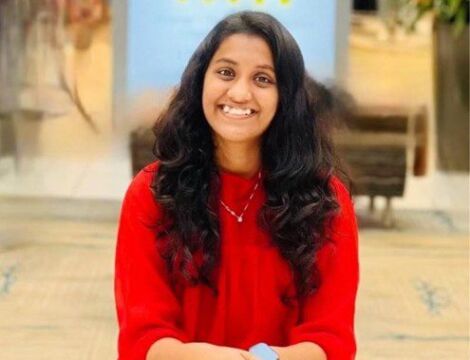

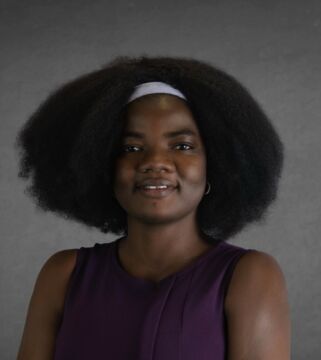
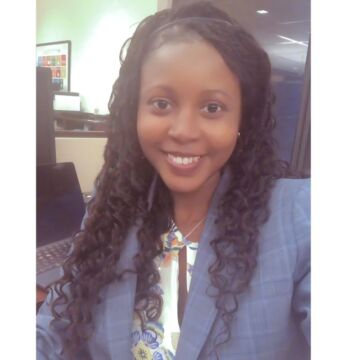
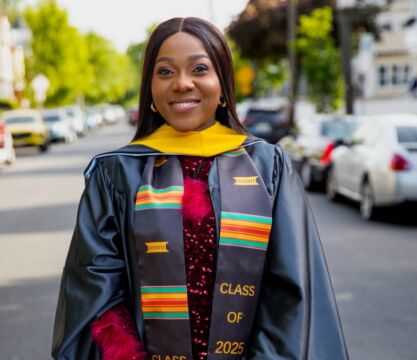
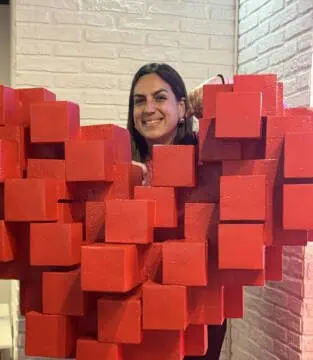
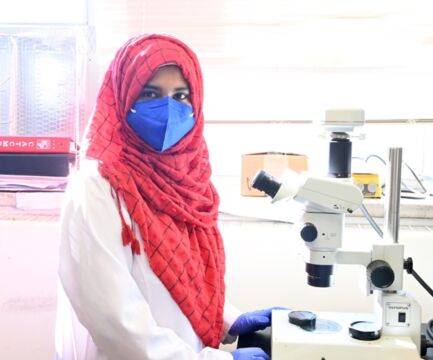
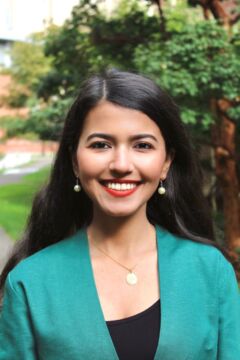
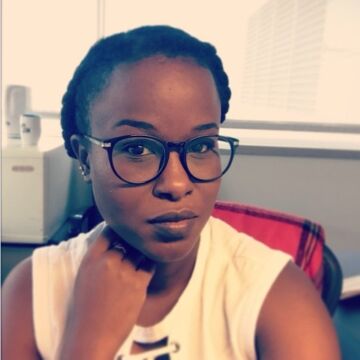
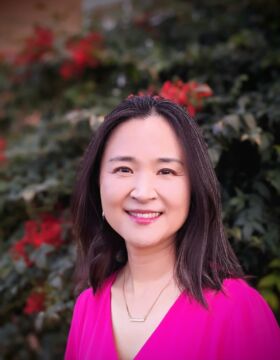
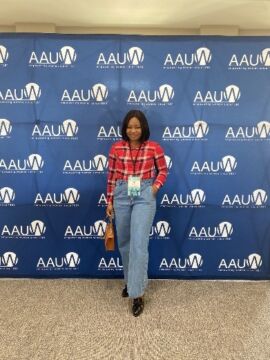
Eleven recipient stories describe degree study supported by AAUW’s International Fellowship. The accounts cover master’s, doctoral and graduate law-and-diplomacy studies, including awards received after enrollment.
Nationalities Represented in the Recipient Stories
| Nationalities | Stories per nationality |
|---|---|
| Ghanaian, Nigerian | 2 each |
| Bangladeshi, Chilean, Colombian, Indian, Kenyan, Pakistani, South Korean | 1 each |
Degree Study Reported by Recipients
| Degree level | Stories | Subjects |
|---|---|---|
| Master’s | 5 | International and Comparative Education; Cybersecurity; Public Health; Transdisciplinary Design; Epidemiology |
| PhD | 5 | Environmental Resources and Policy; Social and Behavioral Sciences; Microbiology and Cell Biology; statistical and human genetics research |
| Graduate study | 1 | Law and Diplomacy, with International Development, Environmental Resource Policy, and Gender and Intersectional Analysis specializations |
Funding Reported by Recipients
| Recipient and degree/program | Reported coverage |
|---|---|
| Prathiba Annam (2023–2024 fellowship) — MPH in Epidemiology, University of Alabama at Birmingham | US$20,000 toward graduate education and research. |
| Ángela Sánchez (2022–2024 studies) — Master of Education, Columbia University | US$20,000 for her second study year. She separately received US$12,000 from the P.E.O. International Peace Scholarship and additional university and external support. |
| Kari Fuentes — MFA in Transdisciplinary Design, The New School | About US$20,000 supporting the first year. IEI and university merit awards also contributed to graduate-study funding. |
| Mary Oluwatosin Kaka (2022–2023 fellowship) — PhD research in statistical and human genetics, Purdue University | US$20,000 for living expenses. A separate graduate assistantship covered tuition, stipend and insurance throughout the doctorate. |
| Gul Saeed — PhD in Social and Behavioral Sciences, Yale University | US$25,000 from the AAUW International Doctoral Fellowship; separately listed a CAD105,000 Canadian Institutes of Health Research award. |
| Jarin Taslem Mourosi (2021–2022 fellowship) — PhD in Microbiology and Cell Biology, Catholic University of America | US$20,000 as an external fellowship, alongside a funded doctoral program and teaching-assistant work. |
Examples of Featured Recipients’ Application Backgrounds
| Recipient and degree/program | Scholarship/application route | Reported background and preparation |
|---|---|---|
| Prathiba Annam — MPH in Epidemiology, University of Alabama at Birmingham | AAUW master’s/first-professional fellowship | PharmD, GPA 3.63, with clinical-research training and a dysmenorrhea quality-of-life project; connected her research to women’s health. |
| Ángela Sánchez — Master of Education, Columbia University | AAUW; application for second-year support | Law degree and LL.M. in Public International Law; more than 13 years in human-rights institutions; linked legal and education experience to peace education. |
| Felicia Jacinta Ayambire — Master of Public Health, Southern Illinois University Edwardsville | AAUW; successful on second attempt | Public Health bachelor’s and Ghana Health Service experience; highlighted work with women and girls, research on older women in Ghana’s witch camps, and strong recommendations. |
| Jarin Taslem Mourosi — PhD in Microbiology and Cell Biology, Catholic University of America | AAUW external fellowship during PhD | Genetic Engineering and Biotechnology bachelor’s, CGPA 3.86/4.00; undergraduate research and an online Advanced Immunology course for Bangladeshi students; submitted a one-page research summary. |
| Gul Saeed — PhD in Social and Behavioral Sciences, Yale University | AAUW International Doctoral Fellowship | MPH from University of Toronto, CGPA 4.0, and prior research at a WHO Collaborating Centre. Sought advice from awardees, met weekly with her advisor and drafted statements several weeks before deadlines. |
| Clara Mundia — PhD in Environmental Resources and Policy, Southern Illinois University Carbondale | AAUW International Fellowship | Prepared a research proposal, education and funding details, income information and supporting documents; asked a mentor to help identify the strongest parts of her case. |
How Recipients Met Language Requirements
| Language requirement route | Stories / total funded degree-study stories | Recipients and examples |
|---|---|---|
| IELTS | 2/11 | 7.0 (Ángela Sánchez); IELTS taken for the application (Prathiba Annam). Both accounts concern host-program admission. |
| Host English-test exemption | 1/11 | Exemption based on her English-language background in Ghana (Felicia Jacinta Ayambire). |
| AAUW English-proficiency evidence | 1/11 | U.S. doctoral transcript used as proof of English proficiency (Jarin Taslem Mourosi). |
Application Timelines Reported by Recipients
| Recipient and degree/program | Application or scholarship route | Reported application timeline |
|---|---|---|
| Ángela Sánchez (2022–2024 studies) — Master of Education, Columbia University | AAUW International Fellowship | Began mapping scholarships almost a year in advance, before choosing specific programs; researched university options about four months ahead of applications; received AAUW support for her second study year. |
What Recipients Pursued After Their Scholarship-Funded Studies
| Recipient | Scholarship-funded degree/program | Reported outcome or current status |
|---|---|---|
| Prathiba Annam (2023–2024 fellowship) | MPH in Epidemiology, University of Alabama at Birmingham | Current role: Clinical Research Coordinator at Agile Clinical Research Trials in Georgia, USA. |
| Ángela Sánchez (2022–2024 studies) | Master of Education, Columbia University | Future goal described in her application: establish an education organization focused on peace, human rights and transformative learning. |
| Sung Hyun Lee (2015–2016 fellowship) | Doctoral study, Drew University | Current role: Assistant Professor of Pastoral Theology and Psychology at Anabaptist Mennonite Biblical Seminary; ordained Korean Methodist pastor. |
| Clara Mundia | PhD in Environmental Resources and Policy, Southern Illinois University Carbondale | Current role: senior geospatial research professional applying geo-analytical methods to sustainable development in Africa and beyond. |
| Gul Saeed | PhD in Social and Behavioral Sciences, Yale University | Ongoing study: third-year doctoral research on maternal and adolescent mental health, suicide prevention and implementation science. |
| Jarin Taslem Mourosi (2021–2022 fellowship) | PhD in Microbiology and Cell Biology, Catholic University of America | Ongoing study: doctoral research engineering T4 bacteriophages to develop Dengue and Zika vaccines. |
Other Offers in Featured Applicants’ Journeys
| Recipient | Reported alternative | Decision described in the story |
|---|---|---|
| Loveth Amarachi Odozor — MSc in Cybersecurity, Yeshiva University | ISC2 Graduate Scholarship, US$1,000. | Reported the offer alongside her AAUW-supported education. |
| Felicia Jacinta Ayambire — Master of Public Health, Southern Illinois University Edwardsville | Tulane University admission with a US$55,000 1912 Founder’s Scholarship. | Enrolled at Southern Illinois University Edwardsville, where she also received the Competitive Graduate Award. |
| Ángela Sánchez — Master of Education, Columbia University | P.E.O. International Peace Scholarship, US$12,000; additional Teachers College awards and a US$50,000 COLFUTURO Scholarship Loan. | Reported receiving these as additional sources of support for graduate study. |
| Jarin Taslem Mourosi — PhD in Microbiology and Cell Biology, Catholic University of America | Joseph McLaughlin Meritorious Award in Biomedical Science, US$4,494, from the Cosmos Club Foundation. | Received the research grant to support her thesis project. |
What AAUW’s International Scholars Say
Advice and reflections from scholars about the AAUW’s International application process and programme.
"In the second year of my PhD, I applied for and won the American Association of University Women (AAUW) International Fellowship, with an award amount of $20,000 covering my living expenses for the 2022/2023 academic session"
"My biggest advice is to just go for it. Don’t let the questions intimidate you. Focus on being authentic and clear in your responses."
"First, don’t hesitate to apply just because you think you’re not good enough, your profile isn’t outstanding, or your research background isn’t strong."
"My experience at Teachers College, Columbia University was deeply meaningful, both academically and personally."
Frequently asked questions
Common questions about AAUW’s International Fellowship, eligibility, funding, and applications.
No, AAUW International Fellowship is a partial-funding award, with listed coverage of $20,000 for master’s and first professional degree recipients, $25,000 for doctoral students, and $50,000 for postdoctoral students. According to Mary Oluwatosin Kaka, an AAUW fellow at Purdue University, the award provided “$20,000 covering my living expenses for the 2022/2023 academic session.” Many recipients therefore treat AAUW as major support, but not always as their only source of funding.
Fellowship is for women, including those who identify as women, who are not U.S. citizens or who hold a nonimmigrant visa in the U.S., and who plan to study full-time at an accredited U.S. institution and return to their home country afterward. Recipient stories reflect that mission. Loveth Amarachi Odozor described it as a “life-changing opportunity for women across the globe,” while explaining that the fellowship supports international students who want to build expertise in the U.S. and use it to create impact back home.
Applicants should be ready for a research proposal, two recommendation letters, proof of highest degree or current enrollment, proof of doctorate or M.F.A. degree where applicable, proof of English proficiency, and certified translations for documents not in English. The same page also notes that requirements can vary by degree, program, nationality, and other factors. In her story, Felicia Jacinta Ayambire emphasized starting early because the process involves multiple documents and recommendation letters, while Dalila Sumani highlighted the value of strong references from both previous and current universities.
Not necessarily in every case, but you should assume that English proof matters. Applicants must show English proficiency through accepted exams, transcripts, or a statement. That means the exact proof can vary. For example, Jarin Taslem Mourosi said, “I showed my transcript as proof of my English proficiency,” because she was already in a U.S. PhD program. Likewise, Felicia Jacinta Ayambire wrote, “I did not take any standardized tests, such as the GRE or TOEFL.”
The process is straightforward at a high level: access the application platform, create an account, and complete all required components. In practice, recipients suggest treating the application strategically. Kari Fuentes advises applicants to “Do the research” so their application clearly reflects the scholarship’s values, while Dalila Sumani prepared by researching eligibility, organizing documents, and building a timeline around the deadlines.
Across the recipient stories, the strongest themes are authenticity, alignment, and a clear future impact plan. Dalila Sumani said her application stood out because “it was authentic and clearly connected my past experiences to my future goals.” Loveth Amarachi Odozor put it even more simply: “I made it personal.” In her Columbia story, Ángela Sánchez explained that she showed how her professional experience directly supported her future education goals.
As early as possible. Dalila Sumani said she would start at least two months earlier next time so she would have room for drafting, feedback, and revision. Felicia Jacinta Ayambire also advised applicants to start early because of the number of documents and recommendation letters involved.

Leave A Comment