
University of Minnesota-Twin Cities Scholarships for International Students 2027
University of Minnesota-Twin Cities offers access to scholarships that can reduce tuition burden and sometimes support additional costs. Below are top options prioritized by funding level.
When reviewing university scholarships connected to University of Minnesota-Twin Cities, these are often the first awards worth checking due to the typical scale of support. Undergraduate Research Scholarship is partially funded, and coverage often includes $1,400 worth of scholarship stipend and given through financial aid and expense money of up to $300. Global Excellence Scholarship is partially funded and typically covers $5,000 to $20,000 each year (for up to four years) for international freshmen students.
If you are building a wider scholarship strategy for University of Minnesota-Twin Cities, external and government programs can be important additions. Here are a few to consider. With Fulbright Foreign Student Program, students may receive fully funded support, and coverage frequently includes roundtrip transportation from the country of origin to the US, monthly living stipend, and tuition fees. AAUW’s International Fellowship is a partially funded award, and the listed benefits often include $20,000 for Master's and first professional degree recipients, $25,000 for doctoral students, and $50,000 for postdoctoral students.
For more opportunities beyond these highlights, explore the scholarship listings below on this page.
University of Minnesota-Twin Cities Scholarships for International Students
The scholarships at University of Minnesota-Twin Cities can help fund your study expenses. There are currently 5 scholarships being offered to international students at the University of Minnesota-Twin Cities, all with varying requirements, benefits, and application processes. We have compiled them in this list to help you find the scholarship that best fits you.
Undergraduate Scholarships
External Scholarships
There are many degrees that are open to international students right now — find yours.
University of Minnesota-Twin Cities Admissions
Here are the official admission pages for University of Minnesota-Twin Cities:
| Degree | Admissions Pages |
|---|---|
| Bachelor's | International Students Admissions Page |
| Master's | International Students Admissions Page |
Admissions and Scholarship Results at University of Minnesota-Twin Cities
Here are some of the admissions and scholarship results from previous applicants to University of Minnesota-Twin Cities, which you might find helpful. For more results to University of Minnesota-Twin Cities, please see the University of Minnesota-Twin Cities Admissions Profile Page .
| Nationality / Region | SAT/ACT | EFC | GPA | Scholarship | Status |
|---|---|---|---|---|---|
| Brazil | 1500 | N/A | 3 | N/A | Accepted |
| Canada | 1270 | N/A | 3.3 | N/A | Accepted |
| Vietnam | 1510 | N/A | 3.9 | N/A | Accepted |
| India | 1470 | N/A | 3.7 | N/A | Accepted |
| Hong Kong | 1590 | N/A | N/A | $10000 USD (per year) | Accepted |
University of Minnesota-Twin Cities Application Deadlines
Tuition Fees at University of Minnesota-Twin Cities for International Students
Indicative annual tuition fee ranges for international students at University of Minnesota-Twin Cities. Exact fees vary by program, so always confirm the current cost on the university's official tuition fee pages.
| Degree Level | Typical Annual Range |
|---|---|
| Bachelor's Tuition | 42,694 USD |
| Master's Tuition | 12,682 – 50,664 USD |
Please note that tuition fees can vary based on the specific program you choose. For the most accurate and current fee information, consult the official tuition fee pages linked above.
University of Minnesota-Twin Cities Scholarship Recipients
International students who received scholarships to study at University of Minnesota-Twin Cities, documented by Global Scholarships.



What Scholarship Recipients Say
Advice and insights from international students who successfully secured funding to study at University of Minnesota-Twin Cities.
"The fellowship provides a scholarship of approximately $30,000 for the ten-month program. This funding covers housing, living expenses, and travel for educational purposes, such as attending conferences."
"My experience in these areas led to my acceptance into a one-year scholarship program at a U.S. university. Since August 2024, I have been an International Humphrey Fellow at the Humphrey School of Public Affairs at the University of Minnesota."
"The scholarship provided $50,000 in funding to cover the full duration of my master’s program."
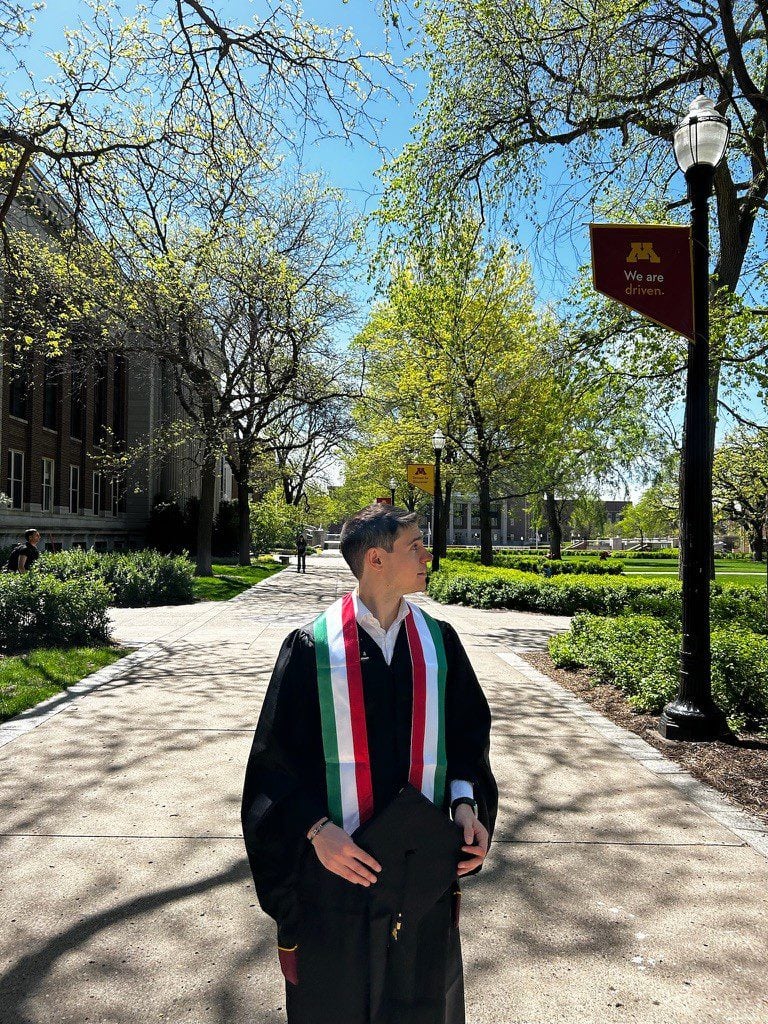
"I was selected through the Italy–USA Fulbright Commission to pursue a Master’s degree in Marketing in the United States, at the University of Minnesota’s Carlson School of Management in Minneapolis, Minnesota."
"The experience went far beyond academics and professional development, encompassing meaningful friendships, personal growth, and life experiences in both Minneapolis and the United States more broadly."
Frequently asked questions
Common questions about scholarships, admissions, and studying at University of Minnesota-Twin Cities.
Most major University scholarships are tied to being admitted to a degree-seeking program (so “online-only, non-degree” students often have fewer options).
Scholarships span broadly across the University’s majors and colleges (the Twin Cities campus alone lists 150+ majors), including STEM fields (computer science, data science, math, natural sciences), engineering, business, and humanities/social sciences, plus many others. In the Global Scholarships recipient stories, Giovanni Gallina studied a Master’s in Marketing at the Carlson School of Management, and Stepan Caramalac attended a Public Affairs (Humphrey) fellowship at the University of Minnesota, showing that scholarships/funding routes can support both business and public-policy style pathways.
It depends on the scholarship: some are specifically for international students, while other scholarships are restricted to U.S. citizens/permanent residents and/or Minnesota residents. In the Global Scholarships recipient stories, you can see international backgrounds represented, for instance, Giovanni is from Italy and Stepan is from Moldova, so “international” funding paths can apply across many nationalities, but the exact eligibility always depends on the specific award.
Often yes for international applicants, the University of Minnesota Twin Cities undergraduate admissions lists minimum required English proficiency scores (with accepted options including TOEFL, IELTS, Duolingo, PTE, and Cambridge), though exemptions/alternative pathways can apply depending on your background. The recipient stories show how real applicants handled this: Giovanni said, “I chose to take the Duolingo English Test,” and Stepan shared, “I scored 78 points” on TOEFL during his process.
For undergraduate admission (Twin Cities), the University describes decisions as an individualized, holistic review rather than a single fixed minimum grade cutoff. For graduate admission, the Graduate School notes that many programs prefer an undergraduate GPA of 3.0/4.0 or higher (but program requirements vary). In the Global Scholarships stories, Giovanni reported a converted bachelor’s GPA of about 3.3/4.0, while Stepan explained his region didn’t use GPAs and he graduated with a “red diploma,” signaling high academic achievement.
University of Minnesota admissions requirements and scholarship listings typically focus on academic records and eligibility criteria (citizenship/residency, program level, etc.) rather than stating a universal age cap, but some external scholarships or special programs may have their own rules. In the recipient stories, Giovanni even introduces himself as “a 26-year-old,” which is a reminder that funded paths can apply to applicants at different life stages—always check the specific scholarship’s eligibility page.
For many UMN merit scholarships (including awards considered through the admissions application), strong academic preparation is the biggest driver, but decisions are still made through an overall review (not one single factor). For international freshmen/transfer students, Global Excellence Scholarships are merit-based and tied to admission (and maintaining F-1 status). From the scholarship stories, you can see what “strong preparation” looks like in practice: Giovanni paired his academics with a clear plan and noted he targeted programs where standardized tests were optional, and Stepan emphasized that in his process “the most critical component was the essays,” showing that clarity + academics can matter together.
Undergraduate (Twin Cities, international freshman): the checklist highlights a completed application, the nonrefundable application fee, and self-reported courses/grades; international applicants also typically provide English proficiency test scores, may need certified English translations for non-English records, and (if a visa is needed) complete a Certification of Finances form, with official final documents submitted later if you enroll. Graduate: requirements vary by program, but Graduate School guidance commonly includes an online application, uploaded unofficial transcripts/credentials, proof of English proficiency (when applicable), and (often) letters of recommendation and any program-required tests. The recipient stories show how “documents” can expand for competitive funded routes: Giovanni described “extensive documentation, including recommendation letters,” while Stepan noted his first stage included “five essay questions.”
Undergraduate (Twin Cities): yes, international freshman guidance lists a $55 application fee (with some applicants receiving an automatic fee waiver based on answers in the application). Graduate: yes, the Graduate School lists application fees of $95 for international applicants and $75 for U.S. citizens/permanent residents, and notes the fees are non-refundable.
There are many degrees that are open to international students right now — find yours.
About the Author: Hyun Lee


Leave A Comment