
How I Secured a Fully Funded PhD at Beijing University of Posts and Telecommunications, China Through the Chinese Government Scholarship (CSC Scholarship)
University: Beijing University of Posts and Telecommunications
Degree: PhD in Electronic Science and Technology
Previous Education: Bachelor’s degree in Pakistan; Master’s in Electronic Science and Information Engineering at Beijing University of Posts and Telecommunications
Scholarship: Chinese Government Scholarship (CSC Scholarship) – Full Funding (Tuition Fees, Accommodation, Medical Insurance, Monthly Living Stipend)
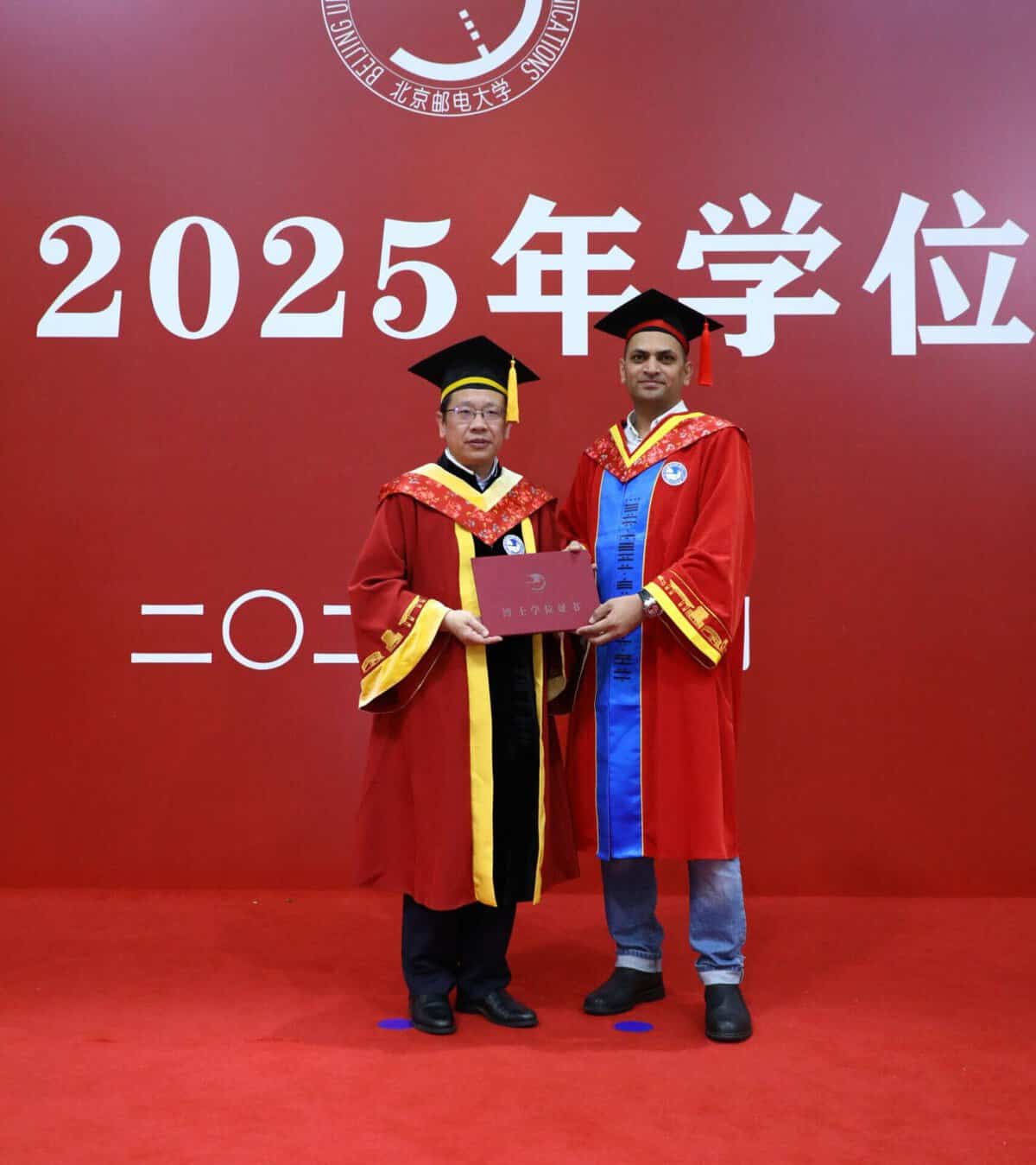
The Journey
My name is Zahid Iqbal, and I am from Pakistan. I completed my bachelor’s degree in 2017, and after graduation, I began my journey of searching for scholarship opportunities abroad. After doing some research, I decided to apply to universities in China through the Chinese Government Scholarship, also known as the CSC Scholarship. I was particularly interested in China because of its advanced technology and strong research environment in the field of electronics, which was closely related to my bachelor’s major.
In 2018, I successfully received the CSC Scholarship to pursue my master’s degree in Electronic Science and Information Engineering at Beijing University of Posts and Telecommunications, China. After completing my master’s degree in 2020, I decided to continue my academic journey and pursue higher studies. I remained at the same university and was fortunate to receive the CSC Scholarship again for my PhD in Electronic Science and Technology.
I completed my PhD in 2025, and I am currently working as a postdoctoral researcher at Harbin Institute of Technology.
Chinese Government Scholarship Details
I received the Chinese Government Scholarship, also known as the CSC Scholarship, to pursue both my master’s and PhD studies at Beijing University of Posts and Telecommunications in China.
The scholarship fully supported my graduate studies by covering tuition fees, accommodation, medical insurance, and a monthly living stipend. For my master’s program, the monthly stipend was approximately RMB 3,000, while for my PhD program, the monthly stipend was approximately RMB 3,500.
Were You Offered Any Other Scholarships?
N/A. The Chinese Government Scholarship, also known as the CSC Scholarship, was the only scholarship I was offered for my master’s and PhD studies.
Educational Background
I completed my bachelor’s degree in Pakistan in 2017 with a CGPA of 3.34 out of 4.00. My bachelor’s studies gave me a strong foundation in electronics and related engineering concepts, which later helped me choose a specialized field for my graduate studies.
For my master’s degree in Electronic Science and Information Engineering at Beijing University of Posts and Telecommunications, China, I achieved A grades according to the Chinese grading system. I continued in the same academic direction for my PhD in Electronic Science and Technology, where I also achieved A grades.
My educational background prepared me well for applying to these programs because my bachelor’s degree was closely related to electronics, and my master’s studies further strengthened my research skills, technical knowledge, and understanding of advanced electronic systems. This academic progression helped me build a strong profile for both the CSC Scholarship and my later PhD studies.
How Did You Prepare to Apply to Beijing University of Posts and Telecommunications?
I prepared to apply to institutions by first researching universities in China that offered strong programs in electronics, electronic science, and information engineering. I focused on universities that matched my academic background and research interests. I also carefully checked the admission requirements, scholarship deadlines, required documents, and available programs.
After shortlisting suitable universities, I prepared my application documents, including my academic transcripts, degree certificates, CV, study plan or research proposal, recommendation letters, passport, and other required materials. I tried to make sure that my application clearly reflected my academic background, motivation, and future goals.
How Did You Find Information About the Chinese Government Scholarship and Beijing University of Posts and Telecommunications?
I found information about scholarships and institutions through different sources, including my teachers, social media, and the internet. My teachers guided me about higher education opportunities and helped me understand the application process. I also used social media platforms to learn from other students who had already applied for scholarships abroad.
In addition, I searched university websites, the Chinese Scholarship Council website, and online scholarship platforms to find accurate information about available programs, eligibility requirements, deadlines, and required documents. These sources helped me understand the CSC Scholarship process and choose suitable institutions for my field.
Did You Take Any Standardized Tests? If So, How Did You Prepare for Them?
N/A. I did not take any standardized tests such as the SAT, ACT, TOEFL, IELTS, GRE, or GMAT for my application.
How Did You Prepare to Apply for the Chinese Government Scholarship?
I prepared for the CSC Scholarship by carefully studying the scholarship requirements, eligibility criteria, application procedure, and deadlines. I made sure that I understood all the required documents before starting my application.
I prepared my academic transcripts, degree certificates, CV, passport, physical examination form, recommendation letters, and study plan or research proposal. I paid special attention to my study plan because it was an important part of the application. In it, I clearly explained my academic background, research interests, reasons for choosing China, reasons for choosing my field, and my future career goals.
I also tried to make my application strong by selecting a university and program that matched my previous education and research interests. I contacted teachers and seniors for guidance, reviewed successful application examples, and checked all documents carefully before submission to avoid mistakes.
How is Your Experience at Beijing University of Posts and Telecommunications?
My experience at Beijing University of Posts and Telecommunications was very positive, productive, and life-changing. I joined BUPT as an international student for my master’s degree in 2018, and later continued there for my PhD. During these years, the university played a very important role in my academic, research, and personal development.
Academically, BUPT provided a strong learning environment, especially in the fields of electronic science, information engineering, communication, and advanced technology. The courses, research training, laboratory work, and guidance from professors helped me build a deeper understanding of my field. I was able to improve my technical knowledge, research skills, problem-solving ability, and academic writing.
The research environment at BUPT was also very helpful. I had the opportunity to work under the supervision of experienced professors and to use advanced research facilities. This helped me gain practical experience in conducting independent research, analyzing scientific problems, writing research papers, and presenting my work. The university encouraged students to focus on innovation, research quality, and academic contribution, which helped me grow as a researcher.
As an international student, my experience was also very meaningful. I had the chance to meet students from different countries and learn from different cultures. This helped me improve my communication skills, broaden my perspective, and become more confident in an international academic environment. Living and studying in China also gave me the opportunity to understand Chinese culture, language, and society.
Of course, like many international students, I faced some challenges in the beginning, especially adjusting to a new country, new academic system, and new lifestyle. However, with time, support from teachers, classmates, and university staff, I was able to adapt successfully. These challenges made me more independent, patient, and determined.
Overall, my experience at BUPT was excellent. The university not only helped me complete my master’s and PhD studies, but also prepared me for the next stage of my academic career. The knowledge, research experience, and confidence I gained at BUPT helped me continue my journey as a postdoctoral researcher at Harbin Institute of Technology.
How Do You Rate Beijing University of Posts and Telecommunications Academically?
I would rate Beijing University of Posts and Telecommunications very highly academically, especially for students interested in electronic science, information engineering, communication technology, computer science, and related fields. BUPT is one of the well-known universities in China for information and communication technologies, and it provides a strong academic and research environment for graduate students.
One of the main reasons I rate the institution highly is the quality of its academic programs. The courses are closely connected to modern technology and research trends, which helped me improve my theoretical knowledge as well as my practical understanding of the field. The university focuses not only on classroom learning but also on research, innovation, and technical problem-solving.
The professors and supervisors at BUPT are experienced and supportive. During my master’s and PhD studies, I received valuable academic guidance that helped me develop my research direction, improve my scientific thinking, and strengthen my academic writing and publication skills. The supervision and feedback I received played an important role in my academic growth.
Another strong point of BUPT is its research environment. The university provides access to laboratories, research groups, technical resources, and academic discussions that are very useful for graduate students. This environment helped me gain hands-on research experience and learn how to work independently on scientific problems.
I also believe BUPT is academically strong because it attracts both Chinese and international students, creating a diverse academic environment. Interacting with students from different backgrounds helped me learn new ideas, improve my communication skills, and understand different approaches to research.
Overall, I would rate BUPT as an excellent institution academically. It gave me the knowledge, research training, and confidence I needed to complete my master’s and PhD studies successfully and continue my academic career as a postdoctoral researcher.
How Does Beijing University of Posts and Telecommunications Support International Students?
Beijing University of Posts and Telecommunications supports international students in many ways, especially during admission, registration, academic study, and daily life in China. As an international student, I found the university environment welcoming and helpful.
One of the main forms of support was guidance during the admission and registration process. The international student office helped students understand the required documents, scholarship procedures, visa-related matters, registration steps, and general university rules. This was especially useful for new students who were coming to China for the first time.
The university also supported international students through accommodation arrangements. Since the CSC Scholarship covered accommodation, the university provided housing support, which made it easier for international students to settle in and focus on their studies. Having accommodation on or near campus also helped students adjust more easily to university life.
Academically, international students received support from supervisors, professors, and departments. My supervisor and research group provided guidance related to coursework, research direction, laboratory work, academic writing, and publications. This support was very important during both my master’s and PhD studies.
BUPT also provided a multicultural environment where international students could meet students from different countries. This helped me build friendships, improve my communication skills, and feel more comfortable living away from home. The presence of other international students made the adjustment process easier.
In addition, the university helped students adapt to life in China by providing information about campus facilities, health insurance, medical services, and daily life matters. For students who were new to the Chinese language and culture, this support was very helpful.
Overall, I believe BUPT provided good support for international students. The combination of administrative guidance, accommodation support, academic supervision, and a diverse student community helped me adjust to life in China and complete my master’s and PhD studies successfully.
Are Your Classes Conducted in English or Mandarin?
My classes were conducted in English. Since my master’s and PhD programs were designed for international students, the main language of instruction was English. This made it easier for me to understand lectures, communicate with professors, complete assignments, and participate in academic discussions.
However, learning some basic Chinese was still helpful for daily life outside the classroom, such as shopping, traveling, using local services, and communicating with people in the community.
Would Potential Students Have Any Problems Not Knowing Mandarin?
In my experience, potential students should not face major academic problems if they do not know Chinese, especially if they are enrolled in an English-taught program. My classes were conducted in English, and I was able to communicate with my professors, supervisors, and research group members in English for academic matters.
For coursework, assignments, research discussions, academic writing, presentations, and thesis work, English was sufficient in my program. Many professors and research students could communicate in English, especially in graduate-level programs designed for international students. Therefore, not knowing Chinese did not create serious academic difficulties for me.
However, learning basic Chinese is still very useful for daily life in China. Students may face some challenges outside the classroom, such as shopping, using public transportation, visiting hospitals, dealing with local services, or communicating with people who may not speak English. Basic Chinese can make daily life easier and help students adjust more quickly.
Overall, I would say that students can manage academically without knowing Chinese if their program is taught in English, but learning basic Chinese is highly recommended for a better living experience and smoother communication in daily life.
What Do You Think Made Your Application Stand Out?
I believe my application stood out because my academic background was strongly aligned with the program I applied for. My bachelor’s degree was related to electronics, and I applied for a master’s program in Electronic Science and Information Engineering, which showed a clear connection between my previous studies and my future academic goals.
Another important factor was that I had a clear study plan. I explained why I wanted to study in China, why I chose Beijing University of Posts and Telecommunications, and how the program matched my academic interests and career plans. I tried to show that I was serious about my field and had a clear direction for my future.
My academic performance also helped strengthen my application. I had a good CGPA in my bachelor’s degree, and later, for my PhD application, my strong performance during my master’s studies at BUPT also supported my profile. Maintaining good grades and showing consistent academic progress helped demonstrate my commitment and ability to succeed in graduate studies.
I also believe my recommendation letters played an important role. Guidance and support from my teachers helped present my academic potential, research interest, and dedication in a positive way. A strong recommendation can help the selection committee understand an applicant beyond grades and documents.
Overall, I think the combination of a relevant academic background, a clear study plan, strong motivation, a good academic record, and supportive recommendation letters made my application stand out.
Looking Back, Would You Have Done Anything Differently During Your Time in the Program?
If I were going through the process again, I would start preparing even earlier. Scholarship applications require many documents, such as transcripts, degree certificates, recommendation letters, a study plan or research proposal, passport, medical form, and other supporting materials. Preparing these documents early would reduce stress and give more time to review everything carefully before submission.
I would also spend more time improving my study plan or research proposal. This is one of the most important parts of the scholarship application because it shows the applicant’s academic direction, motivation, research interests, and future goals. If I had to apply again, I would make my study plan more focused, detailed, and closely connected to the university and program.
Another thing I would do differently is contact professors and potential supervisors earlier. Building communication with a supervisor before applying can help students understand the research environment, available projects, and whether their interests match the professor’s research area. This can make the application stronger and more targeted.
I would also apply to more universities and scholarship opportunities. Even if one scholarship is the main target, applying to multiple institutions increases the chances of success and gives students more options. I would advise applicants not to depend on only one university or one scholarship.
Finally, I would organize all deadlines and requirements more carefully from the beginning. Each university may have slightly different requirements, so keeping a proper checklist would make the process smoother and help avoid small mistakes.
Overall, if I were going through the process again, I would start earlier, prepare my documents more carefully, contact supervisors sooner, and apply to more opportunities.
What Advice Would You Give Those Looking to Apply for a Similar Scholarship?
My advice is to start preparing early and carefully research the universities and programs that match your academic background and future goals. Make sure your documents are complete, especially your transcripts, recommendation letters, CV, and study plan or research proposal.
A strong study plan is very important because it shows your motivation, research interests, and future direction. I also recommend contacting potential supervisors and applying to more than one university to increase your chances.
Most importantly, stay patient, positive, and consistent. Scholarship applications can be competitive, but with proper planning, strong documents, and clear goals, success is possible.
Want to submit your
scholarship journey?
Submit Your Story Here!
More Scholarship Recipients

My name is Anna Nana Agyeiwaa Mensah, a professional nurse from Ghana. My interest in Global Health grew out of my experienc .... Read more

My name is Ratul Chakraborty, and I am from Bangladesh. My background is interdisciplinary, actually. Before coming to Germa .... Read more
My name is Mabel Zuñiga. I am a graduate student from Panama pursuing a Master’s degree in Public Policy at the Universit .... Read more
Leave A Comment