
How Boubou Tine Secured a Fully Funded Master’s at KNUE Through KOICA
University: Korea National University of Education (South Korea)
Degree: Master’s in Global Education Leadership
Previous Education: BA in English at Cheikh Anta Diop University (Senegal), 2013. Undergraduate GPA 3.75.
Scholarship: 2024 Korea International Cooperation Agency (KOICA) Scholarship. Fully funded, with accommodation, a monthly allowance and return airfare.
Social Media
LinkedIn: linkedin.com/in/boubou-tine-8b7959b1/
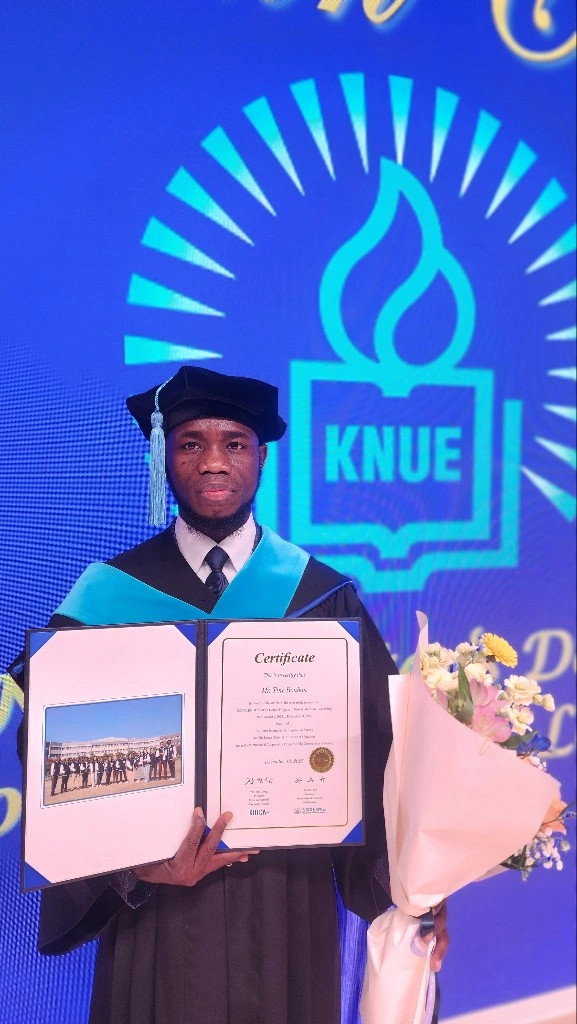
The Journey
My name is Boubou Tine, and I am from Senegal. I am an English teacher in the Senegalese public education system, where I have worked since 2015. My professional experience has given me a strong interest in improving the quality of education, strengthening teachers’ professional competencies, and developing effective school leadership. I decided to pursue a Master's degree in Global Education Leadership because I wanted to deepen my understanding of educational leadership and international education practices. I also wanted to acquire knowledge and skills that I could use to contribute to the development of Senegal’s education system.
KOICA Scholarship Details
I received the 2024 Korea International Cooperation Agency (KOICA) Scholarship to pursue a Master's degree in Global Education Leadership at the Korea National University of Education (KNUE) in South Korea. The scholarship was fully funded. It provided financial support for my studies and my stay in Korea. The exact monetary value of the scholarship was not provided in my records, and I would prefer not to estimate or publish an inaccurate amount.
The KOICA Scholarship was the only scholarship I received.
- Accommodation
- A monthly allowance
- A return ticket
Educational Background
I earned a BA in English from Cheikh Anta Diop University (UCAD) in Senegal in 2013. I subsequently joined the public education system as an English teacher in 2015 and gained more than ten years of teaching experience. My academic training in English provided a strong foundation in language, communication, and critical thinking, while my professional experience helped me understand the realities and challenges faced by teachers and schools. This combination motivated me to study educational leadership and helped me connect the concepts discussed in the Master's programme to real situations in Senegalese schools. My undergraduate GPA is 3.75.
How Did You Prepare to Apply to the Korea National University of Education?
I began by identifying a field of study that matched my professional experience and long-term goals. I looked for an opportunity that would help me develop expertise in education leadership and international cooperation.
How Did You Find Information About the KOICA Scholarship and the Korea National University of Education?
I used scholarship and institutional information channels to understand the programme, eligibility requirements, and application process. Some friends had already received the scholarship and recommended that I apply for it.
Did You Take Any Standardized Tests? If So, How Did You Prepare for Them?
No standardized test was required for my KOICA Scholarship application, so I did not have to take a test specifically for this application.
How Did You Prepare to Apply for the KOICA Scholarship?
Regarding the preparation, I focused on presenting a clear connection between my academic background, professional experience, and future goals. As an English teacher with several years of experience in Senegal’s education system, I explained my interest in educational leadership and my desire to contribute to improving education in my country. I also prepared the documents requested for the application and made sure that my motivation for pursuing the programme was clear. I recommend that applicants carefully follow the official instructions and check that every required document is complete before submitting an application.
How Was Your Experience at the Korea National University of Education?
My experience at the Korea National University of Education was an important stage in both my academic and personal development. Studying in South Korea gave me the opportunity to learn in a different educational environment, exchange perspectives with people from different countries, and reflect on how education systems respond to their own national contexts. The programme also allowed me to examine educational issues from an international perspective while considering how relevant ideas and practices could be adapted to Senegal. I also learnt a lot about Korean culture and values, and I met wonderful people.
How Do You Rate the Korea National University of Education Academically and Why?
I value KNUE for its focus on education and teacher development. The programme helped me explore key areas of educational leadership and development, including International Education Development, Teacher Competency, ICT in Education, School Curriculum, and Education for Sustainable Development. These areas were directly relevant to my professional interests and research.
How Does the Korea National University of Education Support International Students?
As an international student supported by KOICA, I benefited from the opportunity to study in a structured university environment and interact with students from different national and professional backgrounds. The scholarship made it possible for me to concentrate on my studies in Korea. We also had many field trips in different areas and schools.
What Was the Language of Instruction?
The programme was delivered in English, which allowed international students from different countries to participate fully in academic discussions and coursework. However, we learnt Korean during two semesters, and it facilitated our integration.
Would Students Face Academic Challenges Without Korean?
A lack of Korean-language proficiency does not necessarily prevent an international student from succeeding academically if the programme is delivered in English. However, learning some Korean is very useful for everyday communication, building relationships, understanding the local culture, and making the most of life outside the university. Applicants should check the language of instruction and the language requirements of their specific programme before applying.
What Did You Pursue After the Scholarship?
After completing my Master's degree, I returned to Senegal and continued my professional journey in education. I remain committed to using the knowledge and perspectives gained in South Korea to contribute to educational improvement in Senegal, particularly in teacher professional development, school leadership, and the strengthening of educational institutions. My Master's research examined the leadership experiences of middle-school administrators in Senegal, focusing on their challenges, adaptive practices, and competency-development needs. I hope that this work can contribute to discussions and initiatives aimed at supporting school leaders.
What Do You Think Made Your Application Stand Out?
I believe the strength of my application was the coherence between my professional experience, academic interests, and future objectives. I was not applying for a degree simply to obtain another qualification; I wanted to develop knowledge and competencies that could help me address real challenges in Senegal’s education system. My experience as a teacher gave me practical insight into those challenges, while my proposed field of study offered an opportunity to approach them from a leadership and international-development perspective.
What Would You Have Done Differently?
If I were going through the process again, I would start preparing even earlier, organize all supporting documents well in advance, and spend more time researching the programme and the institution. I would also make my post-study objectives and the practical ways I intended to apply the knowledge even more specific. Early preparation reduces pressure and helps applicants submit a more focused and convincing application.
What Advice Would You Give Those Looking to Apply for a Similar Scholarship?
- Identify a programme that genuinely matches your academic background, professional experience, and long-term goals.
- Read the official scholarship guidelines carefully and respect every requirement and deadline.
- Prepare your documents early and write a motivation statement that explains why you want to study abroad and how the programme will help you contribute to your community or country.
- Do not assume that you must have a perfect profile. Your experience, commitment, clarity of purpose, and potential contribution can also be important strengths.
- Remain persistent. Applying for a scholarship requires patience, careful preparation, and confidence in your goals.
Want to submit your
scholarship journey?
Submit Your Story Here!
More Scholarship Recipients

My name is Le Lan Phuong, and I grew up in the northern midlands and mountainous region of Vietnam. I graduated from the Nat .... Read more
My name is Bruna Moreira. I am from Portugal and am currently pursuing a master’s in arts management at Hongik University, .... Read more
- China
- China Three Gorges Scholarship
- Fully Funded Scholarships
- Global Korea Scholarship
- Hongik University
- Management
- Master's Scholarships
- Non-Degree Scholarships
- Partially Funded Scholarships
- Political Science
- Portuguese Nationality
- South Korea
- Tsinghua University
- United States
- University of Tennessee at Chattanooga
My name is Nisarg Hirens Purabiarao, and I am from Ahmedabad, Gujarat, India. I am currently pursuing my PhD in the Graduate .... Read more
Leave A Comment