
How I Secured a Fully Funded Master's at the University of Nottingham, United Kingdom Through the Commonwealth Scholarship
University: University of Nottingham
Degree: MSc in Applied Epidemiology
Previous Education: Medical Degree, Abia State University
Scholarship: Commonwealth Scholarship – Approximately £24,000 Tuition Funding (Monthly Living Stipend of almost £1,000, Travel and Research Grants)
Other Offered Scholarships: University of Nottingham PhD Studentship – Approximately £100,000 Total Funding (Tuition Fees, Monthly Stipend, Conference and Travel Funding, Publication Support, Research-Related Funding)
Social Media
LinkedIn: linkedin.com/in/ucheanyanwagu/
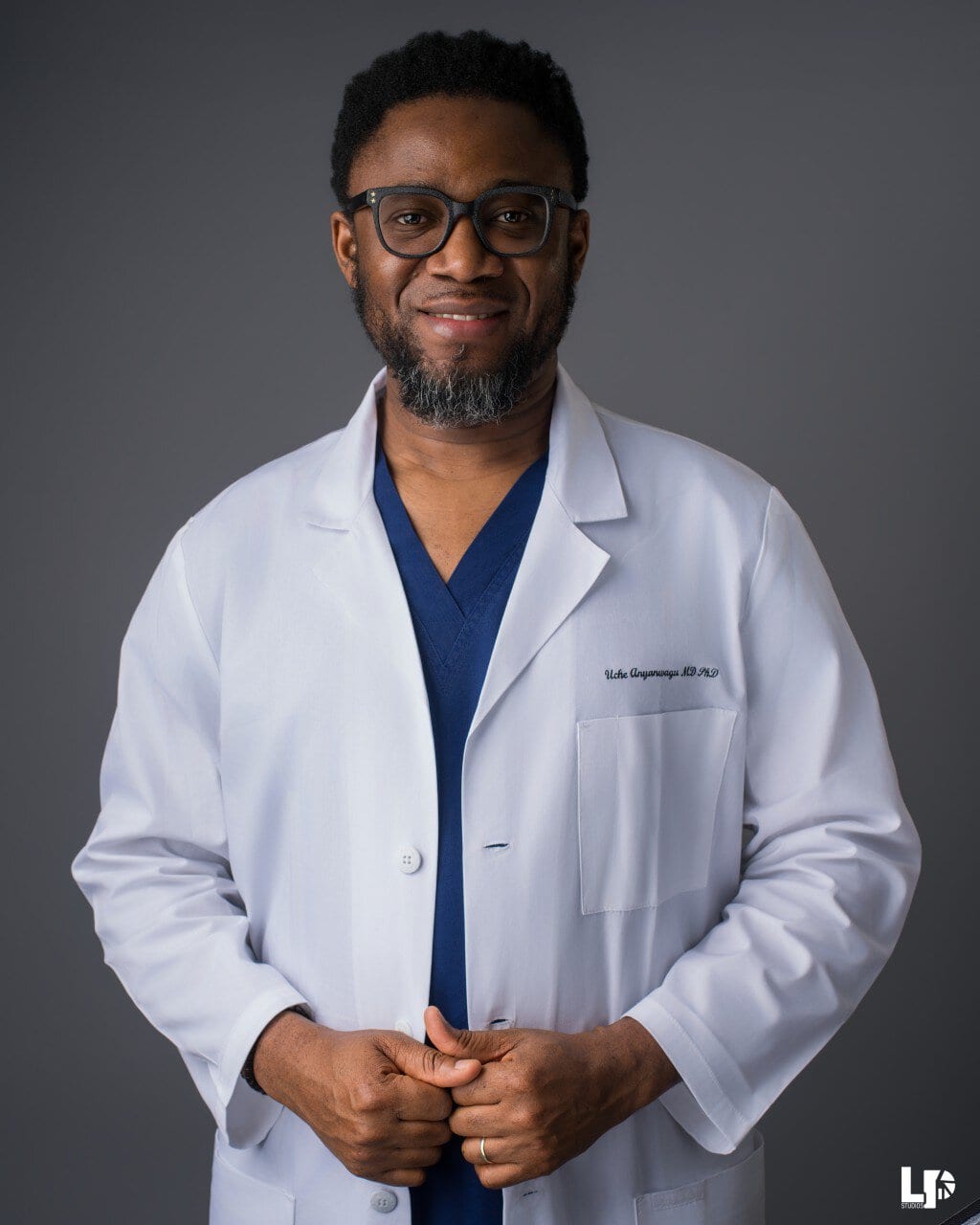
The Journey
My name is Uche Anyanwagu. I am a medical doctor and family physician with an academic and professional background spanning clinical medicine, public health, epidemiology, research, and medical education.
My medical journey was borne of my desire as a child to save my dying dad from diabetes on his deathbed. This led me to choose to be a medical doctor. My academic journey has been driven by an interest in understanding health problems not only at the level of individual patients, but also at the population level. This led me to develop a particular interest in epidemiology, clinical research and evidence-based medicine.
One of the major turning points in my academic career was being awarded a Commonwealth Scholarship to undertake an MSc in Applied Epidemiology in the United Kingdom.
This was followed immediately by a fully funded PhD studentship through the Diabetes Unit, Division of Graduate Entry Medicine, School of Medicine, University of Nottingham.
These opportunities fundamentally changed the direction of my career and provided me with the training, research environment, and mentorship that enabled me to develop from a clinician with an interest in research into an established clinician-researcher.
Commonwealth Scholarship Details
I was awarded a Commonwealth Scholarship to undertake my MSc in Applied Epidemiology.
The scholarship provided approximately £24,000 towards tuition fees, in addition to a monthly living stipend of almost £1,000, as well as travel and research grants.
The financial support was extremely important because it allowed me to concentrate on my studies and research without having to carry the financial burden of international postgraduate education.
More importantly, however, the scholarship gave me access to an academic environment in which I could develop skills in epidemiology, research methodology, critical appraisal, study design, and statistical analysis.
Were You Offered Any Other Scholarships?
Following my MSc, I was fortunate to receive further postgraduate funding through a PhD studentship. The PhD studentship was provided through the Diabetes Unit of the Division of Graduate Entry Medicine, School of Medicine, University of Nottingham.
The overall value of the studentship was approximately £100,000, when tuition fees, monthly stipend, conference and travel funding, publication support and other research-related funding are considered.
Although this was formally a studentship rather than a scholarship, it provided comprehensive financial support for my doctoral training.
Having both experiences has given me a particular appreciation of the importance of postgraduate funding. For many international students, the difference between having funding and not having funding can determine whether advanced education is realistically accessible.
Educational Background
I graduated as a medical doctor from Abia State University, Nigeria. After my internship and national service, I worked briefly in private healthcare before going for residency training in Community (Public) Health. I was honored to be given the National Postgraduate Medical College of Nigeria Prize as the best candidate in the Primary Fellowship Exams. This opened the way for my residency training.
As my clinical career developed during my residency training, I became increasingly interested in epidemiology and medical research. I subsequently applied for, and received, the Commonwealth Scholarship for a Master's degree and completed an MSc in Applied Epidemiology at the University of Nottingham. This provided me with a strong foundation in epidemiological methods, study design, statistics, critical appraisal, and population health research. This MSc was particularly important because it gave me the methodological foundation required to progress into doctoral research.
I then immediately undertook my PhD at the University of Nottingham, where I developed my research expertise further, particularly in diabetes and cardiovascular research.
I later went back to do another residency training, this time in General Practice (Primary care) in England. I went through the extended integrated training route, which enabled me to complete my residency training with research, whilst also being a visiting fellow at Newcastle University. During this period, I was involved in clinical research and teaching medical and biomedical students. I completed an MBA from the University of East London, which broadened my understanding of leadership, management and healthcare systems.
My academic journey has therefore developed across several complementary areas:
Medicine → Epidemiology → Clinical Research → PhD → Management/Leadership → Medical Education. Each stage has built upon the previous one
How Did You Prepare to Apply to the University of Nottingham?
I did not approach postgraduate education simply as a search for another qualification. I first considered what skills I needed to develop and how those skills fitted into my longer-term career.
For my MSc, I wanted formal training in epidemiology and research methodology. I therefore looked for programmes that could provide a strong methodological foundation.
For my PhD, I focused more specifically on the research environment, potential supervisors, research groups and opportunities to develop a meaningful research programme.
I learned that choosing a university should not be based solely on its overall ranking or reputation. The quality of the research group, supervisor, available expertise, and fit with your research interests can be equally important.
How Did You Find Information About Commonwealth Scholarship and University of Nottingham?
My younger sister, who was already doing her MSc in England at the time, opened my eyes and provided insights, materials, and links that helped me to understand the scholarship world.
I sought and used university information, scholarship information, academic networks and research opportunities to identify suitable programmes.
I also learned to look beyond the obvious sources. Funding opportunities can come from governments, universities, academic departments, research groups, charities and professional organisations.
My advice would be to search widely and repeatedly. Funding opportunities change from year to year, and a scholarship that is not available one year may become available the next.
Did You Take Any Standardized Tests? If So, How Did You Prepare for Them?
I did not take IELTS, TOEFL, GRE, GMAT, or another standardised English-language test as part of these applications.
My academic and professional background met the relevant English-language requirements for the programmes
How Did You Prepare to Apply for the Commonwealth Scholarship?
I approached the applications by first understanding what the scholarship was looking for.
I then tried to demonstrate three things clearly through my personal statement (or statement of purpose):
Where I had come from, what I wanted to achieve, and why the proposed program was important for achieving those goals.
I also made sure that my academic and professional experience supported the story I was presenting.
One of the most important lessons I learned is that a scholarship application should not simply be a list of qualifications.
The committee needs to understand why the applicant needs this opportunity, why they are prepared for it, and what they are likely to do with the opportunity afterwards.
How is Your Experience at the University of Nottingham?
My experience was extremely valuable academically and professionally.
The MSc Applied Epidemiology at the University of Nottingham was top-notch. It gave me a strong foundation in epidemiological research and gave me the smoothest transition to my PhD programme. The PhD itself allowed me to develop those skills through practical research.
The doctoral environment was particularly important because research is very different when you move from learning about research methods to conducting research, analysing data, publishing findings, and presenting work to an international audience. My great supervisors were Professors Iskandar Idris and Richard Donnelly. These great men did not see me as another PhD student, but as a colleague whom they mentored with all their hearts, opened doors to many rooms I never dreamt I would be able to enter, and exposed to all the skills and platforms needed to give me wings to fly. Because of their mentorship, I was able to finish my PhD in 2.5years, had very minor corrections that I corrected in less than 45 minutes, published 10 papers in international high-impact journals before my thesis defense, and presented 21 oral/posters at almost 16 international conferences. My work was nominated as one of the best research projects in Type 2 diabetes in the UK in 2017.
The experience also taught me resilience. Research rarely proceeds exactly as planned. There are failed analyses, rejected manuscripts, unexpected findings, methodological problems, and periods when progress seems slow. Learning how to deal with those challenges was an important part of my doctoral education and 2-year post-doctoral experience.
How Do You Rate the University of Nottingham Academically?
I would rate the institution very highly in terms of its contribution to my academic development.
The most important factor for me was not simply the institutional name. It was the academic environment, the expertise of the researchers around me, and the opportunities available to develop my research skills.
The University of Nottingham, in particular, provided an excellent environment for my doctoral research through the Diabetes Unit and the wider medical school.
How Does the University of Nottingham Support International Students?
I did not rely on any specific institutional support programme for international students.
My experience was therefore largely shaped by the academic environment, my supervisors, colleagues and my own ability to adapt to a new academic and cultural environment. All the same, the University had a very strong and dependable international office that greatly supported international students
What Did You Pursue After the Commonwealth Scholarship?
The scholarship and studentship became the foundation for my subsequent academic and professional career.
One of the most remarkable aspects of my journey is the transformation that occurred during my PhD.
Before I started my PhD in October 2014, I had no international publications.
I had an MSc in Applied Epidemiology and some developing research skills, but I was essentially starting from a relatively modest research base. By the time I defended my PhD approximately two years and nine months later, I had produced 10 publications and more than 16 international conferences with over 21 abstracts/presentations.
My research career continued after my PhD. First, as a postdoctoral research fellow for 2 years. Then as a GP trainee and visiting clinical researcher. I have subsequently contributed to more than 40 publications and numerous international conference presentations.
I have also remained involved in medical education and academic activities while continuing my clinical career as a family physician.
The scholarship therefore did not simply help me obtain a degree. It provided the platform from which an entire academic and professional trajectory developed.
Today, I hold the academic titles of MD, MSc, MBA, PhD, DSc (Hon), MRCGP, CCFP
What Do You Think Made Your Application Stand Out?
Looking back, I think several things were important.
First, I had a clear reason for pursuing further education. I was not simply collecting qualifications. I wanted to develop expertise that would allow me to contribute meaningfully to healthcare research and public health.
Second, my medical background gave me a practical understanding of clinical problems, while my epidemiological training allowed me to approach those problems from a population-health perspective.
Third, I demonstrated potential. This is particularly important because I did not begin my PhD with an impressive international publication record.
In fact, I had no international publications before starting my PhD. What I had was curiosity, determination, some foundational research training, and a willingness to learn.
The subsequent transformation demonstrates why scholarship committees should not look only at what an applicant has already achieved. They should also consider what the applicant could achieve if given the right opportunity.
What Would You Have Done Differently if You Were Going Through the Process Again?
- If I were going through the process again, I would probably start preparing even earlier.
- I would spend more time identifying potential supervisors and research groups and would seek more feedback on application materials before submission.
- I would also keep a more systematic record of every academic achievement, presentation, publication, award, and research activity.
- Perhaps most importantly, I would apply for even more opportunities.
- One of the biggest mistakes prospective applicants make is deciding that they are not competitive enough before submitting an application.
- Do not reject yourself.
- Let the scholarship committee decide whether you are competitive.
What Advice Would You Give Those Looking to Apply for a Similar Scholarship?
- Apply. You will never know whether you can win a scholarship if you do not submit an application.
- Start early. Strong applications take time. You may need academic references, research proposals, personal statements, transcripts, and supporting documentation.
- Understand the scholarship criteria. Do not simply send the same generic application everywhere. Tailor your application to the scholarship and institution.
- Develop a clear narrative - the committee should be able to understand:
Where have you come from?
Why do you need this programme?
Why this institution?
What will you do with the opportunity?
And what impact will you ultimately make?
- Choose your programme and supervisor carefully. The best institution for you is not necessarily the institution with the highest overall ranking. Research fit matters.
- Do not underestimate your potential simply because your current CV does not look like that of an established academic.
My own experience is a good example. Before starting my PhD, I had no international publications. Yet within less than three years, I had developed a substantial research portfolio. The opportunity came first; the development followed.
Want to submit your
scholarship journey?
Submit Your Story Here!
More Scholarship Recipients
My name is Ian Cawich. I’m a proud Belizean, specifically from a small northern town called Orange Walk, which serves as t .... Read more
My name is Miguel Felipe Arévalo Castiblanco, and I'm originally from Colombia. I'm currently a PhD candidate in Electrical .... Read more
My name is Brendon Munashe Mahere, and I am from Zimbabwe. I graduated from Al Akhawayn in 2024 with a BSc in Engineering an .... Read more
Leave A Comment