
Erasmus Mundus Joint Master's Scholarship Scholar Tutul Kumar Saha from Bangladesh Shares His Journey of Securing a Fully Funded Master's at the University of Bordeaux, France
University: University of Bordeaux; University of the Basque Country (UPV/EHU); University of Liège; Leibniz Institute for Baltic Sea Research (IOW) for thesis research.
Degree: PhD in Ecology and Environmental Science
Previous Education: Bachelor of Science in Fisheries and Marine Bioscience at Jashore University of Science and Technology; Master of Science in Fisheries Biology and Genetics at Bangladesh Agricultural University
Scholarship: Erasmus Mundus Joint Master’s Scholarship under the MER2030 (Marine Environment and Resources) program – Full Scholarship (Monthly Scholarship Allowance)
Social Media
LinkedIn: linkedin.com/in/tutulsaha123/
The Journey
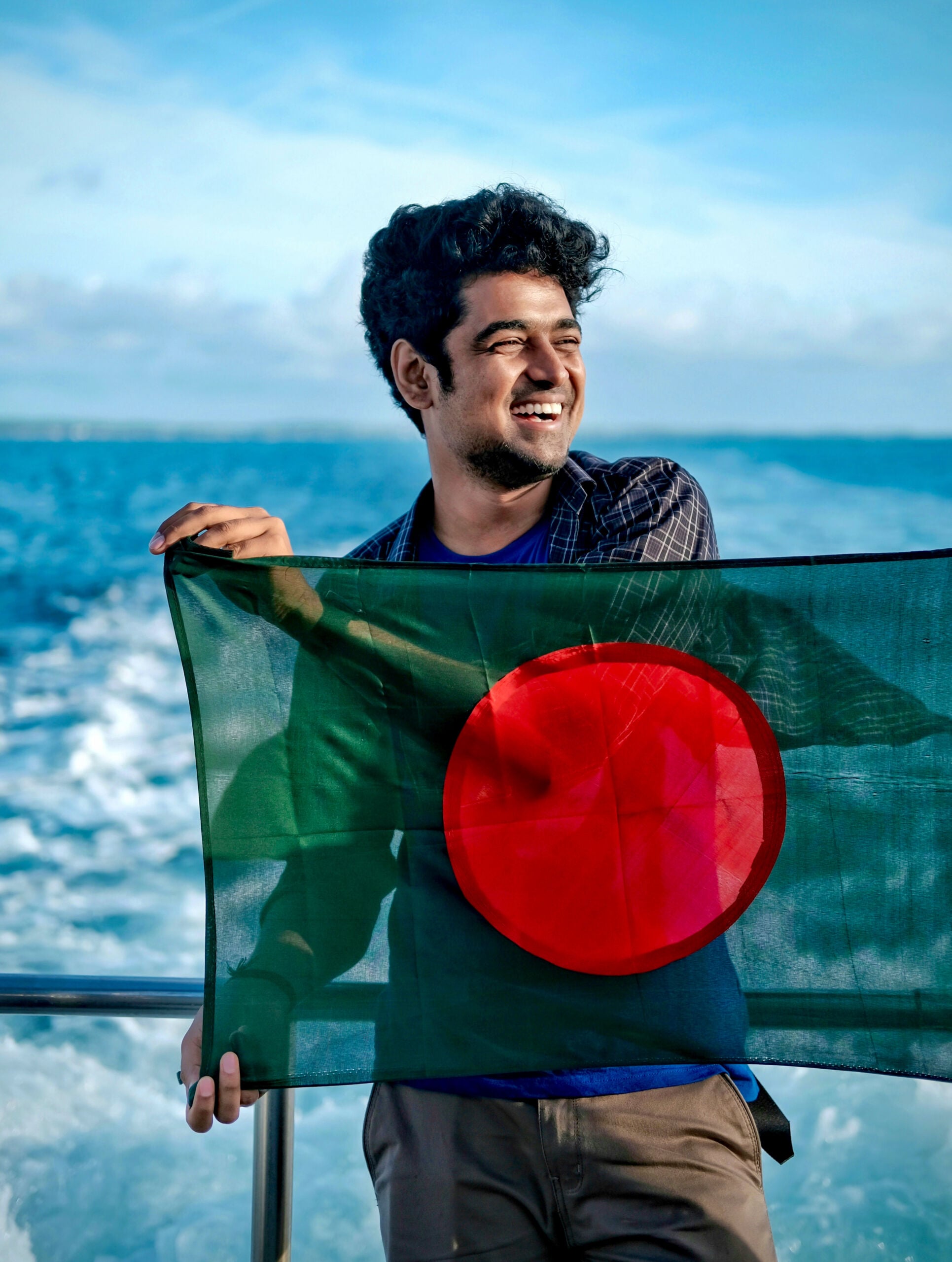
My name is Tutul Kumar Saha, though most people know me simply as SAHA, and I am from Bangladesh. Growing up, I never imagined that one day I would study and conduct research across multiple European countries through the Erasmus Mundus program. My academic journey began with a Bachelor's degree in Fisheries and Marine Bioscience, followed by a Master's degree in Fisheries Biology and Genetics. Throughout my studies, I developed a deep curiosity about aquatic ecosystems and a passion for scientific research.
In 2023, I was fortunate to be awarded the Erasmus Mundus Joint Master's Scholarship under the MER2030 (Marine Environment and Resources) program. This opportunity completely transformed my academic and personal life. During the program, I studied in France, Spain, Belgium, and Germany, learning from world-class professors, collaborating with students from around the globe, and experiencing different cultures and scientific approaches. Beyond the classrooms and laboratories, Erasmus taught me adaptability, resilience, intercultural communication, and the value of building an international network.
Today, I am pursuing a PhD in Ecology and Environmental Science at Klaipėda University in Lithuania, in collaboration with the Leibniz Institute for Baltic Sea Research in Germany. My research focuses on marine microbial ecology and environmental factors influencing bacterial dynamics in the Baltic Sea.
Looking back, my journey from a small town in Bangladesh to studying and conducting research across Europe was not a straight path. It was built on persistence, curiosity, and the willingness to step outside my comfort zone. That is why I am always excited to share my experience with prospective students. I hope my story demonstrates that opportunities like Erasmus Mundus are achievable for talented and motivated students regardless of their background, and that international education can open doors far beyond what we initially imagine.
Educational Background
Before joining the Erasmus Mundus program, I built a strong academic foundation in Bangladesh through a Bachelor of Science in Fisheries and Marine Bioscience at Jashore University of Science and Technology and a Master of Science in Fisheries Biology and Genetics at Bangladesh Agricultural University in Mymensingh. My undergraduate and master’s studies both included thesis-based research, which helped me develop scientific thinking, laboratory skills, and a solid understanding of aquatic and environmental sciences.
During my bachelor’s degree in Jashore, I worked on the molecular detection of Edwardsiella tarda in freshwater cultured fish species, which introduced me to microbiology, molecular methods, and research design. Later, during my master’s degree in Mymensingh, I focused on immuno-physiological responses in Rohu using beta-glucan as a dietary component, which strengthened my experience in experimental work, data analysis, and biological interpretation.
A very important step in preparing me for Erasmus Mundus was my move from Jashore to Mymensingh for my first master’s degree in Bangladesh. That transition taught me how to adjust to a new city, a new academic culture, and new research expectations, so when I later studied across France, Spain, Belgium, and Germany, I was already more confident in adapting to unfamiliar environments and building connections in diverse settings.
This educational journey gave me both academic preparation and personal resilience. It helped me enter the multi-country Erasmus Mundus program with the ability to learn independently, collaborate with people from different backgrounds, and remain focused while adjusting to new institutions and countries.
How Did You Prepare to Apply for the Erasmus Mundus Joint Master's Scholarship under the MER2030?
Before applying to Erasmus Mundus, my initial goal was to pursue a PhD opportunity in the United States. When that plan did not succeed, I quickly shifted my focus and decided to apply for the Erasmus Mundus Joint Master’s scholarship, which I saw as an outstanding opportunity to continue my international academic journey through the Erasmus program.
I understood from the beginning that Erasmus Mundus was highly competitive, so I approached the application with great seriousness. I carefully reviewed the program website, read the application guidelines closely, and noted as much information as possible so that I could prepare every document in a targeted and thoughtful way.
I gave special attention to the motivation letter and my CV because I knew these documents would represent both my academic ability and my long-term goals. I worked to show not only my academic background, but also my research experience, my commitment to marine and environmental sciences, and my readiness to study in different countries.
I believe my application stood out because it combined strong academic results with research experience and a clear sense of purpose. My bachelor’s and master’s studies in Bangladesh gave me solid training in fisheries, microbiology, laboratory research, and scientific writing, while my thesis work and research assistant roles demonstrated that I was already actively building a research career.
Another strength of my application was the way I connected my past experiences with my future goals. I tried to show that Erasmus Mundus was not only a scholarship for me, but also the best platform to gain interdisciplinary knowledge, international exposure, and the scientific skills needed for my long-term development in marine microbial ecology.
Were You Offered Any Other Scholarships?
I applied to a total of six Erasmus Mundus programs and was offered four fully funded scholarships: AquaH, IMBRSea, ACES-Star, and MER2030. Choosing among them was not easy, because each program offered an excellent international study opportunity.
After careful consideration, I decided to accept MER2030 because I found it to be the most established, academically diverse, and well-aligned with my long-term interests in marine and environmental sciences. I was particularly attracted by its multi-field-focused structure, interdisciplinary training, and the opportunity to study in different European institutions, which made it the best fit for my academic and professional goals.
Could You Briefly Discuss the Erasmus Mundus Program You Pursued and the Specific Field of Study It Focused On?
I pursued the Erasmus Mundus Joint Master’s Degree in Marine Environment (MER2030), a multidisciplinary and highly international program in marine sciences delivered through multiple European institutions. During the program, I studied at the University of Bordeaux (France), the University of the Basque Country, UPV/EHU (Spain), and the University of Liège (Belgium), while my thesis research was conducted at the Leibniz Institute for Baltic Sea Research (IOW), Germany. Although the program covered a wide range of marine and environmental topics, I gradually developed a specific academic focus in marine molecular microbiology. This field aligned strongly with my interest in marine microbial ecology and later supported my research on the environmental drivers of Vibrio vulnificus growth in the Baltic Sea.
What Did You Pursue After the Erasmus Mundus Joint Master's Scholarship under the MER2030?
After the scholarship, I pursued further study and research by starting a PhD in Ecology and Environmental Science at the Marine Research Institute of Klaipėda University, in collaboration with the Leibniz Institute for Baltic Sea Research (IOW), Germany. This path allowed me to continue working in marine microbial ecology and to deepen my research on the environmental factors influencing Vibrio vulnificus growth in the Baltic Sea.
How Did the Cost of Living Vary Across the Countries You Studied In? Which Country Was the Most Affordable or Expensive, and How Did You Manage Financially?
The cost of living varied across the countries where I studied during the MER2030 program, including France, Spain, Belgium, and Germany. In my experience, accommodation was the most important factor influencing these differences. Although the 1,000 EUR monthly scholarship was generally sufficient, France was the most expensive country for me because I was unable to access university dormitory housing and had to rely on private accommodation, which initially took almost 60% of my scholarship. Later, by choosing more affordable private accommodation, typically costing around 25–40% of the monthly allowance, I was able to improve my financial management, save a considerable amount of money, and travel widely across Europe during my studies.
Did You Face Any Language Barriers, and if So, How Did You Overcome Them? Did the Language of Instruction Change from One Country to Another?
I did not experience major language barriers during my Erasmus Mundus journey, as English was widely used among students and was generally sufficient for academic communication. While occasional difficulties arose in everyday situations, particularly with some older people who were less comfortable with English, I was able to manage them through translation tools and non-verbal communication. At the same time, I saw language learning as an important part of the cultural experience, and I actively pursued local language learning during my stay. This interest led me to enroll in language courses and obtain A1 certificates in French and Spanish.
Would You Recommend the Erasmus Mundus Program to Others? What Advice Would You Give to Someone Considering This Scholarship?
I would strongly recommend the Erasmus Mundus program to anyone who is looking for a truly international academic experience. In my case, studying through MER2030 meant moving across France, Spain, Belgium, and Germany, which allowed me to experience different cultures, meet people from all over the world, and grow both academically and personally.
My advice to future applicants is to be open-minded, adaptable, and emotionally prepared for frequent change. One important reality of this program is that every five or six months, you may need to move to a new country, pack all your belongings again, say goodbye to the people you have grown close to, and then start building a new routine in the next place.
At the same time, that constant movement is also what makes the experience so special. It teaches independence, flexibility, intercultural understanding, and resilience in a way that very few other programs can.
Looking Back, Would You Have Done Anything Differently During Your Time in the Program?
Looking back, I do not think I would change much about my time in the Erasmus Mundus MER2030 program, because I made a conscious effort to keep my professional and personal life balanced throughout the experience. I wanted to enjoy the Erasmus journey not only as a student, but also as a person experiencing new countries, cultures, and opportunities.
At the same time, I always tried to plan ahead carefully. Whether it was organizing travel, searching for summer schools, applying for internships, or thinking about my master’s thesis, I preferred to prepare early so that I could make the most of each semester. This approach helped me stay organized, reduce stress, and fully benefit from the academic and personal opportunities the program offered.
Want to submit your
scholarship journey?
Submit Your Story Here!
More Scholarship Recipients
My name is Shah Hussain, and I am from Khyber Pakhtunkhwa, Pakistan. I completed my Bachelor’s in Psychology at the Univer .... Read more
I am June from the Philippines. I am an educator for Social Sciences and Humanities. I recently earned my Master in Southeas .... Read more
Hi, my name is Abdul Hafeez, and I come from a small town called Nasirabad in Sindh, Pakistan. Currently, I am pursuing a ma .... Read more
Leave A Comment