
How Syed Shah Zeb, a Pakistani Scholar, Secured a Master’s in Development Economics at Australian National University Through the Asian Development Bank–Japan Scholarship Program
University: Australian National University
Degree: Master’s in International and Development Economics (Development Policy)
Previous Education: Bachelor’s in Mechanical Engineering – University of Engineering and Technology (UET), Peshawar
Scholarship: Asian Development Bank–Japan Scholarship Program (ADB-JSP) – Financial Support (Tuition, Living and Housing Allowance, Books and Study Materials, Medical Insurance, Travel Expenses)
Other Offered Scholarships: Brandeis University – Heller School for Social Policy and Management (60% Scholarship for Master’s in Sustainable International Development)
Social Media
LinkedIn: linkedin.com/in/syed-shah-zeb-1b405b107/
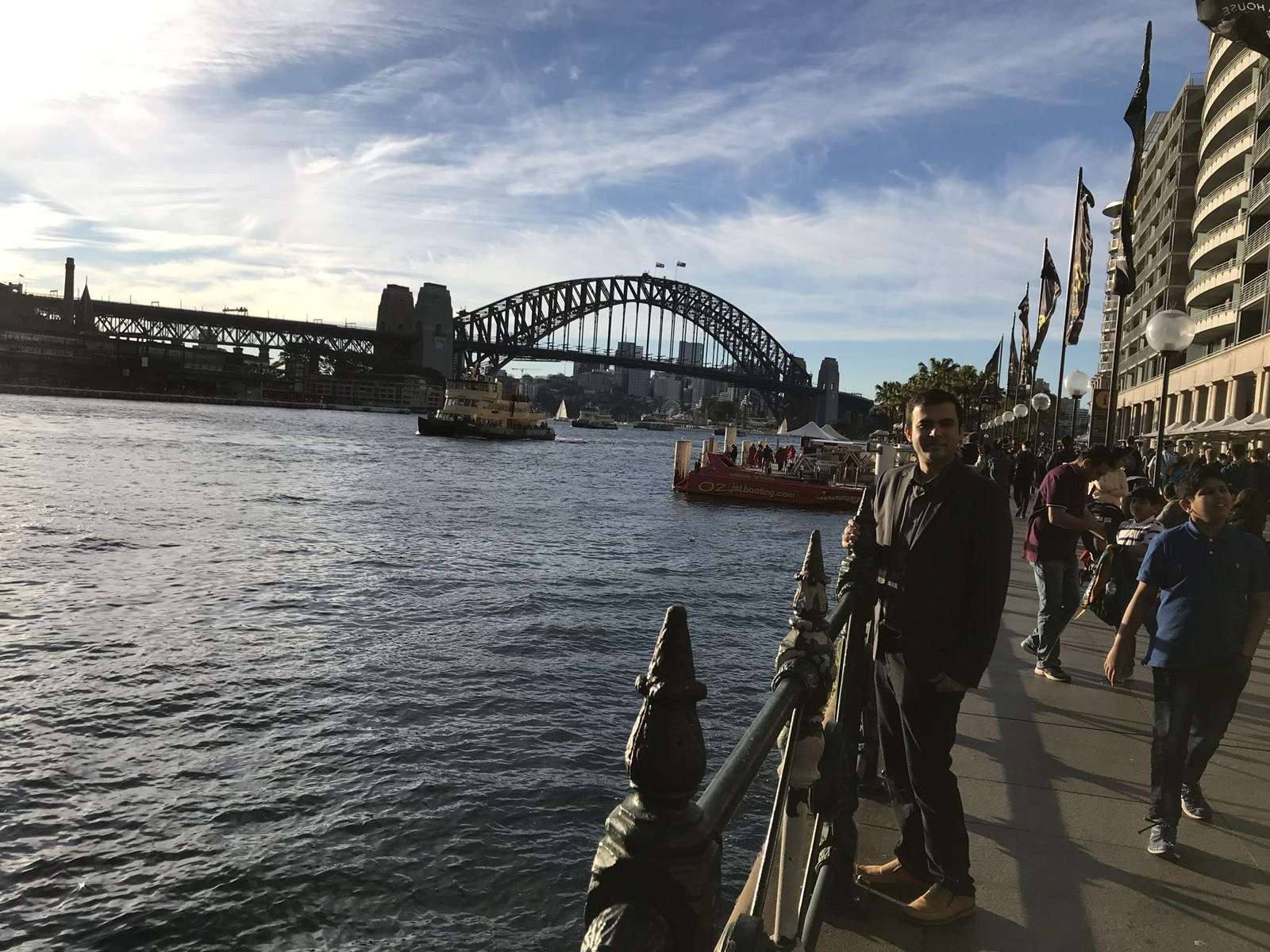
The Journey
My name is Syed Shah Zeb, and I am from Pakistan. My professional journey has been shaped by a simple but enduring question: how can we make public institutions work better and ensure that development policies translate into meaningful improvements in people's lives?
I began my academic journey with a bachelor's degree in Mechanical Engineering from the University of Engineering and Technology (UET), Peshawar. Although engineering gave me a strong foundation in analytical thinking and problem-solving, my professional interests gradually drew me toward public administration, economic development, and public policy. I was selected for the Provincial Management Service (PMS) through a highly competitive Provincial Civil Service Examination.
Working in Pakistan's public sector exposed me to the realities of development: the challenges governments face, the importance of effective institutions, and the difference that well-designed policies can make. I wanted to understand not only how development projects are implemented, but also why some policies achieve their intended results while others fall short.
That curiosity led me to pursue a Master of International and Development Economics at the Crawford School of Public Policy, Australian National University (ANU), after receiving the Asian Development Bank–Japan Scholarship Program (ADB-JSP) scholarship.
For me, studying abroad was about much more than earning another degree. It was an opportunity to challenge my assumptions, learn from different perspectives, and acquire the analytical tools needed to contribute more effectively to development in Pakistan.
Looking back, that experience helped shape the professional I am today: someone who sees education not simply as a personal achievement, but as a means of making a practical contribution to society.
Asian Development Bank–Japan Scholarship Program Details
I received the Asian Development Bank–Japan Scholarship Program (ADB-JSP) scholarship to pursue my master's degree at the Australian National University in Australia.
The ADB-JSP supports eligible students from ADB member countries in pursuing postgraduate education in fields related to development. My scholarship made it possible for me to study at ANU without having to bear the full cost of an international education myself.
The program's approved benefits generally include tuition, a living and housing allowance, books and study materials, medical insurance, and travel expenses, subject to the applicable scholarship terms.
I see the scholarship as much more than financial assistance. It gave me access to a world-class learning environment, introduced me to new ways of thinking about economic and development challenges, and helped me build a stronger foundation for my professional career.
Were You Offered Any Other Scholarships?
Yes. In addition to the ADB-JSP scholarship, I was offered a 60% internal scholarship at the Heller School for Social Policy and Management at Brandeis University, USA, for the Master's in Sustainable International Development program.
This was a significant opportunity because the program aligned closely with my interest in development policy and improving outcomes in developing countries.
Ultimately, I pursued the ADB-JSP opportunity at ANU, where the Master of International and Development Economics program aligned particularly well with my interest in economic analysis, public policy, and evidence-based decision-making.
Educational Background
My educational background combines engineering and economics, two fields that have shaped the way I approach problems.
I completed my bachelor's degree in Mechanical Engineering at UET Peshawar. Engineering trained me to approach complex problems systematically, work with quantitative information, and look for practical solutions.
As my career developed in public administration and development, I became increasingly interested in the economic reasoning behind public policies and government decisions. I wanted to strengthen my understanding of economic growth, development challenges, and the role of institutions in shaping outcomes.
Having studied Calculus, Differential Equations, Numerical Analysis, and Linear Algebra during my bachelor’s degree in Mechanical Engineering, I possess a strong mathematical foundation that provides a relevant academic basis for postgraduate study in International and Development Economics.
The Master of International and Development Economics at ANU was a natural next step. I specialized in Development Policy and graduated with a CGPA of 6.48 out of 7.0, achieving nine High Distinctions (HDs).
My master's research, supervised by Professor Premachandra Athukorala, examined remittance inflows and Dutch disease in Pakistan. It allowed me to explore an important economic question affecting developing countries and strengthened my skills in research and applied economic analysis.
The experience taught me that changing academic direction does not necessarily mean starting from scratch. The analytical skills I developed in engineering remained valuable, while my postgraduate studies helped me apply them to economic and public policy questions.
How Did You Prepare to Apply to Australian National University?
I approached the process by first thinking carefully about what I wanted to learn and how that education would support my professional development.
Because I was already working in the public sector, I was not simply looking for a prestigious university or an international qualification. I wanted a program that would help me understand development challenges more deeply and improve my ability to contribute to policymaking and institutional reform.
I researched programs, considered their academic focus, and looked for a strong connection between my professional experience and the subject I intended to study.
My experience applying to both ANU and Brandeis taught me that there is no need to restrict yourself to one university from the outset. Different institutions may offer different academic strengths and funding arrangements. Exploring several options can help you identify the program that best fits your ambitions.
How Did You Find Information About the Asian Development Bank–Japan Scholarship Program and Australian National University?
I explored university and scholarship information to identify programs that matched my academic interests and professional objectives.
For students beginning this process today, I recommend starting with official university websites and scholarship portals. Read the eligibility criteria carefully, understand the application requirements, and check whether the program is covered by the scholarship you are considering.
It is also useful to keep a simple spreadsheet of universities, deadlines, required documents, funding coverage, and application status. This helps you stay organized and avoid missing important requirements.
Most importantly, research the program itself rather than focusing only on the scholarship. Funding is essential, but the academic experience should also help you move toward your long-term goals.
Did You Take Any Standardized Tests? If So, How Did You Prepare for Them?
Applicants should check the English-language requirements of each university and program, as these may differ. The appropriate preparation depends on the tests accepted, the minimum scores required, and whether any exemptions apply. I scored 7.0 bands in the IELTS exam, whereas the program requirement was 6.5 bands.
My broader advice is to begin preparing for any required tests early. Do not leave language testing or document collection until the final weeks of an application cycle.
How Did You Prepare to Apply for the Asian Development Bank–Japan Scholarship Program?
I believe a scholarship application should tell a coherent story.
Your academic qualifications matter, but they are only part of the picture. You should also explain why you want to pursue a particular field, how your previous experience has prepared you for it, and what you hope to do with the knowledge you gain.
In my case, my engineering education, public-sector experience, and interest in economic development came together naturally in my decision to study development economics.
I would encourage applicants to be specific about their objectives, prepare supporting documents carefully, and give their referees enough time to provide thoughtful recommendations. Your application should help the selection committee understand not only what you have accomplished, but also why the proposed degree makes sense for your future.
And do not assume that you need a perfectly linear academic or professional background. What matters is being able to explain your journey honestly and show how your different experiences have prepared you for the next step.
How is Your Experience at Australian National University?
My experience at ANU was intellectually rewarding and personally transformative.
Studying at the Crawford School of Public Policy exposed me to rigorous economic analysis and encouraged me to examine development problems from perspectives beyond my own professional experience. I learned to look more critically at policy choices, evaluate evidence, and consider the broader economic and institutional factors that influence development outcomes.
One of the most valuable aspects of studying internationally was the opportunity to learn alongside people with different backgrounds and experiences. Conversations with classmates helped me appreciate that countries may face similar challenges but require different policy responses depending on their institutions, resources, and circumstances.
The program was demanding, but the effort was worthwhile. Graduating with a CGPA of 6.48 out of 7.0 and nine High Distinctions was a particularly satisfying outcome.
Beyond academic results, I returned with a broader outlook, stronger analytical skills, and a deeper appreciation of the role that sound economic reasoning can play in public policy.
How Do You Rate Australian National University Academically?
I found ANU particularly valuable for its academic rigor and the policy-oriented environment of the Crawford School. It is among the best universities of Australia and part of the Group of Eight (Go8).
The program at the ANU encouraged me to connect economic concepts with real-world development challenges rather than treating theory and practice as separate areas. This was especially relevant to my professional interests in government, economic development, and public-sector performance.
For prospective students, I would suggest looking beyond university rankings. Consider the curriculum, faculty expertise, research opportunities, learning environment, and the skills you want to develop. A university is a good fit when its academic strengths align with what you hope to achieve.
How Does Australian National University Support International Students?
Studying overseas involves adjusting to a new academic environment, culture, and way of life. ANU does have university's academic assistance, student services, wellbeing resources, and accommodation guidance before arriving for international students.
It is advised to make use of the support available, ask questions when you need help, and connect with fellow students. Building relationships and learning from people around you can make the experience more rewarding. ANU has been truly outstanding. I still fondly remember arriving in Canberra and being warmly welcomed by an ANU administrative officer who ensured that I was well taken care of and settled in. That initial gesture of care and support left a lasting impression on me and reflects the welcoming and supportive environment that makes ANU so special.
Prospective students should consult ANU's official international student resources for current information about available services and support arrangements.
What Did You Pursue After the Asian Development Bank–Japan Scholarship Program?
After completing my master’s degree at ANU in 2019, I returned to Pakistan and continued my career in the provincial civil service, applying the knowledge and analytical skills I had gained through the ADB- Joint Japan Scholarship.
Since then, I have had the opportunity to serve in a range of positions across district administration, development planning, project management, and policy implementation. My postings have included serving as Deputy Director (Coordination), Directorate of Projects, Director, Sustainable Development Unit, Planning & Development Department, Additional Deputy Commissioner (General) in Mardan, and Additional Deputy Commissioner (Finance and Planning) in Swabi. I have also served as Project Director for a World Food Programme initiative. My earlier experience also included work in monitoring and evaluation under USAID-supported infrastructure programmes.
These assignments have allowed me to work closely with communities, government institutions, development partners, and public-sector organisations, giving me a practical understanding of the challenges involved in translating policies into tangible results. My ANU education strengthened this experience by helping me approach public-sector challenges with greater analytical rigour, a deeper understanding of development economics, and a stronger focus on evidence-based decision-making.
I currently serve as Deputy Secretary in the Industries, Commerce and Technical Education Department of the Government of Khyber Pakhtunkhwa, where my work involves industrial development, institutional coordination, and improving the effectiveness of public-sector initiatives.
Looking back, I see the scholarship not simply as an opportunity to earn a postgraduate degree, but as an investment in my capacity to serve. It enabled me to connect international academic learning with the realities of public administration in Pakistan. For me, the real value of education lies in how we use it after returning home- in the decisions we make, the institutions we strengthen, and the positive difference we can make in people's lives.
What Do You Think Made Your Application Stand Out?
I believe the coherence of my academic and professional journey was important.
My engineering background had developed my analytical abilities, while my public-sector experience gave me a practical understanding of the development challenges I wanted to study. Pursuing a master's degree in development economics was a way to bring those experiences together and strengthen my contribution to public policy.
I would not suggest that there is one formula for a successful scholarship application. Different applicants bring different strengths. However, I believe it helps to demonstrate academic readiness, a clear motivation for the chosen field, and a realistic understanding of how the degree fits into your future. One of the most important things is consistency. I have seen many applicants apply only once and give up after facing rejection. Persistence is key; every unsuccessful attempt is an opportunity to learn, improve, and come back stronger.
Rather than trying to present yourself as someone who has achieved everything already, explain what you have learned, what you still want to understand, and how the scholarship can help you grow.
What Would You Have Done Differently if You Were Going Through the Process Again?
If I were applying again, I would begin even earlier and devote more time to speaking with alumni and current students.
Their experiences can help you understand what a program is really like, what challenges to expect, and which aspects of the university experience deserve the most attention.
I would also prepare a structured application calendar, keep all documents organized, and allow sufficient time to review each application carefully.
Perhaps most importantly, I would begin planning for the period after graduation before the degree started. Thinking early about how to apply your knowledge can help you choose relevant courses, build useful relationships, and make more purposeful academic decisions.
What Advice Would You Give Those Looking to Apply for a Similar Scholarship?
My biggest advice is simple: do not let the cost of international education stop you from exploring what may be possible.
I understand that financing overseas study can be a major concern, particularly for students from developing countries. That is why I encourage applicants to research fully funded scholarships, partial tuition awards, university-specific funding, and other legitimate opportunities.
My own experience illustrates why it is worth exploring different options. I received the ADB-JSP scholarship for my studies at ANU and was also offered a 60% internal scholarship at Brandeis University's Heller School. These were different opportunities with different academic and financial arrangements, and each deserved consideration.
Here are a few practical lessons I would share:
- Start early. Scholarship applications involve multiple steps, and good preparation takes time.
- Research beyond rankings. Find programs that genuinely match your academic interests and career objectives.
- Tell your story clearly. Explain how your previous education, work experience, and future ambitions connect.
- Apply to more than one suitable opportunity. Do not rely entirely on a single university or scholarship.
- Pay attention to details. Eligibility, deadlines, references, transcripts, and language requirements all matter.
- Think beyond admission. Consider what you want to learn, how you will use that knowledge, and what you hope to contribute afterward.
- Be persistent. The process can be competitive, but careful preparation gives you a stronger foundation.
The ADB-JSP gave me the chance to study at ANU and deepen my understanding of development economics. That experience continues to inform my professional work. If sharing my journey encourages even one aspiring student to investigate a scholarship they might otherwise have overlooked, I would consider that worthwhile.
Want to submit your
scholarship journey?
Submit Your Story Here!
More Scholarship Recipients

My name is Ore-Oluwa Joseph Oluwatosin, a Yoruba boy from southwestern Nigeria. I completed my undergraduate degree in Elect .... Read more

Earning a scholarship like the GOI IES is not just about the financial support, but also a massive validation of your vision .... Read more

My name is Abdoul-Rachid SIDIBE, and I come from Burkina Faso in West Africa. I'm currently a first-year undergraduate stude .... Read more
Leave A Comment