
How Stanley Hau Secured a Double MSc in International Affairs (LSE–PKU) at Peking University Through the Chinese Government Scholarship
University: Peking University
Degree: Double MSc in International Affairs (LSE–PKU)
Previous Education: BA in History and International Studies, Vrije Universiteit Amsterdam (Top 5%); Exchange at Australian National University; Foundation Year in Economics and Business Economics at the University of Amsterdam
Scholarship: Chinese Government Scholarship – PKU Support: RMB 3,000 Monthly, Free Housing and RMB 30,000 Tuition Waiver
LinkedIn: Stanley Hau
The Journey
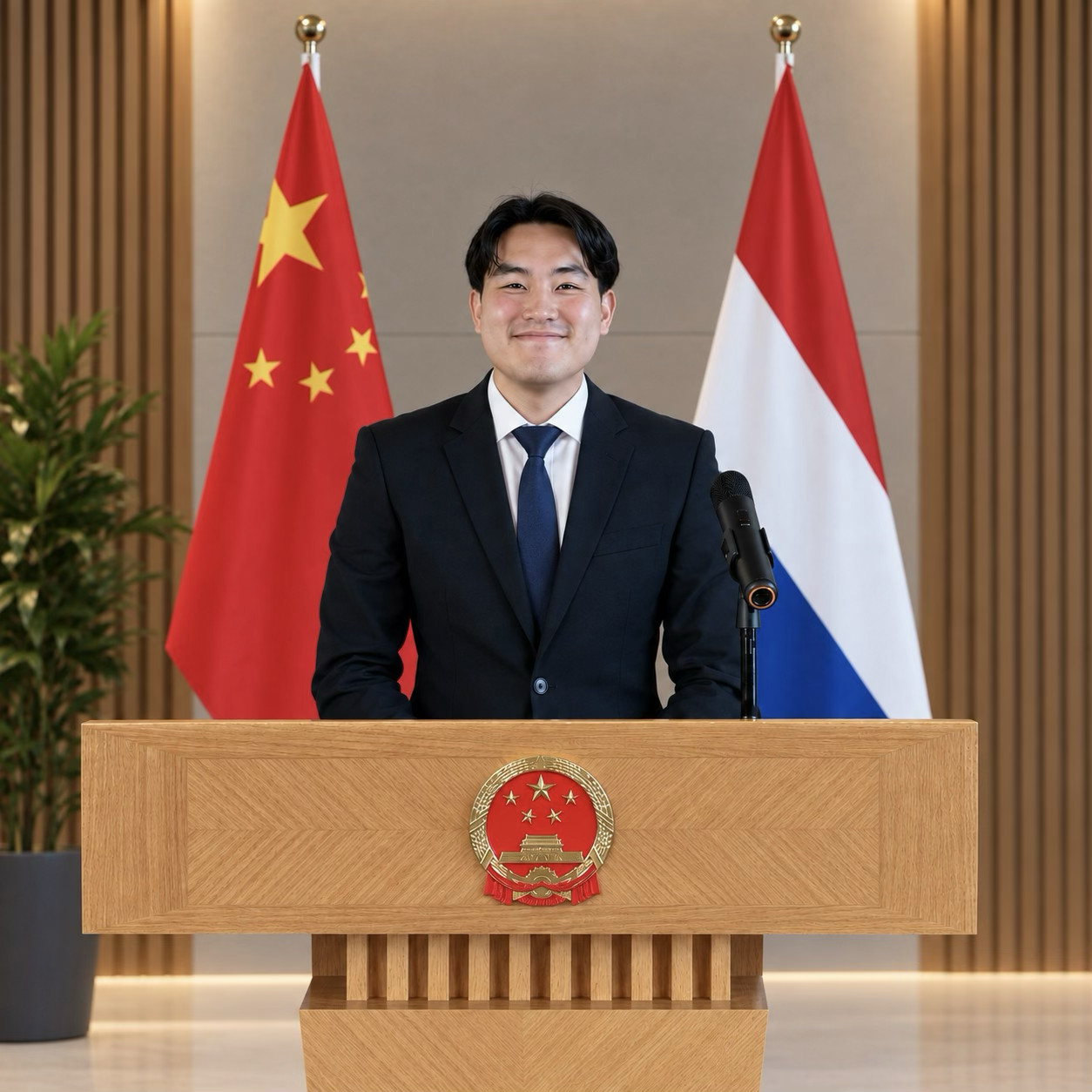
My name is Stanley Hau. I grew up in the Netherlands and have lived in several places since, which taught me to adapt quickly and see the same situation from more than one angle. My Chinese heritage gave me an early, personal connection to China. I completed a BA in History and International Studies at Vrije Universiteit Amsterdam, after a foundation year in Economics and Business Economics at the University of Amsterdam.
Outside academics, I competed in swimming for years. I ranked among the top performers in provincial competitions, won multiple championships in long course, short course, and relay events, and reached the podium at the Dutch national level. That experience built the discipline I bring to everything else: relentless preparation, composure under pressure, and a high standard of accountability.
I am now pursuing the LSE-PKU Double MSc in International Affairs because I want to understand how different political systems interpret responsibility, development, and power. I plan to work as a strategic consultant between Europe and China, focusing on market entry and cross-cultural cooperation.
Chinese Government Scholarship Details
Chinese Government Scholarship (CSC), through Peking University. It provides 3,000 RMB per month, free housing, and a 30,000 RMB tuition waiver.
Educational Background
I graduated in the top 5% of my class at VU Amsterdam with a BA in History and International Studies. I did an exchange semester at the Australian National University, which built my interest in geopolitical analysis. My thesis examined the effectiveness of Chinese manoeuvre tactics in 20th-century conflicts (1937–1949). It strengthened my qualitative research skills and my ability to weigh complex political trade-offs.
The mix of history, international studies, and economics gave me both the analytical tools and the context this degree requires.
How Did You Prepare to Apply to Peking University?
How Did You Find Information About the Chinese Government Scholarship and Peking University?
PKU sent me the scholarship information directly after I got into the program.
Did You Take Any Standardized Tests? If So, How Did You Prepare for Them?
I took the IELTS, which the program required anyway. Free preparation training was available when I applied, which made it easy to prepare. I also hold HSK Level 6.
How Did You Prepare to Apply for the Chinese Government Scholarship?
I reused the motivation I had written for my master’s applications. A friend who has won several scholarships helped me refine it. I also gathered the required documents: notarised transcripts and certificates, a study plan, a reference, a pre-admission letter, a physical examination record, a non-criminal record report, and my HSK certificate.
How Is Your Experience at Peking University?
I have been to China many times, so there was no culture shock, but studying here is different from visiting. My classmates come from all over the world, and I have made some good friends. Living on campus is a big difference from Europe, where you usually have to travel to see people. Here everything is close, so it is easy to do things with friends. I have had little interaction with Chinese students so far, since PKU is the top university in China and they are always studying.
The food is manageable. The canteens are cheap and 100 RMB a day is realistic, though not everyone will like the food, and the breakfast and meal times did not fit the schedule I was used to in the Netherlands. For most people, it is enough. For me, with my protein needs, I order extra through Meituan. For getting around, scholarship students get a free Meituan bike for a year, and Didi is cheap.
How Do You Rate Peking University Academically?
The professors are very knowledgeable and approachable, which shows why PKU is such a prestigious university. Each professor has their own teaching method, so it is hard to judge the teaching as a whole. I found that variety valuable, because I had to adapt to a different style in each course.
How Does Peking University Support International Students?
Scholarship students live on campus in rooms that work like hotel rooms. Mine is shared with a roommate, and the toilets and showers are shared, which was new for me and requires good communication, but the accommodation is free. PKU’s International Students Division handles scholarship and admission matters; Chinese Government Scholarship students receive comprehensive medical insurance, and the School of International Studies has a dedicated program administrator for the double degree.
What Is the Language of Instruction?
Both are possible. Courses in London are taught in English, while those in Beijing can be taught in Chinese or English. I chose English as my preferred teaching language. Non-Chinese students also take a compulsory Chinese language course and a course on Chinese Politics and Diplomacy, both in the first semester.
What Do You Plan to Pursue After the Chinese Government Scholarship?
I plan to work as a strategic consultant at the intersection of Europe and China, building on my business experience and my consultancy work for DaoCloud.
Would Not Knowing Mandarin Be a Problem?
Not academically, since English-taught options are available and the program includes a Chinese language course. Everyday life in Beijing is easier with some Chinese, so I would still recommend learning the basics before arriving.
What Do You Think Made Your Application Stand Out?
I combined academic work on China with real cross-border experience. I founded and run a trading company linking consumers in advanced markets with producers in developing economies. I advised DaoCloud on its European market entry under GDPR and the AI Act. I was Vice Chairman of a Dutch-Chinese cultural foundation, where I organised two Spring Festival Galas. I speak Dutch, English, Mandarin, and Cantonese. My motivation letter tied all of this to one clear goal and an honest account of my financial need.
What Would You Have Done Differently If You Were Going Through the Process Again?
Nothing.
What Advice Would You Give Those Looking to Apply for a Similar Scholarship?
Be yourself. Some classmates who received the scholarship surprised me, which shows there is no single “winning” profile. A genuine story and a clear reason for choosing the program matter more than fitting a template. Beyond that:
- Submit your admission application to PKU first. Applicants must have been successfully offered a place in a full-time graduate program before applying for the scholarship.
- Start the paperwork early. Notarised documents, the physical exam, and the non-criminal record take time.
- Have someone with scholarship experience review your motivation letter.
- Be honest about why you need the funding.
- If you win, expect shared campus housing and canteen food. It is very workable, and the free tuition and housing make it worth it.
Want to submit your
scholarship journey?
Submit Your Story Here!
More Scholarship Recipients

My name is Amílcar Mário Furtado Quinta, and I am an Angolan corporate lawyer and university lecturer from Luanda, Angola. .... Read more

Hi, I am Ali from Karachi, Pakistan. I am currently studying Physics at University College London, where I am enrolled in an .... Read more

My name is Viengsavanh Xaychaleune (Vern) from Lao PDR. I currently serve as the Cluster Marketing and Communications Manage .... Read more
Leave A Comment