
How Nurjakhon Akhmadov, an Uzbek Scholar, Secured a Fully Funded Master’s in Development Policy Through the KOICA Scholarship Program
University: KDI School of Public Policy and Management, South Korea
Degree: Master’s in Development Policy (Sustainable and Inclusive Growth)
Previous Education: Bachelor’s in Banking and Finance – Tashkent Financial Institute, Uzbekistan; Master’s in Banking and Economics – Banking and Finance Academy of Uzbekistan
Scholarship: KOICA Scholarship Program – Fully Funded (Full Tuition, Round-Trip Airfare, KRW 1,200,000 Monthly Living Allowance, KRW 600,000 Settlement Allowance, On-Campus Accommodation, Health Insurance)
Social Media
The Journey
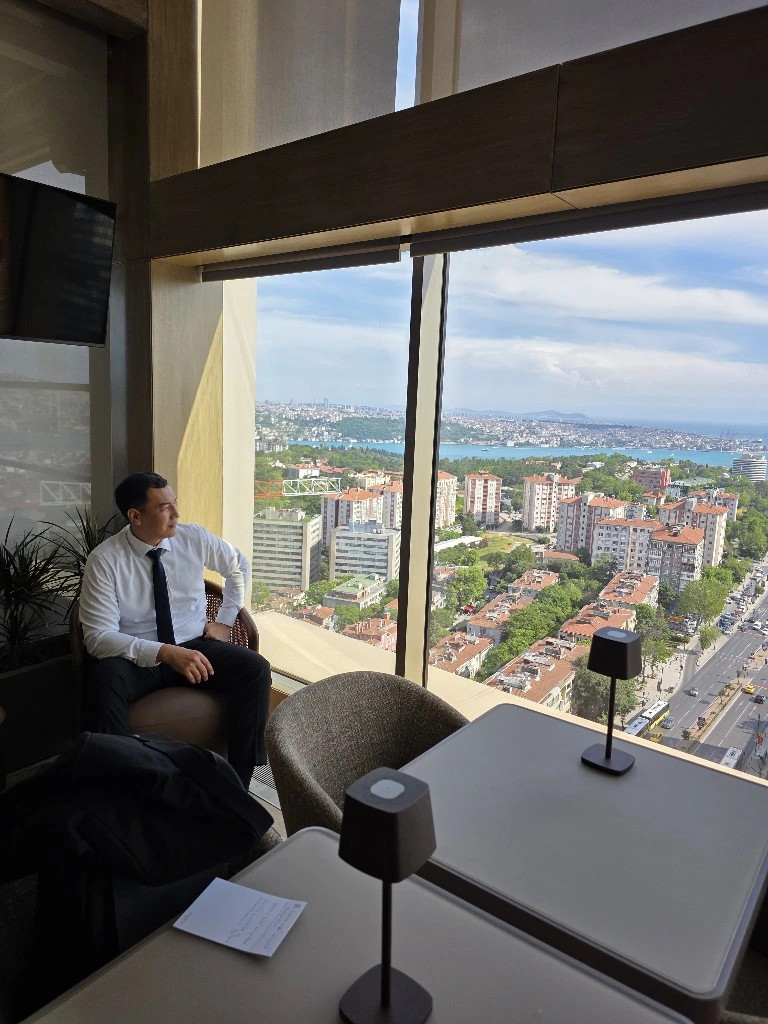
My name is Nurjakhon Akhmadov, and I am from the Kashkadarya region of Uzbekistan. I serve as a District Deputy Governor in the Kashkadarya region, heading the Investment, Industry, and Trade Department. My work focuses on attracting domestic and foreign investment and on projects with international partners. I have worked on several projects with the World Bank and the Asian Development Bank (ADB), as well as with KOICA, GIZ, the Global Covenant of Mayors (GCoM), C40, and FELICITY II.
I am currently pursuing a Master of Development Policy (MDP) at KDI School of Public Policy and Management in Sejong, South Korea, with a concentration in Sustainable and Inclusive Growth. I chose this field because in my daily work I saw how much a district's growth depends on good policy: how investment is attracted, how jobs are created, and how public resources are used. Korea is one of the few countries that went from poverty to an advanced economy within one generation, and I wanted to learn directly from that experience so I could apply it to regional development in Uzbekistan.
KOICA Scholarship Program Details
Institution: KDI School of Public Policy and Management, Sejong, Republic of Korea
Scholarship: KOICA Scholarship Program (KOICA SP), funded by the Korea International Cooperation Agency (KOICA) as part of the Official Development Assistance (ODA) program of the Government of Korea
Coverage: a fully funded scholarship covering full tuition, round-trip economy airfare, a monthly living allowance of KRW 1,200,000, a one-time settlement allowance of KRW 600,000, on-campus dormitory accommodation, and national and private health insurance.
Program duration: February 2026 – May 2027
Were You Offered Any Other Scholarships?
N/A. The KOICA Scholarship Program was the only scholarship I applied for.
Educational Background
I hold a B.A. in Banking and Finance from the Tashkent Financial Institute (2016–2020), graduating with a GPA of 3.6 out of 4.0, and an M.A. in Banking and Economics from the Banking and Finance Academy of Uzbekistan (2021–2022).
My background in finance and economics gave me a strong base for development policy. I already understood how investment, banking, and public finance work; what I needed was the policy side: how governments design, implement, and evaluate programs. My professional experience was just as important. Before becoming Deputy Governor, I worked at the Republican State Center for Diagnosis of Animal Diseases and Food Safety and then at the community (mahalla) level supporting migrants and unemployed citizens. These roles showed me the real problems behind economic statistics, and they shaped the questions I wanted to study.
How Did You Prepare to Apply to KDI School of Public Policy and Management?
How Did You Find Information About KOICA Scholarship Program and KDI School of Public Policy and Management?
I first learned about the scholarship from the official KOICA website, where the KOICA Scholarship Program announcements, application guidelines, and program information for each partner university are published. After that, I studied the KDI School website to learn more about the program, its courses, and its admission requirements.
Did You Take Any Standardized Tests? If So, How Did You Prepare for Them?
Yes, I took the IELTS and scored an overall band of 7.0. KDI School requires an English proficiency certificate taken within two years of the application deadline, so I recommend starting early.
How Did You Prepare to Apply for the KOICA Scholarship Program?
The KOICA Scholarship Program has a two-track process: the KOICA documents (application form, official government nomination, and passport copy) go to the KOICA office, and the university documents (online application form, Statement of Purpose, two recommendation letters, transcripts, diploma, employment verification, and an English test report) are submitted through the KDI School online system. This is followed by an interview.
The most important step for me was getting the official government nomination, because applications without it are not reviewed. I also started the apostille process for my diplomas and transcripts early, since it takes time. For my Statement of Purpose, I focused on concrete problems I face in my district, such as attracting investment and creating jobs, and explained exactly how the program would help me solve them after I return.
For the interview, I prepared mainly around my own field of work. The main questions were about my professional expertise and about the results I would bring back to my organization and my country after completing the scholarship. Because I had real, hands-on experience with these issues and a clear plan for applying what I learn, these questions felt natural and easy for me to answer. My advice is to know your own work deeply and be ready to explain concretely what will change after you return.
How is Your Experience at KDI School of Public Policy and Management?
My experience at KDI School has been excellent. My classmates are government officials and professionals from many countries, so every class discussion brings real policy experience from different contexts. I have taken courses such as Korean Economic Development, Theory and Policy of International Trade, Global Development Finance Cooperation, and Digital Government and Governance, which connect directly to my work. Outside of class, I am captain of the KDIS United FC football club, which has been a great way to build friendships across the school.
How Do You Rate KDI School of Public Policy and Management Academically?
I rate KDI School very highly. It is closely linked to the Korea Development Institute, one of Korea's leading policy think tanks, so the faculty combine academic research with practical policy experience. Courses are demanding but practical: we work with real data, case studies, and policy problems, and professors give detailed feedback on our research.
How Does KDI School of Public Policy and Management Support International Students?
KDI School provides on-campus dormitories, an orientation program, academic advising, Korean language classes, and support with visa and administrative matters. KOICA also organizes orientation and extracurricular activities such as study visits, which help us understand Korea beyond the classroom.
Are Your Classes Conducted in English or Korean?
All classes are conducted in English.
What Did You Pursue After the KOICA Scholarship Program?
I am still completing my program, which ends in May 2027. After graduation, I will continue my work as District Deputy Governor and apply what I have learned to investment promotion, industrial and trade policy, and regional development in the Kashkadarya region.
Would Potential Students Have Any Problems Not Knowing Korean?
No. Since all courses are in English, not knowing Korean is not a problem academically. In daily life, basic Korean helps (for shopping, transport, and making local friends), and KDI School offers Korean language courses that make adapting much easier.
What Do You Think Made Your Application Stand Out?
I believe my application stood out because it was closely connected to my real work. I did not write about development in general terms; I described specific challenges in my district and a clear plan for how the program would help me address them, and I was able to explain this confidently in the interview. My hands-on experience with investment projects and with international partners such as the World Bank, the Asian Development Bank, KOICA, and GIZ showed that I could turn what I learn into results back home.
What Would You Have Done Differently if You Were Going Through the Process Again?
I would have started the apostille process and my English test preparation earlier to reduce last-minute pressure, and I would have contacted KOICA alumni sooner to learn from their experience.
What Advice Would You Give Those Looking to Apply for a Similar Scholarship?
First, read the KOICA Application Guideline and the Program Information very carefully. Most rejected applications are incomplete or miss a requirement such as the government nomination. Second, and most importantly, clearly identify the real problems in your current workplace before you apply, and use your time in the program to find solutions to them. This gives your studies a clear purpose: every course, paper, and discussion becomes a chance to work on an issue you will face again when you return. Third, start early with document authentication (apostille) and your English test, because both take longer than you expect. Fourth, make your Statement of Purpose specific: link your current job, the problems you want to solve, and how this exact program will help you solve them. Finally, remember that KOICA invests in you so that you return and contribute to your country, so show that commitment clearly in your application.
Want to submit your
scholarship journey?
Submit Your Story Here!
More Scholarship Recipients
I’m Mufeedu Rahman Valakundil from Kerala, India. I’m currently pursuing the International Master of Science in Fire Saf .... Read more
My name is Mahnoor Hanan, and I am from Pakistan. I completed my Bachelor's degree in Materials Engineering from the Ghulam .... Read more

My name is Humayun Nosheerwan. I am a Chevening Scholar, social entrepreneur, artist, higher education professional, and Fou .... Read more
Leave A Comment