
How I Secured a Fully Funded Master’s at the University of Louisville, United States Through the Fulbright Scholarship
University: University of Louisville
Degree: Master’s Degree (Field Not Mentioned)
Previous Education: Bachelor’s Degree in Mass Communication, Misr University for Science and Technology; Master’s Degree in Digital Journalism, Cairo University
Scholarship: Fulbright Scholarship – Funding Details Not Specified
Social Media
The Journey
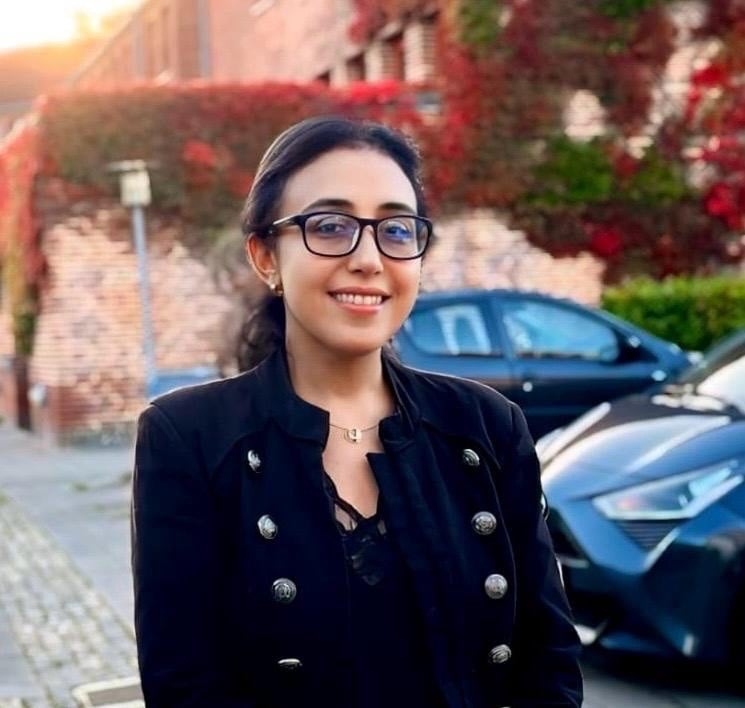
My name is Nariman Mohammed Ali Moustafa, and I am an Egyptian journalist, researcher, educator, and entrepreneur. My academic and professional journey has always been driven by a passion for communication, journalism, political communication, and intercultural understanding.
I earned my Bachelor’s degree in Mass Communication from Misr University for Science and Technology, later completed a Master’s degree in Digital Journalism at Cairo University with distinction, and most recently earned my PhD from Cairo University. Alongside my studies, I worked as a journalist, translator, researcher, and Assistant Lecturer, experiences that strengthened my interest in understanding how media shapes societies and influences public discourse.
My desire to expand my perspective beyond national borders led me to pursue international academic opportunities. This journey first took me to the United States through the Fulbright Program and later to Europe through the Erasmus Mundus Joint Master’s Programme in Media, Journalism and Globalization, studying at Aarhus University in Denmark and the University of Amsterdam in the Netherlands.
Looking back, I realize that every step of my journey was built on a simple belief: opportunities rarely arrive under perfect circumstances. Sometimes you simply have to commit to a goal and decide that failure is not an option.
Fulbright Scholarship Details
I was awarded the Fulbright scholarship to teach Arabic and study for a master's at the University of Louisville in Kentucky, USA.
The scholarship provided academic, cultural, and professional opportunities that extended far beyond the classroom. Through Fulbright, I was able to engage with students and scholars from diverse backgrounds, deepen my understanding of international communication, and develop skills that continue to influence my academic and professional work today.
My choice of the University of Louisville was both academic and personal. While the university offered strong opportunities in communication and media studies, I was also drawn to Kentucky because of my long-standing appreciation for American country music and culture. I believed studying in an environment that genuinely excited me would make the experience even more meaningful, and it certainly did.
Were You Offered Any Other Scholarships?
I was admitted to the Erasmus Mundus Joint Master’s Programme in Media, Journalism and Globalization, jointly offered by Aarhus University (Denmark) and the University of Amsterdam (The Netherlands).
Although I was not awarded the Erasmus Mundus scholarship funding, I made the decision to pursue the programme regardless. This meant relocating to Europe and supporting myself through work while completing a demanding international master’s degree.
While this path was challenging, it became one of the most valuable experiences of my life and taught me that sometimes opportunities are worth pursuing even when circumstances are not ideal.
Educational Background
PhD, Cairo University (recently completed) Erasmus Mundus Joint Master’s Degree in Media, Journalism and Globalization, Aarhus University, Denmark and University of Amsterdam, The NetherlandsMaster’s Degree in Digital Journalism, Cairo University (Graduated with Distinction)Bachelor’s Degree in Mass Communication, Misr University for Science and Technology PhD, Cairo University (recently completed)
My academic background prepared me for international study by providing a strong foundation in journalism, media studies, political communication, digital media, and research methods. In addition, my work as a journalist and Assistant Lecturer allowed me to apply theory in practical settings and strengthened my ability to communicate across cultures.
How Did You Prepare to Apply to the University of Louisville?
Preparing for international study required extensive research and planning. I spent significant time reviewing programme structures, faculty interests, admission requirements, and scholarship opportunities.
Rather than applying randomly, I focused on institutions whose academic strengths aligned with my interests in journalism, media, and political communication. I also invested considerable effort in developing strong personal statements that clearly connected my academic background, professional experiences, and future goals.
Most importantly, I approached every application with determination. I believed that if I was going to apply, I had to give it my absolute best effort.
How Did You Find Information About Fulbright Scholarship and University of Louisville?
I relied primarily on official scholarship websites, university websites, alumni networks, and educational advising resources.
Fulbright Egypt was an especially valuable source of information and guidance. I also sought advice from former scholarship recipients and individuals who had already studied abroad. Their experiences helped me better understand the application process and prepare more effectively.
Did You Take Any Standardized Tests? If So, How Did You Prepare for Them?
Yes.
Preparing for standardized tests required discipline and consistency. Rather than relying on intensive short-term preparation, I focused on gradually strengthening my English language skills through reading, writing, listening, and speaking practice.
I also familiarized myself with the structure and expectations of each examination well in advance, which helped reduce anxiety and improve my performance.
How Did You Prepare to Apply for the Fulbright Scholarship?
One of the most influential moments during my scholarship preparation came from Dr. Maggie Nassif, Director of Fulbright Egypt.
During one of our preparation sessions, she shared a simple but powerful message that has stayed with me ever since:
“You were all given lemons. You can either keep them as lemons or make your own lemonade.”
Those words fundamentally changed my perspective.
Like many applicants, I faced challenges and uncertainties. However, I learned that successful applications are not about presenting a perfect life story. They are about demonstrating resilience, purpose, and the ability to create opportunities despite obstacles.
I spent considerable time refining my personal statements, gathering strong recommendations, and ensuring that my applications reflected not only my achievements but also my aspirations and commitment to contributing to society.
How is Your Experience at the University of Louisville?
My experience at the University of Louisville was transformative both academically and personally.
The university fostered a culture of intellectual curiosity and encouraged students to engage critically with ideas. I was fortunate to learn from outstanding faculty members who challenged me to think beyond conventional perspectives.
One individual who had a particularly significant impact on me was Professor Gregory S. Hutcheson, who served as my academic advisor. Professor Hutcheson consistently encouraged me to think outside the box, challenge assumptions, and trust my analytical abilities.
His confidence in my potential strengthened my own confidence as a researcher and scholar. That encouragement stayed with me long after I left Louisville and continues to influence how I approach new challenges today.
How Do You Rate the University of Louisville Academically?
I would rate the University of Louisville very highly.
The institution combines strong academic standards with a supportive learning environment. Students are encouraged to think independently, engage in meaningful discussions, and explore interdisciplinary perspectives.
What stood out most to me was the emphasis on critical thinking and intellectual growth rather than simply memorizing information.
How Does the University of Louisville Support International Students?
The University of Louisville provided extensive support for international students through orientation programmes, academic advising, cultural activities, and student services.
The university created an inclusive environment where international students felt welcomed and valued. This support made the transition to studying in a new country much smoother and allowed students to focus on both their academic and personal development.
Are Your Classes Conducted in English or Danish/Dutch?
My classes at the University of Louisville were conducted entirely in English.
Similarly, my Erasmus Mundus studies in Denmark and the Netherlands were also conducted in English, allowing students from many different countries to learn together in an international environment.
What Did You Pursue After the Fulbright Scholarship?
Following my Fulbright experience, I continued developing my academic and professional career through research, journalism, teaching, and international education.
I later pursued the Erasmus Mundus Joint Master’s Programme in Europe, studying in both Denmark and the Netherlands. Although I did not receive the Erasmus Mundus scholarship funding, I chose to pursue the opportunity and supported myself through work while completing the degree. I also recently earned my PhD from Cairo University, deepening my research in journalism and communication.
Today, I am working on my own startup, SavnerDig, a platform dedicated to transforming grief into shared moments of love, remembrance, and appreciation. The idea emerged from my belief that technology can be used to strengthen human connection and create meaningful spaces for people navigating loss and remembrance.
My experiences across Egypt, the United States, Denmark, and the Netherlands have reinforced my commitment to building initiatives that connect people, foster understanding, and create positive social impact.
Would Potential Students Have Any Problems Not Knowing Danish or Dutch?
In my experience, students enrolled in international English-language programmes can succeed academically without knowing the native language.
Both my Erasmus Mundus studies in Denmark and the Netherlands were conducted entirely in English. However, learning at least some of the local language can significantly improve daily life, help build stronger relationships, and provide a deeper understanding of the local culture.
What Do You Think Made Your Application Stand Out?
I fundamentally believe my application stood out because it demonstrated consistency, purpose, and resilience for both programs, Fulbright and Erasmus. In fact, I was also recognized by the University of Amsterdam for my achievements and perseverance, and I proudly gave the cohort graduation speech, which was an honor by itself.
My academic achievements, journalism experience, teaching background, and commitment to intercultural communication all supported a clear narrative about who I was and what I hoped to achieve.
I also believe that authenticity mattered. Rather than trying to present a perfect image, I focused on honestly communicating my motivations, goals, and experiences.
Finally, I believe my willingness to embrace challenges made a difference. Whether it was pursuing opportunities abroad or later continuing my Erasmus Mundus studies without scholarship funding, I have always tried to focus on solutions rather than limitations.
What Would You Have Done Differently if You Were Going Through the Process Again?
If I were going through the process again, I would start even earlier and spend more time seeking feedback on my application materials.
I would also worry less about perfection. Looking back, I realize that growth often comes from taking action before feeling completely ready.
Every application, interview, and challenge became part of my learning journey, regardless of the outcome.
What Advice Would You Give Those Looking to Apply for a Similar Scholarship?
Believe that you belong in the room. And on your journey to grow, “sometimes you just have to take that decision because as humans we always have a tendency to remain in our safe zones – so take the risk; if you know yourself well enough then bet on it” - it may sound risky, but it can be worth it.
Many talented students hesitate to apply because they assume these opportunities are reserved for extraordinary people. In reality, scholarship committees are often looking for individuals with potential, determination, and a clear sense of purpose.
Start early, research thoroughly, and seek guidance from alumni and mentors. Invest time in your personal statement and ensure that your application tells a coherent story about your experiences and future goals.
Most importantly, do not allow difficult circumstances to define your ambitions.
I often think back to Dr. Maggie Nassif’s words about lemons and lemonade. Life rarely gives us perfect conditions. The question is not whether challenges exist; the question is what we choose to do with them.
My journey, from Egypt to the United States through Fulbright, then to Europe through Erasmus Mundus, recently completing my PhD at Cairo University, and now into entrepreneurship with SavnerDig, has taught me that opportunities become meaningful when we commit ourselves fully to them.
Sometimes success is not about having every resource available. Sometimes it is simply about deciding that you will find a way forward and refusing to give up.
Want to submit your
scholarship journey?
Submit Your Story Here!
More Scholarship Recipients
My name is Shah Hussain, and I am from Khyber Pakhtunkhwa, Pakistan. I completed my Bachelor’s in Psychology at the Univer .... Read more
I am June from the Philippines. I am an educator for Social Sciences and Humanities. I recently earned my Master in Southeas .... Read more
Hi, my name is Abdul Hafeez, and I come from a small town called Nasirabad in Sindh, Pakistan. Currently, I am pursuing a ma .... Read more
Leave A Comment