
How I Secured a Fully Funded PhD at Charles Sturt University, Australia Through the Charles Sturt University PhD Scholarship
University: Charles Sturt University
Degree: PhD in Artificial Intelligence and Cybersecurity
Previous Education: Bachelor’s in Electrical & Electronic Engineering, University of Chittagong; Master of Engineering, Beihang University
Scholarship: Charles Sturt University Full PhD Scholarship and Connectivity Innovation Network Research Stipend – Full Funding (Full Tuition Fees, Tax-Free Living Stipend of AUD $35,000 per Year for 3.5 Years)
Other Offered Scholarships (if any): PhD offer from Beihang University under Chinese Government Scholarship; several travel grants
Social Media
The Journey
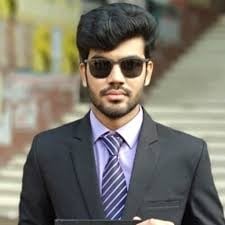
My name is Mehedi Hasan, and I am originally from Bangladesh. I am currently a final-year PhD candidate at Charles Sturt University (CSU) in Albury, New South Wales, Australia, where my research sits within the university’s Connectivity Innovation Network. My work is in artificial intelligence and cybersecurity , specifically, building machine-learning systems that detect cyber-attacks on networkintrusion detection system and adversarial attack defense, and making those systems robust against adversaries who deliberately try to fool them.
Before coming to Australia, I completed a Master of Engineering at Beihang University in Beijing, China, and earlier worked as a physics teacher at a secondary school in Bangladesh, teaching the Cambridge International curriculum. My path into computing and cybersecurity grew out of a lifelong love of problem-solving and a belief that, as more of our world , from hospitals to vehicles , becomes connected, protecting those systems is one of the most meaningful problems an engineer can work on. Pursuing a PhD allowed me to commit to that problem fully and contribute original research to the field.
Charles Sturt University Full PhD Scholarship and Connectivity Innovation Network Research Stipend Details
I received a full PhD scholarship from Charles Sturt University and received Connectivity Innovation Network research stipend. The scholarship covers my full tuition fees and provides a tax-free living stipend for the duration of my candidature AUD $35000 per year for 3.5 years. For an international research student, this kind of full scholarship is what makes a PhD abroad genuinely possible , it removed the financial barrier and let me focus entirely on my research.
Were You Offered Any Other Scholarships?
I have received Ph.D offer from Beihang University, Bejing, China under Chinese government scholarship. Besides, I have received several travel grants for attending.
Educational Background
I completed my bachelor’s degree in Electrical & Electronic Engineering at University of Chittagong, Bangladesh GPA: 3.64 / 4.00, followed by a Master of Engineering at Beihang University, China GPA: 3.76/ 4.00.
My undergraduate training gave me a strong foundation in mathematics and the physical sciences, and my years teaching physics sharpened my ability to break complex ideas down clearly , a skill that turns out to matter enormously in research writing. My Master’s at Beihang moved me firmly into engineering and computational methods, and it was there that I first began working with machine learning. By the time I applied for a PhD, I had a clear research identity at the intersection of AI and security, along with the analytical and coding skills to back it up. That made it far easier to write a credible research proposal and to connect with a supervisor.
How Did You Prepare to Apply to Charles Sturt University?
I treated the application like a research project of its own. First, I narrowed down the specific topic I wanted to work on, then searched for academics whose published work aligned with that topic. I read my prospective supervisors’ recent papers carefully so that, when I reached out, I could speak specifically about how my interests fit theirs and what I could contribute. I also prepared a focused research proposal, an up-to-date academic CV, and a portfolio of my prior work and publications. Reaching out to potential supervisors before formally applying , rather than after , made the biggest difference: a supervisor who is genuinely interested in your project becomes your strongest advocate throughout the admission and scholarship process.
How Did You Find Information About Charles Sturt University Full PhD Scholarship and Connectivity Innovation Network Research Stipend and Charles Sturt University?
I used a combination of sources: official university websites (which list research scholarships and application deadlines), scholarship aggregator sites and newsletters, Google Scholar to find researchers and labs working in my area, and direct email contact with academics. I paid particular attention to the postgraduate research pages of Australian universities, because Australia offers well-structured, fully funded PhD scholarships that combine tuition coverage with a living stipend. Following a few good scholarship listing sites and setting up email alerts kept me aware of deadlines , which, in research admissions, are very easy to miss.
Did You Take Any Standardized Tests? If So, How Did You Prepare for Them?
Yes , as an international student I needed to demonstrate English proficiency, so I took the IELTS: overall band score 6.5. To prepare, I practised consistently with official IELTS materials, completed timed mock tests to build speed under exam conditions, and put extra effort into the writing and speaking sections, which benefit most from structured practice and feedback. My advice is to prepare early and treat the test seriously, because a strong English score reassures both the admissions committee and your prospective supervisor that you can hit the ground running in research and writing.
How Did You Prepare to Apply for the Charles Sturt University Full PhD Scholarship and Connectivity Innovation Network Research Stipend?
For the scholarship itself, the strongest elements of my application were a well-defined research proposal, my publication record and prior research experience, and the support of a supervisor committed to my project. I made sure my proposal clearly stated the problem, why it mattered, and how I planned to tackle it, and I aligned it tightly with my prospective supervisor’s expertise and the university’s research strengths. I also gathered strong references and made sure every document , CV, transcripts, and personal statement , was polished and consistent. Research scholarships are competitive, so I tried to present a coherent story: here is what I have done, here is what I want to do, and here is why this is exactly the right place to do it.
How is Your Experience at Charles Sturt University?
My experience at Charles Sturt University has been excellent. The research culture is supportive and collaborative, my supervisors have been generous with their time and feedback, and I have had the freedom to pursue an ambitious research agenda. Over my candidature I have published my work and presented at international conferences, which has been one of the most rewarding parts of the journey.
How Do You Rate Charles Sturt University Academically?
I rate CSU highly for research, particularly in my area. The supervision quality, access to resources, and encouragement to publish and present internationally have all been strong. What matters most in a PhD is the quality of your supervisor and research group, and on that measure my experience has been very positive.
How Does Charles Sturt University Support International Students?
CSU provides solid support for international students, including orientation, academic and writing support, research training workshops, and student services for the practical side of settling into a new country. As a research student, I also found the postgraduate research office helpful for navigating candidature milestones and administrative requirements.
What Did You Pursue After the Charles Sturt University Full PhD Scholarship and Connectivity Innovation Network Research Stipend?
I am currently completing my PhD. As I finish my candidature, I am pursuing a career in research and academia in AI and cybersecurity, and exploring research and industry opportunities in the field.
What Do You Think Made Your Application Stand Out?
I believe a few things set my application apart: a clearly defined research topic that aligned precisely with my supervisor’s expertise; a track record of prior research and publications that showed I could actually do the work; and a multidisciplinary background , physics, teaching, and engineering , that I framed as a strength rather than a detour. Above all, reaching out early and engaging genuinely with my prospective supervisor’s research, rather than sending a generic application, made me a real person with a real project in their eyes.
What Would You Have Done Differently if You Were Going Through the Process Again?
If I were doing it again, I would start the whole process even earlier and contact a wider range of potential supervisors, since responses can be slow and not everyone has capacity to take on a new student. I would also give myself more time to refine my research proposal with feedback before submitting. Starting early reduces stress and gives you room to apply to several opportunities rather than pinning your hopes on a single one.
What Advice Would You Give Those Looking to Apply for a Similar Scholarship?
A few things I would tell anyone starting out:
- Start early and stay organised. Track deadlines carefully , missing one can cost you a whole year.
- Find the right supervisor first. For a research scholarship, your fit with a supervisor matters more than almost anything else. Read their work and reach out with a specific, genuine message.
- Make your research proposal sharp. Clearly state the problem, why it matters, and your approach.
- Build a track record. Any research experience, publications, or projects you can point to will strengthen your case.
- Don’t be discouraged by silence or rejection. Many emails go unanswered; persistence and applying broadly are part of the process.
- Take the English test seriously and prepare early. A strong score removes any doubt about your readiness.
Most of all, believe that it is possible. Coming from Bangladesh, a fully funded PhD abroad once felt out of reach , but with preparation, persistence, and a clear sense of what I wanted to research, it became real. If you are willing to put in that work, there is a place and a scholarship out there for you too.
Want to submit your
scholarship journey?
Submit Your Story Here!
More Scholarship Recipients
My name is Shah Hussain, and I am from Khyber Pakhtunkhwa, Pakistan. I completed my Bachelor’s in Psychology at the Univer .... Read more
I am June from the Philippines. I am an educator for Social Sciences and Humanities. I recently earned my Master in Southeas .... Read more
Hi, my name is Abdul Hafeez, and I come from a small town called Nasirabad in Sindh, Pakistan. Currently, I am pursuing a ma .... Read more
Leave A Comment