
How Julia Emilia Espinoza Mejía, a Peruvian Scholar, Secured a Master’s in Petroleum Engineering at the University of Kansas, United States Through the Fulbright–CAREC Scholarship
University: University of Kansas (KU)
Degree: PhD in Chemical and Petroleum Engineering
Previous Education: Bachelor’s degree in Chemical Engineering, National University of Engineering (UNI); Master’s degree in Petroleum Engineering, University of Kansas; Master’s degree in Process Engineering
Scholarship: Fulbright–CAREC Scholarship
Other Offered Scholarships: NSF Engineering Research Center (ERC) EARTH – Full Funding for PhD
Social Media
LinkedIn: linkedin.com/in/jeem/
The Journey
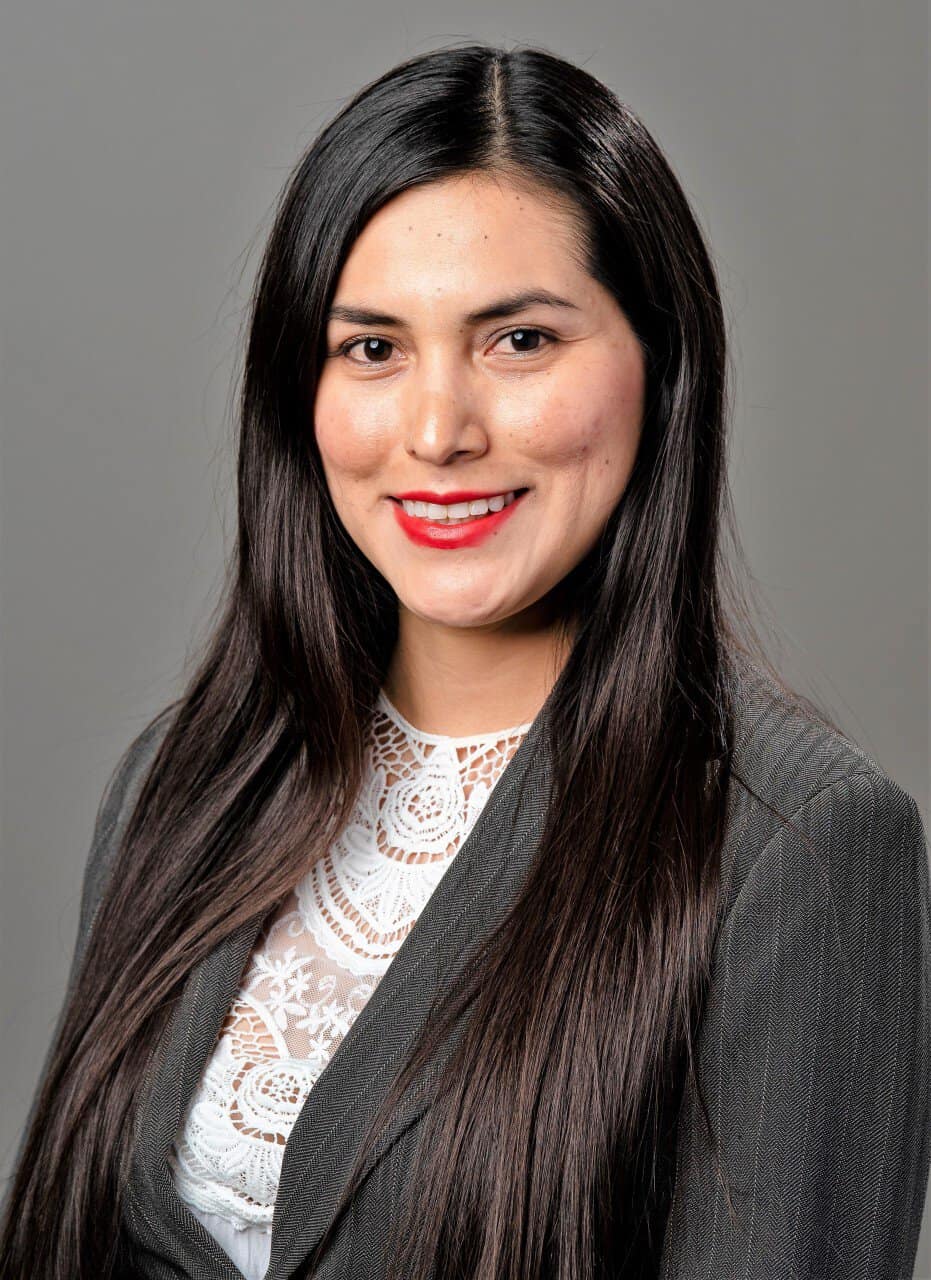
My name is Julia Emilia Espinoza Mejía, and I am from Callao, Peru. My academic background is in chemical engineering. I received my bachelor’s degree in Chemical Engineering from the National University of Engineering (UNI) in Lima, Peru.
After graduating, I began my professional career at PETROPERU, one of the largest oil refining companies in Peru. I started as an intern in 2010 and later worked as a process engineer for almost nine years. In 2018, I became Head of the Engineering Unit. This experience gave me the opportunity to work on real-world engineering challenges and develop both my technical and leadership skills.
In 2019, I was fortunate to receive the Fulbright–CAREC Scholarship to pursue graduate studies in the United States.
My academic and professional journey has focused on chemical and process engineering, with particular interests in energy, sustainability, thermodynamics, and the development of technologies that can address industrial and environmental challenges.
I hold a bachelor’s degree in Chemical Engineering, a Master’s degree in Petroleum Engineering, and a Master’s degree in Process Engineering. I am currently a PhD candidate in Chemical and Petroleum Engineering at the University of Kansas (KU) in the United States.
My decision to pursue graduate education was driven by my desire to deepen my technical knowledge and transition from primarily engineering practice toward research and innovation. I became particularly interested in combining engineering fundamentals, thermodynamics, and process design to develop more sustainable technologies.
Fulbright–CAREC Scholarship Details
- Scholarship: Fulbright–CAREC
- Year: 2019
- Country: United States
- Institution: University of Kansas
- Program: Master’s degree in Petroleum Engineering
The Fulbright experience was a major turning point in my academic and professional career. It gave me the opportunity not only to pursue graduate education in the United States but also to become part of an international academic and professional community.
Were You Offered Any Other Scholarships?
The Fulbright Scholarship opened the door for me to pursue a PhD in Chemical and Petroleum Engineering at the University of Kansas (KU) as part of the NSF Engineering Research Center (ERC) EARTH, which fully funded my PhD.
Educational Background
I began my academic journey in Chemical Engineering, which provided me with a strong foundation in mathematics, chemistry, physics, transport phenomena, thermodynamics, process design, and industrial operations.
I completed my bachelor’s degree among the top third of my graduating class.
I subsequently pursued a Master’s degree in Petroleum Engineering and a Master’s degree in Process Engineering. These programs allowed me to develop complementary expertise in energy systems, process analysis, modeling, and engineering applications.
My academic background prepared me well for doctoral research because it gave me an interdisciplinary perspective. Chemical engineering provided the fundamental scientific and engineering principles, while petroleum and process engineering helped me understand how those principles can be applied to complex industrial systems.
Currently, I maintain a 3.96/4.00 GPA in my doctoral studies at the University of Kansas.
Previous academic achievements:
- Bachelor’s degree in Chemical Engineering: Graduated among the top third of my class.
- Master’s degree in Petroleum Engineering: 3.92/4.00 GPA.
- Master’s degree in Process Engineering: Graduated with Honors.
- PhD in Chemical and Petroleum Engineering: 3.96/4.00 GPA.
How Did You Prepare to Apply to the University of Kansas (KU)?
This opportunity came to me while I was working as a process engineer. I had always dreamed of studying abroad, and the Fulbright–CAREC Scholarship gave me the opportunity to pursue that goal.
Fulbright supported me throughout the application process. As part of the preparation, I spent one year studying English in the United States. After I passed the TOEFL exam with a score of 96, I began identifying graduate programs that aligned with my academic interests and long-term professional goals.
I looked beyond the university’s overall reputation and focused on the research groups, faculty members, research facilities, and specific projects available in my area of interest.
I believe one of the most important parts of applying to graduate school is identifying the right academic fit. I researched faculty members whose work was related to my interests and considered how my previous education and professional experience could contribute to their research.
I also prepared my academic documents, curriculum vitae, recommendation letters, statement of purpose, and other application materials.
How Did You Find Information About Fulbright–CAREC Scholarship and University of Kansas (KU)?
I used several sources, including university websites, scholarship organizations, faculty webpages, professional networks, and conversations with people who had previously studied abroad.
For scholarships such as Fulbright, I also paid close attention to the official requirements and application process. I found it particularly useful to understand not only the eligibility requirements but also the values and objectives of the scholarship program.
Did You Take Any Standardized Tests? If So, How Did You Prepare for Them?
My preparation focused on improving my English skills, understanding the format of the exam, practicing consistently, identifying my weaker areas, and becoming comfortable working under time constraints.
I would emphasize that standardized tests are only one component of an application. A strong academic record, research experience, professional trajectory, clear goals, and a compelling personal story are also very important.
How Did You Prepare to Apply for the Fulbright–CAREC Scholarship?
For me, preparing the scholarship application was not simply about completing forms. I first needed to understand why I wanted to pursue graduate education in the United States and what I hoped to accomplish with that opportunity.
I worked on presenting a coherent story connecting my academic background, professional experience, future goals, and the potential impact of my studies.
I also paid particular attention to my essays. Rather than simply listing accomplishments, I tried to explain why those experiences mattered, what I had learned from them, and how they shaped my future goals.
I also sought feedback from people I trusted and revised my application multiple times.
How is Your Experience at the University of Kansas (KU)?
My experience at the University of Kansas has been highly valuable, both academically and professionally. As a PhD student, I have had the opportunity to work on interdisciplinary research involving chemical engineering, thermodynamics, ionic liquids, refrigerants, phase equilibria, and sustainable separation technologies.
My current research focuses on the use of ionic liquids for sustainable refrigerant recovery, including experimental measurements of thermophysical and interfacial properties, vapor–liquid equilibrium, and thermodynamic modeling.
I have also had opportunities to present my research at conferences and research events and to collaborate with researchers from different backgrounds.
How Do You Rate the University of Kansas (KU) Academically?
I consider the University of Kansas a strong academic environment, particularly because of the opportunities it provides for interdisciplinary research and collaboration.
One of the aspects I value most is the opportunity to combine fundamental engineering concepts with practical environmental and industrial problems. My research has allowed me to work at the intersection of thermodynamics, process engineering, materials, and sustainability.
How Does the University of Kansas (KU) Support International Students?
As an international student, I have benefited from the academic and administrative resources available to international students, as well as from the multicultural environment on campus.
I also had the opportunity to serve as a Vice President of the Graduate Engineering Association at KU. This experience strengthened my leadership skills and motivated me to become an advocate for graduate students and help them succeed both academically and professionally.
Studying in another country requires adapting not only academically but also culturally and professionally. Having access to university resources and a supportive academic community can make a significant difference.
Are Your Classes Conducted in English?
Yes. My graduate education at the University of Kansas is conducted in English.
Although studying in English can initially be challenging for an international student, I found that academic and professional communication improves significantly with practice. Reading scientific papers, participating in discussions, presenting research, and writing technical documents all helped me become more comfortable.
At KU, I also had the opportunity to take language classes such as Portuguese, Quechua, and Arabic. I am glad I was able to benefit not only from learning the languages but also from learning about the cultures behind them.
What Did You Pursue After the Fulbright–CAREC Scholarship?
The Fulbright Scholarship became an important step in my continuing academic journey. I pursued graduate education in the United States and continued developing my expertise in chemical and process engineering.
I eventually progressed to doctoral research at the University of Kansas. My current research focuses on sustainable refrigerant recovery using ionic liquids and extractive distillation, combining experimental work with thermodynamic modeling.
In addition to research, I have remained involved in professional activities and leadership. I currently serve as Vice President of AIChE Perú, my home country’s professional organization for chemical engineers, where I contribute to initiatives that promote professional development, technical education, networking, and collaboration between academia and industry.
I am also part of the STEM Women Directory of Global STEM Women, an initiative that highlights and connects women working in STEM fields.
What Do You Think Made Your Application Stand Out?
I believe one of the aspects that made my application stand out was my personal and professional journey.
I am a first-generation college student, and I am the first person in my family and among my close relatives to become an engineer and pursue a PhD. My professional career has also taken place largely in male-dominated environments, particularly in the petroleum and gas industry.
I have always had big dreams, and I wanted to use my education, experience, and knowledge to contribute to the development of my country.
I did not apply simply because I wanted to study abroad. I had a clear motivation to continue developing as an engineer and researcher, and my previous education and professional experience provided a strong foundation for my graduate studies.
I also believe that my application reflected several dimensions of my experience: academic preparation, professional experience, research interests, leadership, and a desire to contribute to my community.
Another important factor was authenticity. I tried to communicate my real motivations and experiences rather than writing what I thought a selection committee wanted to hear.
What Would You Have Done Differently if You Were Going Through the Process Again?
If I were going through the process again, I would start preparing even earlier, particularly when it comes to developing my language skills.
I would spend more time researching potential institutions, faculty members, funding opportunities, and the specific expectations of each program. I would also dedicate more time to obtaining feedback on my essays and practicing how to communicate my academic and professional story clearly.
Most importantly, I would remind myself earlier in the process that rejection from one opportunity does not mean that you are not qualified. Scholarship applications are highly competitive, and persistence is an important part of the process.
What Advice Would You Give Those Looking to Apply for a Similar Scholarship?
Do not self-reject.
Sometimes students decide not to apply because they believe their profile is not strong enough. You will never know whether you are competitive unless you submit your application.
Second, start early. Give yourself enough time to research programs, prepare for standardized tests if necessary, request recommendation letters, write your essays, and revise your application.
Third, know your story. Your application should explain who you are, where you come from, what you have accomplished, why you want to pursue further education, and what you hope to contribute afterward.
Fourth, don’t focus only on rankings. Look for the right academic and research fit. A university may be highly ranked but not necessarily be the best place for your particular interests.
Finally, remember that a scholarship is not only an investment in your education. It is also an opportunity to develop relationships, expand your professional network, contribute to your community, and become part of a larger international community.
My own journey has taught me that education can open doors that initially seem far away. The important thing is to prepare seriously, remain persistent, and be willing to take the opportunity when it comes.
Want to submit your
scholarship journey?
Submit Your Story Here!
More Scholarship Recipients
My name is Anna Nana Agyeiwaa Mensah, a professional nurse from Ghana. My interest in Global Health grew out of my experienc .... Read more
My name is Ratul Chakraborty, and I am from Bangladesh. My background is interdisciplinary, actually. Before coming to Germa .... Read more
My name is Mabel Zuñiga. I am a graduate student from Panama pursuing a Master’s degree in Public Policy at the Universit .... Read more
Leave A Comment