
How Ignacio Villagrán, a Chilean Scholar, Secured a Master’s in Educational Administration and Policy at the University of Georgia, United States Through the Fulbright Foreign Student Program – Beca Magíster para Profesionales de la Educación
University: University of Georgia
Degree: Master of Education (M.Ed.) in Educational Administration and Policy
Scholarship: Fulbright Foreign Student Program (Fulbright Chile – Beca Magíster para Profesionales de la Educación) – Full Funding (Financial Support Package, International Transportation, Health Insurance)
Other Offered Scholarships: University of Georgia Renewable Nonresident Tuition Waiver; FUNIBER Scholarship – 50% Funding for an MBA in Business Administration and Management
Social Media
The Journey
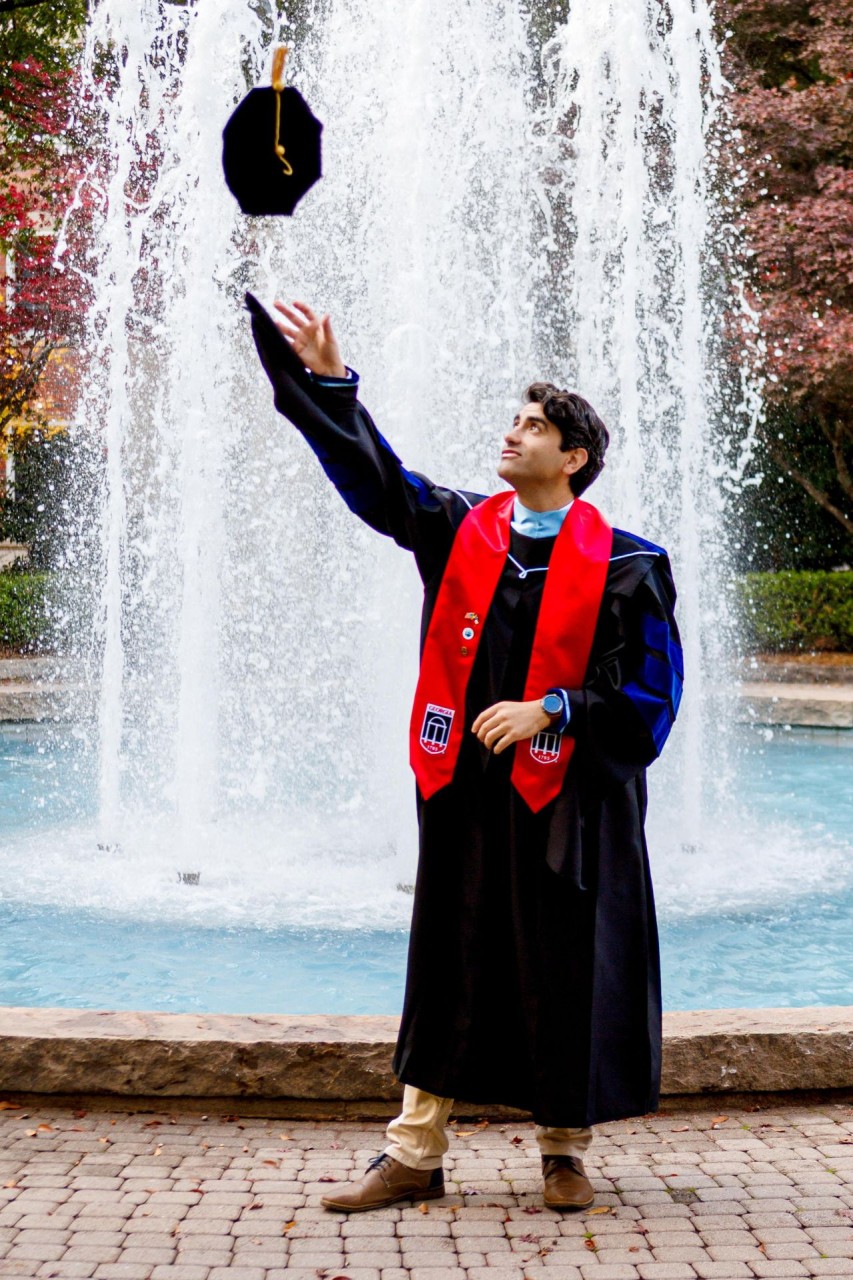
My name is Ignacio Villagrán, and I am an educator and school leader from Chile. I have worked in K–12 education for more than 14 years, beginning my career as an English teacher and later moving into department leadership, student affairs, school administration, and educational leadership.
In 2024, I moved to Athens, Georgia, as a Fulbright scholar to pursue a Master of Education (M.Ed.) in Educational Administration and Policy at the University of Georgia (UGA).
My decision to pursue graduate education in this field came from my own professional evolution. After years in the classroom and later in leadership positions, I became increasingly interested in the systems surrounding teaching and learning: educational policy, school law, organizational leadership, teacher working conditions, and how decisions made by school leaders ultimately affect students and teachers.
I wanted to step outside the educational system I already knew in Chile, study these issues from another perspective, and eventually bring that knowledge back home.
Fulbright Foreign Student Program Details
I was selected for the Fulbright Foreign Student Program through Fulbright Chile’s Beca Magíster para Profesionales de la Educación, a scholarship specifically aimed at education professionals. I was selected in the 2023 competition and began my graduate studies in the United States in August 2024.
My host institution was the University of Georgia, where I pursued an M.Ed. in Educational Administration and Policy. My official Fulbright Terms of Appointment established the beginning of my grant on August 12, 2024.
My DS-2019 ultimately recorded an estimated total financial support package of US$54,243, including US$36,900 from the Binational Commission, US$17,123 from the University of Georgia, and US$220 in program sponsor funds. The support extended beyond direct academic funding. My Fulbright grant also included international transportation to and from the United States and Fulbright health benefits during the grant period (ASPE Health Insurance).
Were You Offered Any Other Scholarships?
Yes. The University of Georgia awarded me a renewable nonresident tuition waiver, initially estimated at US$16,308 for the academic year, as part of my graduate funding package.
Additionally, while studying in the United States in 2025, I was awarded a 50% scholarship from FUNIBER (Fundación Universitaria Iberoamericana) to pursue a Master’s in Business Administration and Management (MBA). I accepted the scholarship and began the program while completing my studies in the United States.
For me, pursuing business administration alongside educational leadership has been an opportunity to broaden my understanding of organizations, strategy, management, and decision-making beyond the traditional boundaries of education.
Educational Background
Before Fulbright, my academic and professional background was primarily in English language education and K–12 schooling. I trained as an English teacher and continued my education in TESOL at the University of Queensland in Australia.
However, I think my professional experience was just as important as my academic background when applying for Fulbright. I had spent more than a decade working in Chilean schools, progressing from classroom teaching to becoming an English Department Head and eventually moving into broader school leadership.
Those experiences changed the questions I wanted to investigate academically. Instead of focusing exclusively on what happens inside an individual classroom, I became interested in the organizational conditions surrounding classrooms: leadership, policy, school climate, teacher support, educational law, and the decisions that influence whether schools and the people working in them can succeed. That background prepared me particularly well for Educational Administration and Policy because I was able to connect the theories and research I encountered at UGA with situations I had already experienced as an educator and school leader.
How Did You Prepare to Apply to the University of Georgia?
My preparation was not something that happened overnight. By the time I applied, I had already accumulated many years of professional experience in education and had gradually taken on greater leadership responsibilities.
A major part of the process was understanding what I actually wanted from graduate school. Rather than simply searching for a master’s degree abroad, I was looking for a program that could help me understand educational leadership from a broader perspective.
Once I became a Fulbright candidate, the process also involved identifying institutions and programs that matched those professional goals. Eventually, the University of Georgia and its Educational Administration and Policy program became the right fit.
My recommendation to future applicants would be to think about institutional fit beyond rankings. Ask yourself what questions you want to answer through graduate education and then look for programs, faculty members, courses, and research opportunities that can help you explore those questions.
How Did You Find Information About Fulbright Foreign Student Program and University of Georgia?
Fulbright was particularly attractive to me because it was not simply a source of financial assistance. It represented an international educational exchange program with a long history and a clear expectation that scholars would use their experiences to contribute after returning home.
I applied through Fulbright Chile’s program for education professionals, which was directly connected to my professional background.
One thing I learned through the process is that applicants should actively look for opportunities rather than assume that international graduate education is financially impossible. Scholarships, university tuition waivers, institutional awards, and other forms of support can sometimes be combined into a funding package. My own experience is a good example: Fulbright was the foundation that made my studies possible, while the University of Georgia also provided institutional financial support.
Did You Take Any Standardized Tests? If So, How Did You Prepare for Them?
Yes. I took the TOEFL iBT Home Edition in March 2023 and received a total score of 108 out of 120, with scores of 25 in Reading, 30 in Listening, 30 in Speaking, and 23 in Writing.
I had an important advantage when preparing for the test because I had already worked as an English teacher for many years and had previous academic training in TESOL. English was therefore already part of my professional life. However, I still had to become familiar with the specific structure and demands of the TOEFL.
Looking back, the test was also good preparation for what came afterward. Being able to communicate comfortably in English is one thing; completing a graduate degree in the United States requires you to read academic literature, participate actively in discussions, give presentations, conduct research, and write extensively in English.
My TOEFL score gave me confidence that I was ready for that challenge, but the experience at UGA continued to develop my academic English considerably, particularly my research and academic writing skills.
How Did You Prepare to Apply for the Fulbright Foreign Student Program?
I approached the Fulbright application as an opportunity to explain not only what I wanted to study, but why it mattered to my professional trajectory and to education in Chile.
I think one of the most important parts of preparing a competitive scholarship application is developing a coherent connection between your past, your proposed studies, and what you intend to do afterward.
In my case, those pieces naturally connected: I had spent years working in Chilean schools, had progressively moved into leadership positions, wanted advanced preparation in educational administration and policy, and intended to return to Chile and continue working in education.
Rather than trying to present myself as a perfect candidate, I tried to demonstrate that graduate education represented the logical next stage of a professional journey that was already underway.
How is Your Experience at the University of Georgia?
My experience at UGA was academically demanding and extremely rewarding.
One of the things I valued most was being able to explore educational leadership from several different perspectives rather than treating administration as simply school management. My studies included educational leadership, policy analysis, education law and policy, research, and interdisciplinary work.
The experience also allowed me to investigate topics closely connected to my professional interests, including teacher working conditions, absenteeism, burnout, attrition, organizational dynamics, and educational policy.
I completed 36 graduate credit hours with a 4.00 GPA. This was particularly meaningful to me because I was studying in a different academic system and completing graduate-level academic work in my second language.
I was also honored to receive UGA’s Award for Excellence in Research, Analysis, and Writing in the Interdisciplinary Program in Education Law and Policy in May 2025.
I ultimately completed my Master of Education in December 2025.
How Do You Rate the University of Georgia Academically?
I would rate the University of Georgia very highly academically.
What mattered most to me was access to professors who encouraged students to move beyond simply learning existing theories. I was expected to analyze policy, question assumptions, work with research, develop arguments, and connect academic knowledge with real educational problems. My relationship with faculty was also an important part of the experience. Graduate education became much more valuable when professors knew my professional background and challenged me to connect what I was studying in Georgia with the educational context I would eventually return to in Chile.
How Does the University of Georgia Support International Students?
UGA had a lot of support available for international students, and I started seeing that even before I arrived in the United States. My Fulbright documentation, for example, already identified an international student advisor at UGA, so I knew there was someone I could contact if I needed help figuring things out.
As a Fulbright scholar, I also had an extra layer of support. Fulbright, the Institute of International Education (IIE), and UGA all played different roles in helping me with things like immigration requirements, academic progress, health coverage, and the practical side of living and studying in the United States. UGA also has a strong connection with the Fulbright Program, so I definitely felt that I was arriving at a university that understood the experience.
But honestly, what I liked most was that the support went way beyond paperwork and academics. There were resources for things you might not even think about before moving to another country. UGA has a whole network of well-being resources, for example, including the UGA Food Pantry. Having resources like that available matters, especially when you are an international student trying to adjust to a new country, a new university, and a completely different cost of living.
The professional support was also great. The UGA Career Center offered career advising and programs such as the Arch Ready Professionalism Certificate. There was even a Professional Clothing Closet where students could find professional clothes for interviews, career fairs, and similar events. I thought that was a really practical idea.
Then there was the social side of being an international student. International Coffee Hour was a great place to meet people from all over the world, and events such as the Parade of Flags and International Education Month made the international community very visible on campus. You didn’t feel like international students were just visitors at UGA; we were actually part of the university community.
And not everything had to be serious! There were also simple things like Movies at Tate and other campus activities where you could hang out, watch a movie, meet friends, and just enjoy being a student.
I think that’s what I appreciated most about UGA. Support could mean having someone help you understand an immigration requirement, finding a resource when money was tight, getting ready for a job interview, meeting people from another country, or simply having something fun to do on a Friday night. When you’re thousands of miles away from home, all those little things add up. They help turn a university in another country into a place where you actually feel at home.
What Did You Pursue After the Fulbright Foreign Student Program?
This is probably the part of my Fulbright story that means the most to me. After completing my M.Ed. at the University of Georgia in December 2025, I returned to Chile.
In February 2026, I became the Director (school Principal) of Colegio San Jorge de Laja, a PK–12 school in Chile’s Biobío Region, a rural area.
The transition gave me an almost immediate opportunity to put my graduate education into practice. Questions that we had discussed academically at UGA- leadership, school policy, educational law, organizational improvement, teacher development, school climate, and evidence-informed decision-making- became part of my everyday responsibilities as a school principal.
At the same time, I have continued my MBA studies and maintained them while looking for opportunities to contribute to Chilean public education.
For me, this is an important part of what Fulbright represents. The experience did not end when I received my degree. The real challenge began when I returned home and had to translate what I had learned into leadership within an actual school community.
What Do You Think Made Your Application Stand Out?
I think coherence was one of the strongest aspects of my application.
I wasn’t proposing a completely new professional direction. I had already spent more than a decade in education and had progressively taken on greater leadership responsibilities. Educational Administration and Policy was therefore a natural continuation of the work I had already been doing.
I also think my background as a practicing educator mattered. I had real questions that came from working inside schools. I wasn’t interested in educational leadership only as an academic subject; I wanted better tools for addressing problems I had actually encountered.
Finally, my English-language background allowed me to demonstrate that I was prepared to participate fully in an American graduate program while also bringing the perspective of a Chilean educator into the classroom.
What Would You Have Done Differently if You Were Going Through the Process Again?
I would have started exploring the academic possibilities surrounding the scholarship even earlier.
Getting the scholarship can understandably become the main objective during the application process. But receiving the scholarship is actually the beginning. If I were doing it again, I would spend even more time before arriving researching individual professors, research groups, interdisciplinary programs, conferences, and opportunities outside my immediate degree requirements.
Some of the most valuable experiences I had in the United States came from opportunities that I discovered after arriving rather than from things I had planned beforehand.
I would tell applicants: do not prepare only to win the scholarship. Prepare for what you are going to do once you get it.
What Advice Would You Give Those Looking to Apply for a Similar Scholarship?
Apply before you feel completely ready. People sometimes look at Fulbright recipients after the fact and assume that they must have had extraordinary profiles from the beginning. That can discourage very capable applicants.
Your application does not need to describe a perfect person. It needs to tell a convincing story about where you have been, what problem or question you care about, why further education is necessary, and what you intend to do with that opportunity afterward.
Be specific. Research the programs. Understand why you want to study what you are proposing. Ask for feedback. Give yourself enough time to improve your application.
And particularly for educators: don’t underestimate the value of your professional experience. Years spent teaching students, working with families, collaborating with colleagues, and dealing with the everyday realities of schools give you questions and perspectives that can be extremely valuable in graduate education. In my case, Fulbright allowed me to leave Chile, study educational leadership from another perspective, learn from people from different backgrounds, and then come home.
Today, when I walk into my school as its principal, I can see a direct connection between the educator who applied for Fulbright, the graduate student I became at the University of Georgia, and the educational leader I am continuing to become in Chile.
Want to submit your
scholarship journey?
Submit Your Story Here!
More Scholarship Recipients
My name is Shah Hussain, and I am from Khyber Pakhtunkhwa, Pakistan. I completed my Bachelor’s in Psychology at the Univer .... Read more
I am June from the Philippines. I am an educator for Social Sciences and Humanities. I recently earned my Master in Southeas .... Read more
Hi, my name is Abdul Hafeez, and I come from a small town called Nasirabad in Sindh, Pakistan. Currently, I am pursuing a ma .... Read more
Leave A Comment