
How Fahim Faisal, a Bangladeshi Scholar, Secured a Fully Funded Master's Through the Chinese Government Scholarship
University: Harbin Engineering University (HEU)
Degree: Master’s in Control Science and Engineering
Previous Education: Associate Degree in Mechanical Manufacturing Automation and Engineering at Nanjing Polytechnic Institute; Bachelor’s in Electrical Engineering and Automation at Nanjing University of Information Science and Technology
Scholarship: Chinese Government Scholarship (CSC) – Fully Funded (Full Tuition, Free On-Campus Accommodation, Medical Insurance, Monthly Living Allowance of RMB 3,000)
Social Media
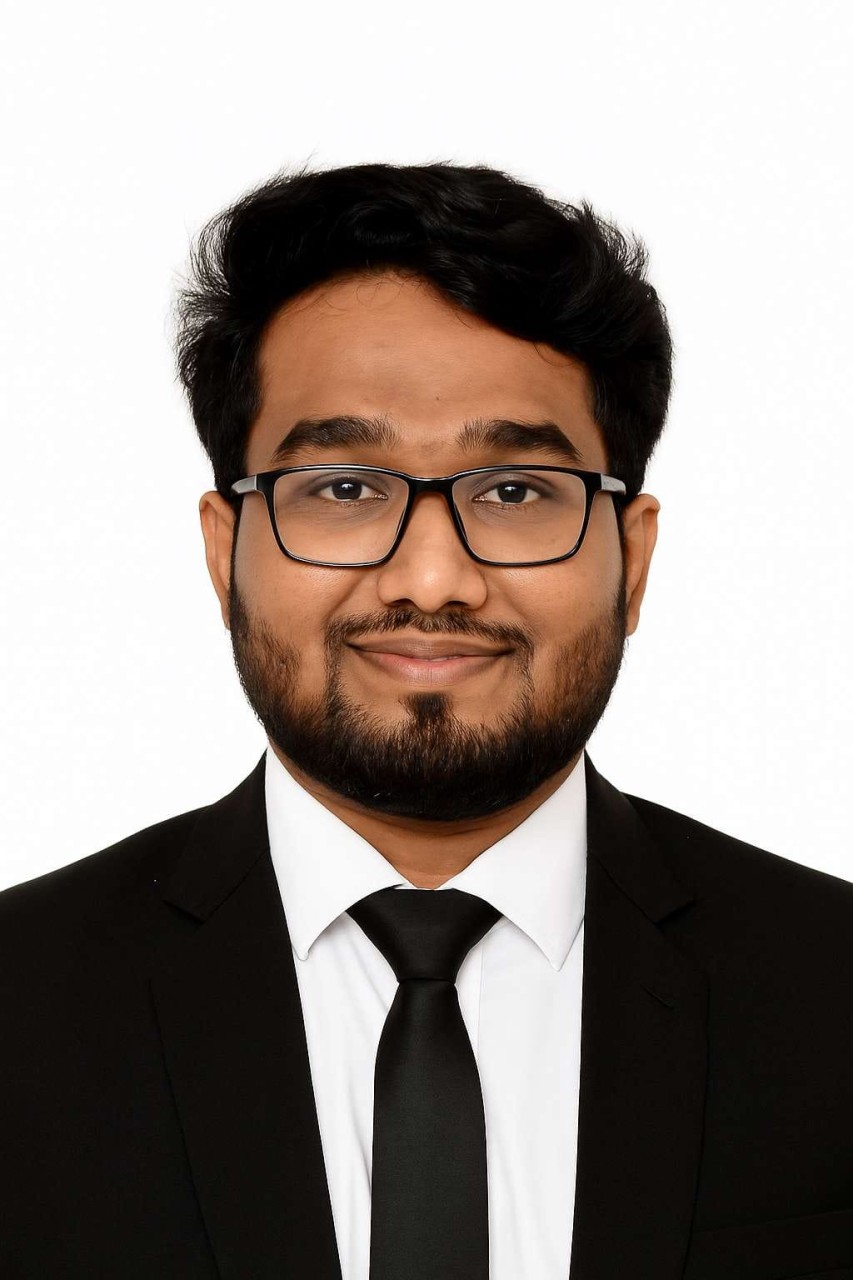
The Journey
My name is Fahim Faisal, and I am from Brahmanbaria, Bangladesh. I am a Master’s student in Control Science and Engineering at the College of Intelligent System Science and Engineering, Harbin Engineering University (HEU), in Harbin, China, under the supervision of Prof. Cheng Peng.
My journey with China began in 2017, when I came to Nanjing to study for an associate degree. In January 2020, when the COVID-19 pandemic broke out, I flew back to Bangladesh. I completed my bachelor’s degree online from Bangladesh while working full-time with Chinese companies there, including Huawei and China Railway Construction Corporation (CRCC). In 2024, I received the Chinese Government Scholarship to study at HEU. I left my job and finally came back to China.
Control Science and Engineering brings together both sides of my background: the engineering and automation of my earlier degrees, and the real-world project experience from my work. I chose it because of a problem every Bangladeshi knows well: unreliable electricity. Power cuts (load shedding) are still part of daily life in many parts of Bangladesh, especially in remote and coastal areas. Building more power plants is only part of the answer. We also need smart systems that decide when to use solar, wind, batteries, the grid, or a backup generator, and that is exactly what control engineering does. My research at HEU focuses on energy management for a more reliable and sustainable power supply in Bangladesh.
My long-term goal is to build a research lab in Bangladesh. I know this will not be easy in a developing country, but I want to bring home what I have learned so that young researchers in Bangladesh can work on the problems our country faces.
Chinese Government Scholarship Details
Institution: Harbin Engineering University (HEU), Harbin, China
Scholarship: Chinese Government Scholarship (CSC), full scholarship for Master’s students
Amount: Full tuition waiver, free on-campus accommodation, comprehensive medical insurance (RMB 800 per year), and a monthly living allowance of RMB 3,000. It covers my whole Master’s program, subject to the annual scholarship review.
Educational Background
Associate degree, Sep 2017 - Jun 2020: Mechanical Manufacturing Automation and Engineering, Nanjing Polytechnic Institute, China (first three years of my 3+2 program). Taught in Chinese. GPA: 3.89 / 4.00. Thesis: Conveyor Belt Design.
Bachelor’s degree, Sep 2020 - Jun 2022: Electrical Engineering and Automation, Nanjing University of Information Science and Technology (NUIST), China (final two years of my 3+2 program). Taught in English and studied online. GPA: 2.96 / 4.00. Thesis: Design and Development of a Face Recognition-Based Door Lock System Using Raspberry Pi.
Current, 2024 - present: Master’s in Control Science and Engineering, Harbin Engineering University (HEU), China (CSC scholarship).
What is a 3+2 program? My associate degree and bachelor’s degree were part of one “3+2” program. In a 3+2 program, you first study for three years at a polytechnic (vocational) college and earn an associate degree, which is focused on practical, hands-on skills. Then you move on to a university for two more years of study and earn a full bachelor’s degree. In total, it takes five years instead of the usual four, but you finish with both strong practical skills and a recognized bachelor’s degree. For students who did not enter a four-year university directly, it is a good route to a full degree.
I spent my first years in Nanjing studying mechanical manufacturing and automation in Chinese, which gave me hands-on engineering skills and fluent everyday Chinese. Then the pandemic changed everything. I flew home in January 2020, finished my associate degree remotely, and graduated in June 2020. My bachelor’s in Electrical Engineering and Automation started online on 1 September 2020. My thesis project, a face-recognition door lock built on a Raspberry Pi, gave me my first real experience of sensors, control, and automation.
Together, these degrees gave me a solid engineering foundation and strong Chinese and English skills. Studying online while working full time also taught me discipline and time management, which I still rely on today.
My Job Journey (additional section): How I studied online and worked at the same time.
When I flew back to Bangladesh on 29 January 2020, I did not know when I would be able to return to China. Because my bachelor’s program was online, I decided to use the time to gain real work experience. I started my bachelor’s on 1 September 2020 and my first job one month later, on 1 October 2020. From then until June 2024, I worked full time, and the whole time I was studying, I was also working. I graduated with my bachelor’s degree in June 2022 and continued working full time until I left for HEU. Most of my work combined Mandarin-Bangla-English interpreting with management roles:
RK Power Ltd., Dhaka (Oct 2020 - Jan 2022), Executive Assistant (After-Sales and Customer Operations): I coordinated after-sales service operations and handled more than 80 client service cases every month.
China Railway Construction Corporation (CRCC-16), Dhaka (Jan 2022 - May 2022), Assistant Manager & Mandarin Interpreter (Procurement): I aligned procurement planning with construction schedules and facilitated more than 40 supplier meetings and site visits.
Weisheng Technology Co., Ltd., Dhaka (Jun 2022 - Dec 2022), Assistant Manager & Mandarin Interpreter (Marketing and Operations): I coordinated more than 15 promotional campaigns and supported sales through bilingual client coordination.
Huawei Technologies (Bangladesh) Ltd., Dhaka (Dec 2022 - Jan 2024), Assistant Manager (Administration) & Mandarin Interpreter: I improved procurement and administrative workflows, supervised more than 8 administrative staff, and interpreted in more than 100 executive meetings and commercial negotiations.
WeiXing Group Limited, Cumilla (Jan 2024 - Jun 2024), Assistant Manager & Mandarin Interpreter: I supported production and maintenance operations, trained and supervised more than 10 staff, and interpreted in more than 50 cross-border technical and supplier meetings.
These jobs taught me things a classroom cannot: how real engineering projects run, how to negotiate with suppliers, how to lead a team, and how to be a bridge between Chinese and Bangladeshi colleagues. They also showed me how much Bangladesh’s development depends on reliable infrastructure and energy. In the end, this work experience became the strongest part of my scholarship application. In June 2024, after receiving the CSC scholarship, I left my job to start my studies at HEU.
How Did You Prepare to Apply to Harbin Engineering University (HEU)?
How Did You Find Information About Chinese Government Scholarship and Harbin Engineering University (HEU)?
Because I had already been studying in China since 2017, I had heard about the Chinese Government Scholarship for years from other international students. For accurate details, I relied on official sources: the CSC online application portal (Campus China) and HEU’s international student admissions website, which publishes a yearly admission guide with programs, deadlines, and required documents. I compared universities by their strength in my field, the research of their professors, and whether they offered CSC places for Master’s students. HEU stood out for its long tradition in control engineering and intelligent systems.
Did You Take Any Standardized Tests? If So, How Did You Prepare for Them?
I did not take the SAT, ACT, TOEFL, IELTS, GRE, or GMAT. They were not required in my case because I had completed my previous degrees in China. For language proof, I used my HSK 5 certificate (score 238 out of 300), which I took in Nanjing in January 2020, just before the pandemic sent me home. My associate degree was taught entirely in Chinese, so I had been learning and using Chinese every day since 2017, in class, with friends, and in daily life. Before the exam, I also practiced past papers and vocabulary lists. Later, my work as a Mandarin interpreter kept my Chinese sharp.
How Did You Prepare to Apply for the Chinese Government Scholarship?
I prepared my application while I was still working full time in Bangladesh, so I started several months before the deadline and planned every step, because collecting documents takes longer than most people expect. The main documents were notarized degree certificates and transcripts, a study plan of at least 1,000 words, two recommendation letters from professors, my passport, my HSK certificate, the Foreigner Physical Examination Form, and a non-criminal record certificate.
The study plan was the part I spent the most time on. Instead of writing in general terms, I described a specific problem, Bangladesh’s unreliable and fuel-dependent power supply, and explained how studying control and energy management systems at HEU would help me work on it. I also explained how my engineering degrees and my work experience with Chinese companies connected to this plan. I asked professors who knew my work well for recommendation letters, and I checked every document carefully before submitting my application through the CSC online portal and HEU’s online application system.
The last step was an interview of about 30 minutes. I was honestly afraid because my bachelor’s GPA (2.96) was the weakest part of my application. But when I talked about my work experience, the interviewer could see what I had done outside the classroom. In the end, my work experience convinced the interviewer that I had the potential to succeed, and I was offered the scholarship.
How is Your Experience at Harbin Engineering University (HEU)?
My experience at HEU has been very rewarding. After more than four years away from China, coming back to a real campus felt special. Academically, I have learned how to carry out a full research project from start to finish, and I am now preparing a journal paper based on my research.
Outside the lab, I serve as Vice President of the Sports and Recreational Department of the International Student Union (2025-2026), where I help organize sports and recreation activities for students from many countries. Last year I received an Outstanding Student award, which encouraged me to keep working hard. Life in Harbin has its own character too: the winters are very cold, but the city is beautiful in the snow, and the famous Ice and Snow Festival is something every student here should see.
How Do You Rate Harbin Engineering University (HEU) Academically?
I rate HEU very highly. It is one of China’s “Double First-Class” universities and is especially strong in engineering, including ship and ocean engineering, control, and intelligent systems. The laboratories are well equipped, the professors are active in research, and graduate students are expected to work independently and publish. My supervisor, Prof. Cheng Peng, has guided me closely while also giving me space to develop my own ideas. The standards are demanding, and that is what makes the degree valuable.
How Does Harbin Engineering University (HEU) Support International Students?
HEU supports international students well. The international student office helps with admission, visas and residence permits, accommodation and scholarship matters, and each student has a counselor to turn to with problems. The International Student Union organizes cultural, sports, and social events so that students do not feel isolated, especially during the long winter. International students can also be recognized through university awards; my own Outstanding Student award is one example.
Are Your Classes Conducted in English or Mandarin?
My classes at HEU are conducted in English. Lectures, assignments, and my thesis are all in English, while some administrative notices and most daily-life communication on campus are in Chinese.
What Did You Pursue After the Chinese Government Scholarship?
I am now in the final year of my Master’s, preparing for my thesis defense and a journal paper based on my thesis research. My next step is a PhD: I am applying to programs in China and in Europe and looking for funded positions. At the same time, with my background in procurement, administration, after-sales, and interpretation, I am open to industry roles in supply chain, procurement, and after-sales, especially with companies working between China and Bangladesh. In the long run, everything points toward one goal: building a research lab in Bangladesh.
Would Potential Students Have Any Problems Not Knowing Mandarin?
I have studied in both languages: my associate degree was taught in Chinese, and my bachelor’s degree was taught in English. In a Chinese-taught program, you need solid Chinese (usually HSK 4 or above) from the first day, and the first year can be hard. In an English-taught program, not knowing Chinese will not cause serious academic problems, because lectures, assignments, and the thesis are in English.
Outside the classroom, though, Chinese makes life much easier: shopping, visiting the hospital, using apps like WeChat and Alipay, and reading some university notices. My advice is to learn at least basic Chinese before or soon after you arrive. It also helps you make Chinese friends, and in my case it later opened the door to jobs with Chinese companies.
What Do You Think Made Your Application Stand Out?
I think my work experience made the biggest difference. My bachelor’s GPA (2.96) was not strong, and I was worried about it. But I could show more than four years of real work with Chinese companies such as Huawei and CRCC, in interpretation, procurement, administration, and team management, much of it while studying online. In my interview, this experience convinced the interviewer that I had the potential to succeed.
Two other things helped. First, I had a long connection with China: I had studied there since 2017, completed a Chinese-taught associate degree with a 3.89 GPA, and held an HSK 5 certificate. Second, my study plan connected control and energy systems to a real problem in my country and showed a long-term purpose: to use what I learn in China to build research capacity in Bangladesh.
What Would You Have Done Differently if You Were Going Through the Process Again?
I would pay more attention to my bachelor’s grades. Studying online while working full time was not easy, and my GPA was the one part of my application I worried about. I would also start earlier and contact potential supervisors before applying, because a supervisor who already knows your research interests can make a big difference. Finally, I would take IELTS alongside the HSK. It was not required for my scholarship, but an English test score keeps more doors open, for example, for PhD applications in Europe.
What Advice Would You Give Those Looking to Apply for a Similar Scholarship?
Start early. Many CSC deadlines fall between January and April, depending on the university, and notarizing and collecting documents can take weeks.
Use official sources. Read the CSC portal and each university’s own admission guide carefully, because requirements differ. At HEU, for example, Chinese-taught programs ask for HSK 4 or above, and English-taught programs ask for IELTS 5.5, TOEFL 79 or an equivalent certificate (always check the latest guide).
Don’t give up because of one weak GPA. My bachelor’s GPA was 2.96, and I still received a full CSC scholarship. Show what else you have done.
Use your work experience. If you have worked, explain what you learned and how it connects to your study plan. Practical experience can make your application stand out.
Make your study plan specific. Explain a real problem you want to solve, why this field, why this university, and what you will do after graduation.
Prepare for the interview. Be ready to explain your background, your study plan and any weak points honestly and confidently.
Contact professors in advance, and choose recommenders who know your work well.
Keep working after you win. The CSC scholarship is reviewed every year, so your grades and conduct still matter. Get involved in campus life too; that is where you grow the most.
And if you are coming to Harbin, bring (or buy) a really warm winter coat!
Want to submit your
scholarship journey?
Submit Your Story Here!
More Scholarship Recipients
My name is Catarina Teixeira, and I am from Portugal. I studied Genetics and Biotechnology at the University of Trás-os-Mon .... Read more
Hi, I'm Ushna from Pakistan. I recently completed my M.Sc. in Chemistry at the School of Science, Tianjin University, China, .... Read more
I chose my university major for a surprisingly simple reason: I realized I really didn't like numbers. When I was trying to .... Read more
Leave A Comment