
How Dr. Tehmina Sheharyar, a Pakistani Scholar, Secured Fully Funded Postdoctoral Research at Stanford Through the Fulbright Scholarship
University: Stanford University, United States
Degree: Postdoctoral Research in Artificial Intelligence for Ophthalmology and Medical Imaging
Previous Education: Master’s in Software Engineering, Bahria University, Islamabad, Pakistan (GPA: 3.8); PhD in Software Engineering, Bahria University, Islamabad, Pakistan (GPA: 4.0)
Scholarship: Fulbright Scholarship – Fully Funded (Approximately USD 5,000 Monthly Stipend, Visa Fees, Return Airfare for Recipient and One Dependent, Health Insurance, and Funded Academic Travel)
Other Offered Scholarships: Stanford University Postdoctoral Funding – USD 6,500 per Month (Offered but Declined in Favor of Fulbright)
Social Media
LinkedIn: linkedin.com/in/tehmina-shehryar/
The Journey
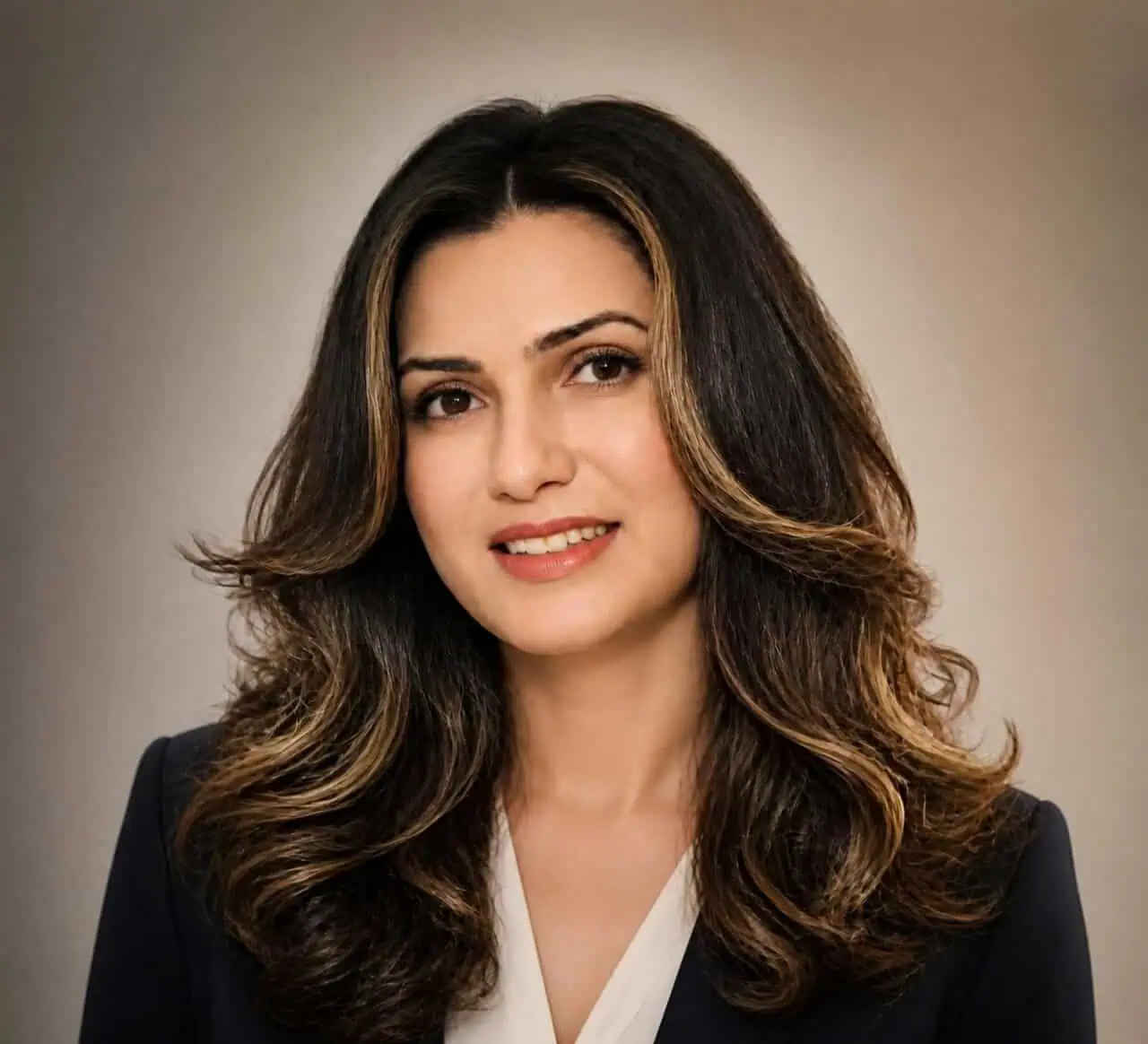
I am Dr. Tehmina Sheharyar, from Azad Kashmir, and I teach in the Department of Software Engineering at Mirpur University of Science and Technology (MUST). I trained as a software engineer, but over the years my work has moved steadily toward healthcare. Today I focus on using artificial intelligence to diagnose eye diseases from medical images.
My PhD was part of a funded project titled “OCT Image Analysis System for Grading and Diagnosis of Retinal Diseases and its Integration in i-Hospital,” supported by Ignite – National Technology Fund. My own work centred on automated glaucoma diagnosis using fundus and OCT images. It produced five journal papers and three conference papers. In 2017, I received the Best Student Researcher Award at Bahria University, an award open to every engineering department.
After completing my PhD, I continued in this field and supervised three MPhil students, each of whom published their research on retinal disease diagnosis in impact-factor journals. In 2023, I began applying for postdoctoral positions abroad and was selected by the Department of Ophthalmology at Stanford University. I joined as a Fulbright scholar and worked on AI-assisted ultra-widefield imaging for uveal melanoma.
My reason for staying in this field is simple. I have seen how much early diagnosis changes the outcome for eye patients. I believe AI can help doctors detect disease sooner, particularly in countries like Pakistan, where access to specialists is often limited.
Fulbright Scholarship Details
I was awarded the Fulbright Scholarship, funded by the U.S. Department of State and administered in Pakistan by the United States Educational Foundation in Pakistan (USEFP). The monthly stipend was approximately USD 5,000.
The award went well beyond the stipend. It covered my visa fees, return airfare for me and one dependent, and health insurance for both of us. Fulbright also funded two invited speaking visits during my time in the United States, at Lake Erie College in Ohio and Henry Ford College in Michigan, including travel and accommodation.
Being free of financial worry made a real difference. It allowed me to give my full attention to my research.
Were You Offered Any Other Scholarships?
| Scholarship | Funding | Awarding body | Outcome |
|---|---|---|---|
| Fulbright Scholarship | About USD 5,000 per month, plus dependent support, insurance, visa fees, airfare, and academic travel | U.S. Department of State, through USEFP | Accepted |
| Stanford University Postdoctoral Funding | USD 6,500 per month | Department of Ophthalmology, Stanford University | Offered; declined in favour of joining Stanford as a Fulbright scholar |
| HEC Postdoctoral Scholarship | USD 1,900 per month, plus airfare | Higher Education Commission, Pakistan | Shortlisted; withdrew after accepting Fulbright |
Educational Background
I completed an MS in Software Engineering with a GPA of 3.8, followed by a PhD in Software Engineering with a GPA of 4.0, both at Bahria University, Islamabad, Pakistan.
Software engineering gave me a strong technical foundation in programming, machine learning, data analysis, and system design. During my PhD, I began applying these skills to medical imaging, mainly fundus and OCT scans for glaucoma and other retinal diseases. That combination of engineering and clinical work is what eventually led me to ophthalmology research at Stanford.
How Did You Find Information About Fulbright Scholarship and Stanford University?
Most of my search happened through university websites and scholarship portals, and by following announcements from Fulbright, HEC, and universities abroad. Faculty contacts and research groups also pointed me toward opportunities. LinkedIn proved far more useful than I expected: it is where I found several postdoctoral openings and was able to reach researchers in my field directly.
How Did You Prepare to Apply to Stanford University?
Did You Take Any Standardized Tests? If So, How Did You Prepare for Them?
I did not need to take the SAT, ACT, TOEFL, IELTS, GRE, or GMAT. My applications were assessed on my academic record, publications, research experience, and interview performance.
How Did You Prepare to Apply for the Fulbright Scholarship?
My first priority was securing an offer from a host institution. I wrote to researchers in Stanford’s Department of Ophthalmology whose work was closely aligned with mine, and in time I received a postdoctoral offer.
With that offer in hand, I built my research proposal around the Stanford project. I explained how it followed from my earlier work and how it could benefit eye care in Pakistan. I asked senior academics who knew my research well to write my recommendation letters. For the interview, I practised explaining my work in plain language, since not every panel member came from my field.
How is Your Experience at Stanford University?
My time at Stanford was deeply rewarding. I was based at the Byers Eye Institute, where I worked alongside researchers from many countries and learned a great deal simply by being among them.
My research was carried out in the Sepah Lab under Dr. Yasir J. Sepah, Assistant Professor of Ophthalmology. There I had the opportunity to fully develop an AI project from start to finish. I was first author on the study “Automated, Point-of-Care, Triage of Choroidal Lesions on Ultra-Widefield Imaging: A Human-in-the-Loop Deep Learning Model for Detecting High-Risk Referrable Melanoma,” accepted for presentation at the Association for Research in Vision and Ophthalmology (ARVO) 2026 Annual Meeting.
On this project, I designed the annotation protocol for characterizing choroidal lesions and developed and trained the deep learning models for ultra-widefield retinal images. I also built a human-in-the-loop framework so clinicians can interpret and check the model’s decisions, carried out the validation and performance analysis, and helped develop a deployable AI application for research and demonstration.
What I valued most was Grand Rounds. Each week, clinicians and researchers discussed real patient cases and ongoing projects. As an engineer, this is where I truly began to understand how clinicians think and what they need from AI tools.
I also volunteered on Stanford’s whole-eye transplantation project, led by Dr. Jeffrey Goldberg’s lab and supported by what is, to my knowledge, one of the largest research grants of its kind in the United States. I assisted with dissections alongside Dr. Farzad Pakdel, MD, a leading researcher on the project who is now an ophthalmologist in Los Angeles. This hands-on work gave me a far clearer understanding of ocular anatomy, which has strengthened my research.
I was able to operate a range of ophthalmic imaging devices myself. Until then, I had only worked with the images. Seeing how they are captured, and why some turn out poor in quality, changed the way I approach my research.
Beyond the lab, I presented my work at conferences and attended Stanford AI events featuring speakers from Google and Meta.
How Do You Rate Stanford University Academically?
I rate Stanford very highly. Its facilities and imaging equipment are excellent, but what impressed me most was how naturally people from different disciplines work together. At Byers, clinicians, engineers, and AI researchers sit in the same meetings and solve problems side by side. For anyone working in medical AI or ophthalmology, I cannot think of a better place to learn.
How Does Stanford University Support International Students?
Stanford’s Bechtel International Center assists international students and scholars with visas, immigration paperwork, and settling in. My department was also very welcoming, and colleagues helped me find my footing in the first few weeks. All teaching and research at Stanford is conducted in English.
What Did You Pursue After the Fulbright Scholarship?
After my postdoc, I returned to Pakistan and resumed my faculty position at MUST. I now bring what I learned at Stanford into my teaching, my research, and my supervision of students working in medical imaging. At Stanford, I worked on a new protocol for melanoma diagnosis, and I have begun extending that study in Pakistan.
What Do You Think Made Your Application Stand Out?
Above all, I believe it was the clear clinical purpose of my research. My PhD work on glaucoma and retinal disease diagnosis was published in reputable journals, and AI in healthcare is a field that is drawing serious attention.
It also helped that I already held an offer from Stanford, with a proposal built around that specific project. My recommendation letters came from people who knew my work closely. I also had a record that extended beyond the PhD itself: supervising MPhil students, presenting internationally, and winning a research award. Together, these showed consistent work over several years.
What Would You Have Done Differently if You Were Going Through the Process Again?
I would start earlier. Gathering transcripts, recommendation letters, and research statements always takes longer than you expect. I would also contact more potential supervisors from the outset to give myself more options.
One practical tip: keep your CV, Google Scholar, and LinkedIn profiles up to date at all times, not only when you are applying. When a supervisor looks you up, your work should be easy to find.
What Advice Would You Give Those Looking to Apply for a Similar Scholarship?
Invest in your research profile before you apply. Good grades matter, but publications and conference experience matter just as much, especially for postdoctoral scholarships.
For Fulbright in particular, an offer letter from a U.S. institution strengthens your application considerably. Start writing to potential supervisors early, and do not be discouraged if many do not reply. Build genuine relationships with your teachers and mentors, because a letter from someone who truly knows your work carries far more weight than a generic one.
Finally, read the requirements carefully. Fulbright wants to know how your work will benefit Pakistan after you return, so make that part of your application clear and specific.
Want to submit your
scholarship journey?
Submit Your Story Here!
More Scholarship Recipients
My name is Van Nguyen, and I am from Vietnam. I hold a bachelor's degree in Data Science and am currently a master's student .... Read more
My name is Idam Okechukwu Samuel, a 29-year-old Nigerian man. I hold a B.Sc. in Computer Science from the Federal University .... Read more
My name is Ruth Mumpande, and I am from Victoria Falls, Zimbabwe. I am an environmental and development professional with a .... Read more
Leave A Comment