
How I Secured a Fully Funded Master's Through the Erasmus Mundus BIOPHAM Scholarship
University: KU Leuven
Degree: PhD
Previous Education: Bachelor’s Degree in Materials Engineering, University of the Philippines–Diliman; Master’s Degree in Bio&Pharmaceutical Materials Science, Erasmus Mundus BIOPHAM Program
Scholarship: Erasmus Mundus BIOPHAM Scholarship – Full Scholarship
Social Media
LinkedIn: linkedin.com/in/dtguzon/
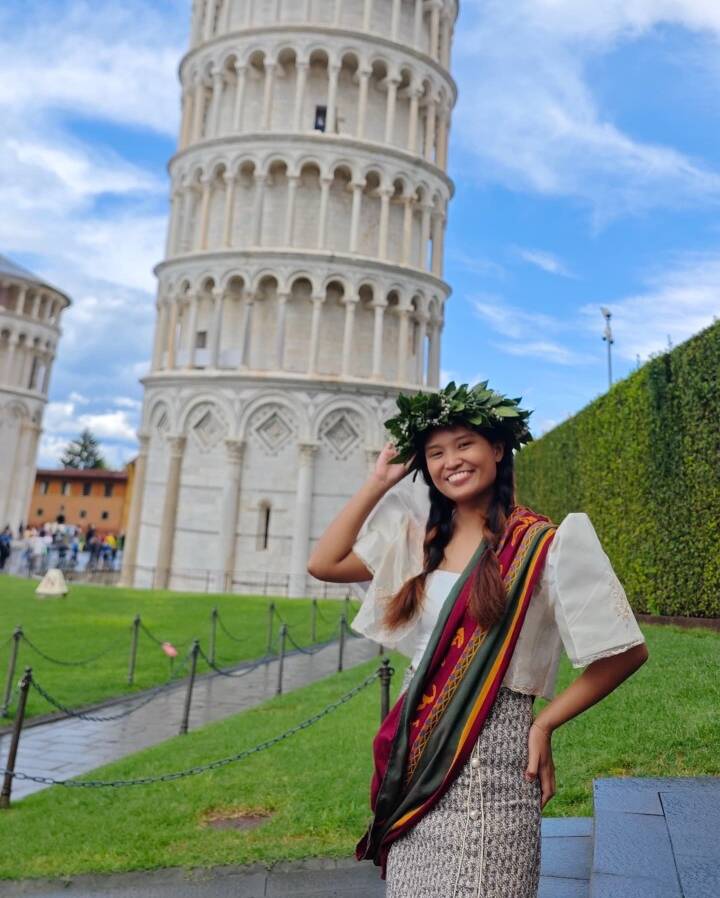
The Journey
My name is Dindi Guzon, and I’m from the Philippines. I have a background in Materials Engineering from the University of the Philippines–Diliman, but my academic journey eventually took me much further than I initially expected.
I pursued a Master’s degree in Bio&Pharmaceutical Materials Science through the Erasmus Mundus BIOPHAM Program. Through the program, I studied in four different countries, with each country focusing on a specific discipline:
- Italy: Materials Science and Nanotechnology
- Spain: Engineering Physics
- Poland: Biophysics
- Belgium (Internship): Tissue Engineering
Educational Background
I got my bachelor’s degree in Materials Engineering from the University of the Philippines - Diliman. Before applying for Erasmus Mundus, I had about a year of professional experience working on a Philippine government-funded project developing electronic stethoscopes as part of the COVID-19 response. I also had the opportunity to do a two-month internship at Hokkaido University in Japan, where I worked in the Micro-Biomechanics Lab on tortuous microfluidic channels and cell migration.
These experiences may not seem directly connected to what I eventually pursued during my Master’s, but they gave me a strong foundation for what came next. My previous research experience meant that I was already comfortable with experimental design and navigating the uncertainties that come with research. More importantly, I had already experienced working in a multicultural research environment, so I knew how to collaborate with people from different backgrounds and to adapt to different ways of thinking/working.
I also think I was prepared for the less glamorous parts of studying abroad. I was used to living alone, dealing with bureaucracy, adjusting to unfamiliar environments, and, yes, moving heavy suitcases around. When I eventually started moving from one country to another, I wasn’t completely starting from scratch.
How Did You Prepare to Apply for the Erasmus Mundus BIOPHAM Scholarship?
I knew I wasn’t the best student academically, so I tried to make up for that by gaining relevant experience. Even during my undergraduate years, I strategically planned ahead by hand-picking and applying for internships that aligned with my specific field of interest.
I also made sure to spend some time polishing my CV and motivation letters. I think it’s important to not only show what you have done, but also to communicate why you did those things and where you want them to take you.
I only applied for Erasmus Mundus scholarships. I applied to three different programs and, although I was accepted into all three, only BIOPHAM offered me a full scholarship. I was incredibly grateful for the opportunity, especially because Erasmus Mundus Joint Master’s programs are extremely competitive.
I think what made my application stand out was a combination of my experience and my overall attitude. I feel that the professors saw that I had a strong passion and a sense of direction when it came to my academic career. They took a chance on me, and I’m grateful they did.
Could You Briefly Discuss the Erasmus Mundus Program You Pursued and the Specific Field of Study It Focused On?
One of the things I appreciated most about the BIOPHAM program was that it allowed me to explore materials science from different perspectives.
During my time in the program, there were several tracks to choose from. You could go into either soft matter or condensed matter, and within those tracks, you could focus on experimental or computational work. I chose the experimental soft matter track because I was more interested in biomaterials and tissue engineering.
Through the program, I developed a strong foundation in biomaterials and, more broadly, in understanding how the structure of materials determines how they perform in different applications. Personally, the most interesting part was understanding how materials interact with biological systems and influence cell behavior, and how we, in turn, can take advantage of these concepts to advance medicine and potentially improve the quality of life of people who need it.
Although BIOPHAM covers a broad range of materials science, my own interests gradually became more focused on biomaterials and tissue engineering. That eventually led to my Master’s thesis, where I worked on bioprinting artificial skeletal muscle tissue using induced pluripotent stem cells in the Tissue Engineering Lab at KU Leuven, with the goal of addressing volumetric muscle loss and developing a platform for future human disease models.
What Did You Pursue After the Erasmus Mundus BIOPHAM Scholarship?
After my Master’s, I took some time to figure out whether I was ready to commit to a PhD. I didn’t want to pursue one simply because it seemed like the natural next step after a research-oriented Master’s. Instead, I wanted to give myself the space to explore what I actually wanted to do. I worked an online job in AI training while traveling and volunteering around the world, which gave me the opportunity to experience life outside of academia and research. After about two years, I realized that I genuinely wanted to pursue a PhD.
I eventually joined the same lab where I did my Master’s thesis, this time as a university-funded PhD scholar. Now, I’m working on the biofabrication of vascularized skeletal muscle using responsive multiphase bioinks.
How Did the Cost of Living Vary Across the Countries You Studied In? Which Country Was the Most Affordable or Expensive, and How Did You Manage Financially?
The cost of living varied quite a bit across Europe. It was cheaper to live in Italy and Poland, for example, compared to Spain, particularly Barcelona, and Belgium. I found Poland to be the most affordable, while Belgium was probably the hardest to get by in with the given budget.
I managed financially by having some personal savings and setting some money aside while I was in the cheaper countries. I also lived with people from my cohort, which helped us save some money on rent.
Moving between countries also taught me to be more conscious about budgeting. You really have to adapt because the same amount of money can feel very different depending on where you are.
Did You Face Any Language Barriers, and if so, How Did You Overcome Them? Did the Language of Instruction Change from One Country to Another?
Academically, language was never really a problem because the medium of instruction was English throughout the program. Day-to-day life, however, could sometimes be challenging.
I adapted by learning a few words and phrases that I could use every day, especially when buying food or dealing with basic situations. Otherwise, I used Google Translate. I learned a bit of Spanish because it was required in my program, which helped me when I was in Barcelona. My native language, Filipino, also has a lot of Spanish loanwords, which made some things easier for me. Living in different countries taught me that there are a lot of ways to communicate other than just verbally.
Would You Recommend the Erasmus Mundus Program to Others?
Definitely.
I was fortunate to learn from some amazing professors in my program. They were really eager to teach and guide students, not just academically but also professionally and personally.
I also think my program was quite unique because it was multidisciplinary and well-rounded, while focusing on an area that deserves more attention and training. I believe the knowledge and skills you gain in this program could be impactful across several industries, particularly the pharmaceutical and medical sectors.
Beyond the academic side, I think the biggest value of the Erasmus Mundus scholarship is the experience itself. You’re not just studying in another country. You’re learning how to adapt, how to work with people from completely different backgrounds, and how to become comfortable with being uncomfortable.
What Advice Would You Give Those Looking to Apply for a Similar Scholarship?
Be open.
There will be times when the program will be particularly tough. I mean the days when you’re down with a bad flu, thousands of kilometers away from home, alone and glued to your bed, with exams the same week.
There will be times when you need to fly to another country because of visa issues, or days when you have to haul your own body weight’s worth of luggage just to catch an early Ryanair flight. It is important to remember that you once wished for this, and that even the hard times are part of the experience.
The people in your program also become your family, and you have each other. Sometimes, it’s easy to forget that we’re not alone and to become closed off to everyone and everything when things get difficult. Throughout the journey, you’ll learn that people are inherently kind and that people genuinely care, and that helps lighten the load. You’ll also learn more about yourself as you live in different countries and interact with different people. I think that’s something beautiful and irreplaceable, and it’s one of the reasons I would definitely encourage anyone to step outside their comfort zone and live abroad.
Don’t forget to enjoy it and take it all in.
Not just the academic aspect of it, but actually live. Experience things. Eat gelato or drink Birra Moretti by the Arno with your colleagues. See new places whenever you can. Try not to get completely sucked into studying or research. For me, Erasmus Mundus was a whole experience and not just a degree, so try not to forget that as well.
What Would You Have Done Differently if You Were Going Through the Process Again?
I think I managed as well as I could have at the time, but from where I am now, I wish I had more fun. I wish I had stayed a little later during hangouts and relied on my colleagues more. I was lucky to be surrounded by such great people, and I wish I had savored that.
When you’re in the middle of the experience, it’s easy to get caught up in deadlines, research, moving, and simply trying to keep up with everything. Now, I realize that the people and the experiences were just as important as the degree itself.
That’s something I would want anyone considering Erasmus Mundus to remember: you are not just going abroad to get a degree. You are going abroad to experience a completely different way of living, to meet people who may become lifelong friends, and to learn more about yourself along the way.
So study hard, do the research, take the opportunities, but also go out, eat the gelato, catch the train, explore the city, stay out a little later with your friends, and enjoy the experience while you’re there.
Want to submit your
scholarship journey?
Submit Your Story Here!
More Scholarship Recipients
My name is Shah Hussain, and I am from Khyber Pakhtunkhwa, Pakistan. I completed my Bachelor’s in Psychology at the Univer .... Read more
I am June from the Philippines. I am an educator for Social Sciences and Humanities. I recently earned my Master in Southeas .... Read more
Hi, my name is Abdul Hafeez, and I come from a small town called Nasirabad in Sindh, Pakistan. Currently, I am pursuing a ma .... Read more
Leave A Comment