
How I Secured a Fully Funded Master's at University College London, United Kingdom Through the Chevening Scholarship
University: University College London
Degree: MSc in Environment and Sustainable Development
Previous Education: Bachelor’s degree in Architecture, Instituto Tecnológico de Costa Rica
Scholarship: Chevening Scholarship – Full Funding (Tuition, Living Expenses, Travel, Other Associated Costs)
Social Media
LinkedIn: linkedin.com/in/daniela-chaves-alvarado-272649226/
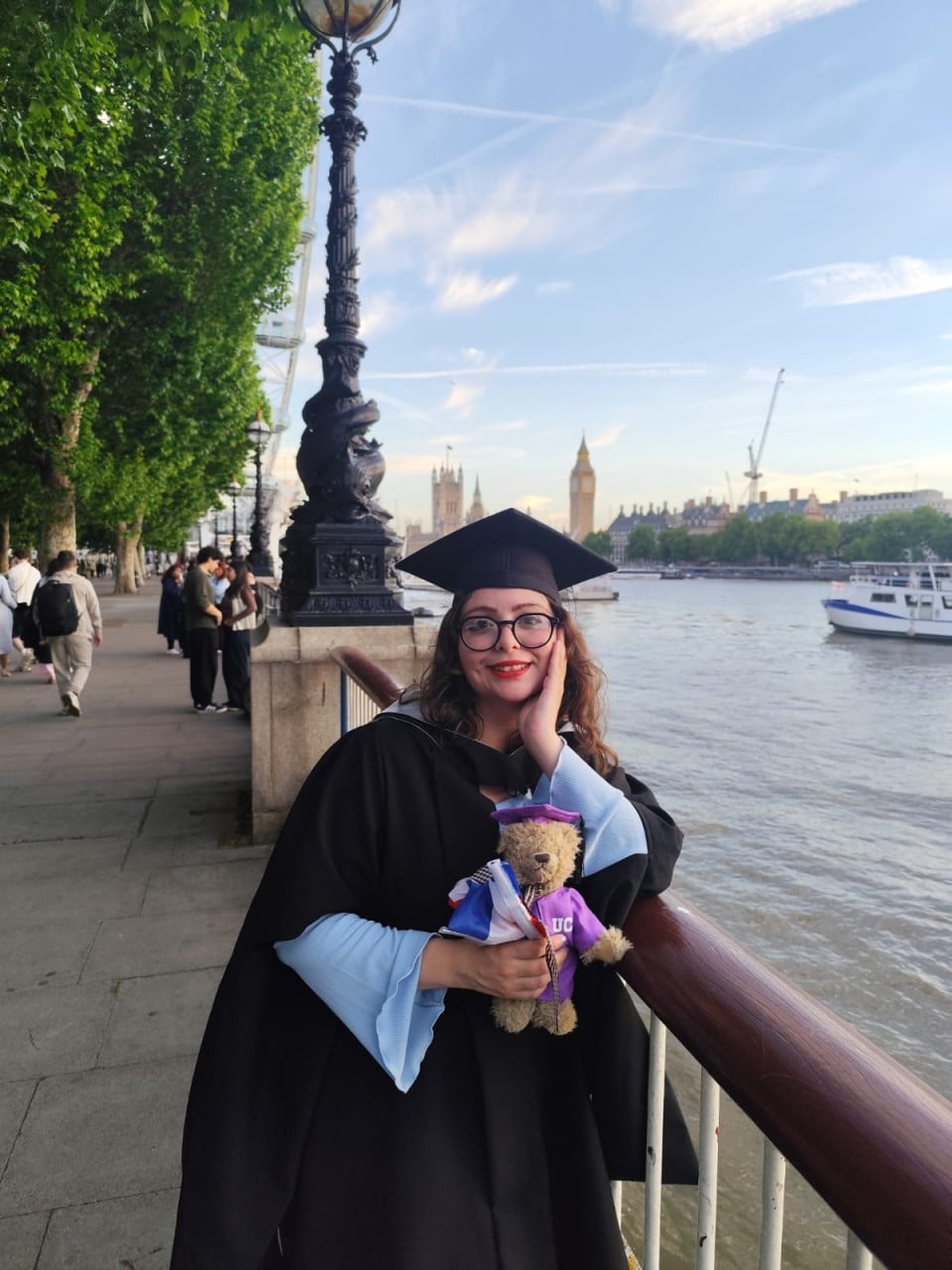
The Journey
My name is Daniela Chaves Alvarado, and I am an architect from Costa Rica, with a professional focus on climate action, sustainable development, private-sector sustainability, and territorial governance.
I completed my Bachelor's degree in Architecture at the Instituto Tecnológico de Costa Rica. During my professional experience, I increasingly realized that many of the challenges I encountered as an architect could not be addressed through design alone. Issues such as climate vulnerability, biodiversity loss, environmental degradation, and access to infrastructure are deeply connected to the way cities and infrastructure are financed, governed, and developed.
Over the following years, I developed professionally through very different but interconnected roles: as a multistakeholder coordinator for community projects, a construction site architect, an ESG assistant in a construction and facility management firm, and a youth climate negotiator representing Costa Rica at COP27 in Sharm El-Sheikh, Egypt.
Through the opportunities and trust I received in these roles, I gradually realized that my professional path was moving toward sustainability in the private sector and climate action at the community level. Each experience gave me a different perspective, but together they sparked a deeper interest in understanding how environmental challenges could be addressed across institutions, businesses, and communities.
At the same time, I felt that this growing interest needed a clearer direction and a stronger foundation. I wanted to understand how these different experiences connected and how I could turn them into a more coherent professional path. This was one of the main reasons I decided to pursue the MSc in Environment and Sustainable Development at UCL's Development Planning Unit (DPU). I was looking for the knowledge, tools, and critical perspective that could help me connect these experiences and give greater direction to the work I wanted to do. These perspectives now shape both my research and my professional work across climate adaptation, environmental justice, philanthropy, and private-sector sustainability.
Chevening Scholarship Details
I received the Chevening Scholarship to pursue my MSc in Environment and Sustainable Development at the Development Planning Unit (DPU), University College London (UCL), during the 2024–2025 academic year.
Chevening is a UK government scholarship that supports outstanding emerging leaders from around the world to pursue postgraduate education in the United Kingdom. The scholarship provided comprehensive financial support for my master's studies, including tuition, living expenses, travel, and other associated costs.
For me, however, the scholarship represented much more than financial assistance. It gave me the opportunity to study at one of the world's leading institutions in sustainable development while becoming part of a global network of professionals working on very different challenges in their countries.
Were You Offered Any Other Scholarships?
No. Chevening was the scholarship I ultimately chose to pursue.
Educational Background
I began my academic journey with a Bachelor's degree in Architecture from the Instituto Tecnológico de Costa. My architectural training gave me a strong foundation in the built environment, urban development, and design, while also making me increasingly interested in the environmental and social challenges shaping cities and infrastructure.
After graduating, I complemented my architectural background with specialized training in different areas of sustainable development. In 2023, I completed Climate Reality & Negotiation Training at Harvard Law School, which strengthened my understanding of international climate policy and negotiation processes. I also completed Operationalizing the Right to Development at the University for Peace, expanding my understanding of development, rights, and social justice.
Through training in Nature-Based Solutions with Nature-Based Infrastructure (NBI), I explored how nature-based approaches can be integrated into infrastructure and urban development to address environmental and climate challenges.
In 2024, I completed the Sustainable Transformation Program at INCAE Business School, where I explored sustainability from a private-sector perspective, including how organizations can integrate sustainability into their strategies and operations.
These experiences gradually showed me that I needed a broader and more interdisciplinary understanding of sustainable development. This led me to pursue the MSc in Environment and Sustainable Development at UCL's Development Planning Unit through the Chevening Scholarship (2024–2025), where I graduated with Distinction.
My dissertation was also awarded the Bartlett Commendation for Outstanding Research, recognizing the quality and contribution of my research.
How Did You Prepare to Apply for the Chevening Scholarship?
I had known about the Chevening Scholarship since my early university years, and studying in the UK had been a long-standing dream. Yet for years, I did not believe I was “good enough” to apply, despite my professional achievements. I also carried a difficult experience from COVID-19. I had previously received a scholarship to study abroad, but the pandemic disrupted the experience and left me uncertain about when I would be able to return home. For a while, that experience made taking another big opportunity feel frightening.
Eventually, I realized that a painful experience does not have to become the end of the story. We can be disappointed, recover, and still choose to continue pursuing the things we once dreamed about. Therefore, my first step in preparing was psychological: giving myself permission to try again, trusting in my personal and professional abilities, and believing that I was worthy of pursuing a dream I had carried for years.
When Chevening opened its application on September 12, my birthday, I took it as a small sign to finally try. I made a list of pros and cons and realized that, for me, the real failure would be not applying.
Once I decided to apply, I approached the process systematically. The number of requirements and decisions can feel overwhelming, so I learned to take it one step at a time. I created an Excel database of universities and programs, comparing admission requirements, curricula, costs, and other practical considerations. I contacted admissions offices and professors and applied to seven programs across five universities. UCL's MSc Environment and Sustainable Development at the DPU was my first choice, not simply because of UCL's reputation, but because I felt a strong connection with the program, its interdisciplinary approach, and the people I interacted with.
I also prepared financially. I created a savings account called “Chevening–UCL” and started setting aside money by reducing non-essential expenses. This later gave me greater flexibility when planning accommodation and travel in the UK.
The Chevening application itself forced me to reflect deeply on my professional journey. I reviewed my experiences and identified concrete examples of leadership, collaboration, problem-solving, and commitment to climate and sustainable development. I revised my essays several times and asked people I trusted for feedback.
I was particularly careful when choosing my referees. I wanted people who knew not only my professional achievements, but also my work ethic, strengths, weaknesses, and genuine commitment to my field, so they could describe me authentically. I learned that academic achievements matter, but the trust people place in you can open doors that achievements alone cannot.
Because I was working long hours in construction coordination at the time, I studied English in the evenings after work. Although I had studied English from a young age, I wanted to become more confident and understand the IELTS format. I prepared specifically for the test and worked to polish my academic English.
When I was invited to the Chevening interview, I decided to prepare differently. I used the “Best Bits” approach from Interview Boss, collecting the strongest experiences already reflected in my essays and turning them into stories I could communicate naturally. I also prepared questions for current and former Chevening scholars and rehearsed several times.
Eventually, however, I realized that I had prepared enough. I decided to stop trying to give the “perfect” interview and simply be myself. I remember thinking: either they see the value in who I am and what I can contribute, or this opportunity is not meant for me. That mindset helped me manage my anxiety and speak more authentically. Fortunately, they trusted my experience, potential, and capacity, and I was awarded the scholarship.
How is Your Experience at University College London?
My experience at UCL was honestly one of the most meaningful experiences of my life. I met some of my best friends there and created memories that I know I will carry with me for a long time. Academically, I became much more curious. I read extensively, discovered new ways of thinking, and was fortunate to learn from professors and classmates who challenged ideas I had previously taken for granted.
I also grew personally as a leader. I learned that leadership is not always about being the person who notices that a window has been left open and immediately closes it. Sometimes it is about helping others notice that the window is open and creating the space to decide together how, when, and for whom it should be closed.
That experience also made me more aware of my own limitations. I learned that I could listen more, organize myself better, and be more attentive to how my actions affect others.
I left UCL not only with stronger academic and professional skills, but also with greater emotional intelligence and a better understanding of the kind of leader I want to become.
How Do You Rate University College London Academically?
I would give UCL 4.7 out of 5 academically. I don't believe any institution is perfect, as we aren't perfect students either, and there were areas where I would have appreciated more practical application. However, academically, I found the experience extremely valuable. What I appreciated most was that the program challenged my existing assumptions.
Coming from architecture, I arrived with certain ways of understanding cities, sustainability, and development. ESD pushed me to question some of those assumptions and look at problems through social, political, environmental, and institutional lenses. For me, that intellectual challenge was one of the greatest strengths of the program.
How Does University College London Support International Students?
I felt very supported as an international student at UCL. One thing that particularly helped me was the academic writing support available to students. I never felt that being a non-native English speaker put me at a disadvantage academically. My professors and classmates were understanding, and I always felt comfortable asking questions or participating.
I also appreciated the university's wellbeing activities and the enormous variety of societies, groups, and events available. They made it much easier to meet people and build friendships outside the classroom.
Coming from Costa Rica, I was surrounded by people from very different cultural backgrounds. Although we sometimes approached things differently, I found that there was always an opportunity to connect, learn from one another, and build genuine friendships.
What Did You Pursue After the Chevening Scholarship?
After completing my master's, I continued building a career around projects where sustainability can translate into tangible benefits for people, communities, and ecosystems.
In research, I have continued working on climate adaptation, sustainable infrastructure, and the relationship between infrastructure and health and well-being. One of my current research interests is applying a One Health and socio-ecological systems perspective to infrastructure, looking beyond whether infrastructure simply “works” and asking how it affects human wellbeing, communities, animals, and ecological systems together.
I have also continued working on nature-based solutions, community resilience, and urban ecological corridors, particularly exploring how these approaches can contribute to both climate adaptation and conservation.
At the same time, I have developed my work in private-sector sustainability and ESG, including carbon mitigation and offsets, corporate philanthropy, and partnerships with nonprofit organizations. Although sceptic as first, the philanthropic side has been particularly meaningful because it allows me to see more directly how well-designed private resources can translate into changes in people's lives.
What Do You Think Made Your Application Stand Out?
I think the most important thing was genuineness. At some point during the application process, I decided that I was not going to try to create a perfect version of myself. I wanted to show who I actually was: passionate about my work, focused on impacts to human and non-human beneficiaries, but also vulnerable, curious, imperfect, and human.
In addition, I was very intentional about choosing my referees. Their trust in me was incredibly meaningful, and I believe that having people who could speak about my journey authentically strengthened my application.
I also think that my different experiences made my story unusual. I had worked in architecture and construction, community projects, ESG, climate negotiations, and research. Rather than trying to make those experiences look perfectly linear, I explained how each one had taught me something and gradually shaped the direction I wanted to take.
I don't think you need to fit a particular mold to be a strong candidate. Everyone has something unique to contribute. The goal is to understand what you genuinely care about and what perspective you can bring to create better outcomes.
What Would You Have Done Differently if You Were Going Through the Process Again?
I would definitely save more money! The UK is enormous and incredibly beautiful, and there were many places I wanted to explore that my budget simply did not allow. I would also start looking for housing earlier and be more strategic about my budget.
I would make a realistic list of the events, places, and experiences I wanted to have during the year rather than trying to decide everything as I went. I might also have looked for a part-time job or additional professional opportunities, if my academic commitments had allowed it.
But beyond the practical things, I would probably tell myself to make more friends and cherish people more. When you are studying, working, and trying to make the most of an intense year, it is easy to focus on what comes next instead of appreciating the people who are sharing the experience with you.
I am still incredibly grateful for the opportunity, the people I met, and the memories I made.
What Advice Would You Give Those Looking to Apply for a Similar Scholarship?
Prepare seriously, ask for feedback, learn from people who have gone through the process, and then remember to rest. You cannot control every part of the outcome. Sometimes an opportunity is yours, and the door opens beautifully. Sometimes it doesn't, and that can hurt. But that does not mean you have failed or that your dream was wrong. There will be other doors.
Most importantly, don't wait until you feel completely ready or completely confident.
I applied while carrying a lot of doubt about whether I was good enough. The application itself became part of learning to trust.
Prepare. Be honest about who you are. Choose your referees wisely and honour their trust. Take the chance, even when you are scared. And keep moving forward.
Want to submit your
scholarship journey?
Submit Your Story Here!
More Scholarship Recipients
My name is Shah Hussain, and I am from Khyber Pakhtunkhwa, Pakistan. I completed my Bachelor’s in Psychology at the Univer .... Read more
I am June from the Philippines. I am an educator for Social Sciences and Humanities. I recently earned my Master in Southeas .... Read more
Hi, my name is Abdul Hafeez, and I come from a small town called Nasirabad in Sindh, Pakistan. Currently, I am pursuing a ma .... Read more
Leave A Comment