
How I Secured a Fully Funded Master’s at the University of North Carolina at Greensboro, United States Through the Fulbright Foreign Student Program
University: University of North Carolina at Greensboro
Degree: Master of Arts in Peace and Conflict Studies (International Peace Development)
Previous Education: Bachelor of Arts in Political Science and International Affairs, Lebanese American University
Scholarship: Fulbright Foreign Student Program – Full Funding (Tuition, Health Insurance, Travel, Accommodation and Living Stipend)
Other Offered Scholarships: Schwarzman Scholarship at Tsinghua University – Full Funding (Tuition, Health Insurance, Language Learning, Travel, Living Stipend, Accommodation, Deep-Dive Trips)
Social Media
LinkedIn: linkedin.com/in/christelle-barakat
The Journey
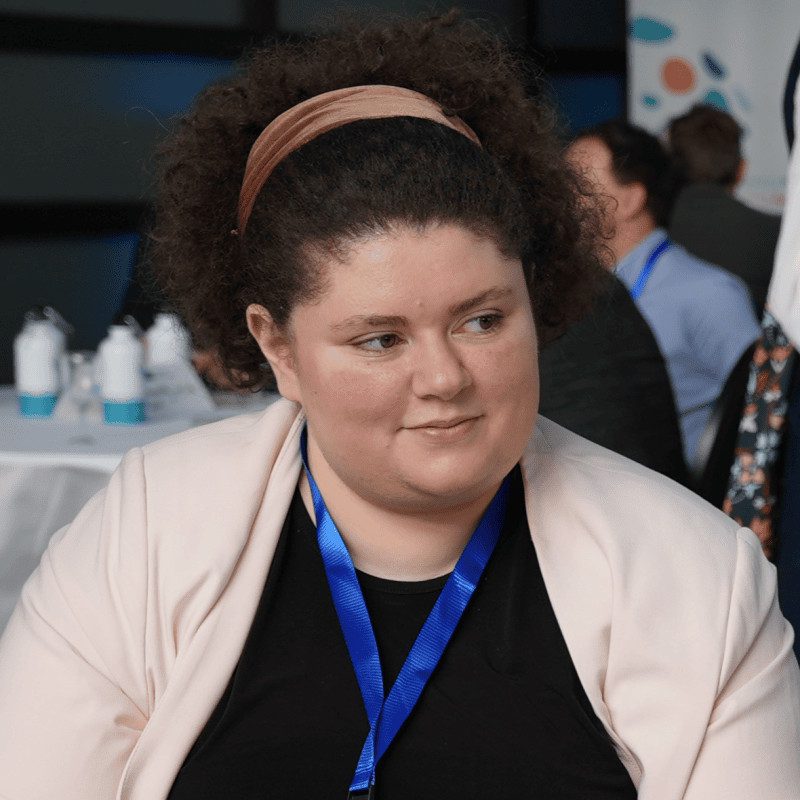
My name is Christelle Barakat. I am a young Lebanese female Researcher in Public Policy, with a particular focus on Peace and Conflict Studies. I completed my Bachelor of Arts at the Lebanese American University (LAU) in Political Science and International Affairs, with three minors in Conflict Analysis and Resolution, Gender Studies, and Legal Studies. I was also part of LAU’s Honors Program and graduated with high distinction, receiving the President’s Award for the School of Arts and Sciences on my campus, as well as the Undergraduate Research Award and the Recognition Award from my department.
It was at LAU that I was first introduced to the field of Conflict Analysis and Resolution, and I quickly realized that I had found my passion. I knew this was what I wanted to pursue for the rest of my life. While that remains true today, my interests have become more focused on nuclear disarmament, non-proliferation, and arms control.
When I applied for the Fulbright Foreign Student Program, I was motivated by a desire to contribute to lasting and sustainable peace in my country, Lebanon, where negative peace and persistent tensions continue to shape everyday life, with intermittent wars or conflict escalations occurring every few years.
Fulbright Foreign Student Program Details
The official name of my scholarship was the Fulbright Foreign Student Program. For selected Lebanese grantees, it offers the opportunity to pursue a master’s degree at a U.S. institution. Through this program, I completed a Master of Arts in Peace and Conflict Studies with a concentration in International Peace Development at the University of North Carolina at Greensboro (UNC Greensboro).
The funding was distributed across the two years of my master’s program. Fulbright covered my tuition fees, health insurance, travel to and from the United States, and provided a monthly stipend to cover accommodation and daily living expenses.
Were You Offered Any Other Scholarships?
Unrelated to my Fulbright scholarship, and five years later, I am currently an incoming Schwarzman Scholar at Tsinghua University in Beijing, China. The Schwarzman Scholarship is also fully funded and covers tuition fees, health insurance, language learning, travel to and from Beijing, as well as a stipend for daily living expenses and short trips known as “deep dives” within China. All selected scholars live together in Schwarzman College on Tsinghua University’s campus.
Educational Background
As previously mentioned, I completed my Bachelor of Arts at the Lebanese American University (LAU) in Political Science and International Affairs, with three minors in Conflict Analysis and Resolution, Gender Studies, and Legal Studies. I was also part of LAU’s Honors Program and graduated with high distinction. My final undergraduate GPA was 3.93/4.0, and I graduated from my Fulbright-funded Master of Arts program with a 4.0/4.0 GPA.
I believe that my educational background provided me with a strong foundation in Conflict Analysis and Resolution, which reinforced my decision to pursue it as a master’s degree. Moreover, my three minors allowed me to approach my studies through intersectional and interdisciplinary lenses, deepening my understanding of a wide range of social science topics. In turn, this strengthened my empathy and equipped me with context-specific, context-adaptive, and context-sensitive analytical and critical thinking skills.
How Did You Prepare to Apply to the University of North Carolina at Greensboro?
Did You Take Any Standardized Tests? If So, How Did You Prepare for Them?
The Fulbright Foreign Student Program in Lebanon, as well as in several Middle East and North African (MENA) countries, is administered by Amideast. Once applicants are shortlisted following the application and interview stages, they begin working with Amideast to select four universities and apply to them based on diverse criteria, including available programs in their desired field, rural versus urban settings, and public versus private institutions. This process was very helpful in introducing me to different universities and helping me find information about them.
I also used Peterson’s Grad School Search Tool to identify institutions that offered graduate degrees in my field, Peace and Conflict Studies. From there, I visited each university’s website individually to get a better sense of its courses, degree requirements, department, other university offices, and campus culture as a whole. I was particularly looking for a university that was community-oriented, emphasized volunteering and leadership, and offered opportunities to study peace and conflict at multiple levels and through diverse subfields.
How Did You Prepare to Apply for the Fulbright Foreign Student Program?
I think the most important thing I did was carefully read the scholarship descriptions and examine my own CV and experiences to understand how they aligned with each other. This included identifying what I had already done that matched what the scholarships were looking for, as well as understanding how the opportunities they offered could help me reach my future goals.
If you have the opportunity to speak with alumni or current scholars, this can also be very helpful in answering your questions and gaining insight into what the scholarship experience looks like once you become part of the community.
Most importantly, do not discourage yourself from applying or let self-doubt prevent you from trying. Your role is to submit the strongest application you can, and the selection committee’s role is to make the final decision based on that application. These scholarships are highly competitive, and being waitlisted or rejected the first time does not reflect your abilities or potential. If you reapply, it can be helpful to highlight areas of growth and development between each application cycle. Ultimately, the more well-rounded your profile is, the stronger your application will be.
How is Your Experience at the University of North Carolina at Greensboro?
Even though my experience took place at the peak of the COVID-19 pandemic, it was everything I had hoped for and more. I found my community there, built lifelong friendships, and had the opportunity to be involved both on and off campus. I was able to create campus-wide programming, and the challenges posed by COVID pushed me to become more creative and adaptable in finding ways to carry out these initiatives.
My leadership skills grew significantly throughout this experience, and the faculty played an incredible role in strengthening my knowledge of Peace and Conflict Studies through the diverse range of courses they offered.
How Do You Rate the University of North Carolina at Greensboro Academically?
From my perspective, the Peace and Conflict Studies program at UNC Greensboro is one of the strongest programs in the field. This is because it allowed me to develop a multilevel understanding of Peace and Conflict Studies. We examined conflicts at various levels, including intrapersonal, interpersonal, intracommunal, intercommunal, national, and global levels.
The program also provided opportunities to explore diverse topics such as restorative justice, religion and conflict, and many others. Since the field is inherently intersectional and interdisciplinary, the faculty’s diverse academic and professional backgrounds, with expertise from different disciplines, further enriched my learning experience and broadened my understanding of the field.
How Does the University of North Carolina at Greensboro Support International Students?
During my master’s program, I was also a Graduate Assistant for Programming and a Global Leadership Program Coordinator at UNC Greensboro’s International Programs Center (IPC), which is the office responsible for directly supporting and communicating with international students. Through this role, I gained firsthand insight into the many ways the university supported its international student community.
In addition to offering dedicated time slots where students could meet with administrators and receive assistance with their questions, IPC organized several initiatives that allowed international students to share their cultures and connect with others. These included weekly International Coffee Hour events, where a student would highlight their country’s culture and facilitate conversations around it. IPC also hosted International Education Week, which featured a variety of student-led, faculty-led, and staff-led events designed to encourage cultural exchange and creativity. Activities included cultural cooking demonstrations, study abroad presentations, discussions on different topics, and sessions focused on specific customs or historical experiences.
At IPC, I further had the opportunity to co-create a program that matched international students with university faculty and staff members for cultural exchanges through both online and in-person meetings and activities that participants organized themselves. Additionally, cultural days that were significant to students were celebrated, especially when international students brought forward ideas they wanted to share with the broader campus community.
Beyond cultural programming, the university provided practical support for students’ well-being. For example, it maintained a food pantry to help ensure that no student faced food insecurity. Many international students also worked as graduate assistants or participated in approved on-campus employment opportunities. The Graduate Student Association provided support for conference participation fees, while Student Government offered funding opportunities for university clubs and organizations.
What Did You Pursue After the Fulbright Foreign Student Program?
After graduating, I returned to my home country, Lebanon, and began working as a Junior Researcher (later promoted to Researcher) at the independent, non-partisan, and non-governmental public policy think tank where I continue to work today, the Lebanese Center for Policy Studies.
I completed my two-year home residency requirement associated with Fulbright, which is based on the principle of giving back to our communities by sharing our knowledge and experiences through our work and other initiatives. Alongside my professional work, I continued volunteering, participating in online programs, and traveling for conferences, training programs, and short-term opportunities, primarily in the areas of youth programming, youth empowerment, disarmament, non-proliferation, and arms control.
Currently, I am an incoming Schwarzman Scholar, and I am preparing to begin my studies at Tsinghua University in Beijing in less than a month.
What Do You Think Made Your Application Stand Out?
I believe my applications stood out because they were well-rounded and highlighted different pillars of my profile, including leadership, community involvement, knowledge, and academic achievement. More importantly, they told a cohesive story about who I was and am, who I aspire to become, and how Fulbright, and later Schwarzman, would help me move toward that vision.
I am a strong advocate for cultural exchange, and I was previously part of another U.S. Department of State program called the Study of the U.S. Institutes for Student Leaders on Religious Pluralism and Democracy. That experience provided me with valuable insight into U.S. culture, dialogue, and diversity. I believe it helped me better articulate what I hoped to gain from the Fulbright experience, what I wanted to learn from the U.S. context, and what I hoped to share about Lebanese culture with others.
For Schwarzman, I believe what stood out was my desire to become part of a global network of current and future leaders who support one another while developing a deeper understanding of China’s growing role in global affairs.
What Would You Have Done Differently if You Were Going Through the Process Again?
For Fulbright, I would not do anything differently during the application process. However, while I was there, I wish I had kept a detailed journal of my memories and experiences. Time passes so quickly, and some memories have now become a blur. I can still remember them, but unfortunately, some of the smaller details have faded over time.
For Schwarzman, I wish I had presented myself more confidently during the interview process. It took me a few application cycles before I was awarded the scholarship. I was always authentic, but I was concerned that my passion area, nuclear disarmament, non-proliferation, and arms control, might be perceived as too controversial, so I initially toned it down. Looking back, I believe that if I had embraced and communicated that passion more openly from the beginning, I may have been awarded the scholarship during my first or second application attempt.
As I begin my Schwarzman experience, I hope to keep a blog or journal documenting my learning, reflections, and adventures in China. In many ways, this will help me address what I missed during my Fulbright experience. Additionally, since the Schwarzman program lasts only 10 months, I am especially aware of how quickly these opportunities pass. My two-year Fulbright experience went by incredibly fast, and I want to be more intentional about capturing and appreciating every moment of this next chapter.
What Advice Would You Give Those Looking to Apply for a Similar Scholarship?
Just apply. Do not let self-doubt prevent you from trying. Do your best, and allow the selection committee to make the final determination. Do not lose hope, because the outcome is not necessarily a reflection of your abilities or potential. If you truly want the scholarship and do not receive it the first time, consider applying again.
Read the announcement carefully, conduct your research, and reflect on how your experiences align with the profile the scholarship is seeking. Think about how this opportunity would contribute to your personal and professional growth, as well as the academic and cultural contributions you can make during the program and after returning home. Also consider what you hope to learn from the people you will meet and the culture you will experience.
If possible, reach out to alumni and ask them questions or request a short online meeting with them. Generally speaking, people are often willing to support and guide others, regardless of their level of achievement. My personal philosophy is: if you do not ask, you will not know. There is no harm in reaching out; the worst possible outcomes are simply receiving a no or no reply at all.
Each scholarship represents a unique and potentially life-changing opportunity. Be open-minded, authentic, and eager to learn, and allow these qualities to shine through in your personal essay and statement of interest. Remember that every component of your application contributes to the overall story of who you are, allowing you to introduce yourself to the selection committee with greater depth and authenticity.
Want to submit your
scholarship journey?
Submit Your Story Here!
More Scholarship Recipients
My name is Shah Hussain, and I am from Khyber Pakhtunkhwa, Pakistan. I completed my Bachelor’s in Psychology at the Univer .... Read more
I am June from the Philippines. I am an educator for Social Sciences and Humanities. I recently earned my Master in Southeas .... Read more
Hi, my name is Abdul Hafeez, and I come from a small town called Nasirabad in Sindh, Pakistan. Currently, I am pursuing a ma .... Read more
Leave A Comment