
How Nisarg Hirens Purabiarao Secured MEXT Funding for a Master’s and Ph.D. at Kyutech
University: Kyushu Institute of Technology (Japan)
Degree: Master of Engineering (2023–2025) and Ph.D. (2025–2028) in the Graduate School of Life Science and Systems Engineering, with research in flexible and biodegradable electronics.
Previous Education: B.Tech. in Electrical Engineering at the Institute of Infrastructure Technology Research and Management, 2017–2021, 7.56/10. M.S. (Research) in Electrical Engineering at the Indian Institute of Technology Indore, 2021–2023, 9.21/10.
Scholarship: MEXT (Monbukagakusho) Scholarship for the master’s and doctorate at Kyutech. The reported package includes tuition-related expenses and a monthly stipend of ¥145,000.
Social Media
LinkedIn: linkedin.com/in/nisarg-hirens-purabiarao-1084581b7/
The Journey
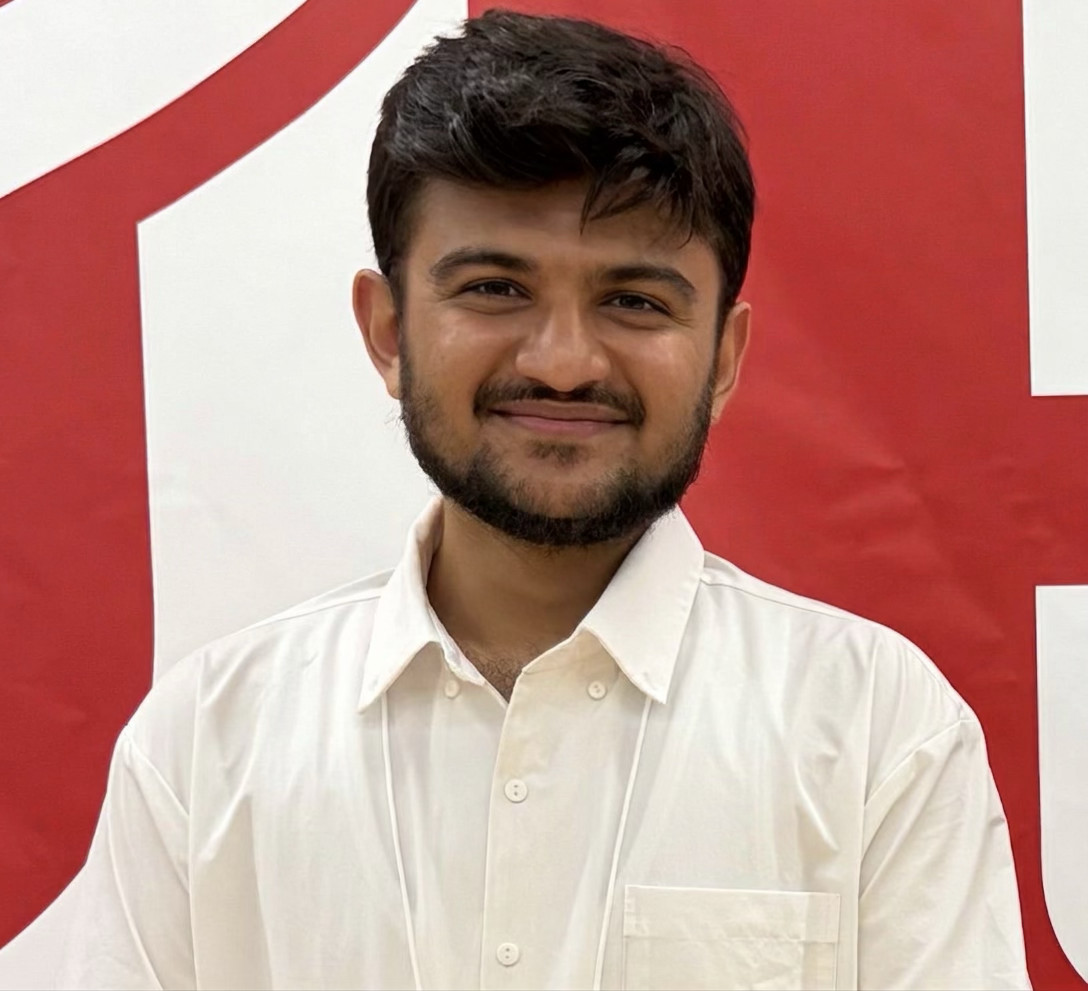
My name is Nisarg Hirens Purabiarao, and I am from Ahmedabad, Gujarat, India. I am currently pursuing my PhD in the Graduate School of Life Science and Systems Engineering at Kyushu Institute of Technology (Kyutech), Japan, as a MEXT Scholar.
My academic background is rooted in Electrical Engineering, while my research interests have progressively evolved toward Flexible, Organic, and Biodegradable Electronics. Throughout my academic journey, I have developed a particular interest in the design and development of flexible, lightweight, and environmentally sustainable electronic and energy-harvesting devices, with potential applications in wearable and next-generation technologies.
I completed my Bachelor of Technology (B.Tech.) (2017-2021) in the Department of Electrical Engineering at the Institute of Infrastructure Technology Research and Management (IITRAM), Ahmedabad, India. I subsequently pursued an M.S. (Research) (2021-2023) in the Department of Electrical Engineering at the Indian Institute of Technology Indore (IIT Indore). I qualified the Graduate Aptitude Test in Engineering (GATE-2021) in both Electrical Engineering and Instrumentation Engineering, which enabled me to gain admission to the M.S. (Research) program. On qualifying GATE-2021, my postgraduate education at IIT Indore was financially supported by the Ministry of Human Resource Development (MHRD), Government of India.
Following my master's research, I joined Kyutech as a MEXT Scholarship recipient, where I pursued a Master of Engineering (M.E.) (2023-2025) with a research focus on Flexible and Biodegradable Organic Electronic devices. Upon completing my master's degree, I continued at Kyutech as a MEXT scholar to pursue my doctoral research (2025-2028) in the same broad research domain.
My decision to pursue higher education and research has been driven by a strong interest in addressing real-world technological challenges through scientific innovation. I was particularly motivated to move beyond the conventional electronic technologies and explore emerging areas such as Flexible and Biodegradable Electronics, Wearable sensors, and Energy-harvesting devices. I believe these technologies have considerable potential to contribute to the development of electronics that are not only functionally advanced but also more adaptable and environmentally responsible.
MEXT Scholarship Details
I was awarded the MEXT (Monbukagakusho) Scholarship, a prestigious scholarship administered by the Ministry of Education, Culture, Sports, Science and Technology (MEXT), Japan, to pursue my studies and research at Kyutech.
The scholarship provides comprehensive financial support for my academic journey in Japan, including tuition-related expenses and a monthly stipend of ¥145,000.
Receiving the MEXT Scholarship has been a significant milestone in my academic career. It has enabled me to pursue advanced technical education and research in Japan without the substantial financial burden that is often associated with studying abroad. More importantly, it has provided me with the opportunity to work in an international research environment and further develop my expertise in the next-generation electronics.
Educational Background
I completed my B.Tech. in Electrical Engineering at the Institute of Infrastructure Technology Research and Management (IITRAM), India, graduating with a 7.56/10 CGPA.
During my undergraduate studies, I developed a strong foundation in mathematics, electrical engineering, electronics, semiconductor device physics, power electronics, control systems, signals and systems, and related areas. My bachelor's thesis focused on the Computational Investigation of Factors Affecting the Efficiency of Organic Solar Cells Using SCAPS-1D. This project introduced me to semiconductor device simulation and developed my initial interest in optoelectronic and energy-harvesting devices.
I then pursued an M.S. (Research) in Electrical Engineering at the Indian Institute of Technology, Indore, where I graduated with a 9.21/10 CGPA. My master's research provided me with extensive experience with experimental device fabrication, characterization, thin-film processing, and flexible electronic devices. My research included work on ZnO-based flexible and biocompatible piezoelectric nanogenerators, laser micromachining of flexible substrates, and thin-film deposition. This experience strengthened my practical skills and deepened my interest in developing flexible and functional electronic devices.
I subsequently joined Kyutech, where my research became more focused on Flexible and Biodegradable Organic Electronics. My work involved organic semiconductor devices, flexible electronics, thin-film fabrication, surface modification, and device characterization. Through this research, I further developed my understanding of emerging bio-derived materials, device fabrication, and the integration of evolving electronic technologies.
Overall, my academic journey has progressed from fundamental electrical engineering and semiconductor physics concepts to computational device simulation, experimental device fabrication, and ultimately flexible and biodegradable electronics. This progression has provided me with a strong foundation for my current doctoral research and has helped me develop a clear and continuous research direction.
How Did You Prepare to Apply to Kyushu Institute of Technology?
I approached the application process by first identifying universities, research institutions, and research groups whose research interests closely matched my academic background and future goals.
My previous research experience was especially helpful in this process because it allowed me to identify the areas in which I could contribute based on my existing skills, while also recognizing the areas where I wanted to gain further knowledge and expertise.
After identifying suitable institutions and research groups, I carefully prepared my academic documents, research proposal, CV, transcripts, and other application documents. I ensured that my academic background, research experience, proposed research direction, and long-term goals were presented consistently throughout the application.
This approach helped me focus not simply on gaining admission to an institution, but on finding a research environment where my existing experience could be developed further and contribute to my long-term research goals.
How Did You Find Information About the MEXT Scholarship and Kyushu Institute of Technology?
Rather than focusing only on university rankings, I paid particular attention to the research activities of individual laboratories and professors. I reviewed their recent publications, research topics, available experimental facilities, and ongoing projects to understand whether their research environment was compatible with my interests and previous experience.
I primarily used university websites, laboratory webpages, academic publications, and official scholarship information to explore available opportunities and understand the requirements for different programs.
Did You Take Any Standardized Tests? If So, How Did You Prepare for Them?
For admission, I took the EF SET English test for the M.E. and the Duolingo English Test for the Ph.D. I prepared for both independently.
How Did You Prepare to Apply for the MEXT Scholarship?
For research-oriented applications, I found it particularly useful to look directly at professors' research interests, recent publications, and ongoing research activities. This helped me identify potential supervisors and assess whether their research areas were compatible with my academic background and future research interests.
I also made use of academic and professional networks to learn more about research opportunities, application procedures, and the experiences of other students who had pursued similar academic paths. These sources helped me develop a clearer understanding of the opportunities available and prepare more effectively for the application process.
How Was Your Experience at Kyushu Institute of Technology?
My experience at Kyutech has been highly research-oriented and collaborative. Working in a laboratory environment has given me the opportunity to gain practical experience in experimental device fabrication, characterization, and materials processing. My research has involved areas such as organic electronics, flexible devices, biodegradable electronics, thin-film processing, and semiconductor device characterization.
The laboratory environment has also allowed me to work closely with researchers and students with different academic backgrounds. This has helped me develop not only my technical knowledge but also my ability to approach research problems from different perspectives and work collaboratively.
I have also had opportunities to present my research at international conferences and symposiums. These experiences have helped me improve my scientific communication and presentation skills while allowing me to interact with researchers from different backgrounds and learn about developments in related research fields.
Overall, my experience at Kyutech has been an important part of my development as a researcher, providing me with opportunities to strengthen my experimental skills, research knowledge, scientific communication, and ability to work in an international research environment.
How Do You Rate Kyushu Institute of Technology Academically and Why?
I consider Kyutech to provide a strong academic and research environment, particularly in the fields of engineering and technology. One aspect I particularly value is the opportunity to work closely within a research laboratory and gain hands-on experience with experimental techniques, device fabrication, and characterization.
For a research-oriented student, access to appropriate laboratory facilities, interaction with researchers, and opportunities to work on specialized research topics are important aspects of academic development. My experience at Kyutech has allowed me to benefit from these opportunities and gradually strengthen both my technical knowledge and practical research skills.
The laboratory-based research environment has also encouraged me to become more independent in planning experiments, analyzing results, discussing research problems, and communicating my findings. Overall, my academic experience at Kyutech has contributed significantly to my development as a scientist/researcher.
How Does Kyushu Institute of Technology Support International Students?
As an international student, I have found the university environment helpful in adapting to academic and research life in Japan. The multidisciplinary nature of the research environment has also provided opportunities to interact with researchers and students from different countries and academic backgrounds.
The university and laboratory environment have helped me become more comfortable with the academic culture and research practices in Japan. At the same time, interacting with other international and Japanese students has given me opportunities to learn from different perspectives and experiences.
For students coming from overseas, I would recommend making full use of the international student support, laboratory environment, and opportunities to interact with other students and researchers. Engaging with the wider university community, rather than limiting one's experience to a single research group, can make the transition to studying abroad more comfortable and rewarding.
What Is the Language of Instruction?
My research environment is international, and my academic and research work has primarily been conducted in both English and Japanese. Living and studying in Japan has encouraged me to improve my Japanese. I believe that learning the local language is valuable even when the academic environment does not require advanced Japanese proficiency.
What Did You Pursue After the Scholarship?
I am currently in the second year of my three-year PhD program at Kyutech as a MEXT doctoral scholar. The MEXT Scholarship has enabled me to continue my academic and research journey in Japan and further develop as an independent researcher.
After completing my M.E. research at Kyutech, I continued into doctoral research focusing on Flexible and Biodegradable Electronics. My current research builds upon my previous experience in organic electronics, device fabrication, thin-film processing, and device characterization.
My broader research interests include Flexible Electronics, Biodegradable Electronic devices, Wearable devices, Sensors, and Energy-harvesting technologies. Through my doctoral research, I am particularly interested in developing electronic technologies that combine functionality with flexibility and environmental sustainability.
In the long term, I aim to contribute to research and development in emerging electronic technologies, particularly technologies that can address practical needs while also considering environmental sustainability.
Would Students Face Academic Challenges Without Japanese?
From my experience, not knowing Japanese does not necessarily prevent international students from pursuing higher education or research in Japan, particularly when the academic program and research laboratory operate primarily in English.
However, I would still strongly recommend learning Japanese. Even a basic understanding of the language can make everyday life easier, improve communication outside the university, and help international students feel more comfortable in their new environment.
Learning Japanese can also provide a valuable opportunity to understand and engage more deeply with Japanese society and culture. Although advanced Japanese proficiency may not always be necessary for academic research, having some knowledge of the local language can make the overall experience of living and studying in Japan more enjoyable.
Therefore, I would encourage prospective students not to be discouraged from applying simply because they do not speak Japanese before coming to Japan. At the same time, being willing to learn the language after arriving can greatly enrich the experience of studying and living in Japan.
What Do You Think Made Your Application Stand Out?
I believe that the consistency between my academic background, research experience, proposed research interests, and long-term goals was an important strength of my application.
My academic and research journey had gradually progressed from electrical engineering to semiconductor devices, energy-harvesting technologies, organic electronics, and flexible electronics. This progression gave me a clear and continuous research trajectory rather than an area of interest that emerged only at the time of application.
I also had substantial hands-on experience in device fabrication and characterization. My previous projects included organic solar cells, ZnO-based piezoelectric nanogenerators, flexible electronics, laser-based micromachining, organic thin films, and organic electronic devices. These experiences helped me develop practical skills while also giving me a broader understanding of electronic and energy-related devices.
In addition, my experience with both experimental research and computational simulation allowed me to approach device-related research from different perspectives. This combination helped me connect theoretical understanding with practical device development.
Most importantly, I tried to clearly communicate why I wanted to pursue further research, what research problems I wanted to address, why the proposed research was relevant to my background, and how the opportunity would contribute to my long-term goals.
Overall, I believe that having a clear research direction, supported by relevant academic preparation and practical research experience, helped make my application coherent and meaningful.
What Would You Have Done Differently?
If I were going through the application process again, I would start preparing even earlier and give myself more time to understand each stage of the process.
I would spend more time researching the research interests and recent work of potential supervisors before contacting them. I would also make my research proposal even more closely aligned with their current research activities while maintaining a clear connection to my own academic background and research interests.
I would also begin preparing the administrative documents and application materials well in advance. Scholarship applications often involve multiple documents, requirements, and deadlines, so maintaining a clear timeline would help reduce unnecessary stress and allow more time to review and improve the application.
Another area I would focus on earlier is communication skills, particularly academic writing and research presentation. These skills become increasingly important when working in an international research environment, not only during the application process but also throughout one's academic and research career.
Overall, I would focus on starting earlier, researching potential supervisors more thoroughly, preparing documents systematically, and strengthening my communication skills. These steps would make the application process more organized and allow me to present my academic and research profile more effectively.
What Advice Would You Give Those Looking to Apply for a Similar Scholarship?
- My biggest advice is not to apply simply because a scholarship is available. Apply when the research opportunity genuinely aligns with your academic interests and long-term goals.
- Start early and thoroughly research the universities, laboratories, and potential supervisors. Read their recent research papers and try to understand their current research activities, rather than relying only on general information about the university.
- Build a strong academic and research profile, but remember that a strong application is not based on grades alone. Research experience, technical skills, publications, projects, presentations, and a clear research direction can all contribute to a well-rounded application.
When preparing a research proposal, avoid making it unnecessarily complicated. Focus on clearly explaining:
- What problem you want to address
- Why the problem is important
- What you want to investigate
- How you plan to investigate it
- Why the particular university or laboratory is suitable for your research
- What you hope to achieve in the long term
It is also important to make sure that your proposal is realistic and connected to both your previous experience and the research environment you are applying to.
Finally, do not become discouraged by setbacks. Research and scholarship applications involve uncertainty, and not being selected for one opportunity does not mean that you are incapable of succeeding elsewhere.
Be persistent, continue improving your academic and research profile, and keep looking for opportunities that genuinely match your interests and goals.
Want to submit your
scholarship journey?
Submit Your Story Here!
More Scholarship Recipients
My name is Boubou Tine, and I am from Senegal. I am an English teacher in the Senegalese public education system, where I ha .... Read more

My name is Le Lan Phuong, and I grew up in the northern midlands and mountainous region of Vietnam. I graduated from the Nat .... Read more
My name is Bruna Moreira. I am from Portugal and am currently pursuing a master’s in arts management at Hongik University, .... Read more
- China
- China Three Gorges Scholarship
- Fully Funded Scholarships
- Global Korea Scholarship
- Hongik University
- Management
- Master's Scholarships
- Non-Degree Scholarships
- Partially Funded Scholarships
- Political Science
- Portuguese Nationality
- South Korea
- Tsinghua University
- United States
- University of Tennessee at Chattanooga
Leave A Comment