
How I Secured a Fully Funded Master's at George Washington University Law School, United States Through the Fulbright Scholarship
University: George Washington University Law School
Degree: LL.M. in Environmental Law
Previous Education: Law degree, Universidad Nacional del Nordeste (UNNE)
Scholarship: Fulbright–Consejo Federal de Inversiones (CFI) Scholarship – Financial Support for LL.M. Study
Other Offered Scholarships (if any): George Washington University Law School Merit Scholarship – Combined with Fulbright funding to cover full graduate tuition and living expenses; Pace University Elisabeth Haub School of Law Scholarship – 70% of graduate tuition; Penn State Dickinson Law Scholarship – Tuition Support; UCLA School of Law Dean’s Tuition Fellowship – Tuition Remission; University of Colorado Law School Scholarship – Tuition and Fees Support
Social Media
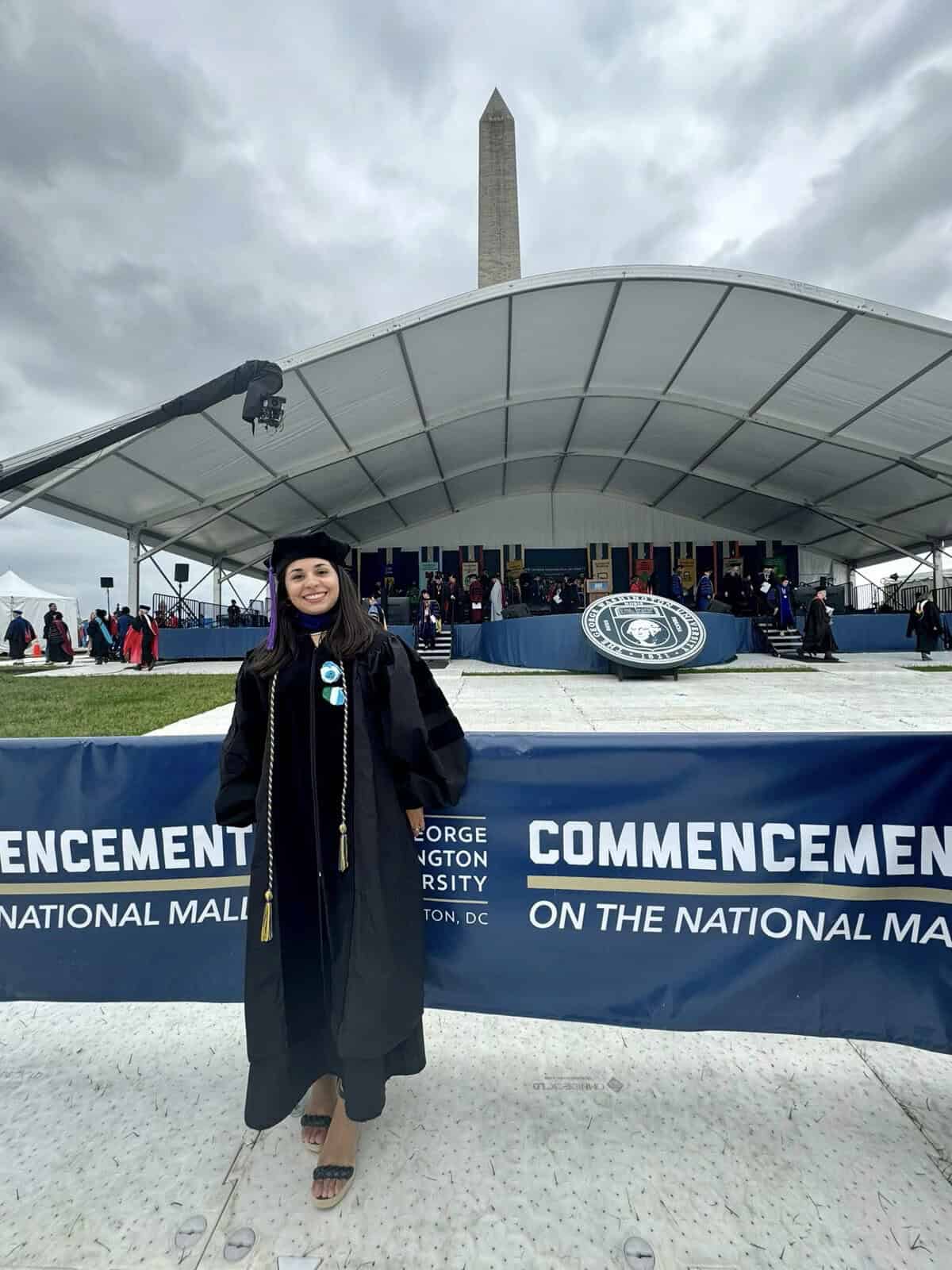
The Journey
My name is Antonella Micaela Lemos, and I am from Resistencia, Chaco, Argentina. I am a lawyer, and I earned my law degree from the Universidad Nacional del Nordeste (UNNE) in 2017 and later pursued an LL.M. in Environmental Law at George Washington University Law School in Washington, D.C., as a Fulbright Scholar.
I never imagined that I would have an opportunity like this someday. I come from a working-class family in Chaco, and I was the first person in my family to attend university. My parents worked hard to support our family, and their effort has always been an important part of my motivation to pursue education and professional opportunities.
After graduating from law school, I began working in the public sector and became increasingly interested in human rights, particularly in the relationship between natural resource development, human rights, and local communities. My work and research have allowed me to explore these issues from both a practical and academic perspective.
I decided to pursue an LL.M. in Environmental Law because I wanted to deepen my legal knowledge while gaining an international perspective on environmental governance. I was particularly interested in understanding how environmental protection, economic development, and human rights can be balanced in the context of emerging industries such as lithium mining in Argentina.
Fulbright Scholarship Details
I was fortunate to receive a Fulbright and Consejo Federal de Inversiones de Argentina Scholarship to pursue my LL.M. in Environmental Law at George Washington University Law School.
The Fulbright Program gave me the opportunity not only to study at a leading institution in the United States, but also to become part of an international academic and professional community. For me, the scholarship represented much more than financial support. It made international graduate education possible and gave me access to experiences, networks, and perspectives that I would not otherwise have had.
I was awarded a Fulbright Scholarship to pursue my LL.M. in Environmental Law at George Washington University Law School. In addition, George Washington University awarded me a Merit Scholarship. Together, these awards covered the full cost of my graduate tuition and living expenses, allowing me to pursue my LL.M. without having to bear tuition costs personally.
Were You Offered Any Other Scholarships?
In addition to the Fulbright Scholarship and the Merit Scholarship I received from George Washington University Law School, I was fortunate to receive scholarship offers from several other U.S. law schools during the LL.M. application process.
These included:
UCLA School of Law: a Dean’s Tuition Fellowship, a highly competitive tuition remission award. The university indicated that fewer than 20% of applicants to its LL.M. program received this award. The specific award amount was requested to be kept confidential by the university.
- Pace University Elisabeth Haub School of Law: a scholarship covering 70% of graduate tuition.
- Penn State Dickinson Law: a scholarship toward tuition.
- University of Colorado Law School: a scholarship toward tuition and fees.
I ultimately chose George Washington University Law School. My Fulbright Scholarship, together with GW Law’s Merit Scholarship, covered the full cost of my graduate tuition, allowing me to pursue my LL.M. without having to personally finance my tuition.
I am particularly grateful that the application process opened opportunities at several highly regarded institutions. For future applicants, I believe this is also an important reminder that it is worth applying broadly and exploring the different forms of financial support that universities may offer.
Educational Background
I earned my law degree from the Universidad Nacional del Nordeste (UNNE) in Argentina in 2017, graduating with an average grade of 8 out of 10. Although the standard length of the law program in Argentina is six years, I completed my degree in three and a half years. This experience taught me early on the value of discipline, perseverance, and taking advantage of every academic opportunity available to me.
Immediately after graduating, I began working at the Subsecretaría de Niñez, Adolescencia y Familia within the Ministry of Social Development of Chaco. This was a particularly formative experience because it allowed me to see law from a much more social and human perspective. Through extensive work in the field, I had direct exposure to the realities faced by children and families and to the ways in which legal frameworks can either protect or fail to protect people's rights. This experience strengthened my interest in public law, human rights, and the role of government in addressing social challenges.
I later joined the Legislature of the Province of Chaco, where I conducted legal and policy research and worked on drafting legislative projects, some of which ultimately became provincial laws. This experience gave me a different perspective on public law: I was able to see not only how laws are implemented, but also how they are researched, designed, and developed.
At the same time, I pursued an academic path at UNNE. I participated in the competitive selection process to become a teaching assistant in the Chair of Fundamentals of Civil and Commercial Law at the Faculty of Economic Sciences and was selected for the position. I was later promoted and had the opportunity to contribute a chapter to the textbook used by the Chair. Teaching became an important part of my professional and academic development, as it challenged me to continuously deepen my understanding of the law while helping students develop their own legal reasoning.
These experiences gradually shaped the questions I wanted to explore further. I became increasingly interested in how governments can promote development and economic opportunities while maintaining strong institutions and protecting human rights. I was particularly interested in questions of governance, natural resources, and sustainable development.
With many questions and a strong desire to continue learning, I applied for the Fulbright Scholarship to pursue an LL.M. in Environmental Law at George Washington University Law School. I saw graduate study not simply as an opportunity to specialize in environmental law, but as a way to better understand how law, governance, development, and human rights can work together to address some of the most complex challenges facing Argentina and the region.
How Did You Prepare to Apply to George Washington University?
My journey toward applying to U.S. universities actually began with learning about the Fulbright Program from an English professor.
At that time, my English was not very strong, and I had never seriously considered pursuing a graduate degree in the United States. During the COVID-19 pandemic, I had the opportunity to receive a scholarship from the Universidad Nacional del Nordeste (UNNE) to take an English course as a university instructor. The course lasted one year, and during the program, my English professor, who had previously been a Fulbright Scholar, shared his experience and told us about the opportunities available through Fulbright.
That conversation opened up a possibility that I had not previously considered. After completing that first year of English training, I decided to continue studying for another year. At the same time, I began preparing for the TOEFL and learning about the U.S. graduate school application process.
After taking the TOEFL in early 2022, I applied to the general Fulbright competition. I was not selected in that first application. Rather than seeing that as the end of the process, I continued looking for opportunities and strengthening my application. I was subsequently selected for the Fulbright–Consejo Federal de Inversiones (CFI) program, a specific initiative designed to promote geographic diversity by identifying and supporting candidates from provinces across Argentina rather than concentrating opportunities primarily in the country's capital.
Being selected through this program was particularly meaningful to me because I come from Chaco, in northern Argentina, and had built my academic and professional career outside Buenos Aires. It reinforced my belief that international academic opportunities should not be limited to people who have access to the same networks and resources available in the capital.
Although my English had improved significantly by then, Fulbright also provided me with the opportunity to participate in a Pre-Academic Program at the University of Alabama from March through July 2023. This additional preparation allowed me to further strengthen my academic English and become more confident in an English-speaking academic environment before beginning my LL.M.
Throughout this process, I also learned how to navigate the U.S. graduate school application system. I researched different LL.M. programs, compared their curricula, faculty, research opportunities, and areas of specialization, and prepared the required application materials, including academic documents, recommendations, personal statements, and standardized test results.
The process was gradual and required persistence. I did not begin with perfect English, an international academic network, or a clear understanding of how U.S. graduate admissions worked. I learned each step along the way, applied, received a rejection, tried again, continued improving, and eventually earned the opportunity to begin my LL.M. at George Washington University Law School.
Looking back, one of the most important lessons I learned is that sometimes an opportunity begins simply by being willing to listen to someone else's experience. I heard about Fulbright from a professor, became curious, and then spent the following years acquiring the skills, experience, and confidence I needed to pursue it.
How Did You Find Information About Fulbright Scholarship and George Washington University?
Honestly, before learning about Fulbright, I did not know much about scholarship opportunities for graduate study in the United States. I learned about Fulbright through my English professor, who had previously been a Fulbright Scholar, and that was really the starting point of my journey.
Once I began exploring LL.M. programs, I initially relied on Google and the traditional websites and resources available online. I was looking for programs that aligned with my interests in human rights, environmental protection, natural resources, and governance.
The Fulbright placement process was also extremely helpful. At a certain point, there are so many institutions and LL.M. programs in the United States that choosing where to apply can become overwhelming. Having guidance through the placement process helped me narrow down my options and think more carefully about which institution would be the best fit for my academic and professional goals.
I know that many students naturally look first at Ivy League universities or institutions with the highest rankings. In my case, however, I was looking for something beyond rankings. George Washington University Law School particularly attracted me because of its location in Washington, D.C. Being in the place where so many national and international policies are developed, and where major global institutions are based, offered a unique opportunity to study law while being surrounded by the institutions and actors shaping the issues I wanted to understand.
For me, the question was not simply, "Which university has the highest ranking?" but rather, "Where can I be in the right environment to learn about the issues I want to work on?"
Did You Take Any Standardized Tests? If So, How Did You Prepare for Them?
Yes. I took the TOEFL as part of my preparation for applying to U.S. universities.
I prepared for the exam with the support of an English professor, while continuing to improve my English through formal courses and independent study. Also, my time at the University of Alabama was essential to keep learning and eventually take the exam and reach the score needed.
How Did You Prepare to Apply for the Fulbright Scholarship?
I prepared my Fulbright application largely on my own. Looking back, I am actually surprised by how much of the process I navigated independently. I did not use AI tools or professional application consultants; at the time, one of my most helpful resources was simply Google and, quite honestly, Google Translate.
But I think the most important part of my preparation was not technical. I always tried to be genuine about why I wanted to pursue the program and what the experience meant to me.
I still remember what I wrote in my essays, and even today they make me emotional because they were connected to childhood memories and to the way I imagined myself experiencing an opportunity like this. I was not simply trying to write what I thought a scholarship committee wanted to hear. I was trying to explain why this opportunity mattered to me and how I imagined using it afterward.
In many ways, the application required me to "pitch myself" and believe that the future I was describing could become a reality. At the time, it sometimes felt almost like describing a dream. That is why I believe authenticity was one of the most important parts of my application.
What Did You Pursue After the Fulbright Scholarship?
After completing my LL.M. in 2024, I continued developing both my professional and academic interests.
During my time in Washington, D.C., I worked with a nonprofit organization that provides legal support and representation to vulnerable communities in Washington, D.C., and Maryland, particularly immigrants, children, and women who had experienced domestic violence. I initially joined the organization as a paralegal and was later selected as a Legal Fellow.
My work gave me the opportunity to gain practical experience in several areas. I assisted supervising attorneys, translated conversations and documentation for Spanish-speaking clients, prepared case-related documentation, and supported attorneys in their preparation for hearings and trials. I eventually had the opportunity to attend a trial alongside my supervising attorney and support the work of the legal team. It was an extremely rewarding experience and gave me a perspective on access to justice that complemented my previous work in Argentina.
At the same time, I continued developing my research on environmental issues, governance, natural resources, and human rights. During my LL.M., I conducted research on Argentina's lithium sector and the relationship between economic development, environmental concerns, and human rights. Since completing the program, I have continued working on these issues and have presented my research in Buenos Aires and virtually at an international conference in Canada.
My LL.M. also opened the door to another important professional goal: pursuing admission to the New York Bar. In late July 2026, I took the New York Bar Examination as part of my process toward becoming licensed to practice law in New York. Preparing for and taking the Bar Exam has been another significant step in my professional development and an opportunity to apply the legal knowledge and skills I developed during my studies in the United States.
Overall, my experience after the scholarship has combined legal practice, research, teaching, and continued professional development. The Fulbright experience was not an endpoint for me; it gave me new tools, perspectives, and opportunities that continue to shape my career.
What Do You Think Made Your Application Stand Out?
I think what made my application stand out was that I was genuine about why I wanted the opportunity.
I was not applying simply because I wanted to study abroad or because an LL.M. in the United States seemed like a prestigious opportunity. I had a very personal and professional reason for wanting to pursue graduate education. My experiences working with children and families, in the Legislature, in academia, and in public administration had led me to ask questions about how governments can promote development while protecting human rights.
I believe the application reflected that journey. I was able to explain where I came from, what I had experienced, what questions those experiences had raised for me, and why studying in the United States could help me find better answers.
Perhaps most importantly, I did not try to present a version of myself that I thought the committee wanted to see. I tried to present the person I actually was and the questions I genuinely wanted to explore.
What Would You Have Done Differently if You Were Going Through the Process Again?
If I were going through the process again, I would try to learn more about the actual student experience before arriving in the United States.
I would have talked to more former Fulbright Scholars and current or former students from the university about what it is really like to study in an American law school. In particular, I would have asked more questions about the structure and expectations of classes, grading, exams, participation, and what it is like to take courses alongside JD students and other American students.
I also think I would have tried to understand more about the cultural aspects of the American classroom. The academic expectations were not necessarily difficult because of the content itself, but because some of the ways professors teach, evaluate participation, structure assignments, and interact with students were different from what I was accustomed to in Argentina.
Finally, I would have made a greater effort from the beginning to build relationships with American students. I think being more connected to them would have helped me understand the academic and cultural environment more quickly and would have enriched my experience even further.
What Advice Would You Give Those Looking to Apply for a Similar Scholarship?
Apply even when you have doubts and even when you are afraid.
It is very easy to look at a scholarship like Fulbright and think that other people are more prepared, have better English, have stronger academic backgrounds, or have more international experience. I know I had those doubts myself.
But opportunities like this are not reserved for people who already have everything figured out. I did not start with perfect English, an international network, or a clear understanding of how U.S. graduate admissions worked. I learned along the way. I applied once and was not selected. I continued improving and applied again.
There will always be people who seem more prepared than you, but there will also be many people who started with fewer resources or less preparation and still took the chance, applied, and got it.
So my advice is to prepare as much as you can, be honest about your goals, ask questions, learn from other people's experiences, and, most importantly, submit the application even if part of you is still wondering whether you are good enough.
Want to submit your
scholarship journey?
Submit Your Story Here!
More Scholarship Recipients

My name is ADA Ouèssè Amédé, and I am from Burkina Faso. I am currently completing a double-degree program in energy and .... Read more
My name is Monalisa Maremba, from Zimbabwe, with a background in Geographical Information Science and Earth Observation from .... Read more
My name is Rassula Arone Dzimba. I am from Mozambique, where I worked as a data manager at the National Institute of Health .... Read more
Leave A Comment