
TU Dresden Scholarships for International Students 2027
TU Dresden is linked to scholarships that can reduce costs in meaningful ways. Here are a few strong options prioritized by funding level.
On the institution side, TU Dresden is connected to scholarships that can reduce tuition and sometimes extend to other study costs. These are practical starting points. With Free Tuition, students may receive full tuition support, and coverage frequently includes full tuition fees for four years for bachelors degrees, two years for masters degrees, and up to six years for doctorate degrees.
Beyond campus funding, TU Dresden applicants often explore outside opportunities including government backed and independent programs. These are common starting points. A strong option is DAAD Scholarships which is fully funded and often covers €992 for master's and €1,300 for Ph.D. students, health insurance, and one-time research allowance. DAAD EPOS (Development-Related Postgraduate Courses) is fully funded, and coverage often includes full tuition fee waiver, health insurance, and A monthly stipend of €934 for Master's students. Konrad Adenauer Stiftung Grant (KAS) is partially funded and typically covers up to 992 euros per month for Bachelor's, master's, and or postgraduate study, up to 1,400 euros per month for PhD study, and health insurance subsidy of up to 120 euros per month.
For the complete set of linked scholarships including additional options and details, continue below on this page.
TU Dresden Scholarships for International Students
The scholarships at TU Dresden can help fund your study expenses. There are currently 8 scholarships being offered to international students at the TU Dresden, all with varying requirements, benefits, and application processes. We have compiled them in this list to help you find the scholarship that best fits you.
Undergraduate Scholarships
Graduate Scholarships
External Scholarships
There are many degrees that are open to international students right now — find yours.
TU Dresden Admissions
Here are the official admission pages for TU Dresden:
| Degree | Admissions Pages |
|---|---|
| Bachelor's | International Students Admissions Page |
| Master's | International Students Admissions Page |
TU Dresden Application Deadlines
Tuition Fees at TU Dresden for International Students
Indicative annual tuition fee ranges for international students at TU Dresden. Exact fees vary by program, so always confirm the current cost on the university's official tuition fee pages.
| Degree Level | Typical Annual Range |
|---|---|
| Bachelor's Tuition | Free |
| Master's Tuition | Free |
Please note that tuition fees can vary based on the specific program you choose. For the most accurate and current fee information, consult the official tuition fee pages linked above.
TU Dresden Scholarship Recipients
International students who received scholarships to study at TU Dresden, documented by Global Scholarships.
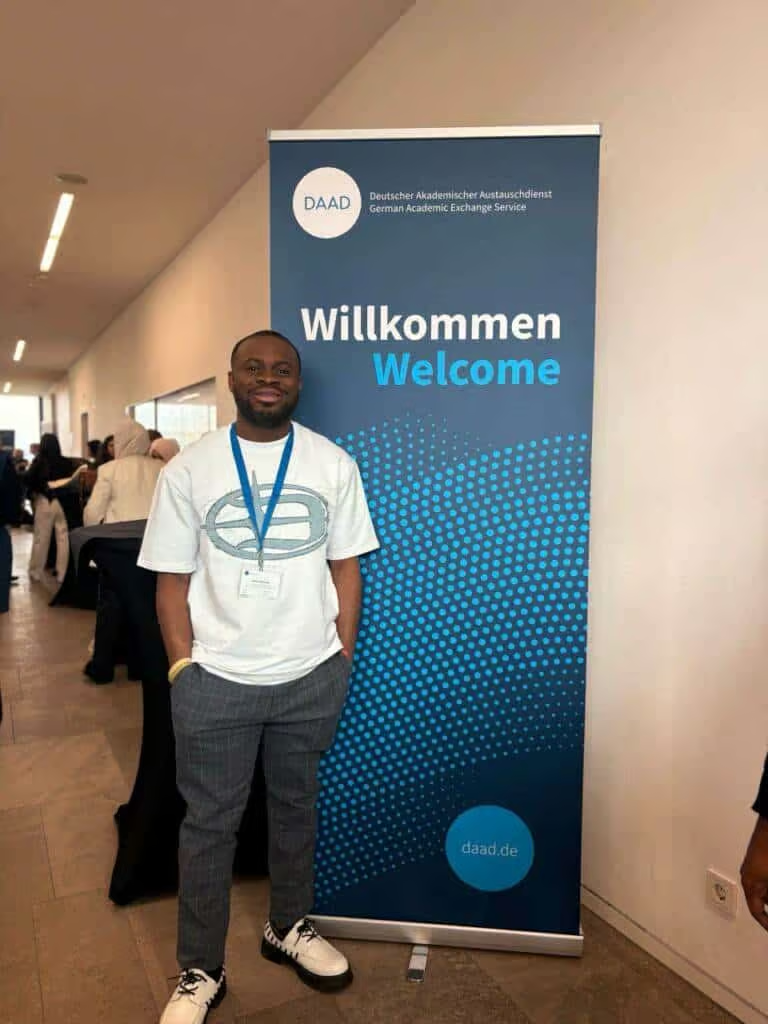

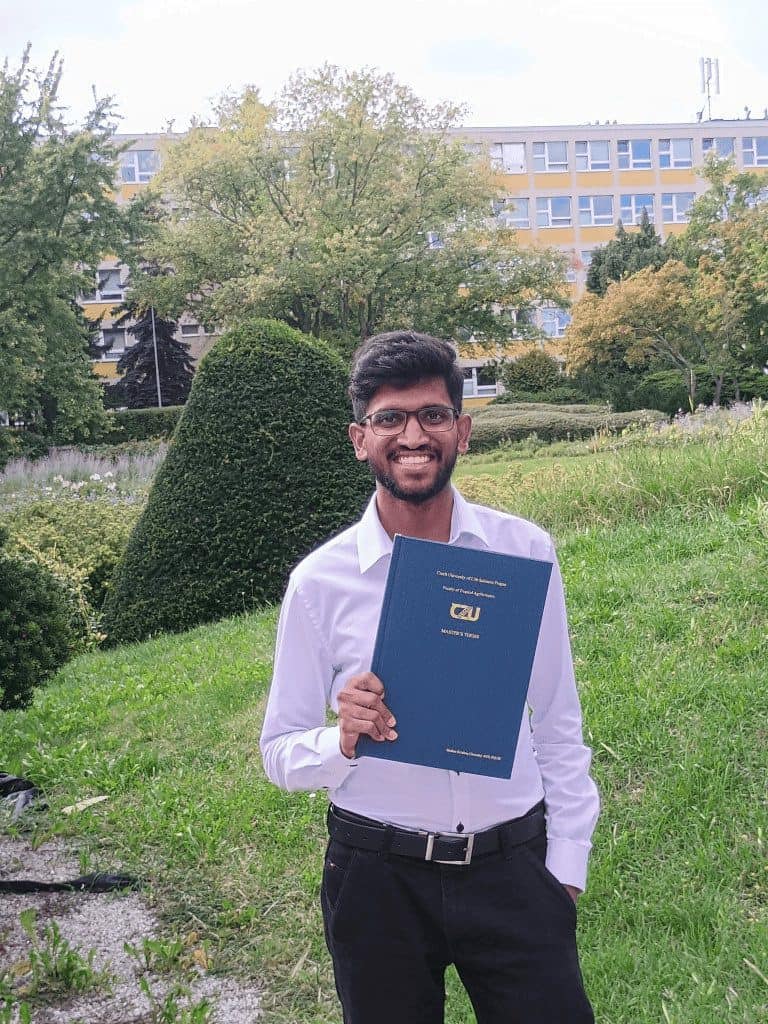
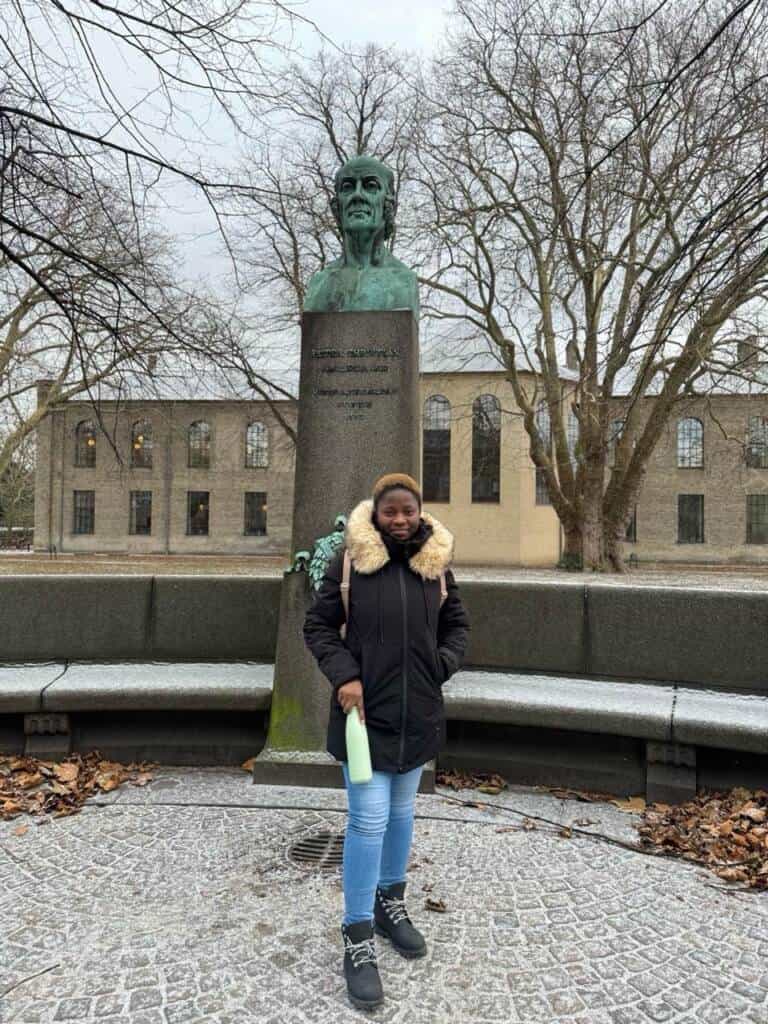

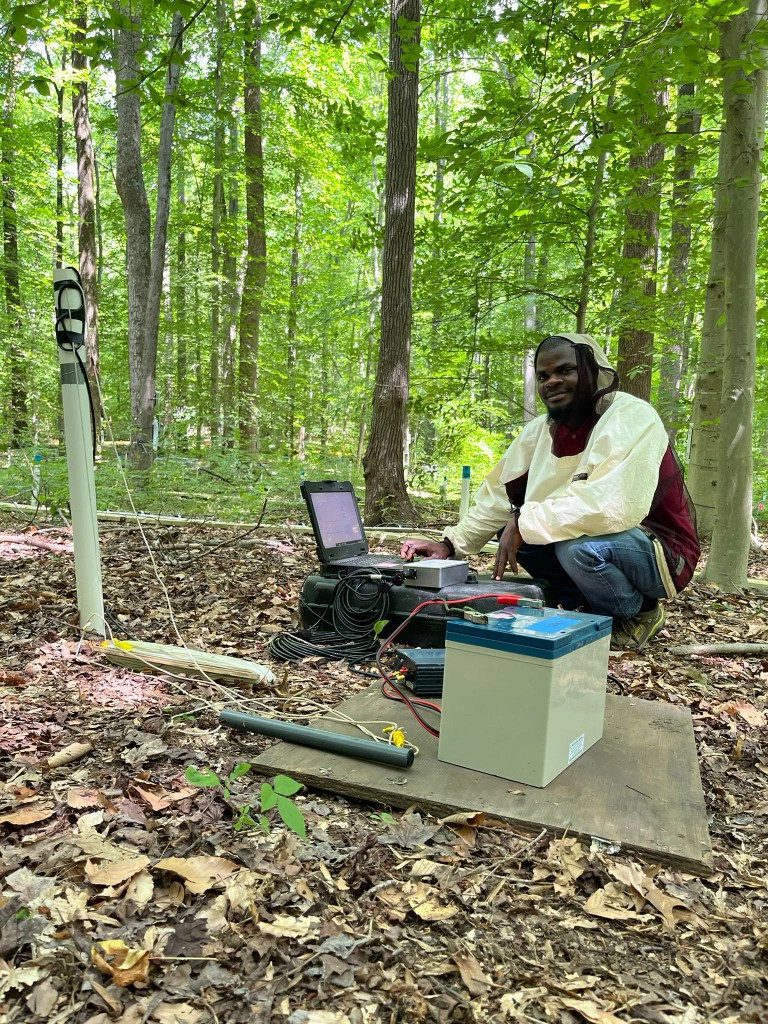
Scholarship Recipient Insights at TU Dresden
10 degree-study stories feature TU Dresden.
Featured Recipients by Nationality
| Nationalities | Stories per nationality |
|---|---|
| Indian | 3 each |
| Nigerian | 2 each |
| Bangladeshi, Ghanaian, Malaysian, Nepali, Sierra Leonean | 1 each |
Degree Levels and Subjects
| Degree level | Stories | Subjects |
|---|---|---|
| Master's | 9 | Global Forestry; Hydroscience and Engineering, GroundwatCh; Hydro Science and Engineering; Tropical Forestry; Global Forestry; Agroforestry Systems and Biodiversity; Air Transport and Logistics; World Textile Engineering Advanced Master (WE-TEAM) |
| PhD | 2 | Traffic Modelling and Simulation; Spatial Information and Modelling, UNU-FLORES/TU Dresden |
Selected funding routes used by featured recipients:
Funding Routes Reported by Recipients
| Funding route | Stories | Recipients |
|---|---|---|
| Erasmus Mundus | 5 | Sachin Timilsina, Olawale Quadri Ogunsola, Bolanle Lizzy Bamidele, Mohan Krishna Chowdry Avilineni, Tuo Sern (Adrian) |
| DAAD Scholarships | 3 | Maliva Islam, Sampha Sesay, Samuel Mensah |
| DAAD STIBET Scholarship | 1 | Somnath |
Funding Coverage and Remaining Costs
| Recipient and degree/program | Reported coverage and financial experience |
|---|---|
| Maliva Islam — Master's in Hydro Science and Engineering | DAAD award received in 2021: tuition, monthly living support, health insurance and travel allowances. Described the award as fully funding the studies. |
| Sampha Sesay — Master's in Tropical Forestry (completed) | DAAD EPOS for MSc; a later DAAD award supported doctoral study with similar tuition, living, travel and insurance benefits. MSc stipend covered rent, food and basic living expenses. |
| Samuel Mensah — Master's in Tropical Forestry (ongoing) | DAAD Scholarship: tuition, stipend, travel, health insurance and study expenses. Paid approximately €300–€350 semester contribution from the stipend; described it as outside the scholarship package. |
| Somnath — Master's in Air Transport and Logistics (ongoing) | DAAD STIBET: €300 monthly for three months during the Master’s. Found housing and relocation demanding; warned that living expenses persist despite low tuition and that a technical Master’s can be difficult to combine with substantial part-time work. |
| Tuo Sern (Adrian) — Master's in World Textile Engineering Advanced Master (WE-TEAM) (completed) | WE-TEAM Erasmus Mundus award valued at €49,000: tuition, €1,000 monthly stipend, annual travel allowance, insurance and installation support. Completed a summer internship and final master’s thesis in Dresden. |
| Sachin Timilsina — Master's in Global Forestry (ongoing) | Fully funded Erasmus Mundus Global Forestry scholarship. Reported stipend sufficient across his study countries; Germany more affordable than Denmark, with student housing and semester-ticket transport helping. |
| Bolanle Lizzy Bamidele — Master's in Global Forestry (final year) | Full Erasmus Mundus Global Forestry scholarship supported tuition and living expenses. Found Dresden cheaper than Copenhagen; used a strict monthly budget and student housing. |
| Mohan Krishna Chowdry Avilineni — Master's in Global Forestry; Agroforestry Systems and Biodiversity (graduated September 2025) | Erasmus Mundus Global Forestry scholarship. Found Dresden and Prague similarly affordable relative to Copenhagen; cooked at home, used public transport and student discounts, and shared housing when possible. |
Examples of Featured Recipients’ Application Backgrounds
| Recipient and degree/program | Scholarship/application route | Reported background and preparation |
|---|---|---|
| Sachin Timilsina — Master's in Global Forestry (ongoing) | Erasmus Mundus | Forestry bachelor’s at Tribhuvan University, Nepal; forest ecology, silviculture, soil science and fieldwork. Tailored the motivation letter and sought alumni input. |
| Olawale Quadri Ogunsola — Master's in Hydroscience and Engineering, GroundwatCh (completed) | Erasmus Mundus | First-Class Water Resources Management and Agrometeorology degree, Hydrology option, at Federal University of Agriculture, Abeokuta; best student in cohort. Tutored peers and completed groundwater-survey internships. Applied through the IHE-Delft coordinating portal and sought former recipients’ feedback. |
| Maliva Islam — Master's in Hydro Science and Engineering | DAAD Scholarships | Bachelor’s and Master’s in Environmental Science at Khulna University. Environmental-management work in garment factories, a coastal drinking-water publication, climate-change modelling and GIS assessment informed her motivation letter and research fit. |
| Sampha Sesay — Master's in Tropical Forestry (completed) | DAAD Scholarships | Forestry BSc from Njala University and professional forestry experience. Explained sustainable-development goals for Sierra Leone; sought mentors’ and DAAD alumni feedback. Strong MSc performance and continued university contact preceded the later doctoral scholarship. |
| Bolanle Lizzy Bamidele — Master's in Global Forestry (final year) | Erasmus Mundus | Forestry bachelor’s at Adekunle Ajasin University; GIS/remote-sensing internship at Federal University of Technology, Akure, a carbon-monitoring preprint and Forestry Research Institute of Nigeria experience. Reapplied after resolving an English-certificate gap. |
| Mohan Krishna Chowdry Avilineni — Master's in Global Forestry; Agroforestry Systems and Biodiversity (graduated September 2025) | Erasmus Mundus | BSc Honours Agriculture at Tamil Nadu Agricultural University. Agronomy and management work in regenerative agriculture, agrotourism and agroforestry, plus volunteering. Revised his CV and motivation letter with peers and mentors and sought personalized recommendations. |
| Somnath — Master's in Air Transport and Logistics (ongoing) | University admission; later DAAD STIBET support | Electrical Engineering bachelor’s at Indira Gandhi Institute of Technology, Sarang, CGPA 8.47/10. Logistics roles at Maersk and Vedanta involved transport flows, cost optimization and freight contracts. Highlighted quantitative skills and AI interests; prepared translated credentials through Uni-assist and APS. |
| Samuel Mensah — Master's in Tropical Forestry (ongoing) | DAAD Scholarships | Integrated Development Studies bachelor’s, Natural Resources Management option, at University for Development Studies. Forestry Commission of Ghana field and timber-compliance work, NGO involvement and professional certificates. Matched his forest-restoration research goals to faculty work and used professional referees. |
| Tuo Sern (Adrian) — Master's in World Textile Engineering Advanced Master (WE-TEAM) (completed) | Erasmus Mundus | Industrial Engineering degree with Mathematics minor at Wichita State University, cum laude, CGPA 3.31/4.00. Three years of US logistics work, a teaching-assistant certificate and badminton leadership/achievements. Reviewed mobility requirements and prepared an Europass CV. |
How Recipients Met Language Requirements
| Language requirement route | Stories / total degree-study stories | Recipients and examples |
|---|---|---|
| IELTS | 1/10 | Mohan Krishna Chowdry Avilineni — Master's in Global Forestry; Agroforestry Systems and Biodiversity (graduated September 2025): took IELTS when preparing for the Erasmus Mundus application. |
| Exemption based on prior English-medium study | 2/10 | Sampha Sesay — Master's in Tropical Forestry (completed): supplied proof that previous undergraduate and graduate courses were entirely in English. Tuo Sern (Adrian) — Master's in World Textile Engineering Advanced Master (WE-TEAM) (completed): supplied a signed, stamped Wichita State English-proficiency certificate based on at least 60 English-taught credit hours; his November 2015 IELTS belonged to the earlier US-study application. |
English-taught programs / stories reporting teaching language: 7/8
Teaching Language Reported in Different TU Dresden Programs
| Recipient and degree/program | Reported language and context |
|---|---|
| Sachin Timilsina — Master's in Global Forestry (ongoing) | Entirely English instruction across the joint program, including TU Dresden; local languages remained relevant outside class. |
| Olawale Quadri Ogunsola — Master's in Hydroscience and Engineering, GroundwatCh (completed) | Entirely English instruction across the joint program, including TU Dresden; local languages remained relevant outside class. |
| Bolanle Lizzy Bamidele — Master's in Global Forestry (final year) | Entirely English instruction across the joint program, including TU Dresden; local languages remained relevant outside class. |
| Mohan Krishna Chowdry Avilineni — Master's in Global Forestry; Agroforestry Systems and Biodiversity (graduated September 2025) | Entirely English instruction across the joint program, including TU Dresden; local languages remained relevant outside class. |
| Tuo Sern (Adrian) — Master's in World Textile Engineering Advanced Master (WE-TEAM) (completed) | Entirely English instruction across the joint program, including TU Dresden; local languages remained relevant outside class. |
| Sampha Sesay — Master's in Tropical Forestry (completed) | All academic coursework and research activities in English; learned basic German for everyday integration. |
| Samuel Mensah — Master's in Tropical Forestry (ongoing) | Tropical Forestry lectures, seminars and assessments entirely in English; German useful for housing and administration. |
| Somnath — Master's in Air Transport and Logistics (ongoing) | Main classes, core courses, exams and thesis in English; administrative processes largely German. |
Academic and Living Experiences
| Recipient and degree/program | Reported academic experience | Reported challenges or support |
|---|---|---|
| Sachin Timilsina — Master's in Global Forestry (ongoing) | At TU Dresden studied silviculture, agroforestry, soil science and forest management/organization. | Used basic local phrases and translation tools outside English-taught coursework. |
| Samuel Mensah — Master's in Tropical Forestry (ongoing) | Praised the new Tropical Forestry curriculum combining rigorous fieldwork, excursions and theory. Thesis examined restoration of mining-degraded reserves in Ghana. | Found International Office and buddy support helpful; local German eased everyday tasks. |
| Somnath — Master's in Air Transport and Logistics (ongoing) | Air Transport and Logistics combined theory with applications, simulation and machine learning; thesis focused on air-traffic-control safety analysis. | Supportive supervisors and computing resources, but demanding workload, German administration and work–study balance required planning. |
| Mohan Krishna Chowdry Avilineni — Master's in Global Forestry; Agroforestry Systems and Biodiversity (graduated September 2025) | Global Forestry included multi-country mobility and applied fieldwork; specialized in agroforestry and biodiversity. | Encountered language barriers in Dresden internship searches and bureaucracy; learned basic phrases and used translation tools. |
| Olawale Quadri Ogunsola — Master's in Hydroscience and Engineering, GroundwatCh (completed) | GroundwatCh led to MSc degrees in Portugal, the Netherlands and Dresden and additional fieldwork in France. | Found Germany the cheapest of the three host countries; cooked at home and later wished he had had greater confidence and peer accountability. |
Application Timelines Reported by Recipients
| Recipient and degree/program | Application or scholarship route | Reported application timeline |
|---|---|---|
| Bolanle Lizzy Bamidele — Master's in Global Forestry (final year) | Erasmus Mundus consortium application | 2021: unsuccessful applications without an accepted English-proficiency certificate. 2022: resolved the gap and reapplied; received admissions to Global Forestry, MEDfOR and European Forestry, then chose Global Forestry with a full scholarship. |
Other Offers in Featured Applicants’ Journeys
| Recipient | Reported alternative | Decision described in the story |
|---|---|---|
| Maliva Islam | Orange Knowledge Programme award for Limnology and Wetland Management at TU Delft. | Chose the DAAD-supported TU Dresden opportunity. |
| Bolanle Lizzy Bamidele | Admissions to MEDfOR and European Forestry in 2022, alongside Global Forestry. | Selected Global Forestry for its full Erasmus Mundus scholarship and strongest academic/institutional fit. |
| Sachin Timilsina | Selected for three Erasmus Mundus programs and waitlisted for three others; reported multiple fully funded offers. | Chose Global Forestry for forest-ecosystem, biodiversity and restoration interests, and exposure to temperate and tropical forests. |
What Recipients Pursued After Studying at TU Dresden
| Recipient | Degree/program at TU Dresden | Reported outcome |
|---|---|---|
| Olawale Quadri Ogunsola | Master’s Hydroscience and Engineering, GroundwatCh; completed | Pursuing a PhD in Environmental Science at the University of Toledo, United States. |
| Sampha Sesay | Master’s Tropical Forestry; completed | Returned to his home country and maintained university contact; subsequently began a DAAD-funded PhD at UNU-FLORES/TU Dresden in spatial information and modelling. |
| Mohan Krishna Chowdry Avilineni | Master’s Global Forestry; graduated September 2025 | Became Head of Certification at Carboneg in Prague. Earlier Unique Land Use internship and working-student experience in Freiburg shaped his carbon-farming interests. |
| Samuel Mensah | Master’s Tropical Forestry; ongoing | Planned to return to Ghana for restoration work and forestry-policy contributions after completion; also expressed a longer-term doctoral-research interest. |
Research Placements and Professional Training
| Recipient and study context | Reported support and preparation | Reported experience or next step |
|---|---|---|
| R. Shabarinath — accepted research placement for IIT Roorkee Master’s thesis | DAAD KOSPIE: seven-month project award; approximately €1,000 monthly, insurance, one-month German course, €266 research allowance and €1,400 travel allowance. Applied with CGPA 9.421/10 and a transport-sustainability proposal. | Secured a TU Dresden supervisor before the DAAD award; recommended searching early for a close research match. |
| Sakshi Charde — earlier Master’s exchange at TU Dresden; now PhD scholar | DAAD KOSPIE exchange award: about €950 monthly, €1,200 travel allowance, €266 research grant, insurance, rent subsidy and German training. At application held an Architecture bachelor’s, two years of architectural work and IIT Roorkee CGPA 9.474. | Exchange research on electric-vehicle charging-station planning developed into a full-time research position and ongoing PhD work in Traffic Modelling and Simulation at TU Dresden. |
| Olujumoke Adesola Ogunrayi — CIPSEM EM37 professional Environmental Management program | Reported accommodation and stipend; prior Meteorology/Climate Science degrees and environmental-governance work in Nigeria. | English-taught training combined lectures, visits and international professional exchange. Continued environmental/climate-policy work in Nigeria and later pursued a World Bank-linked scholarship-supported PhD in Integrated Coastal Zone Management. |
| Aklilu Wodebo Wola — six-month research stay during Hawassa University MSc | Studied MSc Forestry at Hawassa University during 2017–2020 under DAAD In-Country/In-Region support. | Said the TU Dresden stay improved research experience and international exposure; later pursuing a DAAD-funded PhD at Martin Luther University Halle-Wittenberg. |
Across the funding examples, a short grant provides a different level of support from a full-degree award. Award duration and remaining semester and living expenses can shape a student’s budget.
What Scholarship Recipients Say
Advice and insights from international students who successfully secured funding to study at TU Dresden.
"It covered full tuition fees, a generous monthly living stipend sufficient to cover rent, food, and basic living expenses,"
"I created a research proposal showcasing what I would like to do as part of my project."
"I received the DAAD Scholarship in 2021 to pursue my Master’s degree in Hydro Science & Engineering at Technische Universität Dresden, Germany."
"This scholarship has been a turning point in my career; it opened doors to international research, a global network, and personal growth beyond measure."
"Absolutely, YES! This experience has transformed my life for the better."
"Erasmus Mundus is more than just a degree — it’s a life-changing experience."
Frequently asked questions
Common questions about scholarships, admissions, and studying at TU Dresden.
Most scholarships connected to TU Dresden (for example, DAAD-STIBET support and the Deutschlandstipendium) are designed for students who are formally enrolled at TU Dresden and typically studying in Dresden, not for “online-only” participation.
It depends on the degree: many Bachelor’s programs are German-taught, while TU Dresden also offers a wide selection of English-taught Master’s programs (and some programs are mixed-language). Always confirm the “language of instruction” on your specific program page.
From a recipient perspective, Somnath (MSc Air Transport and Logistics) shared that “the main classes and the Master’s thesis are conducted in English,” while day-to-day administration and life in Dresden can still require German.
TU Dresden scholarships are usually based on eligibility, academic fit, and merit rather than a strict age cap, but individual programs can set their own rules, so always check the scholarship’s official call text.
For many DAAD-funded opportunities that TU Dresden students often use, DAAD’s guidance is explicit: “No, there is usually no fixed age limit.”
Scholarships connected to TU Dresden are available across a wide range of subjects; the key is whether you meet the specific funder’s profile (merit, research fit, leadership, need, etc.).
- Engineering: mechanical, electrical, civil, transportation, aerospace/aviation-related fields, and more (e.g., Somnath in air transport & logistics; R. Shabarinath in sustainable transportation research).
- STEM (broadly): computer science/data/AI, environmental sciences, hydroscience, forestry, mathematics, physics, etc. (e.g., Maliva Islam in Hydro Science & Engineering; Sampha Sesay in forestry and spatial information & modelling).
- Business / economics: opportunities often exist via external funders and merit-based schemes like the Deutschlandstipendium (availability depends on your exact program).
- Humanities & social sciences: eligible for many scholarship schemes as long as you are enrolled and meet the criteria (merit and profile matter more than the faculty label in many cases).
- Medicine: TU Dresden has Human Medicine (State Examination). The program is German-taught and admission is highly regulated; international applicants can apply, but procedures differ by status (e.g., non-EU routes often involve uni-assist for certain cases), and you should expect strict language and admissions requirements.
In practice, many international students at TU Dresden combine a program-specific scholarship (e.g., Erasmus Mundus in certain consortia) with TU Dresden’s own support options (e.g., STIBET) depending on eligibility.
Many TU Dresden-linked scholarships are open to international applicants or enrolled international students, and eligibility is typically defined by program rules (and sometimes residence/status), not by a short list of “approved nationalities.”
For example, Erasmus Mundus (where TU Dresden is a partner in some joint master’s programs) states: “Students from all over the world are welcome.”
In GlobalScholarships stories connected to TU Dresden, recipients included scholars from India (Somnath, R. Shabarinath), Nigeria (Bolanle Lizzy Bamidele, Olawale Quadri Ogunsola), Sierra Leone (Sampha Sesay), Bangladesh (Maliva Islam), and Nepal (Sachin Timilsina).
It depends on the language of your program: German-taught degrees require German proof (commonly TestDaF/DSH or equivalents), while English-taught degrees require English proof (often IELTS/TOEFL or accepted alternatives). Some applicants can qualify for waivers if their previous degree was taught in the relevant language—always confirm on your program page.
TU Dresden’s published guidance includes TestDaF as a route for German-taught programs (with a required level for enrolment), and DSH certificates are recognized as admission requirements depending on level.
From the recipient side, Sampha Sesay noted that DAAD commonly asks for TOEFL/IELTS evidence, but in his case “I was exempted from taking these tests” after providing proof his prior studies were taught in English.
There is no single TU Dresden-wide minimum grade that applies to every program: each degree program sets its own academic requirements (and some have restricted admission or aptitude assessments). You should check the specific program’s admission requirements in the study program description.
For scholarships, minimum grade thresholds can be explicit. For example, R. Shabarinath explained: “The primary eligibility criterion for this scholarship was maintaining a CGPA above 8.5.”
As real examples from stories, applicants often present strong records (e.g., Somnath shared an 8.47/10 CGPA in his prior degree; Sakshi Charde reported top grades for her DAAD research scholarship route), but the exact “minimum” is scholarship- and program-specific.
A “good background” usually means strong grades plus a clear match to the program or research group, and evidence you can succeed in a rigorous environment (research experience, projects, internships, publications, leadership, or professional impact—depending on the scholarship).
Olawale Quadri Ogunsola emphasized preparation depth, advising applicants to “solidify their academic understanding, learn new tools (such as models, coding, programmes, and software)” before starting an Erasmus Mundus track that included TU Dresden.
And on application writing, Maliva Islam said a key differentiator was feedback that “my motivation letter was unique than others,” which is a useful reminder that academics + storytelling often win together.
Document requirements vary by program, but many international applicants commonly need: an application form, a CV (often tabular), passport/ID scan, certificates and transcripts (with translations if required), and proof of language proficiency for the program language; some applicants also need an APS certificate depending on country rules.
Scholarship and research routes can add documents like a research proposal, supervisor contact/acceptance, and recommendation letters. For example, Sakshi Charde highlighted the importance of “A motivation letter explaining my research goals and why TU Dresden was the right place for me.”
Practical tip from TU Dresden-linked stories: applicants often prepare certified scans/translations early and align every document to the program’s focus (for instance, Somnath described collecting and translating transcripts and degree certificates for the application flow).
TU Dresden itself typically does not charge a separate “university application fee,” but many international applicants must apply via uni-assist, which charges processing fees for handling and evaluating your application documents.
TU Dresden’s international applicant guidance states: “A processing fee of 75 Euro for the first application is required by uni-assist.” (Additional applications are charged separately.)
There are many degrees that are open to international students right now — find yours.
About the Author: Hyun Lee


Leave A Comment