
Soongsil University Scholarships for International Students 2027
Students considering Soongsil University can explore scholarships that range from fully funded support to partial awards. This shortlist highlights higher coverage options first.
For institution funded support at Soongsil University, these scholarships are frequently highlighted when prioritizing higher coverage. A strong option is Soongsil Global Scholarship which is full tuition and often covers 100% tuition fee for applicants with TOPIK 5 or above, 70% tuition fee for applicants with TOPIK 4, and 40% tuition fee for applicants with TOPIK 3.
Outside the university’s own funding routes, Soongsil University students may be eligible for external programs that can offer substantial support. Here are a few to consider. Global Korea Scholarship (GKS) is commonly categorized as fully funded support, and coverage that often includes tuition fees, airplane tickets, and living stipend.
This is only a shortlist. Additional scholarships and funding options appear further down on this page.
Soongsil University Scholarships for International Students
The scholarships at Soongsil University can help fund your study expenses. There are currently 3 scholarships being offered to international students at the Soongsil University, all with varying requirements, benefits, and application processes. We have compiled them in this list to help you find the scholarship that best fits you.
Undergraduate Scholarships
Graduate Scholarships
External Scholarships
There are many degrees that are open to international students right now — find yours.
Soongsil University Admissions
Here are the official admission pages for Soongsil University:
| Degree | Admissions Pages |
|---|---|
| Master's | International Students Admissions Page |
Tuition Fees at Soongsil University for International Students
Indicative annual tuition fee ranges for international students at Soongsil University. Exact fees vary by program, so always confirm the current cost on the university's official tuition fee pages.
| Degree Level | Typical Annual Range |
|---|---|
| Bachelor's Tuition | 7,923,800 KRW |
Please note that tuition fees can vary based on the specific program you choose. For the most accurate and current fee information, consult the official tuition fee pages linked above.
Soongsil University Scholarship Recipients
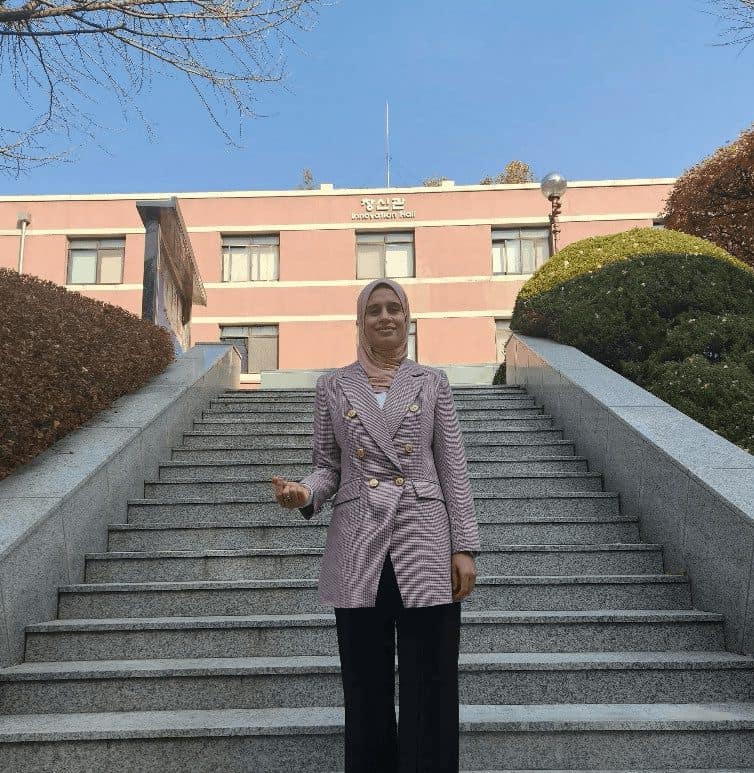
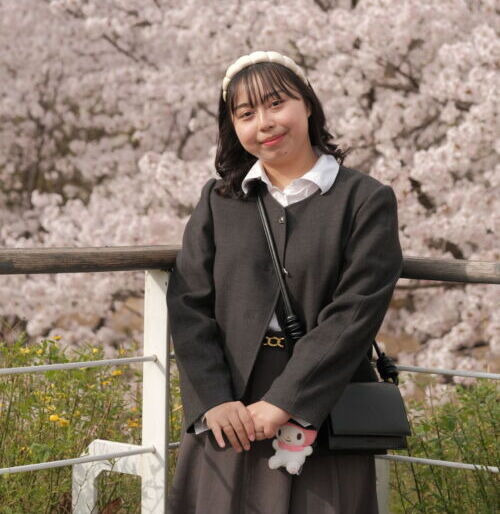
International students who received scholarships to study at Soongsil University, documented by Global Scholarships.
What Scholarship Recipients Say
Advice and insights from international students who successfully secured funding to study at Soongsil University.
"GKS-G is a fully funded scholarship program managed by the National Institute for International Education (NIIED), under the Ministry of Education of South Korea. The program covers round-trip airfare, full tuition, monthly stipend, Korean language training, thesis support, and more."
"Additionally, I strongly recommend starting early. Learning Korean in advance not only eases your transition once you arrive in Korea, but also strengthens your application. Submitting a TOPIK score beforehand demonstrates your level of preparation and genuine commitment to studying in Korea, which can leave a positive impression on the selection committee."
"I will be studying Master's in International Commerce at Soongsil University under the Global Korea Scholarship."
Frequently asked questions
Common questions about scholarships, admissions, and studying at Soongsil University.
Most Soongsil University scholarships are tied to admission/enrollment in standard (in-country) degree programs and are applied as tuition waivers per semester (e.g., entrance scholarships for the first semester, then continuing-student scholarships based on credits/GPA/TOPIK).
Both, but for full-degree international undergraduate admission, Korean is central. Soongsil’s international admissions guide sets Korean-language qualification (for most majors: TOPIK 3+ or equivalent routes; Film Arts: TOPIK 4+) and also states that “All admitted students must acquire TOPIK Grade 4 or better in order to graduate from Soongsil University.”
At the same time, Soongsil (and its partners) note that English-taught options exist: an exchange fact sheet states “Around 15% of the courses are taught in English,” and highlights programs where “a large majority of the classes are taught in English” (e.g., Global Law, Global Commerce, Business Administration, English Language and Literature).
From the student side, Priscila came from an international-track business program that “conducts all courses in English,” and she still emphasized learning Korean early to be ready for Korea-based study.
For Soongsil’s in-house tuition-waiver scholarships (like entrance/continuing scholarships tied to TOPIK and semester GPA), age limits are typically not the headline requirement; eligibility is mainly about admission status, credits, grades, and language level.
However, major external scholarships can have explicit age rules. The National Institute for International Education (NIIED) lists Global Korea Scholarship (GKS) age limits such as “under the age of 40” for the graduate program (with limited exceptions) and “under the age of 25” for the undergraduate program (as of the inviting year’s date).
In general, Soongsil’s admissions-linked scholarships (especially the entrance scholarship tiers and continuing-student tuition waivers) apply across a wide range of majors, because the criteria are usually TOPIK level, semester credits, and GPA rather than a single subject.
A real example from the recipient side: Priscila pursued a business/commerce pathway (Master’s in International Commerce at Soongsil) through the fully funded GKS route.
For international undergraduate admission-based scholarships at Soongsil, the admissions guide defines eligibility by nationality status: “Both applicant and his or her parents must be foreign nationals,” and “Dual nationality with Korea is not qualified.” In practice, that means scholarships in this track are aimed at non-Korean applicants who meet the admissions definition of “international student.”
For external government scholarships like GKS, NIIED specifies that applicants must hold citizenship of “NIIED designated countries” invited in that year, so the eligible nationality list depends on the guideline year. Priscila, for instance, applied as an Indonesian national.
For international undergraduate admission at Soongsil, some form of Korean-language qualification is required. The guide lists options like TOPIK 3+, completing a qualifying Korean course, or passing Soongsil’s Korean proficiency test (Film Arts requires TOPIK 4+). It also states you’ll need TOPIK 4+ to graduate.
For scholarships, Korean tests matter even more: Soongsil’s entrance scholarship tiers in the guide are explicitly tied to TOPIK level (e.g., TOPIK 6 = 100% tuition waived; TOPIK 5/4/3 = lower tiers) or strong performance on Soongsil’s Korean proficiency test. Continuing-student tuition waivers also depend on both GPA and having TOPIK 4 or better.
English tests can still help depending on the scholarship/program. In GKS, Priscila said she “submitted both TOPIK and TOEFL iBT scores,” and she recommended learning Korean early because “Submitting a TOPIK score beforehand” can strengthen your overall profile.
For international undergraduate admission, Soongsil’s guide describes the evaluation as document-based (e.g., “Document evaluation 100%” for most majors), but it does not present a single universal minimum GPA cutoff for acceptance in the same way some universities do.
Where grades become very concrete is scholarships after admission: Soongsil’s continuing-student scholarship table starts tuition waivers at GPA 3.0+ (with TOPIK 4 or better) and rises with higher GPA bands; the top tier notes GPA 4.3+ (with TOPIK 6) for a 100% tuition waiver.
If you’re aiming for a government scholarship like GKS, NIIED states applicants must have maintained a CGPA equivalent to “80% or higher” in their previous degree. As a real benchmark, Priscila reported graduating with a “GPA of 3.85 out of 4.00.”
A strong profile usually combines (1) solid grades, (2) language readiness (especially TOPIK for Soongsil’s tuition waivers), and (3) a focused story that fits your major. For Soongsil’s continuing scholarships, aim to keep your semester GPA comfortably above 3.0 and build toward higher bands (3.5+, 3.8+, etc.), while also securing TOPIK 4+ to unlock tuition-waiver eligibility.
Soongsil’s international undergraduate admissions guide lists required documents such as: (1) Admission ticket (download/print after online application), (2) language score documents (meeting the language qualification), (3) certificate of graduation (or expected) and (4) academic transcript (high school for new students; plus university/college documents for transfers), (5) proof of family relationship (family register/certificate/birth certificate), (6) parents’ official ID copies, (7) certificates related to acquisition of foreign nationality/loss of Korean nationality (if applicable), (8) applicant passport copy, and (9) alien registration card copy (if applicable).
Additional/conditional items include (10) Korean language institute completion/enrollment certificate and transcript (if applicable), (11) bank balance statement (submitted after tuition payment; the guide mentions a minimum KRW 20 million balance, with some special cases), and (12) a self-introduction video for Film Arts applicants (uploaded to YouTube/Vimeo, then submit the URL).
Country-specific accreditation rules can apply; for example, the guide includes cases where an “Apostille Certificate” is required for certain documents (notably in some China-related pathways). On the scholarship-story side, Priscila said she spent months mastering requirements and urged applicants to thoroughly understand the official guidelines before submitting.
Soongsil offers a broad range of programs across humanities, law, social sciences, business, natural sciences, engineering, and IT/AI fields. In the international undergraduate guide, examples include English Language and Literature (humanities), International Legal Affairs (law), Mass Communication (social sciences), Global Commerce and Business Administration (business), Chemistry and Statistics (STEM), Mechanical/Electrical/Chemical Engineering (engineering), and Computer Science and Engineering plus AI Software (computing/AI).
Yes. Soongsil’s international admissions guide lists an “Application fee: KRW 90,000” for the online application. Check the latest guide for updated information
There are many degrees that are open to international students right now — find yours.
About the Author: Hyun Lee


Leave A Comment