
Korea Advanced Institute of Science and Technology (KAIST) Scholarships for International Students 2027
Funding at Korea Advanced Institute of Science and Technology (KAIST) can be easier to navigate when you start with the most generous options. Below is a shortlist prioritized by the level of support.
University scholarships associated with Korea Advanced Institute of Science and Technology (KAIST) often form the core of an applicant’s funding plan. Here are a few notable options to review first. With KAIST Global Presidential Scholarship (KGPS), students may receive fully funded support, and coverage frequently includes 100% tuition fee for 4 semesters and KRW 1,000,000 monthly financial aid for 4 semesters. KAIST International Student Scholarship is a fully funded award, and the listed benefits often include 100% tuition fee, KRW 350,000 monthly financial aid, and medical health insurance. KAIST Scholarship (Graduate) is usually considered fully funded, and typical coverage can include 100% tuition fee, A monthly stipend dependent on research involvement, and medical health insurance.
In addition to university awards, students connected to Korea Advanced Institute of Science and Technology (KAIST) may also consider government and external scholarships. Here are a few widely relevant options. A strong option is Global Korea Scholarship (GKS) which is fully funded and often covers tuition fees, airplane tickets, and living stipend. POSCO Asia Fellowships is fully funded, and coverage often includes full tuition, living expense stipend of 1,000,000 KRW per month, and national health insurance.
You can find more university scholarships and external or government scholarships further down on this page.
Korea Advanced Institute of Science and Technology (KAIST) Scholarships for International Students
The scholarships at Korea Advanced Institute of Science and Technology (KAIST) can help fund your study expenses. There are currently 6 scholarships being offered to international students at the Korea Advanced Institute of Science and Technology (KAIST), all with varying requirements, benefits, and application processes. We have compiled them in this list to help you find the scholarship that best fits you.
Undergraduate Scholarships
Graduate Scholarships
External Scholarships
There are many degrees that are open to international students right now — find yours.
Korea Advanced Institute of Science and Technology (KAIST) Admissions
Here are the official admission pages for Korea Advanced Institute of Science and Technology (KAIST):
| Degree | Admissions Pages |
|---|---|
| Bachelor's | International Students Admissions Page |
| Master's | International Students Admissions Page |
Admissions and Scholarship Results at Korea Advanced Institute of Science and Technology (KAIST)
Here are some of the admissions and scholarship results from previous applicants to Korea Advanced Institute of Science and Technology (KAIST), which you might find helpful. For more results to Korea Advanced Institute of Science and Technology (KAIST), please see the Korea Advanced Institute of Science and Technology (KAIST) Admissions Profile Page .
| Nationality / Region | SAT/ACT | EFC | GPA | Scholarship | Status |
|---|---|---|---|---|---|
| Japan | N/A | N/A | 4.2 / 4.5 | Fully Funded | Accepted |
| Azerbaijan | 1440 | N/A | N/A | N/A | Accepted |
Korea Advanced Institute of Science and Technology (KAIST) Application Deadlines
| Degree | Admission Deadline |
|---|---|
| Bachelor's (Regular Admissions - Fall) | January 6, 2026 |
| Bachelor's (Early Admissions - Spring & Fall) | October 22, 2026 |
| Master's (Fall - Early Track) | December 16, 2025 |
| Master's (Fall - Regular Track) | March 17, 2026 |
| Master's (Spring) | September 1, 2026 |
Tuition Fees at Korea Advanced Institute of Science and Technology (KAIST) for International Students
Indicative annual tuition fee ranges for international students at Korea Advanced Institute of Science and Technology (KAIST). Exact fees vary by program, so always confirm the current cost on the university's official tuition fee pages.
| Degree Level | Typical Annual Range |
|---|---|
| Bachelor's Tuition | 6,866,000 KRW |
| Master's Tuition | 19,118,000 – 25,200,000 KRW |
Please note that tuition fees can vary based on the specific program you choose. For the most accurate and current fee information, consult the official tuition fee pages linked above.
Korea Advanced Institute of Science and Technology (KAIST) Scholarship Recipients
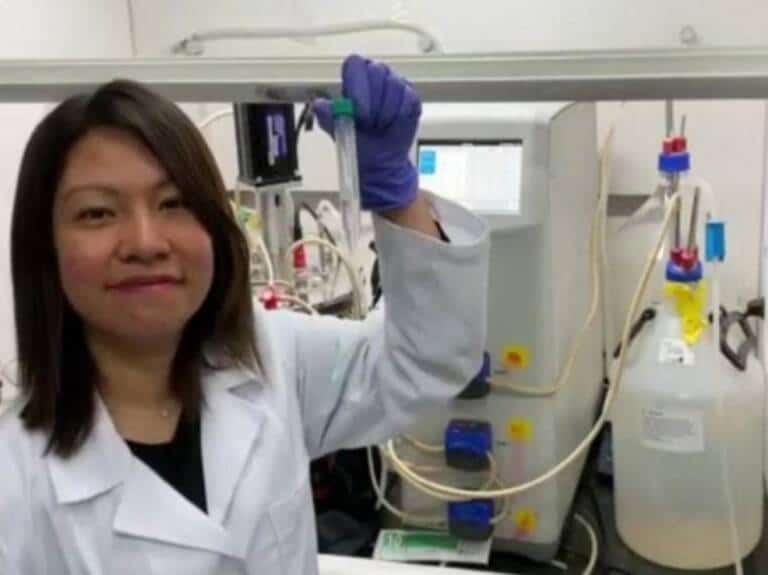
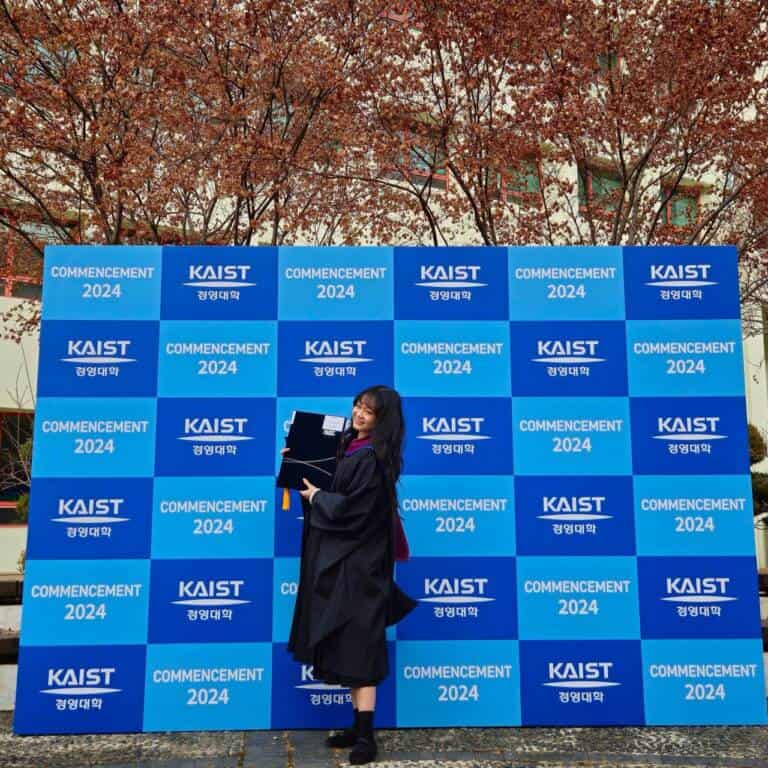
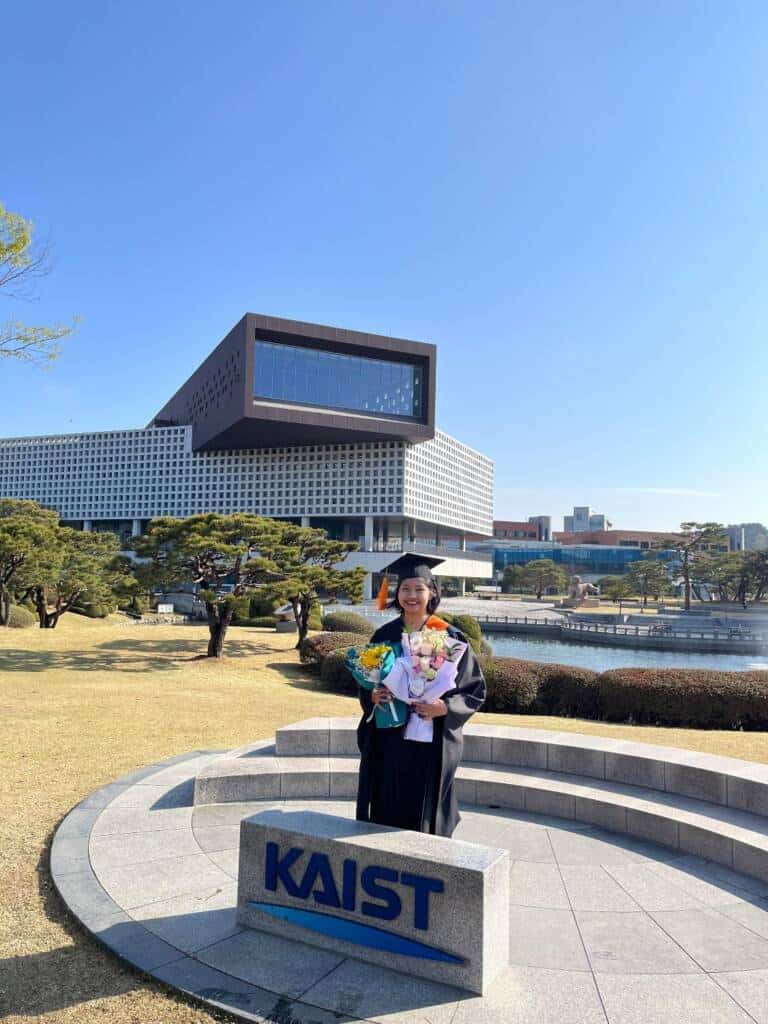
International students who received scholarships to study at Korea Advanced Institute of Science and Technology (KAIST), documented by Global Scholarships.




What Scholarship Recipients Say
Advice and insights from international students who successfully secured funding to study at Korea Advanced Institute of Science and Technology (KAIST).
"I received the KAIST International Scholarship worth ~10,000 USD per semester for 5 years (Integrated Master + Ph.D.) to cover the tuition fee."
"When preparing your application, avoid making it sound general; instead, make it specific by emphasizing one of your strengths."
"I chose to major in Computer Science and minor in Industrial and Systems Engineering."
"I had the opportunity to work on various research projects alongside professors in different labs, which provided invaluable hands-on learning and exposure to cutting-edge technology."
"KAIST: I learned a lot from my professors and peers, who brought diverse experiences to each lesson."
"KAIST is one of the best universities in Korea. It produces a very large number of research papers at top-tier conferences and journals every year."
Frequently asked questions
Common questions about scholarships, admissions, and studying at Korea Advanced Institute of Science and Technology (KAIST).
Most KAIST scholarships (including common “full tuition + stipend” packages) are designed for full-time, degree-seeking students who enroll through KAIST admissions (i.e., on-campus study).
All KAIST classes are taught in English, and several scholarship recipients described studying primarily in English. For example, Tria Asri Widowati shared that “Classes at KAIST are conducted in English,” and Purevzaya Amarzaya explained, “Most of the classes are taught in English; however, there are some classes taught in Korean.” In practice, you can often plan an English-taught pathway, while Korean can help a lot for daily life; as Biniyam Aschalew put it, “you can manage perfectly well without knowing Korean,” even though learning Korean can still make life easier.
KAIST’s own scholarship offers are typically linked to your eligibility for admission (for undergraduate applicants, this usually means you meet the timing/credential rules around high school completion), rather than a simple “maximum age” rule. However, some external scholarships that students use alongside KAIST (especially government-funded programs) can include age requirements, so it’s important to check the specific scholarship’s rules if you’re applying via a government route.
KAIST scholarships generally follow KAIST admissions, so they apply across KAIST’s academic areas (especially STEM), and you’ll see recipients funded in different fields. For engineering and STEM, examples include Chemical & Biomolecular Engineering (Tria), Data Science / Industrial Systems-type research paths (Omer Tariq), and Computer Science (Rahul Agrawal, Purevzaya). For business, KAIST offers Business and Technology Management, and recipients have pursued CS + BTM as a double major (e.g., Rahul and Purevzaya). For humanities, KAIST has transdisciplinary/humanities-adjacent options (e.g., School of Transdisciplinary Studies). For medicine: KAIST is not a traditional medical school for an MD; instead, it focuses on science/engineering pathways that can include bio/medical engineering and related research areas (so “medicine scholarships” usually mean research/engineering tracks rather than an MD program).
KAIST scholarship pathways for international applicants are broadly intended for students applying as “international” under KAIST rules (so it’s not limited to one or two countries). Recipients on GlobalScholarships include students from Mongolia (Purevzaya), Indonesia (Tria), India (Rahul), Ethiopia (Biniyam), and more. Some named scholarships have their own geography rules: for example, Tria described POSCO Asia Fellowship as supporting students “from across Asia,” while government scholarships depend on the government’s eligible-country list each year.
For many applicants, an English proficiency result is important (and in some routes it’s required). This matches what recipients did: Purevzaya said, “I took the TOEFL,” and Rahul shared that he took “the IELTS” (along with SAT/SAT Subject Tests). Strong scores can help your overall profile; Omer Tariq emphasized that “TOEFL/IELTS scores matter.” TOPIK is usually not the core requirement for studying in English at KAIST, but Korean skills can improve daily life; Purevzaya noted she “would have learned Korean at a more advanced level” for life in Korea.
KAIST is selective, and while requirements depend on the specific track and year, the most realistic guidance is to aim for top academic performance and strong test/portfolio materials. Scholarship recipients’ academic records show the kind of profile that can work: Purevzaya said, “I graduated with a GPA of 5 out of 5,” and Rahul wrote that he “achieved a 95% grade” in high school. At graduate level, Omer advised, “aim for the top percentile in your class.”
A strong STEM foundation (math/science depth), evidence of excellence (top grades, competitions), and clear motivation/research direction are common themes across recipients. Purevzaya linked her path to Olympiads: “I used to participate in Mathematical Olympiads,” and she paired that with a top GPA (“GPA of 5 out of 5”). For research-focused graduate scholarships, Omer said, “Statement of Purpose and Research experience matter the most.” For scholarship essays, Tria explained, “I focused on improving my essay writing,” especially the motivation letter and statement of purpose.
Document lists vary by program/track, but typical KAIST international applications commonly involve an application form plus academic records and identity documents, and they often include recommendation letters and proof of testing (where applicable). In KAIST undergraduate international applications, you should be ready for items like an application form, a recommendation letter, transcripts, and a passport/ID copy, plus standardized/English test score reports when required. Scholarship recipients also repeatedly stress essays: Omer highlighted “Statement of Purpose,” Tria emphasized the “motivation letter and statement of purpose,” and Mhd Anas Al-Saidi shared, “I followed previous years’ guidelines and prepared all required documents,” adding that “I took good care in writing high-quality essays.”
- Common core items: application form, transcript(s), passport/ID, recommendation letter(s)
- Common proof items: English proficiency scores (e.g., TOEFL/IELTS) and/or other standardized test scores (depending on track)
- Common writing items: statement of purpose / motivation letter / essays (especially important for scholarships)
KAIST is strongest in science, engineering, and technology, but it also includes business and transdisciplinary options. Examples of areas you can study include Physics, Mathematical Sciences, Chemistry, Biological Sciences, Brain & Cognitive Sciences, Mechanical Engineering, Aerospace Engineering, Electrical Engineering, Computer Science, Civil & Environmental Engineering, Chemical & Biomolecular Engineering, Materials Science & Engineering, Nuclear & Quantum Engineering, Industrial Design, Industrial & Systems Engineering, and Business & Technology Management. Recipients’ majors show this mix in real life: Purevzaya and Rahul both pursued a Computer Science + Business/Technology Management combination, while Tria pursued Chemical & Biomolecular Engineering.
Yes, KAIST applications commonly include a non-refundable application fee (the exact KRW amount can vary with exchange rates depending on the payment method and year). KAIST’s undergraduate international admissions guidelines list an “Application fee: 80 USD,” and note payment options like credit card and bank transfer. KAIST also describes a fee waiver pathway for eligible applicants in special cases, so if cost is a barrier, it can be worth checking whether you qualify.
There are many degrees that are open to international students right now — find yours.
About the Author: Hyun Lee


Hello, my name is Ishwarya. I am interested to study at KAIST.
Hello, take a look at KAIST Admissions Section for information on admission!
What are the eligibility requirements for black students who wish to study at KAIST and receive a scholarship?
Hello, eligibility criteria for KAIST is the same regardless of race. Please see the Admissions Guides that can be found in the Admissions Section. In the pdfs, you will see the eligibility criteria, whether it’s for Bachelor’s or Master’s.
Hello, please what are the courses available for scholarship?
All the courses offered at KAIST are eligible
Hello. I want to do my Bachelor degree in South Korea. And i am interested in majoring in Culinary Arts’ and hospitality Management. Do you have this field. Can you give some information about the faculties this university offers?
Hello no, KAIST doesn’t offer Culinary Arts and hospitality management. Some universities that offer that are Woosong University and Sejong University. There are more, and you can find them by searching on Google
Hello I’m Dew. I’m from Sri Lanka. And I’m very interested to join the university and do my education. Is there available software engineer degree?
Hi yes, software engineering (computer science) is available at KAIST
Hello . I want to pursue a bachelor’s degree in South Korea. I am interested in pursuing a BBA Course. Do you offer this course? Can you give some information on the faculties this university has?
Hello, Korea Advanced Institute of Science and Technology does not seem to offer a bachelor’s degree in Business Administration. Please check out The College of Business for available courses.
Hello, I plan to apply to KAIST. Do they offer Artificial Intelligence or Big Data ?
Hello, KAIST does have an AI Graduate School that offers plenty of AI courses.
Please what does the guideline for the study plan for undergraduate program so I can start writing mine before I pay for my application fee 🙏🏿
I don’t think KAIST requires a study plan for undergraduate program from what I can see on their admissions process document?
Does KAIST offer computer science scholarships for undergraduates?
Yes, the scholarship is offered for all subjects in KAIST, including computer science
Hello, please for the study plans for graduate programs, is it the same as writing a research proposal?
Basically the same!
Also when is does the application portal for Fall ( early track 2026) and Fall (regular track 2026) open
Hello, check out the deadlines section!
Please is there by any chance application fee waivers for students who can’t afford to pay the application fee?
Thank you!
Hello, I don’t think KAIST offers any application fee waivers unfortunately
Hello, so I’m studying in a Cambridge school, in MOZAMBIQUE (Africa). So i want to apply for a university in south Korea, KAIST in this case. This year I’m about to do AS-level, and is there a chance of me getting a scholarship after I finish As-level? Like does the university have some foundation programs?
Hello, you can apply directly to KAIST after your A Levels. They offer scholarships for all admitted students. They do not have a foundation program.
Hi,
I am Raju Roy from Bangladesh. I am interested to pursue Master degree in data science. Is it possible to get scholarship for this program?
Yes, KAIST has a data science program for Master’s, and all students at KAIST receive some sort of scholarship